
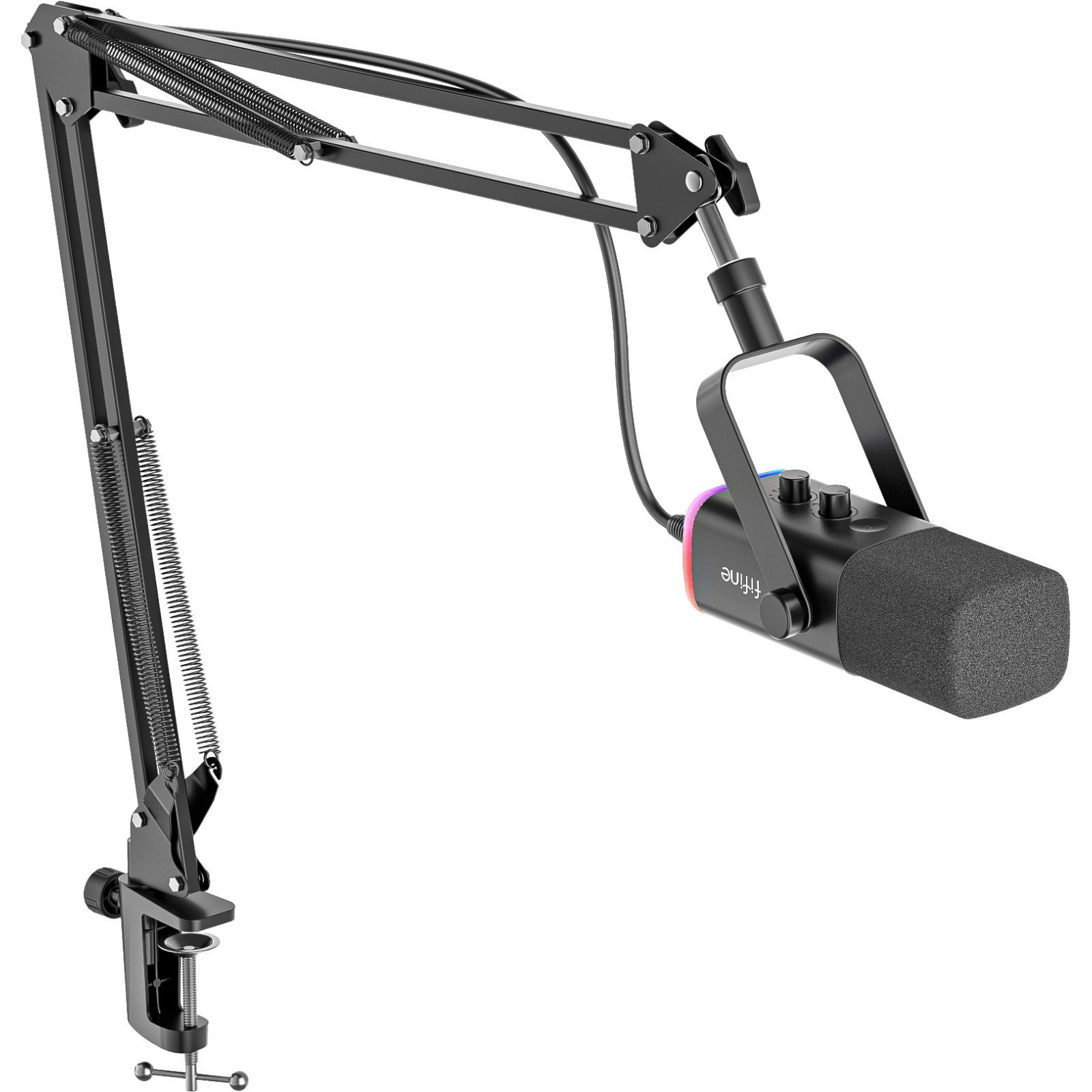
Review basis: Personally used FIFINE AM8T microphone and included boom arm, tested through regular recording and everyday desktop use. This fresh CS Press article is based on the reviewer’s earlier hands-on assessment.
You can spend a remarkable amount of money persuading a computer to capture the sound of your voice. The FIFINE AmpliGame AM8T makes a much simpler proposition: plug it in, put the microphone somewhere sensible and get on with the actual recording.
Having used the AM8T regularly for podcasting and voice work, I’ve found it to be a very easy bit of hardware to live with. It’s clear, uncomplicated and flexible enough that you aren’t locked into one setup when you decide to improve your equipment.
A good fit for real recording
The AM8T uses a dynamic cardioid capsule. That makes sense at a normal desk where the microphone is fairly close to your mouth and you’re trying to capture one speaker rather than the entire room.
No inexpensive microphone can magically erase background noise. Position, distance, gain and the room still matter. But in my own recording use, the FIFINE gives voices a strong, intelligible presentation without making the whole process feel technical.
It also helps that the microphone is straightforward to position on the supplied boom arm. That sounds like a minor feature until you spend time recording and realise how much difference repeatable microphone placement makes.
USB now, XLR when you’re ready
A standout advantage is having both USB-C and XLR connections. USB is the easy entry point. It means a PC can record without another piece of audio hardware, and you have useful controls available directly on the microphone.
If you later add an interface or mixer, XLR gives you somewhere to go without immediately replacing the microphone. That upgrade path is genuinely worthwhile for anyone gradually building a recording setup instead of buying everything at once.
There is an important caveat: the RGB lighting and the on-mic USB controls aren’t available in the same way when using the XLR connection. You will also need to supply a separate XLR cable and handle functions through the connected interface.
What the boom-arm kit gets right
I would specifically consider the AM8T kit over buying just a microphone and hoping an old desk stand will do. A boom arm lets you bring the capsule close, clear desk space and adjust positioning without constantly shifting your keyboard or chair.
The kit doesn’t make this a professional studio by itself. What it does is get the basics right without demanding a lot of extra purchases before you can record usable audio.
Any downsides?
You don’t get the full feature set in both connection modes, the styling and RGB won’t appeal to everybody, and someone wanting intensive sound processing will still need to do that elsewhere in the recording chain. Like other dynamic microphones, it works best when you’re reasonably close and using sensible gain.
None of those points have been significant problems for how I actually use it.
The verdict: 85/100
85/100. The AM8T continues to earn its score because it offers the right combination of clean voice capture, everyday convenience, useful controls and room to improve your setup later.
It is one of those pieces of kit that quietly becomes part of your routine. That’s a compliment, because recording hardware should help you make something rather than become the thing you spend the evening troubleshooting.
Sources and transparency
Personally used microphone and boom-arm kit. FIFINE AM8T official product details for technical reference. Manufacturer/retailer product photography used. The assessment is based on the reviewer’s own hands-on use; the original rating is retained.
Where to find it
Affiliate disclosure: As an Amazon Associate I earn from qualifying purchases. View the FIFINE AM8T microphone kit on Amazon UK (paid link) ↗. Prices and availability can change. The retailer does not influence our review score.