
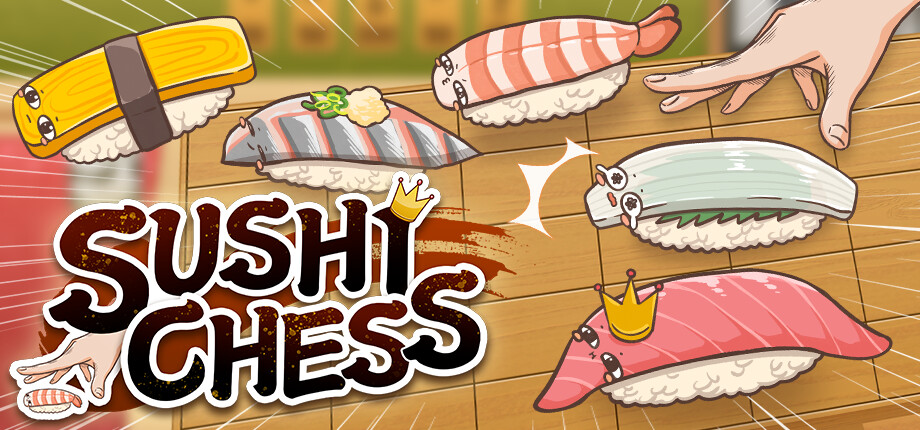
A game of shogi at a Japanese inn, a craving for sushi and a simple design question created an unusual strategy game: what if capturing the opponent’s pieces cost your own money? We spoke with producer Terumoto Takamiya (MCnagai) of Today’s Special! about Modern and Classic modes, the financial cost of a capture, and how a two-person team is trying to make familiar board-game ideas surprising again.
The free Steam demo is available; the proposed March 2027 full release remains a target, not a confirmed launch date. Described online features should not be confused with what’s playable today.
Written developer interview: seven questions from Coloured Static Press; original answers from Terumoto Takamiya (MCnagai), Today’s Special!. Answers were supplied in English following AI-assisted translation from Japanese, as disclosed by the interviewee. Editorial presentation has been adjusted only for paragraph spacing and legibility. This is not a scored review.
The full developer interview
1. How did SUSHI CHESS begin, and when did you realise sushi could become the basis of a strategy game?
SUSHI CHESS began after we played shogi at a ryokan, a traditional Japanese inn. It was our designer’s first time playing, and they found the rules complicated and the games quite long. That led us to make a shogi- or chess-like game that could be played in shorter sessions.
Sushi came later. We initially considered tanks and small arms as themes for the pieces, but couldn’t settle on one. Then, while I was hungry and craving sushi, I happened to put the two ideas together—and it clicked.
2. In Modern mode, captures cost money. What does that change about the familiar decisions players make in chess?
One major difference is that capturing a powerful piece isn’t always the best move, even when you have the opportunity. Capturing an opponent’s shrimp—the bishop—or squid—the rook—means eating it and paying ¥500 from your own funds.
With only ¥2,000 to start with, you can’t afford to capture every opposing piece. You have to think about which captures are worth paying for.
3. Why include Classic mode, and what different experience do you hope it offers?
Classic mode is still being refined, but we included it for two reasons. First, some players wanted a simpler ruleset. Second, our puzzle mode has received particularly positive feedback, and we wanted to explore chess-style puzzles using pieces that move differently from those in chess.
It has a very simple, “classical” board-game feel. We recommend it to anyone looking for a lighter palate cleanser between games of Modern mode!
4. How have you approached introducing the rules so newcomers can understand the game without being overwhelmed?
We’ve approached this in a few ways. First, we want players to understand the board at a glance: there is no hidden information or information available to only one player.
Second, we built on familiar games—chess and shogi—so players can quickly grasp the basic rules.
Third, we use expressive animations to draw attention to important moments. Captured sushi gets eaten, and a piece trembles when it’s in check.
But the biggest help is probably the concept itself: “Chess where you pay to capture your opponent’s pieces.” That gives players an immediate idea of how it works.
5. What has been the most challenging part of designing, testing and balancing SUSHI CHESS as a two-person team?
Balancing the game has definitely been the hardest part! As I mentioned, the project began because our designer found shogi complicated and wanted something simpler—so they didn’t have much experience with this kind of game. I’m the producer, and I’m no expert either!
To make something that feels like chess or shogi while being easy to pick up and still having depth, we played both games over and over. And, along the way, we ate plenty of sushi too.
6. What have you learned from players trying the free demo’s puzzles and CPU matches?
The biggest surprise was how positively players responded to the puzzle mode! It was also fun to see that people familiar with chess or shogi were often the ones most thrown off by paying to capture pieces. It showed us how adding just one rule to a familiar game can fundamentally change the way people think.
Some players have also become comfortable with the rules and asked for a greater challenge.
Two big priorities have come out of that feedback. One is expanding the puzzle selection and creating puzzles specifically for the demo. I’d been hesitant because designing good puzzles is quite difficult, but seeing people enjoy them made me want to give them more!
The other is adding rule customisation—for example, adjusting the cost of passing or setting each player’s time allowance so they can play faster, blitz-style matches.
7. Looking towards the planned full version, what are you most excited to add with local matches and the proposed online play?
What I’m looking forward to most is hearing what people think after they’ve enjoyed all the cute sushi! We’re also planning rule customisation, so I’d love players to tell us which combinations of rules they found fun.
For people who find chess or shogi intimidating, I hope SUSHI CHESS’s small board and simple rules help them discover how enjoyable these games can be. And for people who already love chess or shogi, I hope they get as delightfully confused as possible! The money rule really turns everyone’s familiar instincts upside down. [laughs]
Thank you again for giving us the opportunity to share the story behind the game. If anything needs clarification, please let me know.
Best wishes, Terumoto Takamiya (MCnagai) Producer, Today’s Special! contact@todays-special.com
Discover the game
Explore our original First Signal feature on SUSHI CHESS for the developer’s initial pitch and context. This interview is independently edited, and no payment or favourable coverage is implied.
Answers received 28 October 2026. Artwork supplied from approved official promotional materials. Release timing remains planned March 2027 as described above; check the official storefront for current availability.