
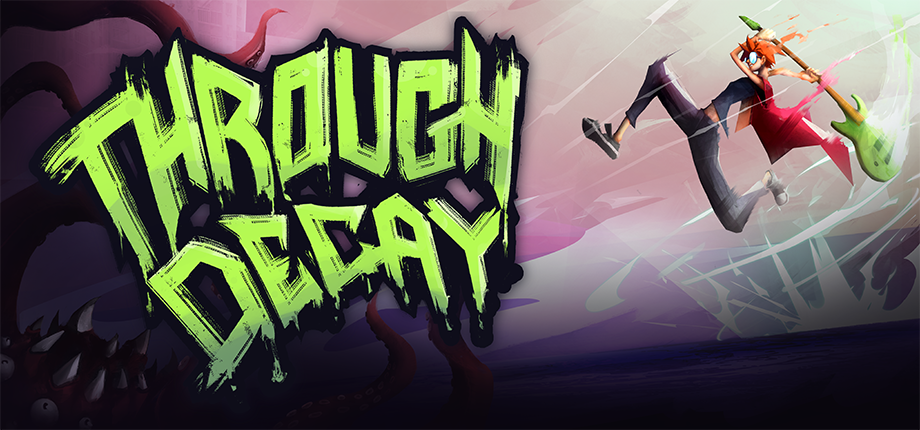
An electric guitar instead of a sword, a decaying dream world and music woven directly into the action. Through Decay is a hand-drawn action-platformer from Dead Flowers Games, built around fast combat and rhythm-based challenges.
For Coloured Static Press, creator and game designer Nikolay Shapoval explains the long road from greybox prototype to a musical action game, why its protagonist was once a pacifist, and how he is balancing responsive controls with hand-drawn animation. This is an original seven-question written developer interview following our earlier First Signal discovery story.
Questions from Coloured Static Press; responses from Nikolay Shapoval, Creator and Game Designer at Dead Flowers Games, reproduced in his own words. The game is in active development; its first playable demo is not yet available and no release window has been announced. This is a developer interview, not a hands-on review.
The full developer interview
1. What first inspired Through Decay, and why did you choose a guitarist stranded in a decaying dream world as its protagonist?
I think the first real spark of inspiration came when I discovered Limbo. That game left a huge impression on me, and even the name Through Decay has its roots there. "Decay" is how I perceived the world of Limbo.
Much later, I started playing FromSoftware games, and I felt there was something deeply rhythmic about them. That was another major source of inspiration, and it made me want to bring something rhythm-based into a game of my own.
As for choosing a guitarist as the protagonist, that felt obvious to me from the very beginning. It makes the story personal. I guess he’s the kind of hero I once imagined myself becoming.
2. You’ve spent nearly three years developing the project with a small group of artists. What did the earliest prototype look like, and which idea has changed the most since then?
Three years is a long time, but when we started, we barely knew how to do any of this. We’ve been learning along the way, and until last year, the game was essentially just a greybox prototype.
I’ve done an enormous amount of experimentation with the game design, constantly changing and rethinking ideas.
For example, the protagonist was originally supposed to be a pacifist. He wasn’t meant to hurt anyone at all! Eventually, I abandoned that idea because it simply wasn’t fun enough.
The next big concept was to let players complete the game in two different ways: either as a rhythm game or through traditional combat, or by combining both approaches.
Eventually, I realised it would be more elegant to integrate rhythm sections directly into the regular gameplay, making the whole experience feel more cohesive.
Whether players will actually enjoy and manage those rhythm sections is something we’ll find out during playtesting!
3. The electric guitar is both a weapon and a musical instrument. How did you develop its combat feel, attack timing and feedback so that each strike has the right rhythm?
My first priority is making the controls as responsive as possible. I want players to feel that their victories and mistakes come down to their own skill.
It’s important not to get carried away with beautiful, smooth animations. Something can look amazing in a trailer but feel terrible to control.
In that sense, I’m trying to capture the spirit of hack-and-slash games. I want the player to be the one driving the action, rather than constantly reacting to enemies.
As for the rhythm mechanics, I see them more as musical puzzles. You listen to a rhythm and try to reproduce it. And I don’t want the game to punish players too harshly for slightly imperfect timing.
4. Your game mixes hand-drawn character animation with fast platforming and larger boss fights. What have been the most difficult artistic and technical challenges in keeping everything fluid and readable?
First of all, I try not to go overboard with visual effects that cover the entire screen! 🙂
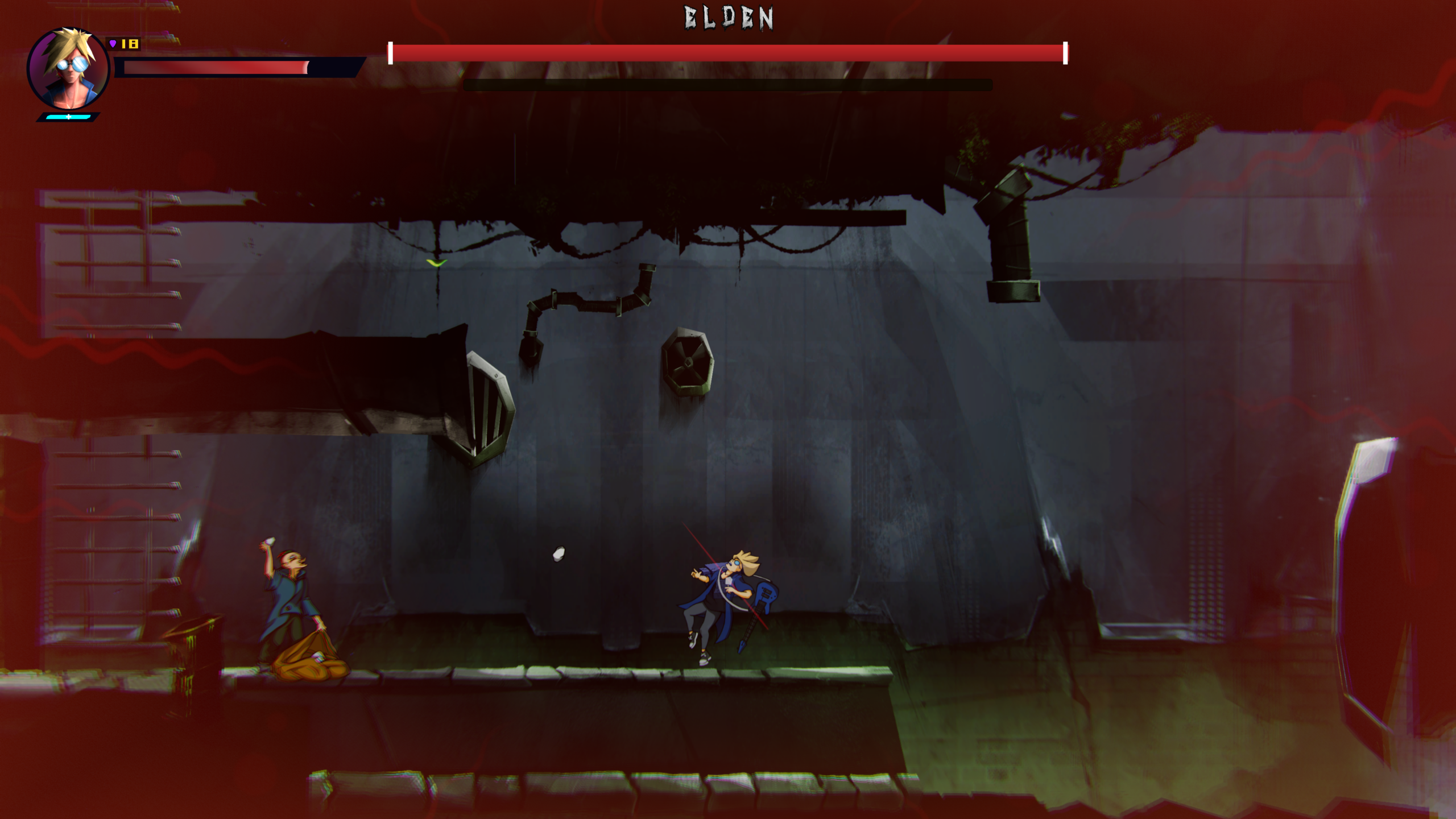
The characters and environments are deliberately drawn in different styles. The environments are generally quite dark, which helps the characters stand out naturally without needing additional highlights or outlines.
One of the biggest challenges for me personally has been learning the fundamentals of animation, especially how to handle transitions between different character states.
Camera design has also been surprisingly difficult. Simply making the camera follow the player vertically all the time doesn’t look good, so I have to adjust its behaviour individually for different areas of the game.
5. Rock and metal culture runs through the game. How does the original soundtrack influence level design, atmosphere and rhythm-based mechanics rather than simply accompany the action?
I try to approach music from a game designer’s perspective.
If a moment needs to feel dramatic, peaceful, unsettling, or intense, I’ll use whatever musical techniques or even genres help create that feeling.
Unfortunately, I can’t make the entire soundtrack nothing but heavy metal. If everything is intense all the time, then nothing feels intense anymore! 🙂
I want the sound of an electric guitar to make the right moments feel incredibly cool, rather than becoming a constant background noise that eventually gets annoying.
6. With a playable demo still in development, which parts of the experience have demanded the most iteration, and what feedback would you particularly value once players get their hands on it?
The game is quite challenging. I want to push players, but I also want them to enjoy that challenge rather than end up hating me!
Whenever possible, I try to judge the experience by the emotions it creates.
One thing I’m particularly interested in right now is how players feel about the animation frame rate.
We took inspiration from Streets of Rage when developing our animation style, but I’m starting to suspect that players might prefer something smoother.
That’s something we really need to find out through playtesting.
7. Looking beyond the first demo, what do you most hope players will feel or remember about Through Decay, and what’s one aspect of its world you’re especially excited to reveal?
I just want to make something cool.
I don’t know exactly how to describe it. Maybe something like hearing your favourite song for the very first time.
I’d also love to make someone laugh or simply have a great time playing.
And I definitely want players to experience that feeling of overcoming something difficult.
So no, it’s not going to be easy! 🙂
More signal
Through Decay remains in development. You can follow the game via its official Steam page, read our earlier First Signal feature, or explore other original Coloured Static Press interviews.
All interview responses are provided by Nikolay Shapoval of Dead Flowers Games. Official source images are used with the developer’s express editorial permission. No playable build or review key was provided for this interview.