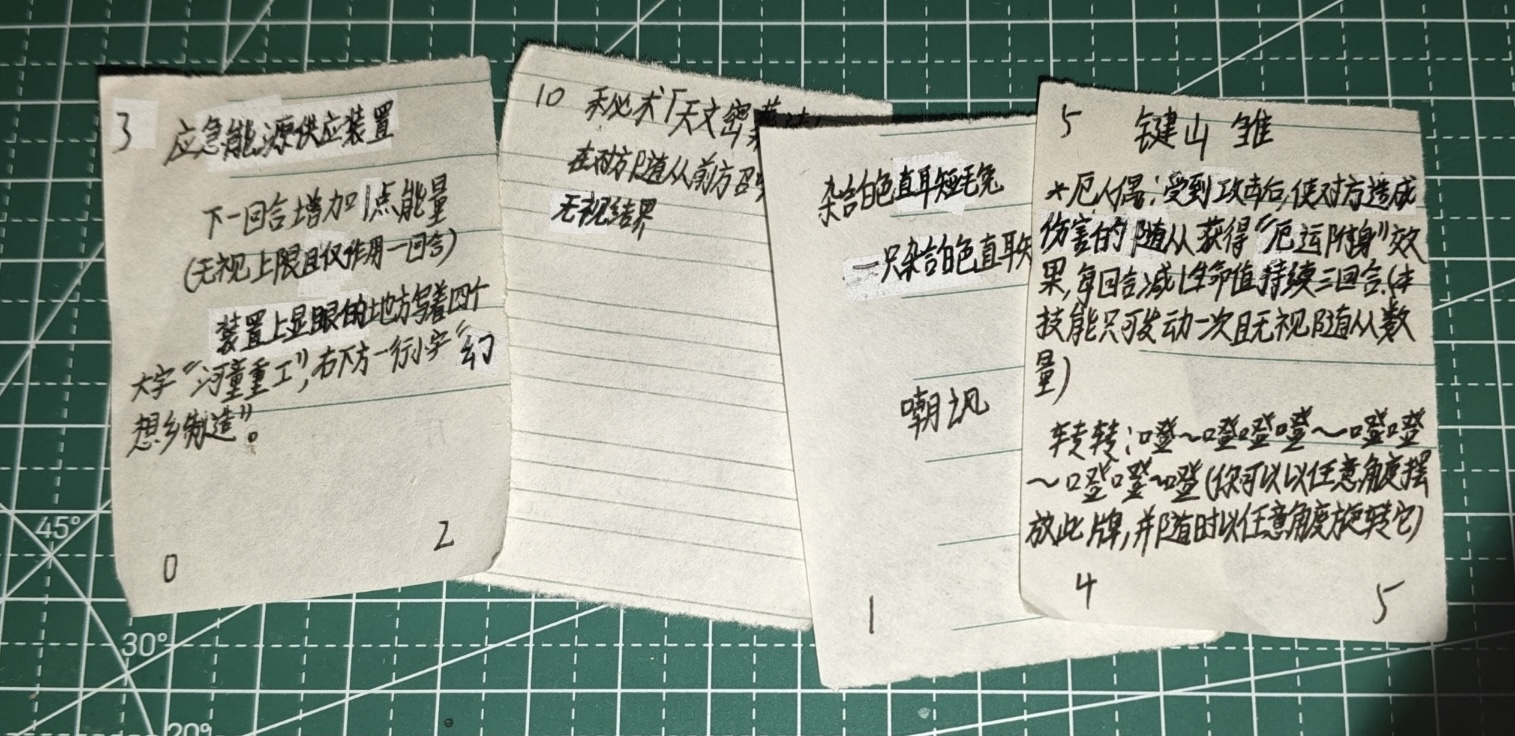
Before there was a Steam store page, a digital deck or a five-act workshop, there were handmade cards on a school table. For solo developer Yue, also known as KaiserIII, CardCraft Engineering began with a simple desire: invent a card, challenge a friend, and discover whether that invention actually worked.
That original creative spark has grown into a Windows card-crafting and turn-based strategy game where players spend a limited budget on card attributes, assemble 30-card decks and experiment with the consequences. In this original Behind the Signal interview, Yue talks about creativity within rules, the difficult balance of PvP, and the human decisions behind a project that also uses AI-assisted tools.
This is a seven-question written developer interview, not a hands-on review. The game is still in development with release planned for December 2026; a free single-player Steam demo is available. We have not reproduced the project’s AI-generated visuals in this feature.
From the school desk to Steam
What makes the story worth telling is that the project did not begin with a genre formula or a fashionable visual style. It began with the pleasure of designing something yourself. A card might look powerful in isolation, but a functioning ruleset soon asks harder questions: how much should its abilities cost, and what does it add to a larger deck?
The full developer interview
1. How did the paper-card game you created with school friends become CardCraft Engineering?
It began with cards I drew and played with school friends. The part I wanted to preserve was not just playing a deck, but inventing a card and seeing whether the idea actually worked against someone else’s. That became the starting point for the PC game.
2. What rules prevent players from simply making impossibly powerful custom cards, and what makes a good card design?
Card creation works within a budget: costs, attack, health and skills involve trade-offs rather than unrestricted stat editing. The aim is to make players decide what their card should be good at.
3. How do you balance creativity with meaningful deckbuilding strategy and turn-based combat?
Creating a strong individual card is only one step. Players also build a 30-card deck and test how their cards interact in turn-based combat. A card has to earn its place in a larger strategy.
4. How does the five-act Endless Workshop change the player’s decisions and card creations across a run?
Beyond individual battles, the Workshop introduces route decisions, resources, card modification and fusion, and durability management. Those constraints make players adapt their plans over the course of a run.
5. What have you learned from designing both single-player and online PvP, especially when players can invent their own cards?
Freeform card creation is exciting, but the underlying rules need to remain understandable and consistent. Single-player gives room to experiment; playing against another person’s inventions makes clarity and balance especially important.
6. As a solo developer, where has AI assistance proved most useful, and where have you deliberately kept human design or manual decisions?
AI tools assisted with programming, writing, translation and aspects of the artwork. The original paper-card idea, the game’s direction, rule and design choices, and decisions about what to include and release are mine. I’ve tried to be open about AI-generated visuals and AI assistance so readers can judge the work on an informed basis.
7. What are the most important changes you hope to complete before your planned December 2026 launch?
I’m concentrating on compatibility and stability checks, tutorial clarity, responding to external feedback, and release preparation rather than adding another major system.
Rules that make creativity meaningful
Yue’s answers draw an important line between unlimited freedom and interesting choices. The goal is not simply to let players invent the strongest possible card; it is to make every design pay for its strengths and then prove its value in a 30-card deck. The promised Endless Workshop extends that logic with resources, fusion and durability across its five acts.
He also speaks directly about using AI-assisted programming, writing, translation and some artwork while retaining responsibility for the original idea, the game’s rules and release decisions. Coloured Static Press believes that transparency belongs in the story, and readers should be able to make an informed judgement.
Where to find CardCraft Engineering
The CardCraft Engineering Steam page provides the current description and links to its demo. Yue also documents development challenges through his project website. All release plans remain subject to change.
We thank Yue for taking the time to answer our questions. Editorial consideration is free and independent. A complimentary unfinished development build was made available separately for private assessment, but this interview is based on the developer’s written answers rather than a scored hands-on review.
Interview responses received October 2026. Original questions by Coloured Static Press; answers reproduced from Yue/KaiserIII’s email, with light formatting. The developer has disclosed AI assistance in code, writing, translation and artwork. No AI-generated art has been used in this interview.