
What does it take to turn the arcade simplicity of popping bubbles into something that can carry a modern roguelite? For solo developer Brian Lee, the answer involves changing hazards, upgrades that do not replace player skill, and two bosses designed to be challenging without becoming unreadable.
We recently introduced FrogPop in First Signal. Now, for our Behind the Signal interview series, Brian tells us how childhood inspiration became a ten-wave demo, why the Bubble Stork and Geode Wyrm demand different responses, and what it feels like to work towards the release of a first game on your own.
This is an original seven-question written developer interview, not a hands-on review of the demo or the unfinished game. Responses are Brian Lee’s own words. The developer supplied the original game screenshots and confirmed that the captures were arranged using assisted controls; no review score is assigned.
The arcade idea behind FrogPop
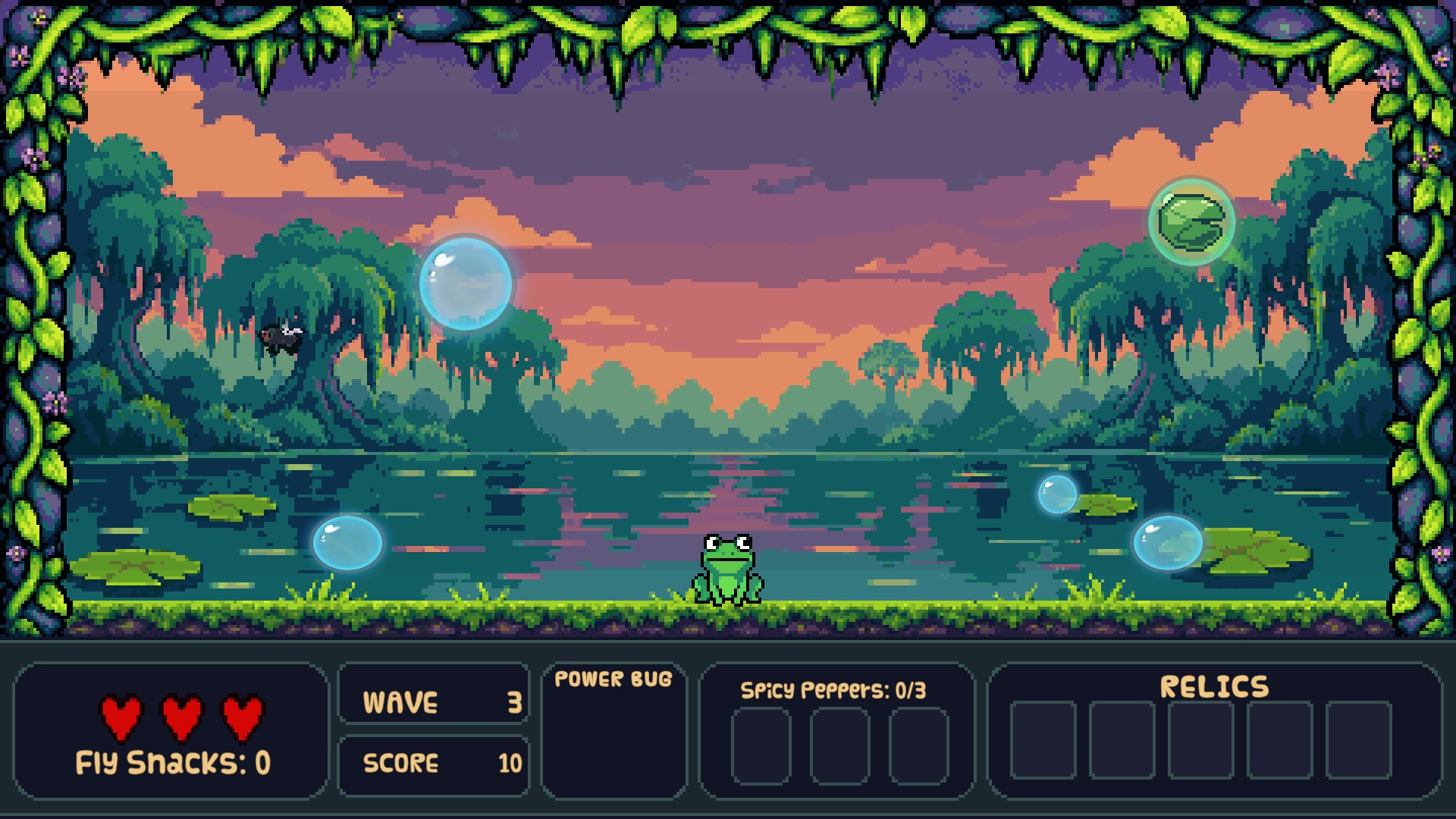
The freely playable desktop-browser and Windows demo combines familiar bubble-splitting action with a pond and crystal cave, shop decisions, relics and two boss encounters over ten waves. The full Steam game remains in development. That distinction matters: what is available today is a demo built to let people try the game’s basic loop and tell its developer what works.
The full developer interview
1. What inspired you to combine Bubble Trouble-style wave combat with roguelite relics and shop decisions?
I grew up playing Bubble Trouble and wanted to give people a bit of that experience again. The roguelite side comes from games I enjoy myself, and wanting to bring something fresh to it.
2. How did the simple act of popping threats evolve into a ten-wave progression loop, and what makes each successive wave different?
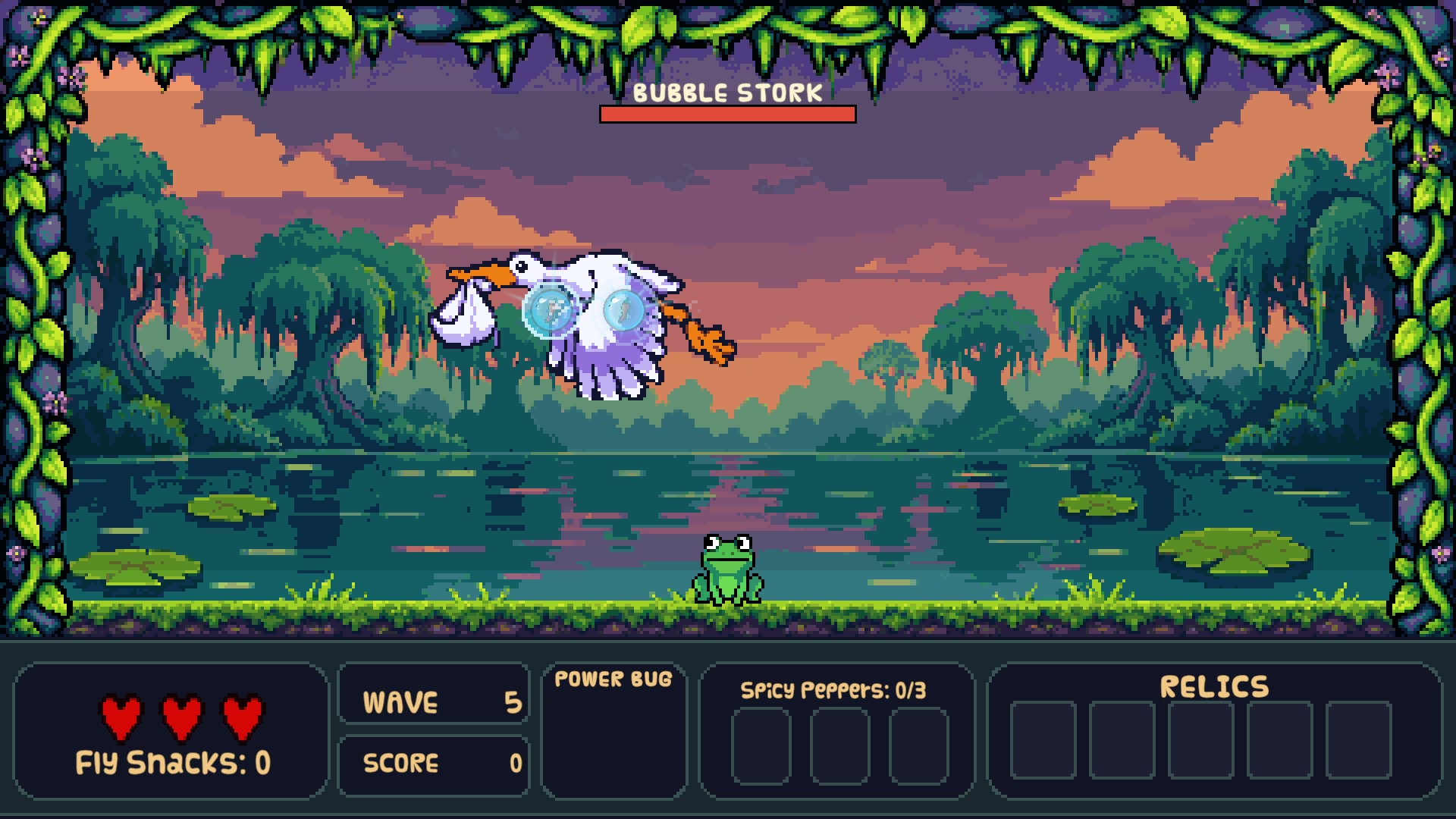
The popping stays simple, but different bubble types, powers and hazards change how each wave plays. The two bosses give the ten-wave demo a couple of bigger challenges to work toward.
3. What design ideas are behind the Bubble Stork and Geode Wyrm encounters, and how do you teach players their patterns without spoiling the surprise?
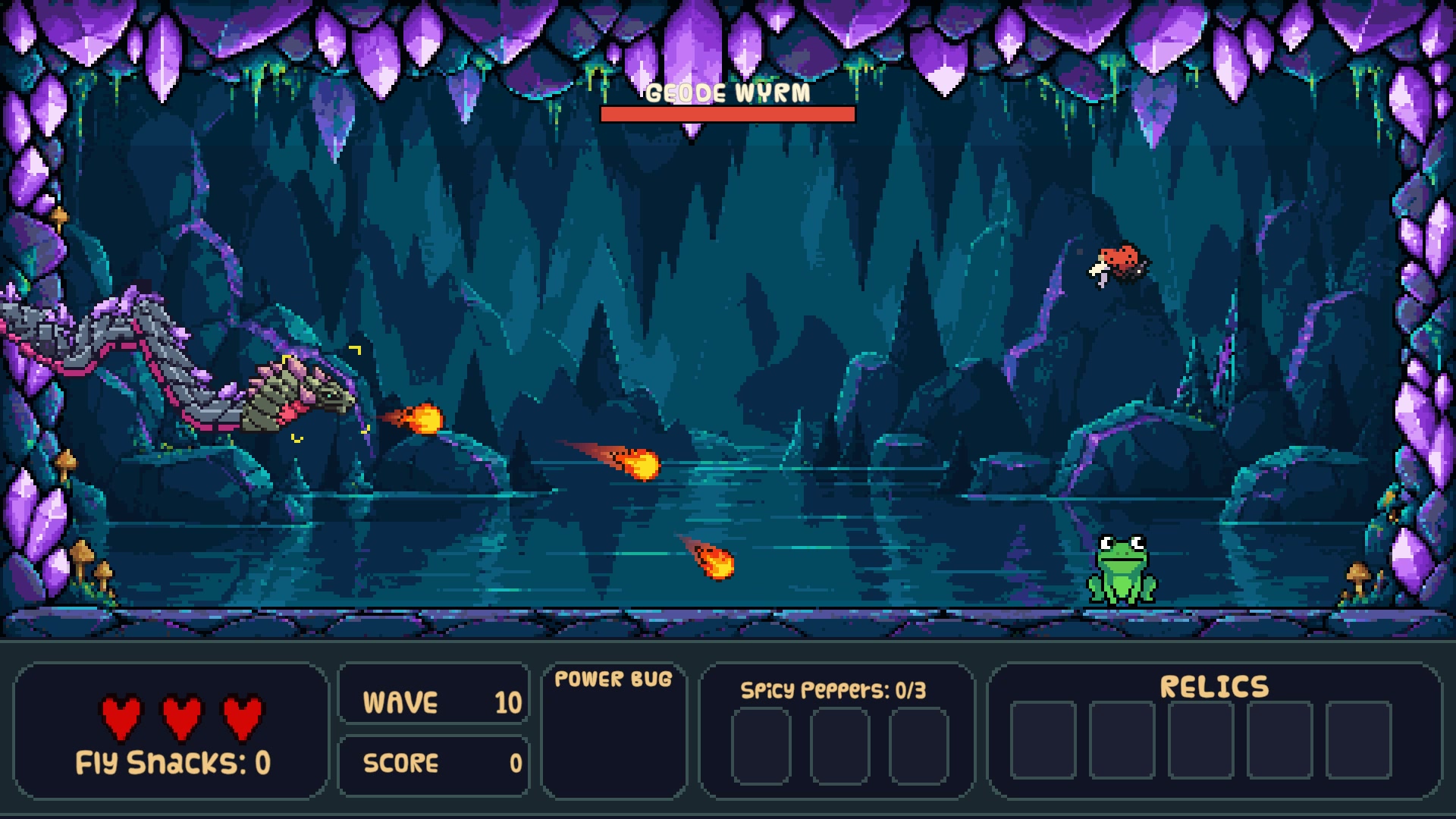
The Stork attacks from above, while the Wyrm makes you watch the arena’s edges. Their movements and warning marks give you clues before attacks, so you can learn by playing.
4. How do you balance upgrades so that a lucky relic helps without making skill and positioning irrelevant?
Upgrades can make your attacks stronger or give you some breathing room, but you still have to dodge. Popping a big bubble can leave you with more problems to deal with.
5. What did the two demo zones teach you about visual readability, pacing and difficulty?
Keeping the action readable has taken a lot of work, especially when effects overlap. The frog and hazards need to stand out, and tougher waves still need enough room and warning to feel fair.
6. As a solo developer making your first game, what proved unexpectedly complicated, and what have you been most proud to complete?
Honestly, the hardest part has been keeping going when success doesn’t seem likely. I’m proud I’ve pushed through and am getting ready to release my first game.
7. Which feedback from the public demo would be most useful to you, and what are your priorities for the full Steam release?
I’d love to know what people find fun, what feels unfair, and whether they want to play another run. My priority for Steam is to release something I personally enjoy and hope others can enjoy too.
Keeping the frog, and the challenge, in focus
Brian’s replies bring out a tension in the design: the upgrades are there to make runs interesting, but they cannot do the dodging for the player. The same problem appears in his comments on visual clarity. A hazard that overwhelms the screen might be difficult, but not necessarily satisfying; the developer’s emphasis is on learning patterns through movement and warning signs.
His most personal answer is also his shortest. For a first-time solo developer, the challenge has not just been balancing bubbles and bosses. It has been continuing when success feels uncertain. Rather than promising that the eventual Steam launch will be something it has not yet become, Brian says he wants to release a game that he enjoys making and that others may enjoy playing.
Where to play FrogPop
The FrogPop free demo on itch.io is available to try in a desktop browser or on Windows. The full game’s Steam page is open for wishlists while development continues. For the demo’s bosses, features and availability, read our original First Signal feature.
Thanks to Brian Lee for taking the time to answer our seven questions and share the story of his first game. The interview and editorial consideration are entirely free and independent.
Written responses received 30 October 2026. Questions by Coloured Static Press; answers reproduced from Brian Lee’s email with HTML formatting only. All pictured game footage is from developer-supplied original public-demo screenshots, captured with assisted controls. Images used with permission. No paid placement, review key or review score is associated with this interview.