
BEHIND THE SIGNAL / ORIGINAL SEVEN-QUESTION DEVELOPER INTERVIEW
A samurai duel is a contest of timing. Blackjack is a contest of judgement under uncertainty. PixelScale has found an unusual meeting point between the two in Burakku Jakku Samurai, a tactical pixel-art roguelite in which drawing another card can be the difference between a lethal strike and a disastrous overreach.
We invited PixelScale to discuss how its card system became a combat language, what makes a risky decision feel fair, and why the studio is careful not to attribute earlier demo updates to feedback gathered later at Steam Next Fest. Raimon answered seven written questions for our Behind the Signal series.
The full game remains in development, with Steam currently showing a 2027 release window. A separate free demo was released on 11 September 2026 and remains available. This is a written interview, not a hands-on review.
The full developer interview
1. Where did the idea to blend blackjack/21 with samurai combat first come from?
The heart of Burakku Jakku Samurai is the connection between two kinds of tension: the choice to draw another card or stand in blackjack, and the moment of commitment in a samurai duel. We wanted a familiar decision to carry a very different consequence. A number on a card becomes Ki, and choosing whether to push closer to 21 becomes a question of attack, defence and survival. That combination gives the game a straightforward premise while leaving room for deeper tactical systems.
2. How do card decisions translate into tactical choices during an encounter?
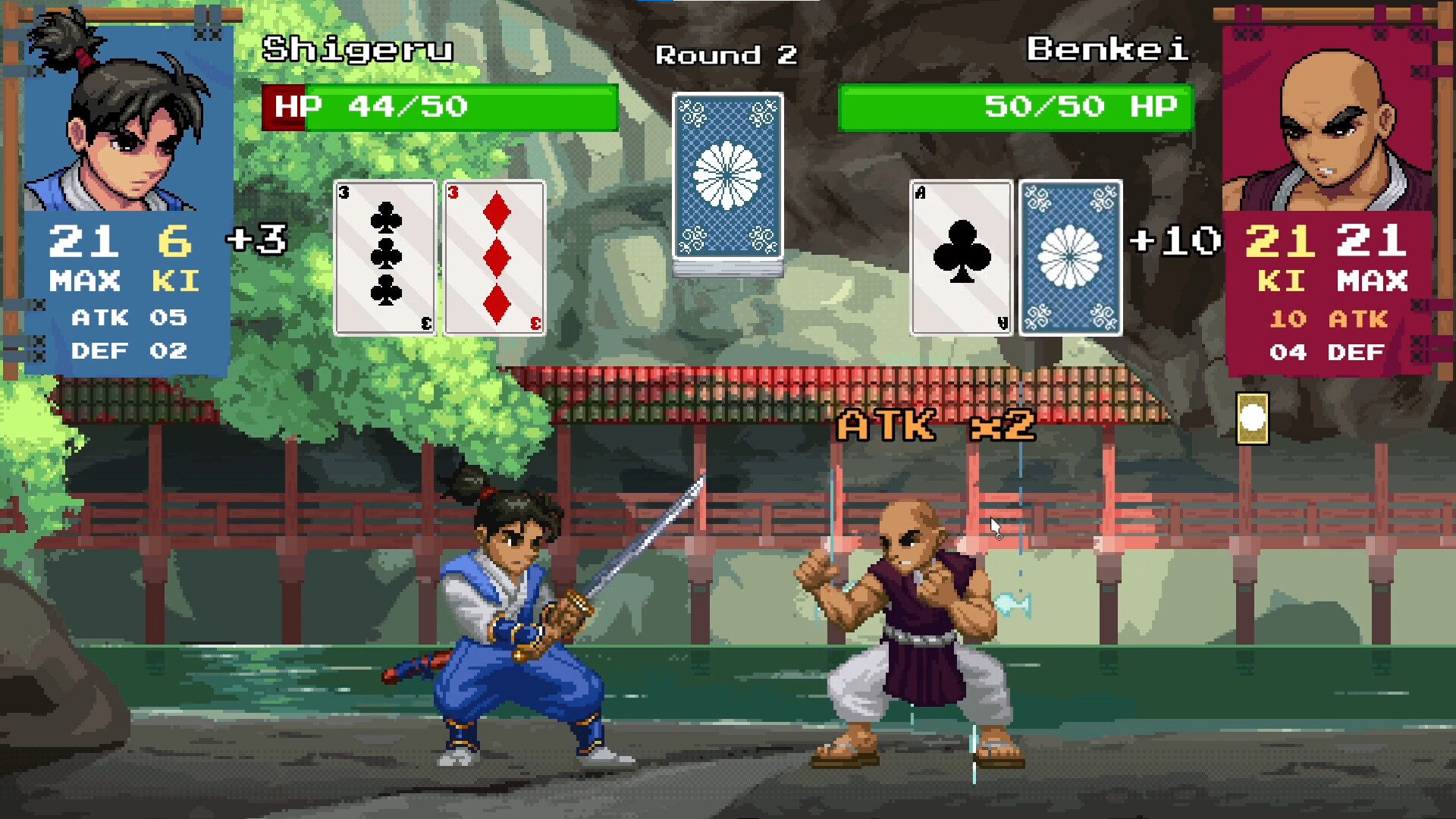
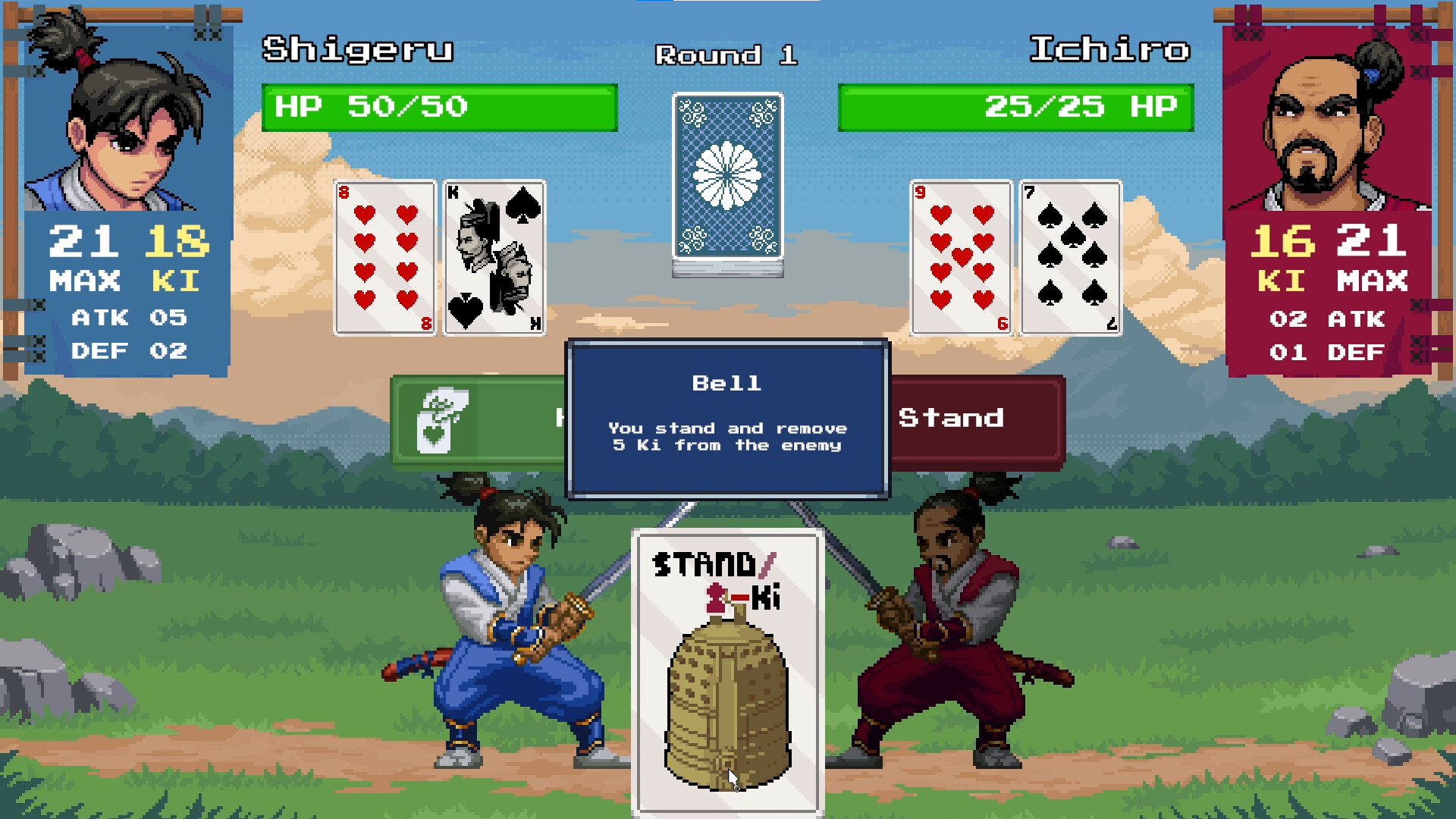
In combat, ordinary cards raise your Ki towards a limit of 21. The higher you go, the more powerful your offensive potential, but going over the limit leaves you dangerously exposed. Reaching exactly 21 activates Perfect Focus. Players must judge whether to draw again or stand, taking the enemy’s situation into account. Special cards add another layer: they can reveal information, change values, affect an opponent’s Ki or provide recovery. The interesting decision is rarely just ‘Can I reach 21?’; it is also ‘Is this the right moment to take that risk, and which resources should I save for the next encounter?’
3. What makes a risky play rewarding without simply relying on luck?
We do not pretend the cards are predictable. Chance is part of the game, but players can influence how they respond to it. They decide when to stop, which special cards to use and how to prepare for the next encounter. Some cards let players look ahead, change values or interfere with the enemy’s hand, so taking a risk can be informed rather than blind. Getting exactly 21 is a powerful payoff, but a more modest result may be the strategically better decision if it keeps you alive. The aim is for wins to feel earned through a series of choices, not just a lucky draw.
4. How did you develop the original pixel-art style and combat atmosphere?
Our visual direction uses handcrafted pixel art and animation to make each duel feel dramatic without losing the clarity of a card-based tactical game. The feudal-Japan-inspired setting, the characters and the combat presentation are all meant to give weight to what would otherwise be an abstract number game. Our artists created the game’s original artwork; we do not use generative AI in its production. Audio is also part of that atmosphere: for example, our October 17 demo update introduced reactive music for round resolutions, helping the sound reflect the changing momentum of a fight. For us, presentation and mechanics should support the same feeling of tension.
5. What has been the trickiest part of balancing strategy, randomness and player skill?
One of the hardest design questions is how to make a punishing system feel fair. Going over 21 should be a meaningful danger, but players must also understand their options and see how their decisions affected the outcome. That involves more than adjusting numbers: card effects, enemy behaviour, recovery opportunities and interface clarity all influence whether a loss feels understandable. An example from development is a bug we fixed in the October 17 demo patch: enemies could activate a special card even after exceeding their Ki limit. Correcting that kind of inconsistency matters because a tactical game relies on rules players can trust. Balance remains an ongoing part of development rather than something we regard as solved.
6. What did you learn from players who tried the Next Fest demo, and what changes followed?
The public demo has been valuable because watching people play reveals things that are not always obvious from inside the development team. Players have engaged with the blackjack-and-samurai concept, while feedback has also raised questions about survivability, variety and how clearly the game communicates its tactical options. We want to be accurate about the timeline: our September 30 update introduced a revised 52-card deck system and a Campfire recovery node, and our October 17 update improved elite rewards, the map HUD, sound and several bugs. Both updates happened before October’s Next Fest, so we would not claim they were changes made in response to that festival. We are now reviewing the festival’s feedback alongside play data to determine which further improvements should be prioritised.
7. What would you most like players to discover about the full game, and what’s next for your team?
We hope players discover that Burakku Jakku Samurai is about much more than hitting 21. We want them to enjoy the decisions around when to take a chance, when to protect themselves, how to combine special cards and how to choose a route through dangerous encounters. We also want the hand-crafted presentation to make every duel memorable. Our immediate priority is to evaluate what we learned from the demo and Steam Next Fest, especially which elements of the combat are compelling and where the experience needs greater clarity or depth. We are considering the next steps as a team, so we would rather share confirmed plans when they are ready than promise features or dates prematurely. The free demo remains available on Steam in the meantime.
The discipline behind the draw
Raimon’s answers reveal a design challenge that goes beyond combining two recognisable ideas. The team wants players to feel the temptation of drawing one more card, but also to understand why a cautious decision might be better. A perfect 21 is powerful, yet survival depends on preserving resources, reading opponents and choosing a route through encounters.
The discussion of demo updates is equally revealing. PixelScale explicitly separates its September 30 and October 17 patches from the subsequent October Steam Next Fest feedback. That precision matters when tracing how a game changes in response to players; an earlier patch should not be rewritten as a festival reaction.
Play the demo and follow development
The free Burakku Jakku Samurai demo is available on Steam, while the full game’s Steam page lists a planned 2027 release. The developer’s official press kit contains original promotional assets.
Thank you to Raimon and PixelScale for taking the time to answer our questions and explain the thinking behind the game’s systems.
Editorial note: Seven written answers received from Raimon on 30 October 2026 and reproduced verbatim, with only HTML paragraph formatting applied. The developer confirms its pixel art was created by its artists without generative AI. Official game images credited to PixelScale. This is not a review, and no review score or hands-on impression is asserted. Editorial consideration is independent and unpaid.