

What begins as a speck of cosmic dust could eventually become a black hole. That is the escalating premise of Become Blackhole, a Windows PC incremental game from two-person indie developer PandaKoala Studio, which is targeting 11 November 2026 for its Steam release. A free public demo is available now.
The studio confirmed its planned launch date and gave Coloured Static Press permission to use its official press materials. Importantly, the public demo only covers the first three growth stages, from dust to an asteroid. Larger celestial bodies appearing in the studio’s trailers and later-stage artwork belong to the upcoming full game, not the current demo.
Smash, absorb, upgrade, repeat
Players steer an expanding object through space, collide with nearby material and absorb the resulting debris. Stardust collected between short runs funds upgrades through a Star Map, providing a path to the next, more ambitious attempt. The studio describes shards, ricochets and electric arc chains as available in the demo.
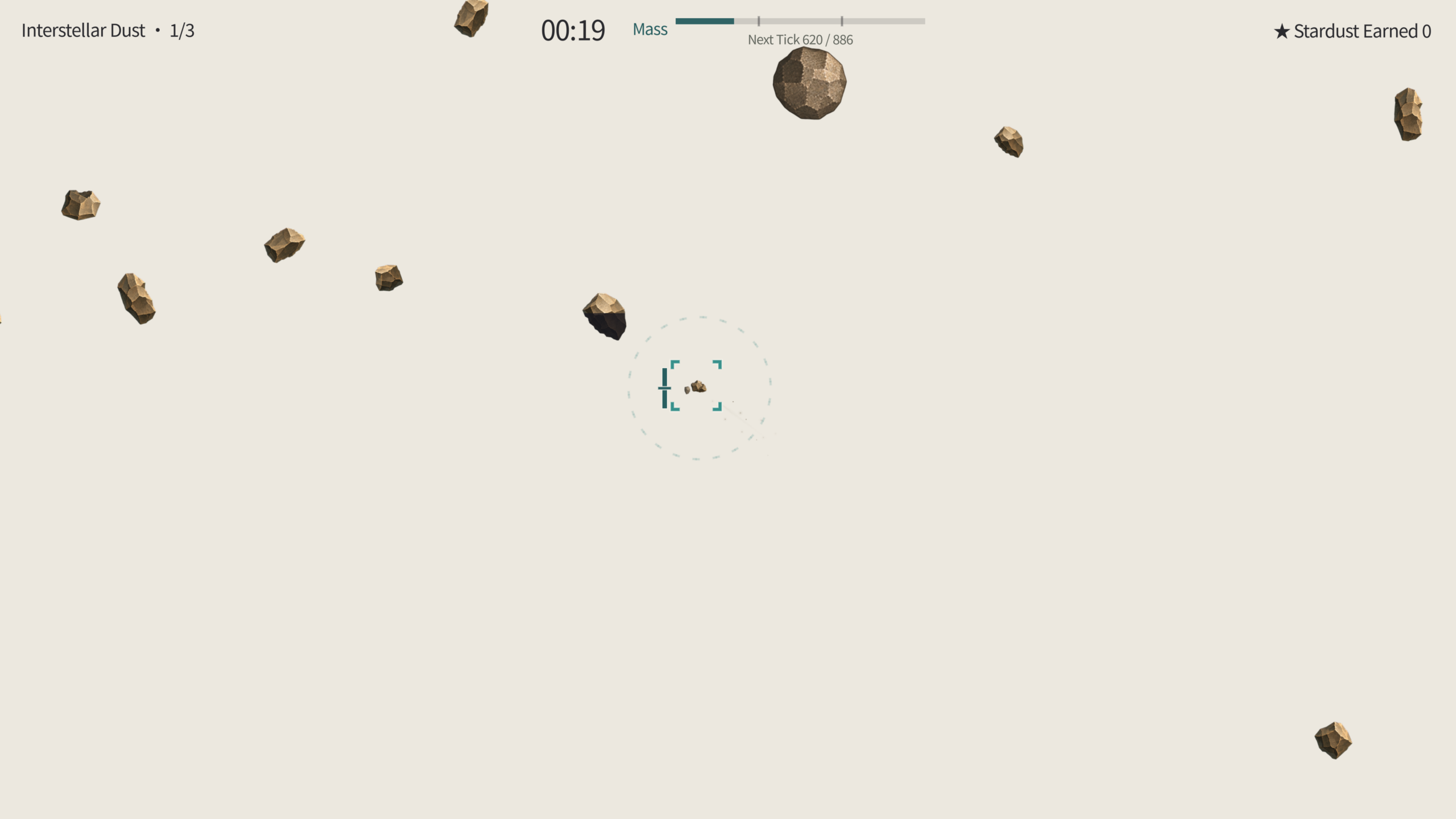
The idea is to turn each run into a chain reaction of motion and growth. As your celestial body grows, what once looked like an obstacle can become another piece of material to pull into the next upgrade cycle. The question is how quickly the collision loop can build momentum, rather than how long a single run survives.
What can you actually play in the free demo?
The current public demo features three stages, from dust to an asteroid, and a selection of the game’s collision and Star Map upgrade systems. PandaKoala Studio specifically distinguishes this from full-game previews of moons, planets, stars and black holes, which should not be mistaken for footage from the playable demo.
According to the studio’s updated October press kit, the planned full game has ten growth stages and more than 250 Star Map nodes. Those are publisher-supplied feature details rather than systems independently verified by Coloured Static Press. The team says the game supports 16 interface languages, including English and Chinese.
A November target, not a finished review
PandaKoala Studio currently plans to launch on 11 November 2026 at 10:00 PST, which falls on 11 November at 18:00 GMT in the United Kingdom. This is a planned release date and may change. The team has not announced a final public price in the press materials supplied to us.
The studio has offered to discuss full-game review access separately when the build is ready. Our coverage here is a First Signal discovery feature based on official materials, not a hands-on review, performance assessment or scored verdict.
Where to play and follow the project
The Steam store page hosts the free public demo and wishlist option. Additional screenshots, trailers and official media can be found in PandaKoala Studio’s English and Chinese press kit.
Imagery: official developer key art and an authentic public-demo screenshot, credited Become Blackhole / PandaKoala Studio. Reporting based on the studio’s 23 October press release and direct correspondence on 27–28 October. No release-time embargo applies to public demo coverage.