
Forty years of game development cannot be reduced to a logo reel. The history of Bethesda Game Studios is also a history of how players learned to inhabit digital worlds: ignoring the main quest, wandering into the wilderness and returning hours later with a story no developer could have scripted exactly as it happened.
On 3 November 2026, Bethesda marked its 40th anniversary with a retrospective and the long-awaited naming of The Elder Scrolls VI: Sentinel. The timing invites celebration. It also offers an opportunity to ask what made the studio’s games matter, where their ambitions have sometimes collided with technical reality and what its next generation of worlds must achieve.

When systems write their own stories
One of the most revealing anecdotes in Bethesda’s official anniversary archive comes from Associate Art Director Dan Lee. While testing an Oblivion Dark Brotherhood quest, Lee stole the food from a sleeping captain’s cabin and slipped a poisoned apple into his pocket. Hours later, the captain died. The quest designer, Emil Pagliarulo, was reportedly as surprised as Lee: the outcome emerged from the interaction of existing systems, rather than a bespoke scripted solution. It is a compact illustration of what made Bethesda’s role-playing worlds feel different. Players weren’t merely choosing from authored branches; occasionally, the machinery of the world allowed an unanticipated story to happen.
Another account, from designer Alan Nanes, recalls testing Morrowind on an original Xbox while developers watched his choices and took notes. Together these memories offer a more human explanation for the studio’s enduring philosophy: freedom is not just the number of destinations on a map, but the room a game leaves for unexpected behaviour.
Source: Bethesda’s official 40th-anniversary developer memories.
The people behind the worlds
Bethesda’s official 40th-anniversary archive offers something a standard chronology cannot: memories from the people who built these worlds. Developers recall discovering Morrowind and Oblivion as players before joining the studio, building memorable characters and watching colleagues celebrate launches together. These recollections reveal how a creative identity is transmitted from one generation of developers to another, not just from one game engine to the next.
Official anniversary archive: Bethesda Game Studios at 40: memories, developer profiles and historical gallery.
Forty years of Bethesda, and a distinction worth making
The anniversary traces a lineage to Bethesda Softworks, founded in 1986 by Christopher Weaver. Bethesda Game Studios, as the separately named development division, emerged later, in 2001. That corporate distinction matters when telling the history accurately: the early sports titles and original Elder Scrolls games belong to the wider Bethesda development lineage, even though the studio name familiar to players today came afterward. Bethesda’s anniversary celebrates the continuity of its game-making history, not forty years under precisely the same corporate label.
Historical references: MobyGames company chronology and Entertainment Software Association’s 1986 timeline.
From experimentation to a defining identity
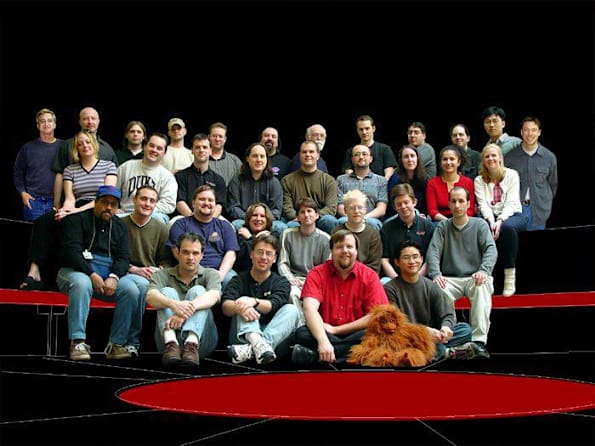
Bethesda’s history extends beyond the fantasy RPGs that now dominate its reputation. Its early catalogue reflects a studio experimenting with different genres before The Elder Scrolls established the particular attraction of large, explorable role-playing spaces. Arena and Daggerfall were ambitious foundations, even when technology constrained how convincingly those spaces could be realised.
Morrowind: a world that refused to be ordinary
Morrowind’s Vvardenfell remains a powerful example of place-making. Its ashlands, strange architecture and competing institutions gave players a setting with its own texture rather than a familiar fantasy backdrop. Its systems could be unforgiving, but that friction was part of its identity. It trusted players to be curious, and sometimes to get lost.
Oblivion and Skyrim: widening the doorway
Oblivion brought a different sense of immediacy and spectacle, while Skyrim made Bethesda’s particular style of discovery a mainstream cultural phenomenon. The most memorable stories often happened between quest markers: a cave entered by accident, a dragon interrupting a journey, a settlement that became unexpectedly familiar. That capacity for personal narrative is the studio’s enduring strength.
Fallout: freedom with a different kind of consequence
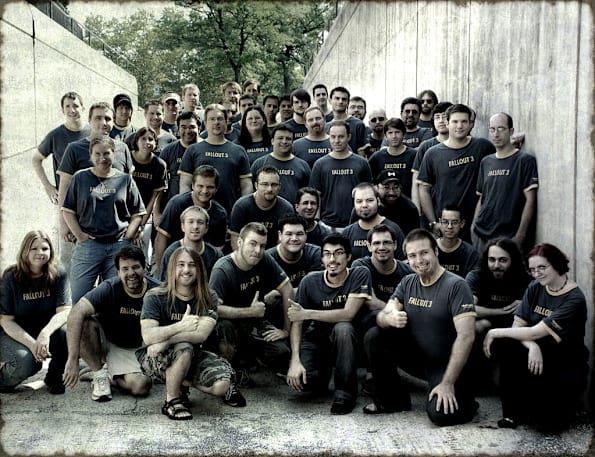
Fallout 3 carried Bethesda’s open-world approach into a ruined America, combining environmental storytelling with exploration and dark humour. Fallout 4 refined combat and settlement-building while provoking debate about dialogue and role-playing flexibility. Fallout 76, meanwhile, forced the studio to confront the demands of a connected, evolving world, including the importance of communication and post-launch trust.
Starfield and the problem of scale
Starfield showed both the appeal and the difficulty of pursuing enormous scope. Its ambition encouraged discovery across many locations, but it also reignited questions about the relationship between scale, traversal and a cohesive sense of place. Bigger worlds are not automatically more absorbing. Players remember meaningful detail and consequence, not only distance travelled.
Beyond the launch-day mythology
The anniversary archive also preserves a perspective rarely seen in anniversary press releases: the human work behind the spectacle. Fallout 3 producer Philip Nelson remembers travelling through Washington, D.C. with colleagues to study the streets and neighbourhoods they were recreating. Designer Jeff Browne recalls the anxiety surrounding a live Fallout 3 demonstration, when an improvised explosion-filled sequence had to work in front of an audience. These accounts are reminders that convincing fictional worlds emerge from observation, technical risk and countless small decisions, not simply from bigger maps.
What the next 40 years require
The announcement of The Elder Scrolls VI: Sentinel is an appropriate anniversary punctuation mark, but it is not yet evidence of the game’s systems or quality. The greater test lies ahead: whether Bethesda can preserve its gift for player-led storytelling while meeting modern expectations for technical polish, responsive worlds and thoughtful role-playing design.
The studio’s legacy is not that every experiment succeeded. It is that its best games gave players places they wanted to return to, long after the credits or main quest were finished. Forty years in, that remains a formidable standard to meet.
Primary source: Xbox Wire: Celebrating 40 Years of Bethesda Game Studios. Image credit: Bethesda Game Studios / Xbox Wire. Official 40th-anniversary artwork used for the featured image. Historical developer photographs are available to view in Bethesda’s linked archive.