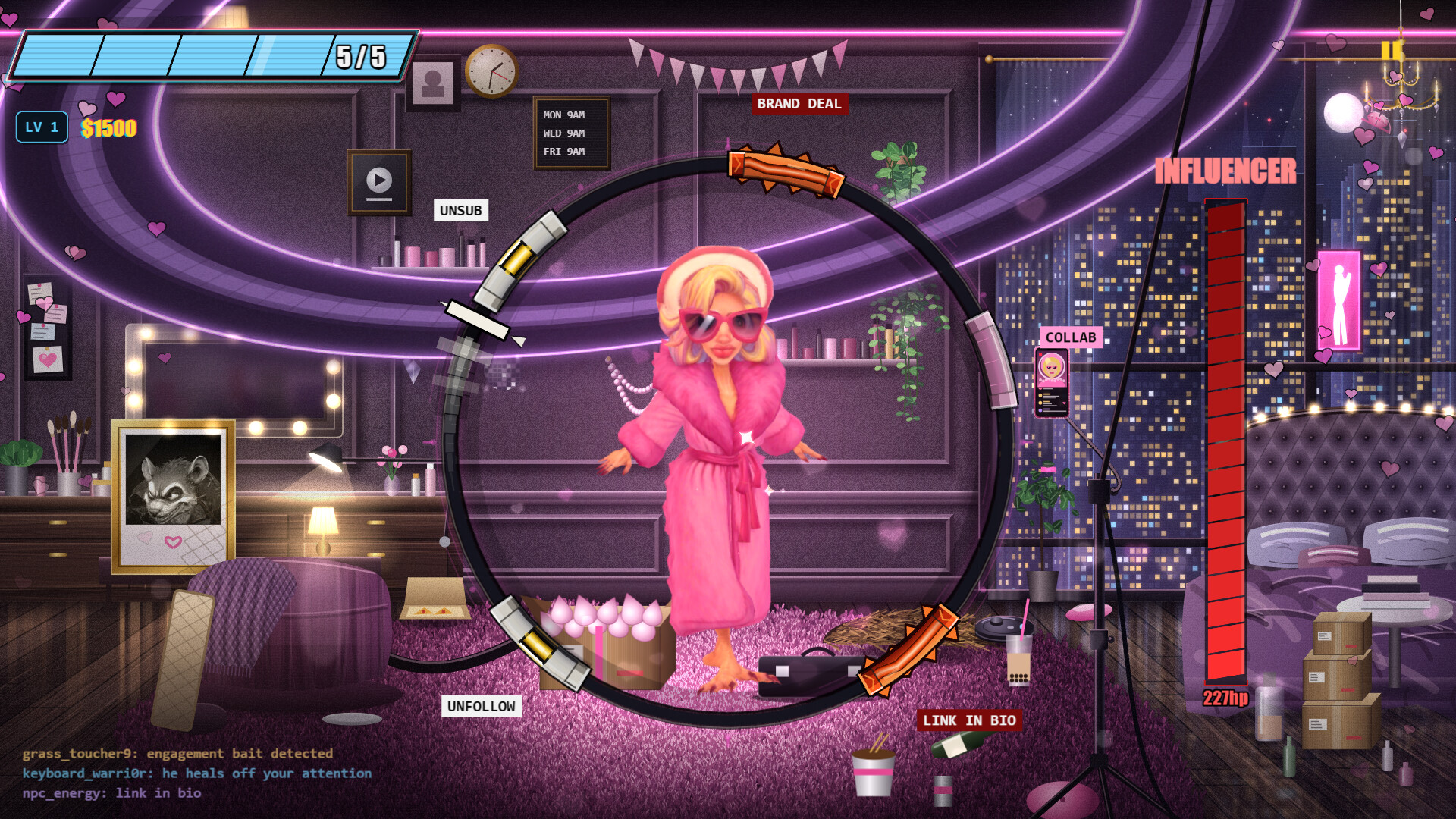
Attack, defend or take the money? In CLICK BAIT, those three decisions pass around the same spinning wheel, forcing players to decide which opening to take as it arrives. It’s a compact idea, but developer Benjamin Adams has built an entire internet-satire roguelite around it.
After showing us the free PC demo and providing original gameplay screenshots for our First Signal introduction, Adams agreed to a seven-question written interview. He discusses why timing and tactics occupy the same space, how the Influencer and Spam Bot behave differently, what relics add to a run and why he’s careful not to announce features before they’re ready.
This is a written developer interview, not a hands-on assessment. Gameplay systems and accessibility options described below are the developer’s account of the current development build and may differ from the public Steam demo; we have not independently verified them.
1. Why the spinning wheel?
The appeal is how much you can do with one timing input. The wheel puts attacking, defending and collecting money in the same space, so the question becomes which opportunity you take as it comes around. I don’t have a specific origin anecdote to share, but that’s the clearest way to explain the design. The core wheel uses one button; some enemy minigames also involve clicking things on the screen.
2. Readability and fairness
The consistent white, red and gold language gives players something familiar even when an enemy introduces a new gimmick. The visible playhead and node windows show when to act, and the smaller PERFECT zone adds a precision challenge inside that basic action. Clear feedback and steady performance matter a lot here. A busy scene shouldn’t make it harder to understand why a click succeeded or failed.
3. Turning internet annoyances into enemies
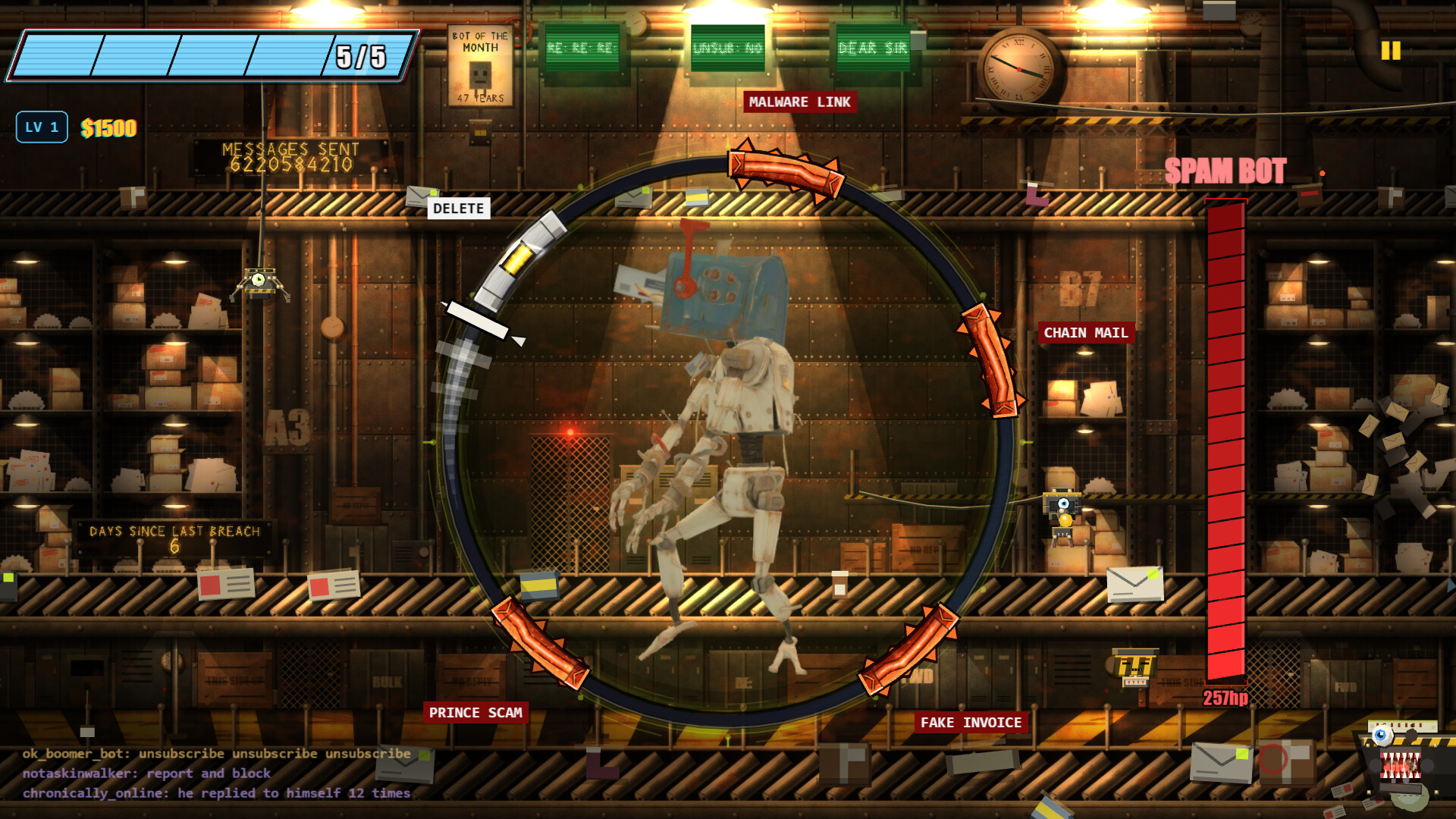
The joke works best when it changes what you have to do. In the current development build, Autocorrect gives you a spelling task with letter tiles, the Influencer’s pink COLLAB nodes must be interrupted to prevent healing, and Spam Bot floods the wheel while tempting you with a grey node that heals him if you click it. Those ask for different decisions: read carefully, interrupt at the right moment, or resist clicking something. The personality becomes part of the fight.
4. Builds versus timing skill
Relics change the value of your actions. For example, there are effects that reward blocking, make PERFECT hits pay out, or turn gold nodes into a source of healing. That gives the shop a purpose beyond simply buying a bigger damage number. The run map and encounters give you decisions between fights, while the wheel tests how well you use the build you’ve assembled. I wouldn’t claim build choice and timing are mathematically equal, but both have a real role.
5. Reaction times and accessibility
The difficult balance is keeping precision satisfying without making every mistake feel unrecoverable. Readable cues, predictable input response and performance are important alongside the actual timing windows. Current development settings include separate music and sound controls, a screen-shake toggle and a live-chat toggle, and some visuals respond to reduced-motion preferences. That isn’t a claim of comprehensive accessibility support. I don’t have an additional accessibility feature or release date to announce, and the available settings should be checked in the exact demo build you’re covering.
6. Feedback and the road to release
One concrete lesson from player conversations has been to investigate performance scene by scene. I’ve asked players which scenes run well and which run badly, because adding something new can sometimes make performance worse. I can’t attribute that specifically to the Steam demo or give you a verified demo-feedback breakdown. Performance testing and improving the presentation are ongoing work; I don’t want to turn that into an unconfirmed feature roadmap. December 3, 2026 remains the planned Steam release date.
7. What should stay with players?
I’d put the combination of mastery and internet satire at the center: recognizing an annoying online habit, learning how it behaves as an enemy, and finally getting past it. The combat gives those jokes something to do. That’s a stronger way to describe CLICK BAIT than adding a dramatic development story.
Try CLICK BAIT
Developer: Benjamin Adams
Free demo: Windows PC on Steam
Planned full Steam release: 3 December 2026 (subject to change)
Official Steam listing. The developer has allowed original screenshot use and independent demo capture, but in-game music should be muted in monetised clips until the relevant rights are separately confirmed.