
GAME REVIEW / 73/100 / PLAYTHROUGH NOT COMPLETED
A missing British detective, rain-soaked streets in Kyoto and a trail that leads towards the Yakuza: Dark Alley has the ingredients for a compelling detective story. Its strongest moments reward observation and patient reasoning. Its weakest make it unnecessarily difficult to tell whether you’ve overlooked a clue or simply failed to spot something the interface never properly highlighted.
A mystery worth investigating
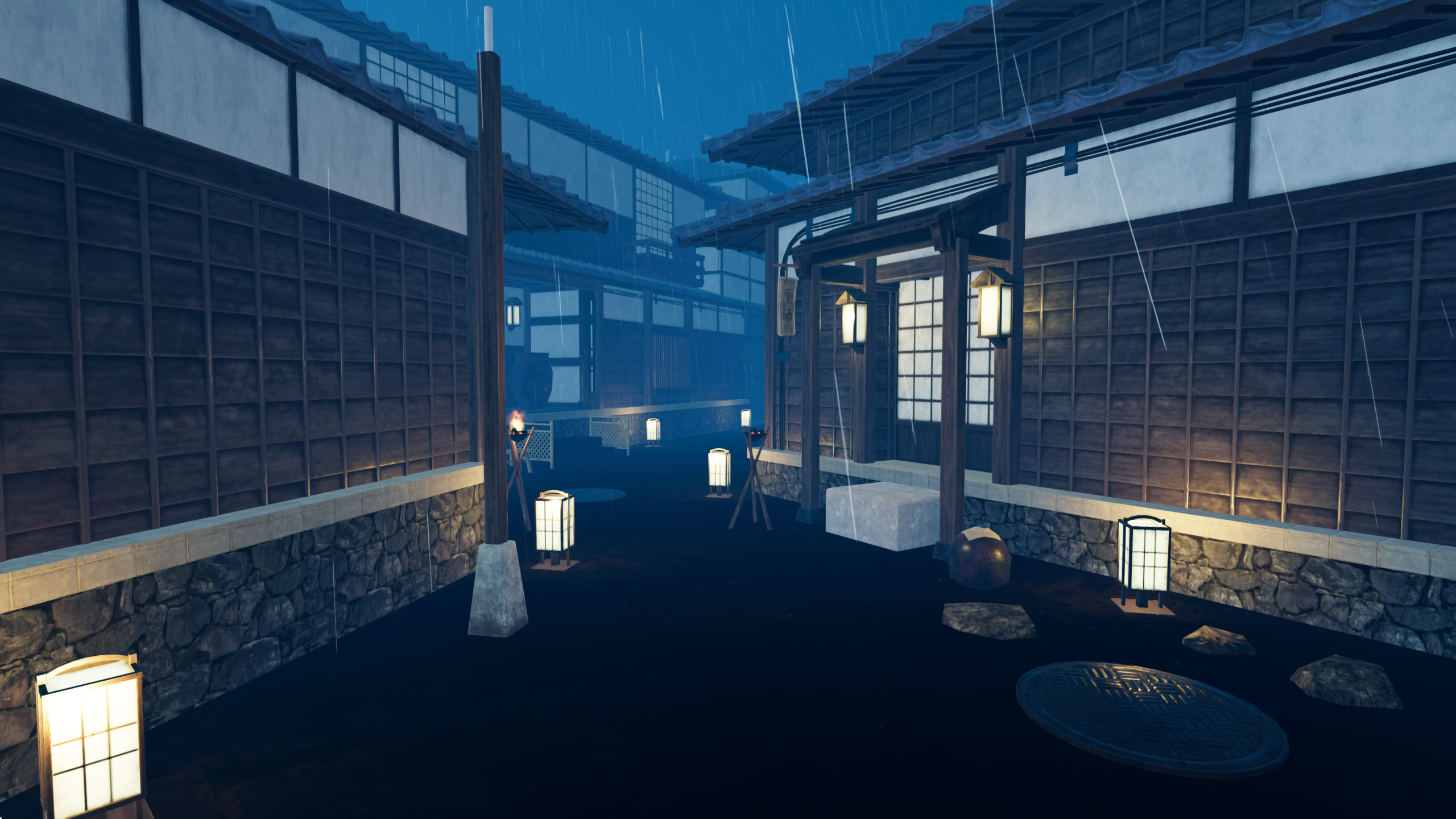
Playing as Detective Bennett, the investigation begins with the disappearance of Edward Hale. The story quickly becomes more complicated than a routine missing-person case, and the game’s Kyoto setting gives it a strong sense of place. Traditional buildings, glowing lanterns, wet pavements, cherry blossoms and a nightclub each bring a different mood to the journey.
The illustrated character portraits are a particularly effective touch. They contrast with the 3D environments and give conversations a distinctive look, while Bennett’s dry, sarcastic comments bring welcome humour to repeated investigations.
When the puzzles work, they really work
Dark Alley is built around searching, collecting objects and connecting environmental clues. Some puzzles have an appealing physical logic. Early on, collecting bricks helps clear wooden boards; elsewhere, ember tongs can be heated to deal with a wasps’ nest.
One standout sequence involves a Yakuza member guarding a restaurant. Noticing an expensive car and a discarded metal can opens up an inventive way to create a distraction. It is exactly the kind of moment a detective adventure should deliver: the solution feels earned once the clues connect.
An interface that sometimes hides the answer
The most significant weakness is the limited inventory presentation. Collected items appear as small icons in the corner, without a more useful place to examine them or revisit their descriptions. Bennett sometimes offers verbal hints when an item is picked up, but remembering those comments much later is not always easy.
Interaction cues are inconsistent too. Some objects highlight when approached; others show a name, while some give little indication that they can be used. The result is too much backtracking through familiar areas, not because the underlying puzzles are necessarily difficult but because the interface is not always clear.
Movement and basic interactions, by contrast, felt responsive and straightforward. The audio also contributes significantly to the atmosphere: rain animates the streets, nightclub music gives its setting a distinct identity, and howling wind around an abandoned temple provides an eerie change of pace.
A review with a clear stopping point
The investigation ultimately stopped at the abandoned temple after repeated unsuccessful attempts to work out how to reach a folded ladder. We did not complete the story, and this review does not assess its final reveal or ending. That limitation is important when evaluating a mystery-driven adventure.
Final verdict
73/100. Dark Alley is an atmospheric detective adventure with a setting worth exploring, appealing character artwork and genuinely satisfying environmental puzzles. But the lack of a proper inventory and inconsistent interaction cues create avoidable frustration. Patient players who enjoy investigating every corner may find plenty to appreciate; those who want clearer feedback could find themselves wandering in circles.
Dark Alley launched on 5 November 2026 for Steam (PC), PlayStation 5 and Xbox, according to its launch announcement from publisher JanduSoft. Find it via the UK Xbox listing or Steam. Developer: CheesecakeGames.
Review disclosure: Original hands-on review manuscript and unaltered gameplay screenshots received 31 October 2026. The playthrough was not completed, and the verdict reflects the portion assessed. No personal contributor byline is used; the review is attributed to Coloured Static Press. No favourable verdict was promised in exchange for review access.