
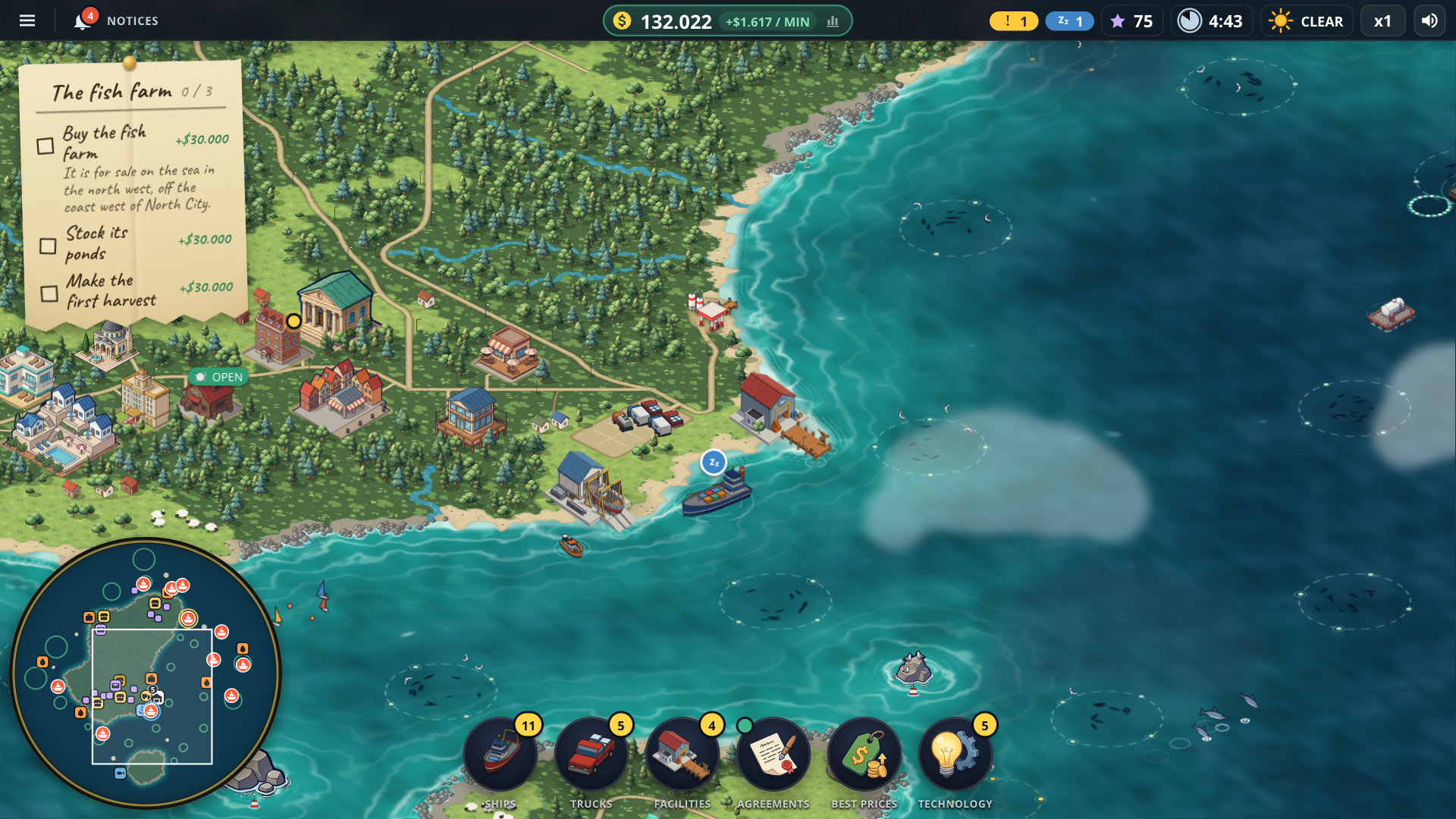
There is more to running a fishing company than catching fish. In Fishing Company Tycoon: Harbor to Market, solo developer Buğra Özden wants the decisions after the catch to be just as important as the journey out to sea. Freshness, market prices, fleet automation and factory investment all feed into a growing transport-and-trading business.
For this Coloured Static Press developer interview, we spoke with Buğra about designing a relaxed management game without losing meaningful strategic choices, what changes when players automate jobs they once performed themselves, and the creation of the project’s distinctive isometric visuals. The game is still in development, with Q1 2027 as its provisional Steam release window.
Coloured Static Press: Our interviews aim to tell the story behind the game. Here are Buğra’s answers to our seven written questions, presented in full.
1. What sparked the idea for Fishing Company Tycoon: Harbor to Market, and why focus on the business behind fishing?
Buğra Özden: I wanted to make an isometric tycoon game. Of the many ideas I had written down, building a fishing company was the one I most wanted to spend time on. The connected journey from catching fish to transporting and selling them offered a good way to show a company’s growth through different gameplay mechanics.
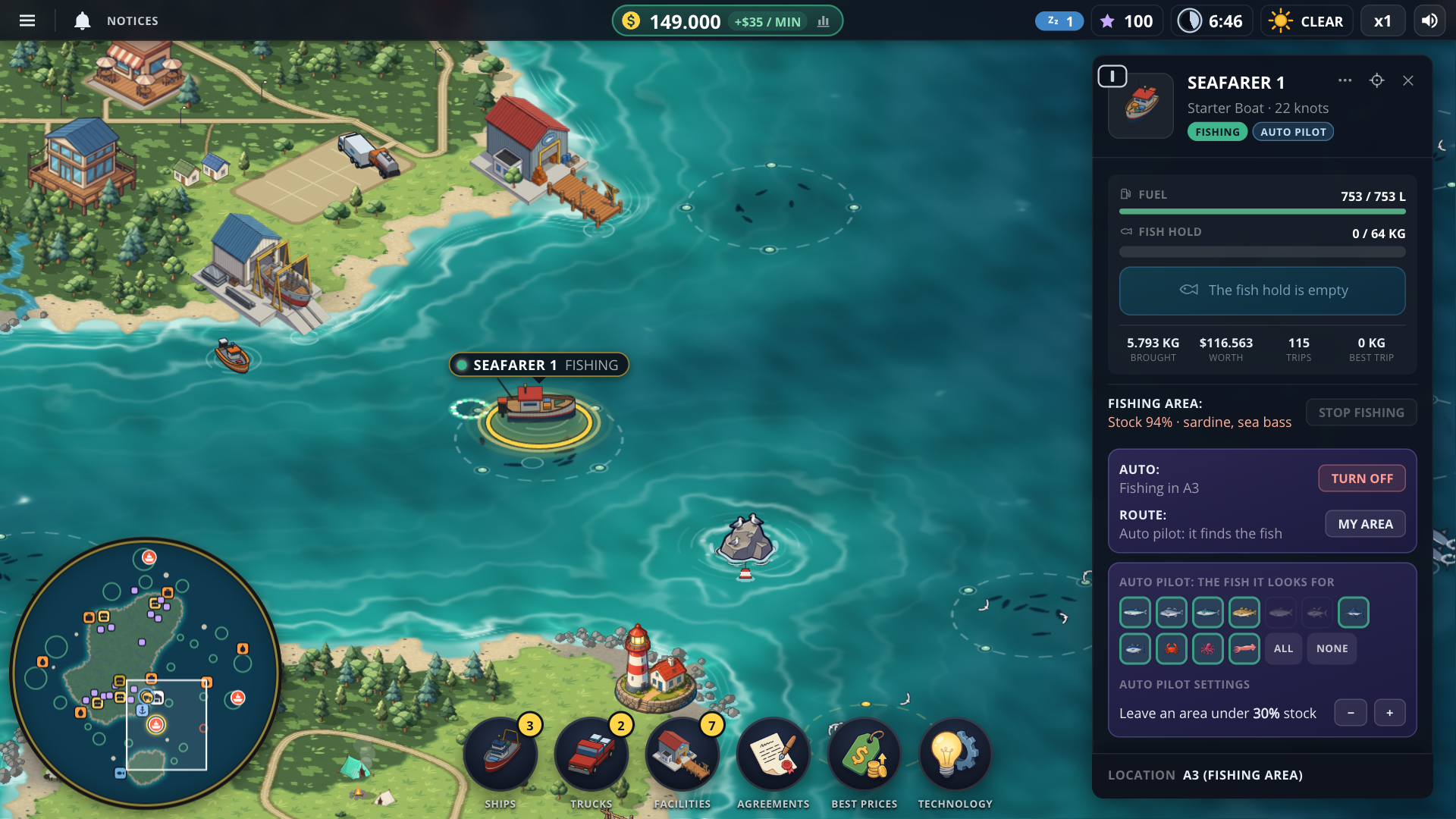
2. How did you decide which parts of fleet management and harbour operations should be hands-on and which can be automated?
Buğra Özden: I wanted players to do a job themselves first and learn how it works. As the business grows and new mechanics become available, they can automate earlier jobs and turn their attention to new areas. Tasks they managed personally at the beginning gradually become working parts of the company they have built.
Automation is optional, though. Players who would rather put their resources into other investments to progress faster can continue handling those jobs themselves. I wanted to leave that choice to the player.
3. What makes the choice of where and when to sell a catch meaningful for the player?
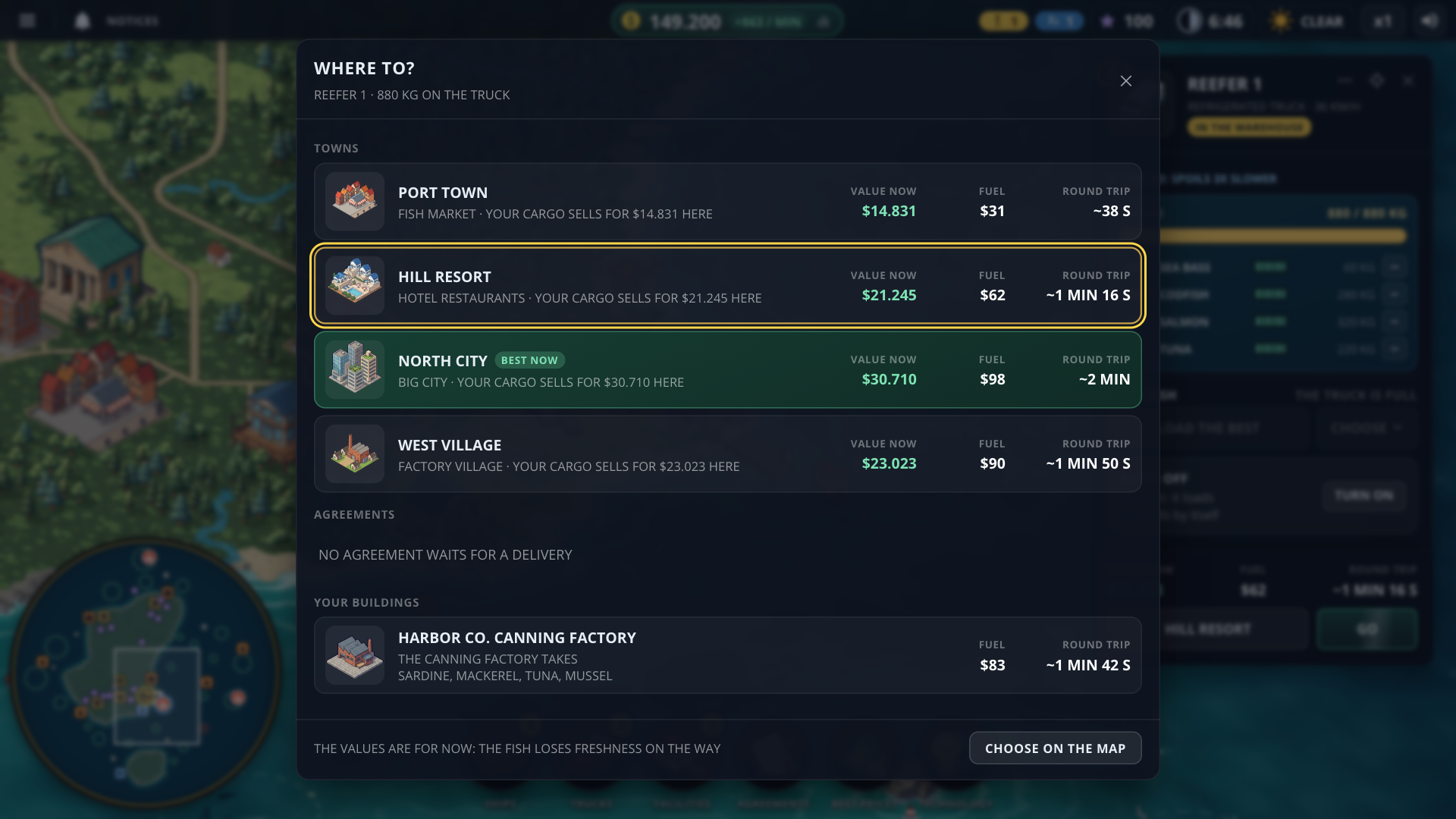
Buğra Özden: The best market is not simply the one showing the highest price. The vehicles needed to reach it, the journey time, and the freshness of the fish also matter. Some species are worth much more in particular markets. However, if you keep selling the same fish to the same market, its price starts to fall. Following different markets and finding a suitable buyer for your catch can therefore increase your earnings.
Contracts add another dimension to these decisions. You need to deliver a particular species to a facility in the required quantity and at the required freshness before the deadline. Earning money depends on planning the delivery well as well as catching the fish.
4. How do you balance the relaxing atmosphere with the strategic demands of running a fishing business?
Buğra Özden: I have tried to strike that balance through the difficulty settings. On Easy, my aim was to let players grow their company without feeling under pressure as they learn and manage the mechanics. I wanted those mechanics to be noticeable enough to require decisions, while still allowing a relaxed pace.
On Medium and Hard, resource management and planning become more important. Players can choose a difficulty that suits the kind of business management experience they want.
5. Which feature or system has changed the most during development?
Buğra Özden: One of the areas that evolved most was what players can do with their catch. Over time, keeping fish fresh, transporting them to different locations by truck, and processing them at a canning factory to extend their shelf life all became part of that process.
Ideas such as setting up fish and mussel farms and buying restaurants also emerged during development. These additions broadened the company’s growth to include different investment and production decisions.
6. What led to your visual approach, and how do you direct and review the assets used in the finished game?
Buğra Özden: I had an isometric view in mind from the start, but the game’s visual style changed many times during development. The sea, in particular, was something I revisited because earlier attempts did not create the effect I wanted.
The trucks and ships were created using Python code written by AI, generating a separate image for each direction. Map details were also added to the base background using Python. Because the buildings are seen from a single angle, they were generated as icons using AI and then adjusted with Python to fit the map.
I review the resulting assets in the game, alongside the rest of the map. I pay particular attention to whether their perspective and scale fit the surroundings. These in-game adjustments after the initial generation helped bring the visuals to their final form.
7. What feedback are you hoping to gather before launch, and what do you most want players to enjoy about managing their fleet?
Buğra Özden: I especially want to learn whether the tasks are clear, how the pace of progression feels, and which jobs start to become repetitive. It is also important to me to find out whether new mechanics and automation options become available at the right time.
I hope players enjoy completing the tasks and gradually growing a fishing company from a small fleet. Seeing a system they have built through their own decisions working well is an important part of the experience I want to offer.
What comes next for Fishing Company Tycoon?
Ozden Games is working towards a Q1 2027 launch window, with no exact date announced. You can find Fishing Company Tycoon on Steam and watch the official gameplay trailer. This is a written developer interview, not a scored review or a claim of hands-on completion.
Developer interview: Buğra Özden, Ozden Games. Seven answers supplied directly by the developer on 28 October 2026, reproduced in full. Images are three unaltered game screenshots supplied with explicit permission, credited to Ozden Games. The developer disclosed that the game’s visuals include AI-generated assets and Python-assisted elements. These screenshots are authentic captures of the game, not images generated for this article.