
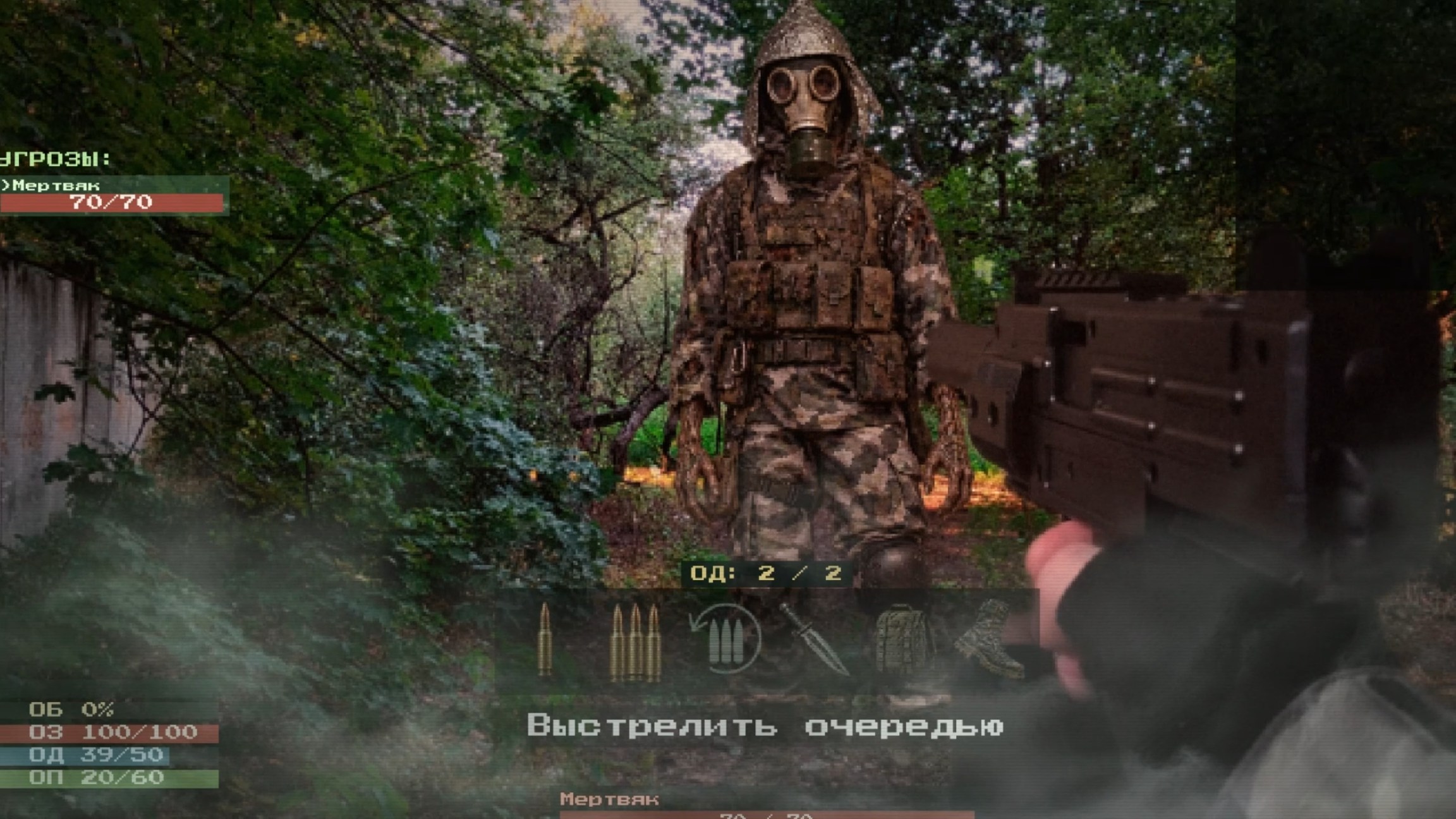
A real Moscow district, years of local folklore and a love of classic role-playing games sit at the heart of K.O.T.L.O.V.K.A.: Rayon of Oblivion. Bandit Rabbit Studio is making a first-person turn-based RPG from a striking blend of edited photographs, actors and painstakingly assembled monster designs. The studio currently targets 24 December 2026 for its Steam release.
We spoke in writing with Vladimir Shamenkov-Shalashasky, creator and game director at Bandit Rabbit Studio, about the project’s unexpected visual process, its Fallout influences and the stubborn challenge of finishing a game. Below are the developer’s answers, provided for our editorial interview.
Game information: Steam. Release information: 24 December 2026 is the studio’s target; the Steam store currently lists the game as Coming Soon.
Developer interview
Where did the concept for K.O.T.L.O.V.K.A.: Rayon of Oblivion begin?
The idea behind K.O.T.L.O.V.K.A.: Rayon of Oblivion has been with me for practically my entire life.
I first played Fallout 2 when I was about nine years old, and its open world absolutely blew my mind. As I explored the game, I discovered a whole treasure trove of cultural references, including Flowers for Algernon, The Hitchhiker’s Guide to the Galaxy, Monty Python, and many others. Incidentally, it was our love for Monty Python that inspired the name of our studio.
However, to create your own work of art rather than simply imitate someone else’s, you need more than cultural influences. You also need your own life experience.
My colleagues and I graduated from universities specialising in the creative arts, worked on various projects, developed our own tastes, and gained both professional and personal experience.
In the past, we experimented with making parody games, purely for a laugh. One of those fictional universes was K.O.T.L.O.V.K.A.
At some point, as a kind of postmodern experiment, we decided to reimagine that universe, giving it a serious, dramatic storyline and something meaningful to say.
And so, with all that experience behind us, we began creating our first serious game, which we currently plan to present to players on 24 December 2026.
What inspired the game’s world and how does the setting shape its tone?
Our main source of inspiration is Kotlovka itself. It’s a real place, a district in the south of Moscow.
There are quite a few green spaces in the area, although unfortunately, they haven’t always been particularly clean. Sometimes, looking at the rubbish and leftovers from picnics scattered through the woods, we’d joke that the place resembled an ecological disaster zone or a post-apocalyptic wasteland.
Gradually, we began developing our own local folklore around these observations.
We mixed in all sorts of conspiracy theories, our personal experiences, and elements from our favourite works of fiction.
And that’s the rather potent cocktail we’re preparing for you!
Why did you choose a first-person perspective for its turn-based RPG encounters?
It’s quite unusual, isn’t it?
When was the last time we saw a first-person turn-based RPG? Honestly, I can hardly remember. Perhaps Doom RPG on old Java mobile phones, although that didn’t really offer much in the way of role-playing or an open world.
We don’t have a professional artist on our team who can create all our graphics from scratch.
One day, while playing another old-school shooter — I think it was Shadow Warrior — inspiration struck.
I realised that you don’t necessarily have to draw everything from scratch. You can take photographs, edit them, paint over certain details, and combine different visual elements.
My professional skills were perfectly suited to that approach.
And that’s how the central idea was born: a turn-based RPG viewed from a first-person perspective, visually reminiscent of classic 2.5D shooters.
How do you transform photographic material into a coherent game world?
We haven’t invented anything fundamentally new here.
When it comes to backgrounds and locations, we either go out and photograph the places we need or use pictures from our personal archives.
When we need characters, real actors portray them. Afterwards, all the material is processed in Photoshop.
Sometimes we bring in an external artist to refine particular images. Then we manually assemble the necessary frames according to storyboards we’ve prepared in advance. And there you have it!
Monsters are a bit more complicated.
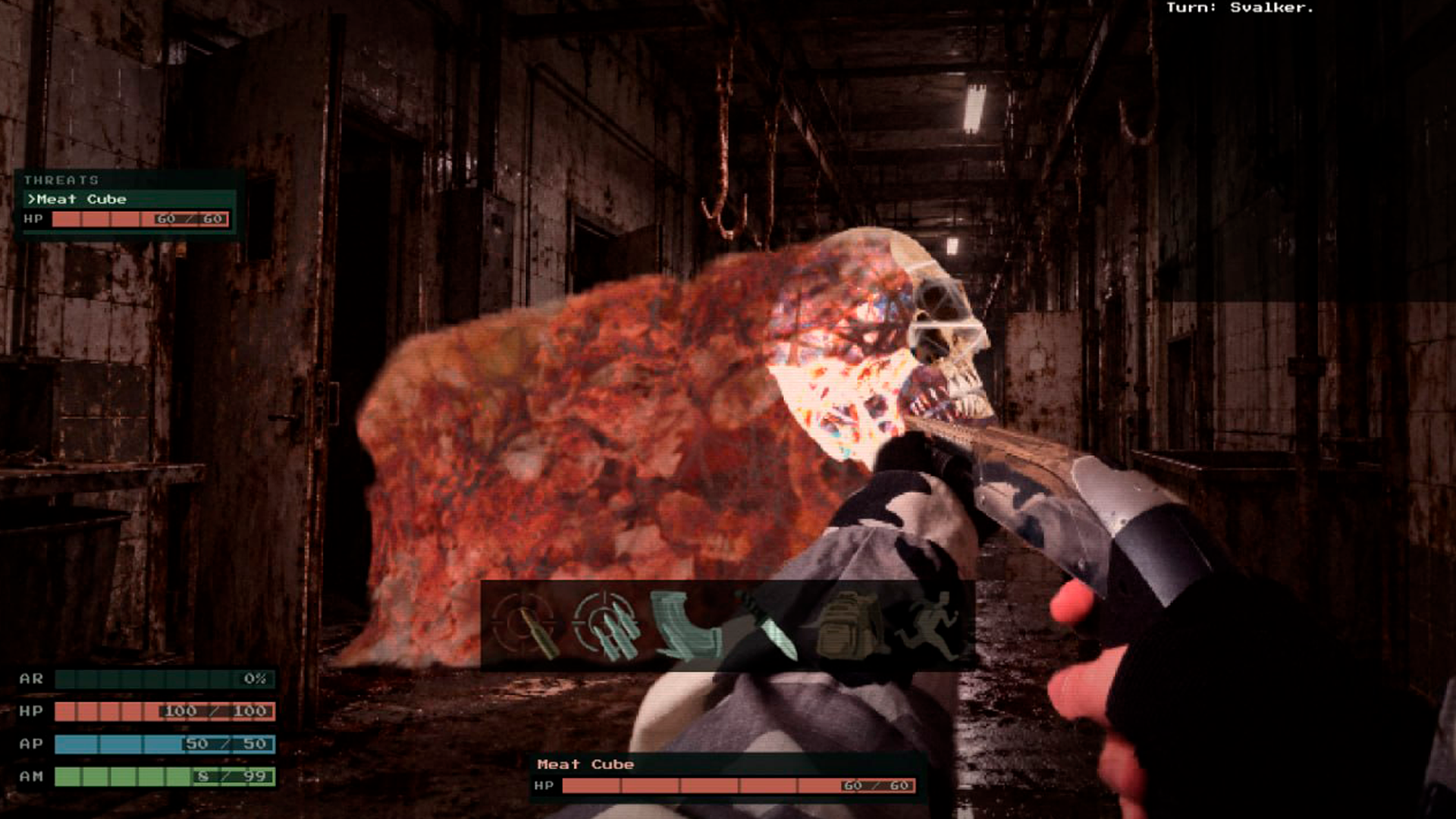
Sometimes we have to combine a whole collection of completely unrelated images to create a single creature, often using the most unexpected materials.
For example, one of our favourites is the Meat Cube.
It’s made from a photograph of a skull I took at an anatomical museum, along with pictures of several food products I happened to have in my fridge.
We play around with layers, adjust the colours, paint in a few details, stick another photograph on top, remove something else, and… voilà! Our little monster is ready!
What has been the most unusual or difficult part of the development process so far?
Finishing what you’ve started.
I think anyone who has ever made a film, developed a game, written a book, or been involved in any other creative endeavour will understand what I mean.
Everything might be going brilliantly with your project, but life doesn’t stop around you, does it?
You might have problems at work, at university, or in your family. You might simply burn out.
And sometimes the opposite happens: people spend too much time relaxing, partying, and gradually abandon their creative projects.
There are countless reasons, but the result is often the same: people never quite manage to bring their creation across the finish line.
We may be a small independent studio, but on 6 February 2027, we’ll be celebrating our tenth anniversary.
Over those years, we’ve learned a thing or two, including how to finish what we start.
Although, I must admit, it’s never easy.
What have you learned from early player feedback, and which ideas changed as a result?
Our testers have generally been very positive about the game, although it’s worth mentioning that they’re mostly people who already enjoy turn-based games.
Player feedback is extremely important to us.
Quite a lot has changed during development as a result of their opinions and suggestions. Most of these changes have involved specific gameplay mechanics, which we’ve reconsidered, adjusted, and refined following testing.
What do you most want players to discover when the game releases, and what’s next for the team?
Our studio has a motto: "We do it because it’s fun."
We’ve spent a very long time working towards releasing our first game on Steam.
More than anything, we’d love to read reviews from players saying they’ve spent many enjoyable and entertaining hours in our game.
And if even one person leaves a review saying they were going through a difficult period in their life, and our game managed to cheer them up, give them some comfort, or help them through it, we’ll consider our lives well spent!
Of course, we have plans for the future, but it’s a little too early to share them just yet.
A message for our readers
Finally, if I may, I’d like to address your readers in the United Kingdom directly.
Guys, we don’t know you. But we love you. And we genuinely mean that!
Our studio believes that the ultimate purpose of a creative person is to entertain people in the very best, most intelligent sense of the word.
We believe that a work of art should help lift some of the weight from people’s shoulders, allow them to relax, enjoy life, and perhaps teach them a little something along the way.
That’s what we’re striving for, and I sincerely hope that K.O.T.L.O.V.K.A.: Rayon of Oblivion will manage to achieve it.
I’d like to thank the wonderful editorial team at Coloured Static Press for giving me this opportunity to speak to you!
See you in Kotlovka’s Rayon of Oblivion!
Interview: Coloured Static Press. Developer: Bandit Rabbit Studio. Planned PC/Steam release target: 24 December 2026; subject to change. Gameplay and development imagery used with permission of Bandit Rabbit Studio.