

BEHIND THE SIGNAL / DEVELOPER INTERVIEW / PRE-RELEASE PC HORROR
Fourteen years after releasing Night Whisper Lane on mobile, solo developer Emanouel Pontikakis of EPX Games is rebuilding his debut horror game for PC. The Anniversary Edition is not being presented as a quick port: Pontikakis describes redesigned first-person combat, noir-styled cutscenes, a live minimap and a new approach to the game’s unsettling point-and-click house exploration.
We asked him about returning to the project that started his commercial development journey, what the old hardware could not deliver and how he is balancing nostalgia with a modern horror experience. The answers below come directly from Pontikakis and have been selected for length. This is a developer interview, not a hands-on review. The Steam page and release date were not yet announced when the interview was supplied.
1. What made Night Whisper Lane the game you wanted to release commercially in 2012, and what do you remember most vividly about developing it?
What made Night Whisper Lane the game I had to make was a desire to combine influences that didn’t usually sit in the same room. Growing up, I was obsessed with 1980s slasher cinema—films like Friday the 13th and A Nightmare on Elm Street where the killer is an unstoppable force of nature that refuses to stay down. On the gaming side, I grew up on the methodical dread of Shadowgate and the tactical resource management of classic turn-based RPGs like Dragon Warrior (Dragon Quest).
Rather than choosing between those genres, I decided to blend them. I wanted to see what happened when you took dangerous point-and-click house exploration, littered it with lethal traps, and suddenly pulled the player into tense, turn-based combat with a stalker like Sofia who kept returning stronger throughout the night. That mashup became the DNA of the game, and it felt distinct enough that I knew it had to be my first commercial project.
On top of that, developing for early mobile phones and tablets meant wrestling with severe hardware limitations. I had to compress the audio down to a heavy 96 kbps crunch, strip back special effects, and keep combat visuals relatively simple just so the devices wouldn’t run out of memory.
What I remember most vividly, though, was the surreal feeling of watching other people experience something that had previously lived only in my head. Gathering friends around to test the game and watching them hit that infamous toilet snake trap for the first time—jumping out of their skin and then laughing—showed me that the blend of horror and dark absurdity was really connecting. At the same time, seeing early player feedback about how frustrating it was to lose progress to instant-death traps pushed me to jump straight into patching, rolling out updates for animated battles, in-game maps, and save recovery. That direct dialogue with players was easily the most memorable part of the entire release.
2. Why return to your first commercial horror game after fourteen years rather than create something completely new?
Even though Night Whisper Lane faded from the spotlight after its initial release, I never truly walked away from the concept. Over the last fourteen years, I kept a running collection of design notes on what a proper, uncompromised PC version could look like.
When I released the original in 2012, I had to make huge creative compromises just to get it running on early mobile phones and tablets—compressing the audio down to 96 kbps, trimming visual effects, and keeping combat presentation relatively static. I always felt there was an unfinished vision there. The core idea—blending point-and-click exploration with turn-based slasher combat—was strong, but the technology at the time couldn’t fully support the cinematic dread I wanted to deliver.
Bringing it back as the Anniversary Edition allowed me to rebuild the entire game from the ground up for modern PC standards. I was able to finally give it the presentation it deserved: noir-style cutscenes, fully re-engineered audio, an overhauled navigation system with a live minimap, and a complete reimagining of the combat into a first-person, cinematic showdown with visible wound progression.
Just as importantly, revisiting Night Whisper Lane is actually part of building something new. I have extensive ideas mapped out for a true sequel that will explore Sofia and the lore on a much deeper level. Taking the time to rebuild this foundation—refining the engine, the combat logic, and the mechanics through a modular design process—gives returning fans the definitive version of the original, introduces newcomers to the house without needing any prior knowledge, and sets the stage for where the franchise goes next.
3. How much of the original atmosphere, story and design did you want to preserve, and where did you give yourself permission to change things?
When it came to the Story Mode, I was very protective of the original story and lore. The narrative is the foundation of Night Whisper Lane, and I didn’t want to change or alter what worked in 2012. Slasher horror thrives on mystery, and if you start tacking on extra exposition or over-explaining your killer, you risk diluting the dread. I also preserved the core gameplay identity—the deliberate tension of point-and-click house exploration, managing scarce resources, and sudden turn-based encounters. That loop is the DNA behind #PointClickandDie, and keeping the danger, the puzzles, and iconic surprises like the toilet snake was non-negotiable.
First, presentation received a massive upgrade. The original 2012 cutscene renders were very outdated, so I completely rebuilt them. After experimenting with different visual directions and running A/B testing sessions, I chose a noir style with moody, atmospheric backgrounds and full-color characters in the foreground to give the narrative sequences a true cinematic identity.
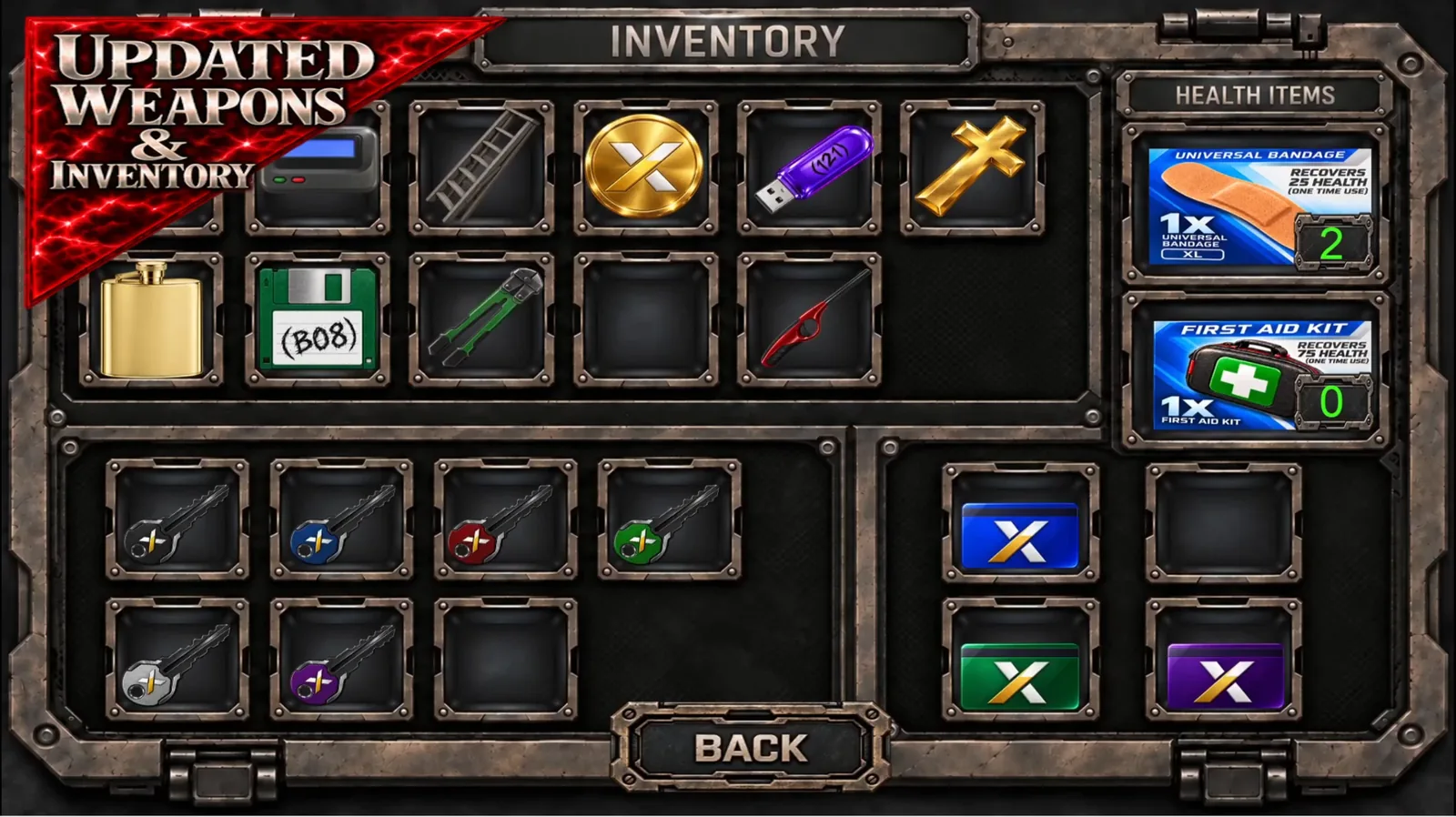
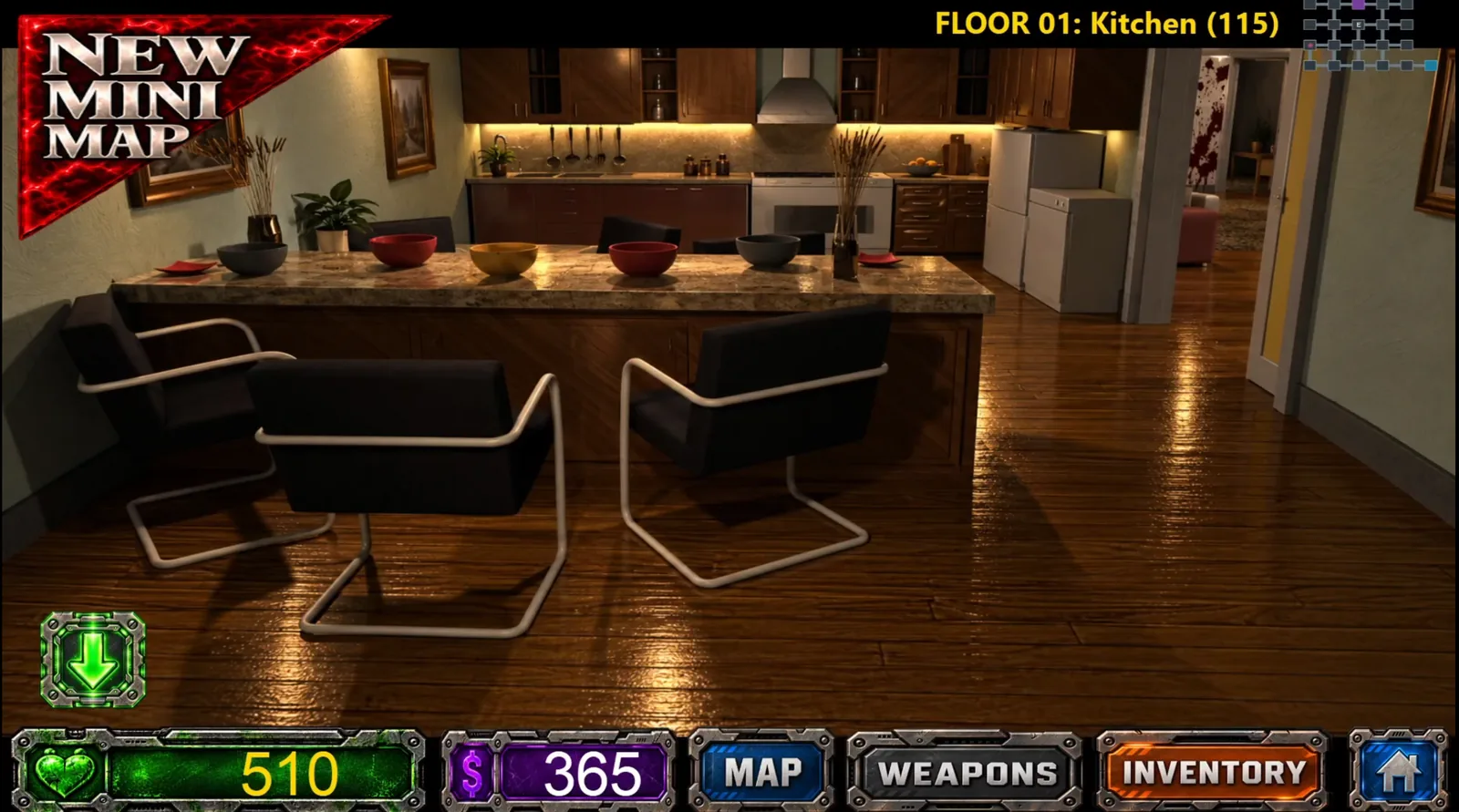
Second, I modernized navigation to eliminate unnecessary friction. As the developer, I knew every room by heart, but watching fresh playtesters showed me where players got disoriented. I redesigned the floor maps with clear legends, made keys and keycards visible in the environment rather than frustratingly hidden, added a live minimap that updates room-by-room showing locked doors, and brought the in-game pager to life as an immersive, tactile guidance tool while exploring Sofia’s home.
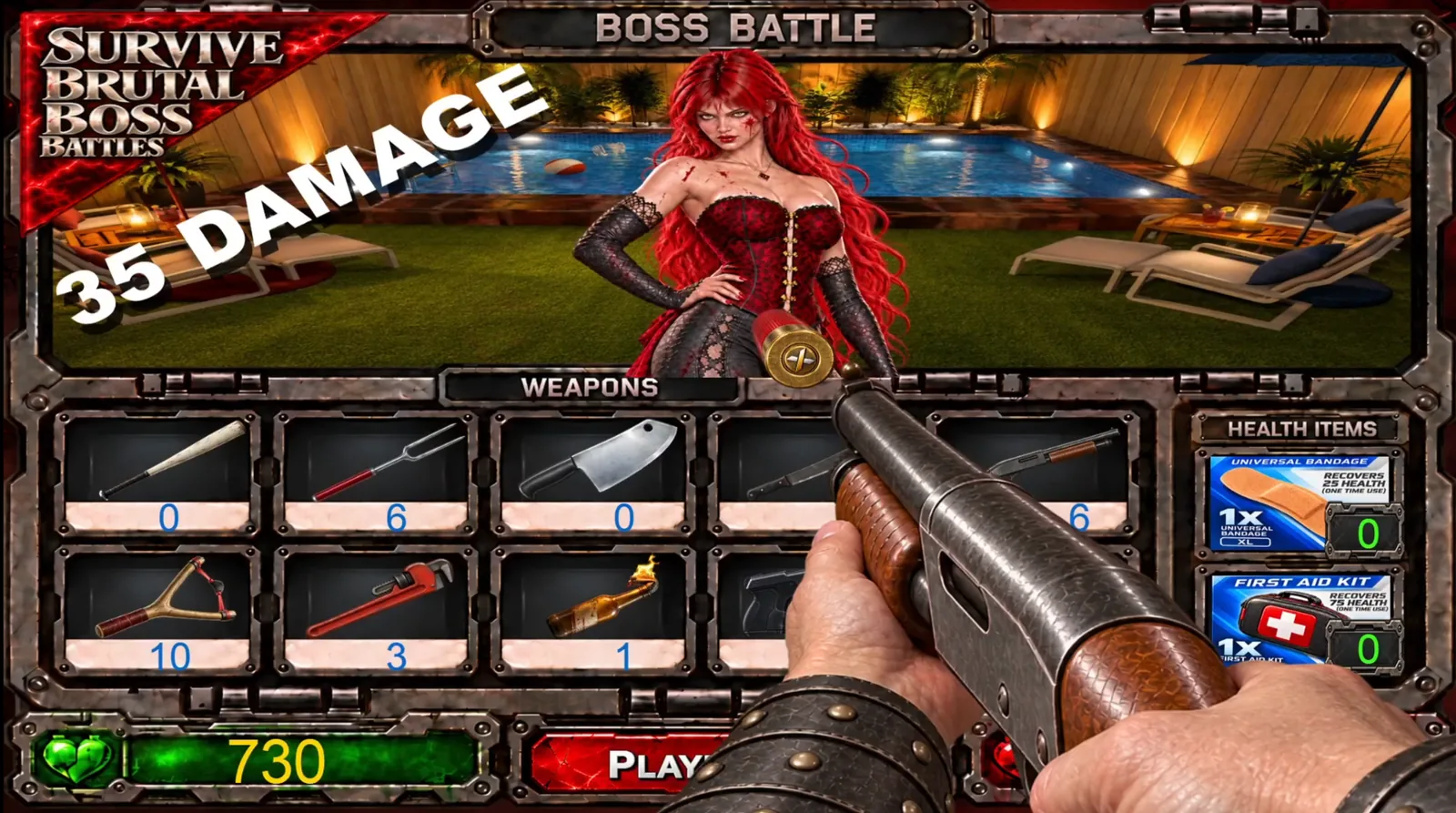
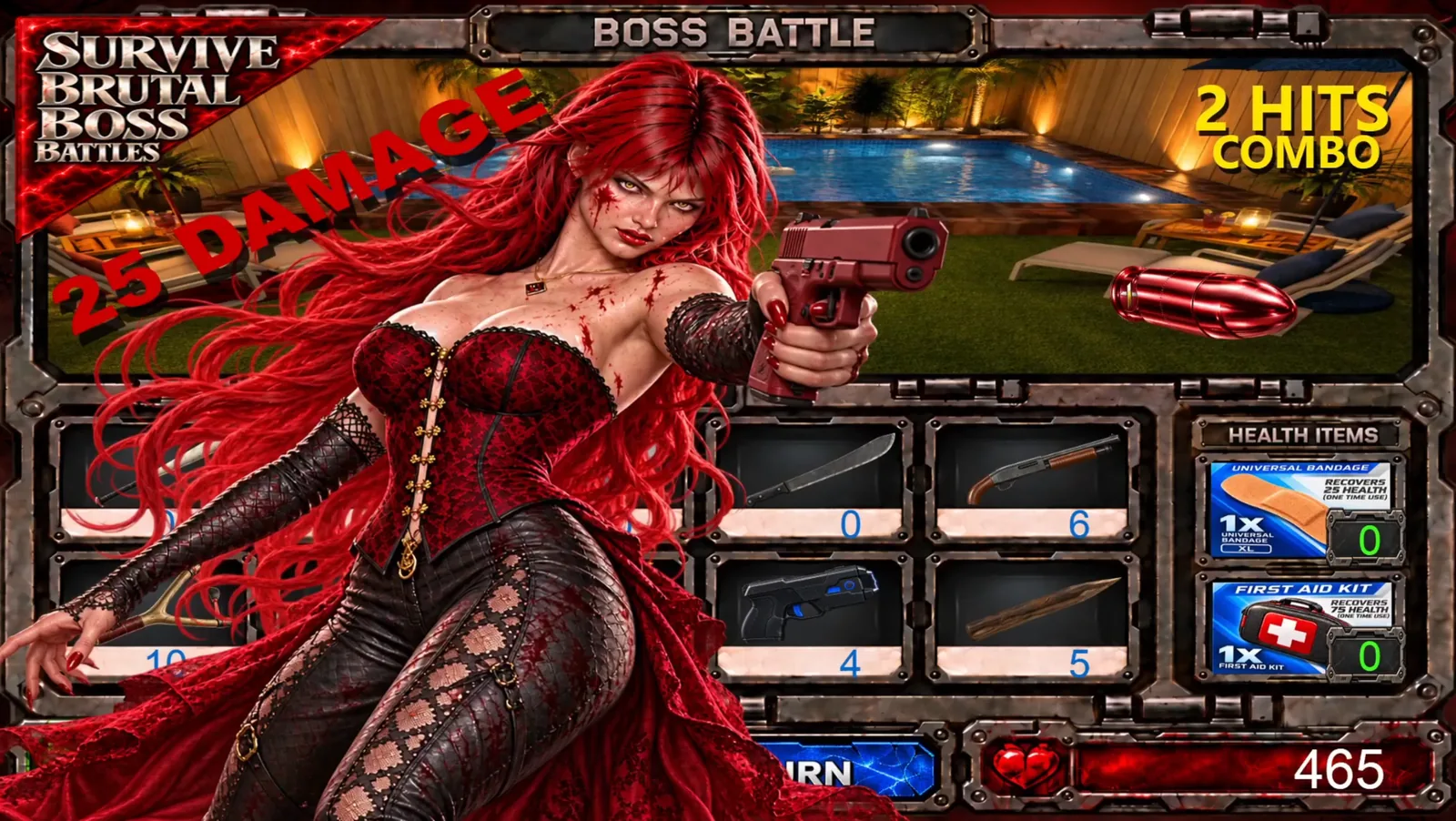
Third, combat was completely reimagined. In the original release, combat was very basic—essentially Victor and Sofia body-checking each other back and forth, with Sofia locked to a single dagger and predictable base damage. For the Anniversary Edition, I rebuilt combat from Victor’s first-person perspective, drawing inspiration from the NES Friday the 13th game where the enemy moves right toward the screen. I gave Sofia an expanded arsenal of weapons, deadly combo attacks, visible progressive injury states, and a hidden D&D-style dice system tuned uniquely for each boss battle.
That same overhaul applied directly to Boss Rush Mode. Originally, I planned to do what most people expected: bring over the old six rounds with the modern combat engine, and save a “Boss Rush 2.0” update for post-launch. But before I started working on it, I decided that didn’t feel right. If I was doing an Anniversary Edition, Boss Rush should launch as the definitive 2.0 version on Day 1. Because of my modular design process, playtesters who had focused primarily on Story Mode had no idea what was coming, and seeing their reaction to how much deeper and more intense Boss Rush had become was something really special.
4. What did moving the Anniversary Edition toward PC demand technically and creatively, compared with the original release?
Technically, the biggest demand was accepting that you can’t just take an old mobile game, stretch it onto a 1080p or 4K PC monitor, and call it a day. In 2012, everything was built to fit within the severe memory ceilings of early tablets and smartphones. Audio had to be crunched down to 96 kbps, visual effects were scaled back, and combat was kept mostly static.
Audiovisual Rebuild: The original 2012 renders were far too outdated for PC monitors. I had to produce all-new renders for cutscenes, dialing in a noir aesthetic with atmospheric contrast and full-color character focus. On the audio side, while the sound files are still compressed, they’ve been completely re-engineered at a much higher quality so they sound worlds cleaner and richer without the muddy compression of the original release.
First-Person Combat Architecture: Moving away from the 1.0 body-checking sprites meant coding a full first-person combat system. I had to animate Victor’s hands and weapon strikes, script Sofia advancing directly toward the screen, and program a background D&D-style dice system that dynamically rolls her attacks and combos while tuning the math differently for each encounter.
Hardware Accessibility: As a solo developer, accessibility was a huge technical priority. I didn’t want players to need a thousand-dollar gaming rig or a dedicated graphics card. I used my everyday Lenovo laptop—running a 5th-generation Intel Core i5 processor, basic integrated Intel graphics, and a minimum of 12 GB of RAM—as my personal hardware baseline. The game was optimized so that if your PC meets those modest everyday specs, it runs smooth and stable.
On a mobile screen in 2012, I relied heavily on immediate shock value. On a large PC monitor with headphones, horror is about immersion, anticipation, and pacing. You have to care just as much about what happens before and after a surprise: the slow buildup walking down a dark hallway, the tactile dread of hearing your in-game pager buzz with a message, and the agonizing seconds waiting to see what Sofia rolls on her turn.
5. How have you reconsidered the combat, puzzles and pager systems for returning players and newcomers?
For both audiences, my goal was to keep the core survival horror tension intact while completely stripping away the accidental frustration of the 2012 mobile release. Newcomers get an intuitive, atmospheric horror experience that doesn’t feel like a clunky port, and returning fans get systems that are vastly deeper than what they remember.
For Returning Players: Combat is no longer about two sprites body-checking each other while Sofia relies on a single dagger and predictable base damage. It’s now rebuilt from Victor’s first-person perspective, with animated hands, weapons, and Sofia advancing directly toward the screen in homage to the NES Friday the 13th game. Sofia now wields an expanded arsenal of weapons and dangerous combo attacks, driven by an invisible D&D-style dice roll system tuned differently for each boss battle so you can’t rely on old muscle memory. She also features visible injury progression states, so you actually watch the physical damage mount as she stalks toward you.
For Newcomers: It preserves that deliberate turn-based tactical loop where survival comes down to resource management—choosing wisely between attacking, burning a scarce healing item, or conserving ammo. And consistent with slasher lore, Sofia never heals, because monsters don’t drink potions; they just hit harder.
For Returning Players: All the dangerous traps, puzzles, and absurd surprises—including the infamous toilet snake—are fully intact. But based on player feedback, I leaned into instant-death traps paired with an immediate safe-room autosave reload. That way, triggering a trap gives you that sudden shock and consequence, but you reload right away without permanently bleeding away your health pool before a major confrontation.
For Newcomers: I eliminated the old “pixel-hunting” frustration. Keys and keycards are visibly placed in rooms rather than obscurely hidden, the floor maps have clear legends, and a live minimap updates room-by-room to show locked doors and key requirements. The danger remains lethal, but you’re never left wandering aimlessly in circles.
In the 2012 original, the pager was very rudimentary—it was basically just a static message on your inventory screen offering a simple clue, like looking beneath a particular lamp. For the Anniversary Edition, I really wanted to bring it to life and make it feel like a tangible object with you while exploring Sofia’s home. It receives messages to provide more helpful, reliable information about important items and progression hurdles when you’re stuck, working alongside the new live minimap so you aren’t wandering aimlessly. A lot of younger gamers today have probably never even seen a pager, but having that retro device in the dark fits the era perfectly without relying on modern smartphones or GPS markers. Crucially, it never holds your hand or solves puzzles for you, and it keeps that eerie mystery intact: who is on the other end sending those messages into the house, and why?
6. As a solo developer, what has been hardest about revisiting a project built by an earlier version of yourself?
The hardest part has been holding myself to the much higher standards I have today, and putting in the relentless solo work to meet them.
Doing that as a solo developer is an enormous undertaking. It meant taking every single system down to the studs and rebuilding it: re-rendering the cutscenes from scratch in the noir aesthetic, engineering a full first-person combat engine with animated weapons, coding the background D&D dice logic, re-engineering the audio, and overhauling the navigation with a live minimap and tactile pager. Even with Boss Rush Mode, rather than holding back for a future update, I pushed myself to build the definitive 2.0 version right into the launch build. Carrying that entire workload on your own shoulders while making sure the game runs smoothly across different PC hardware is intensely demanding.
The other major challenge was the perspective shift. When you designed every hallway, trap, and puzzle yourself, you can’t easily surprise yourself anymore. Stepping back and analyzing the house from the perspective of someone walking in completely blind took serious discipline. I had to rely heavily on fresh-eyes playtesting to ensure that every room delivers genuine tension, that the puzzles feel rewarding, and that the lethal surprises hit with maximum impact.
7. With the Steam page and release date still unannounced, what would you most like people to notice when they first experience Night Whisper Lane: Anniversary Edition?
I want people to feel the atmosphere take hold the second they step into the house.
I’d love for players to notice that this isn’t just an old game with a fresh coat of paint—it’s a complete, immersive reimagining of a world I’ve lived with for fourteen years. I want them to hear the richness of the re-engineered audio, take in the high-contrast noir cutscenes, and feel the genuine dread of exploring an unpredictable environment where danger lurks behind every door.
When they hit the navigation improvements—the live room-by-room minimap, the clear floor legends, and that tactile in-game pager buzzing in the dark—I want them to appreciate how seamless and respectful of their time the exploration feels. The lethal stakes of #PointClickandDie and the sudden traps are fully alive, but without the clunky frustration of the past.
And when Sofia finally confronts them, I want their heart rate to spike. Seeing her charge straight toward the screen from Victor’s first-person perspective, watching her model visibly break down with progressive injuries while she continues stalking forward, and knowing that her attack combos are being dynamically rolled by a hidden dice system rather than a predictable script—that’s the cinematic slasher experience I always envisioned back in 2012.
Above all, I hope players can feel the care and solo dedication poured into every corner of the game, right down to delivering the full Boss Rush 2.0 depth on Day One and making sure it runs smooth as butter even on a modest, everyday laptop.
Following the project
Further information is available through EPX Games’ official website. The developer has said the Steam page is awaiting approval; we will not invent a store link or release date.
Interview: Emanouel Pontikakis, solo developer at EPX Games. Written answers supplied directly to Coloured Static Press. Official game imagery is credited to EPX Games and used with editorial permission.