
What happens when an entire civilisation chooses to forget? In White Cloud: The Oblivion Surveyor, lost memories are more than a narrative theme. They shape the walls of a labyrinth, the price of everyday goods and a combat system that rewards the act of learning before attacking.
Following our First Signal discovery feature, South Korean solo developer Seunghoon Choi (ugiomin31-ops) answered seven written questions about the world of Imprint, the Survey mechanic, the influence of classic dungeon crawlers and the production realities of an ambitious browser game.
This is a developer interview presenting the creator’s descriptions of the game and its planned features, not an independent hands-on review. Four genuine gameplay screenshots were supplied and cleared for editorial use.
1. What was the first image or idea behind White Cloud’s forgotten labyrinth, and what kind of emotion do you want players to feel as they map it?
The first image was an empty chair at a dinner table that nobody can name the owner of. In White Cloud, humanity released a white fog on itself to forget something it could not live with. People survive, but names, relationships and meaning wear away, and everything forgotten sinks into a labyrinth beneath the city. The labyrinth is not real history; it is the shape of how people remember. Things many people remember clearly become solid walls, and things only one person remembers fall apart when you touch them. As players map it, I want them to feel a quiet mix of curiosity and responsibility: every tile you confirm is something brought back, and you slowly start to wonder whether it should have been.
2. How did the Survey mechanic evolve, and what made revealing enemy vulnerabilities more interesting than simply offering another attack command?
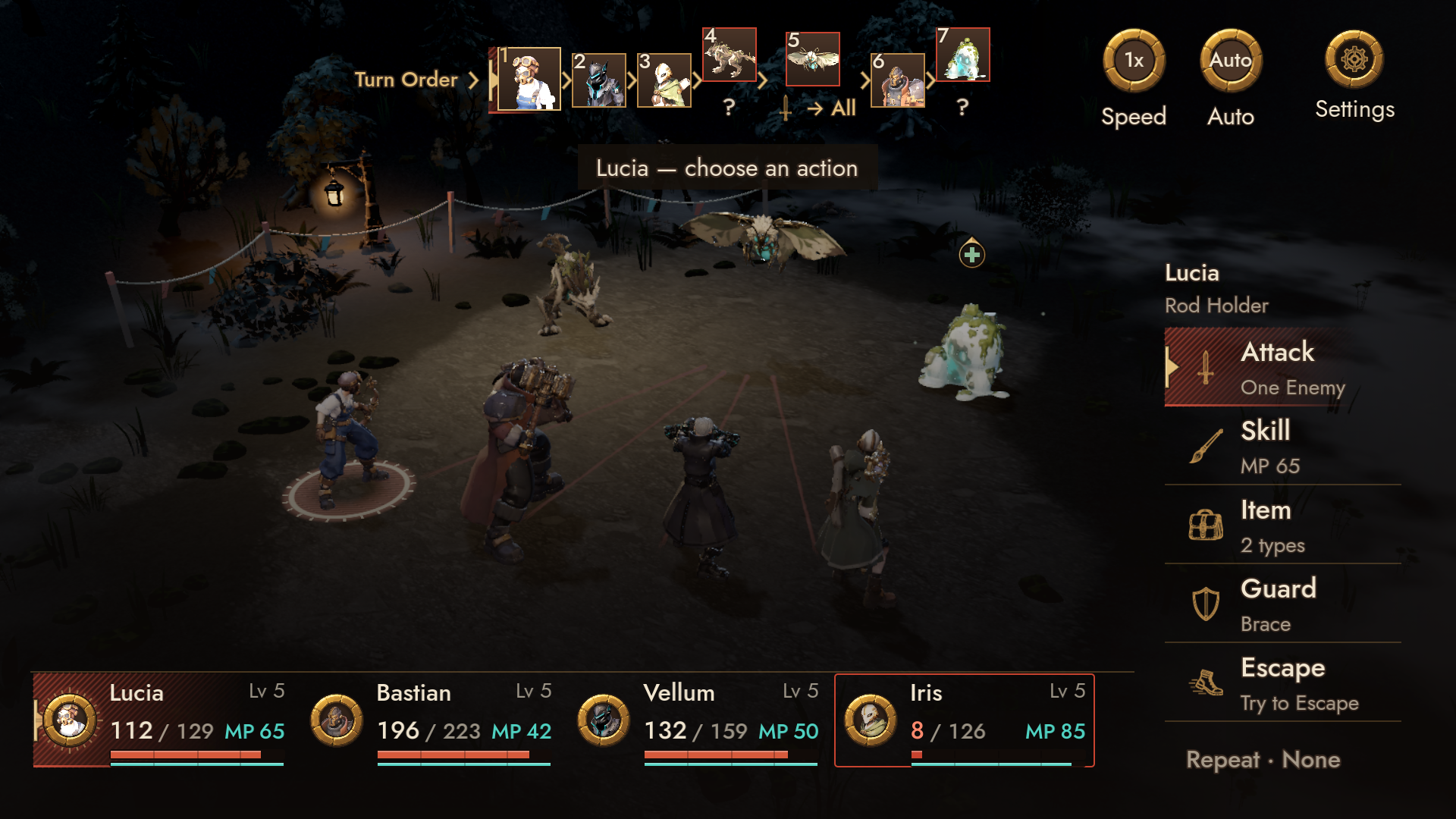
The hero is a surveyor, and the oath of the surveyors’ guild begins: “Never claim to have confirmed what you have not confirmed.” I wanted the combat to say the same thing. Enemies start out unsurveyed, and their weaknesses show only as question marks. You can learn them the hard way by landing a weak hit, or Iris can use Survey to reveal every weakness and resistance at once and raise the party’s critical-hit rate for a few turns. A plain attack command only makes a number go down. Survey changes what you know, and the whole party plans around that knowledge, which fits a game that is about mapping and confirming.
3. How do you balance the cost of spending a turn investigating with the reward of discovering a weakness, particularly in boss encounters?
Survey costs Iris her action and some TP, so on weak enemies it is often better to just attack and discover weaknesses through hits. On bosses the balance flips: a boss has more HP and its resistances can waste whole turns, so knowing early pays back over a longer fight, and the crit bonus rewards acting on that knowledge right away. The F1 boss is designed so that you can win without Survey, but a surveyed fight is noticeably shorter and safer. I’m still tuning those numbers with playtest feedback.
4. What makes Lamp Row and the Ancient Forest feel connected to a larger world, rather than just a village menu and the first dungeon?
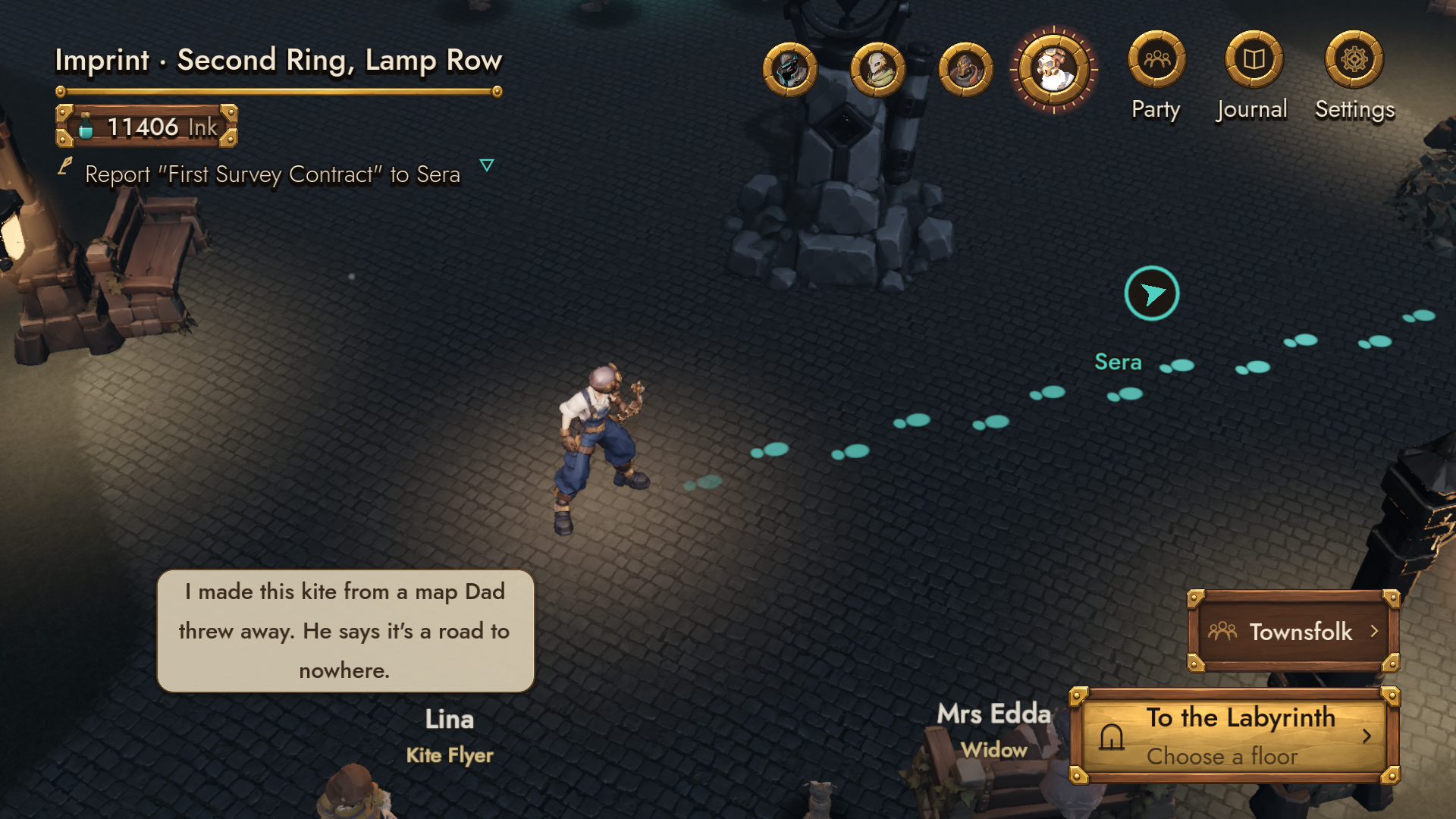
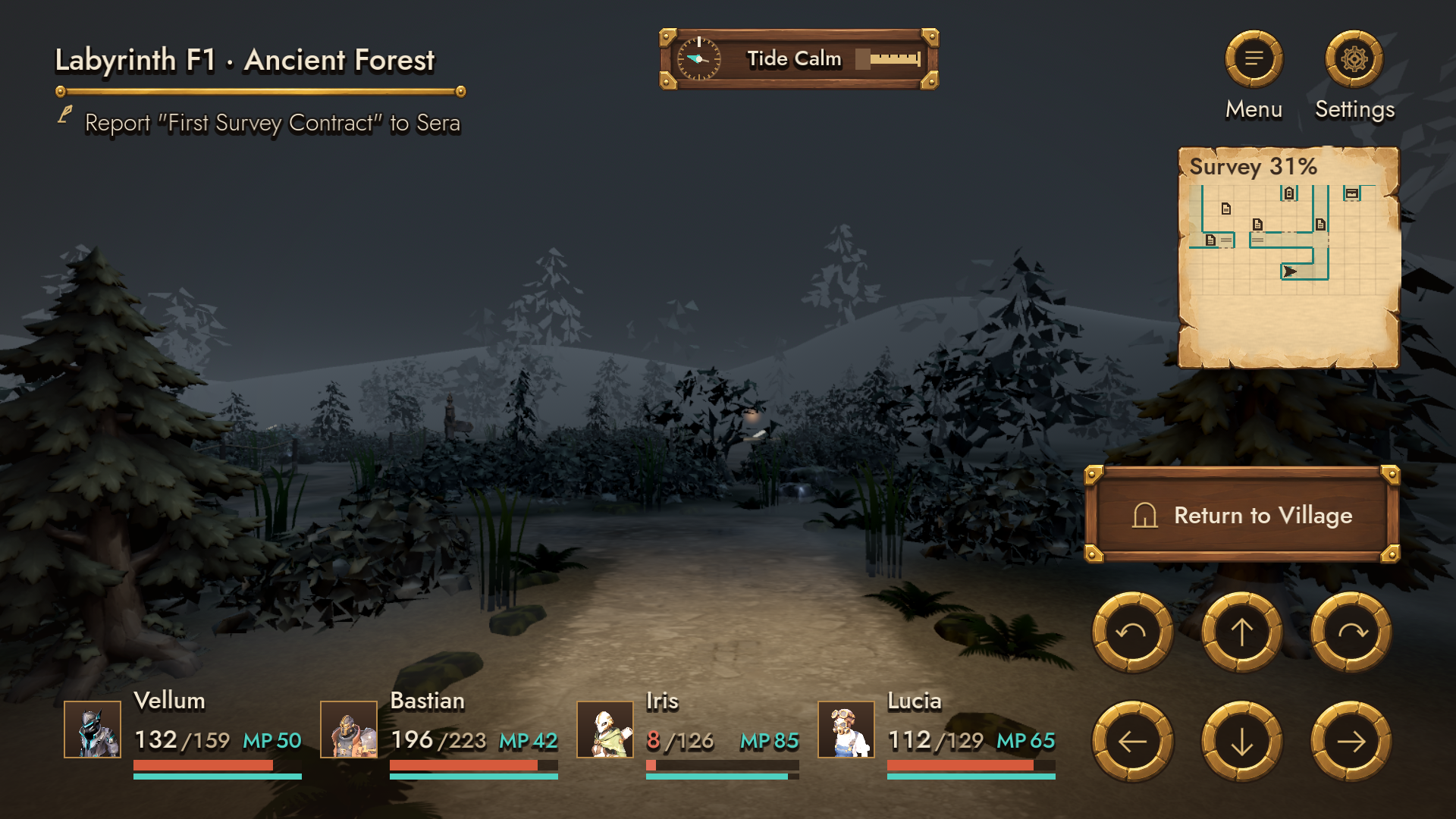
The city, Imprint, is built in three rings around the mouth of the pit. Lamp Row is the second ring, where guilds, workshops and markets are, and its only artificial light comes from ink lamps that burn people’s memories. Ink is also the currency, so prices are literally the speed of forgetting. The Ancient Forest is the first layer of the labyrinth: the way humanity remembers nature, with trees about the height of a person and leaves that make no sound. What you bring back from the labyrinth is meant to flow back into the city over time, and each deeper layer is a more deeply denied memory, so the village and the dungeon are two halves of the same system.
5. Which influences shaped your grid-based first-person exploration, and where have you deliberately moved away from those influences?
Etrian Odyssey and the Wizardry tradition are the obvious roots: stepping tile by tile, turning in place, and the joy of a map you fill in yourself. Where I moved away is the map’s role. In White Cloud the map is not only a navigation aid; confirming the map is the story and the progression. Surveying the floor changes the world, and the tide of fog limits how long you can stay in the labyrinth. I also kept the auto-map automatic so the browser demo stays approachable for players new to the genre.
6. As a solo developer, which aspect of creating the current browser demo proved unexpectedly difficult, and how have you approached the use and disclosure of generative tools?
The hardest part was making a 3D first-person game load and run reasonably in a browser. The full build is far larger than browser portals allow, so I split assets into separately loaded packs and got the first load down to about 36 MB. On generative tools: I use them openly and say so everywhere the game appears. Image tools were used for concept and 2D art, Tripo for 3D models, Stable Audio for music and most sound effects, and an image-to-video model for the intro movie. Design, writing, systems and code are my own work, and the remaining sound effects are CC0. I would rather players know exactly what they are looking at and judge the game on that basis.
7. What would you most like players to notice or tell you after finishing the free demo, and what are your priorities before the full release?
I’d most like to hear whether Survey and the weakness system make sense without outside explanation, and exactly where players got confused or stopped. Early feedback already told me the opening needs clearer goals, so that is my first priority. After that come bug fixes (including a few leftover Korean strings in the English UI), performance in the browser, and then deeper labyrinth layers, more of the companions’ stories, and a downloadable PC version.
Play White Cloud
The free public browser demo of White Cloud: The Oblivion Surveyor is available at the developer’s itch.io page. The full release is still in development, with no confirmed launch date.