
First Signal | Indie discovery
What if the objective of a survival game wasn’t to save the world? What if the world couldn’t be saved at all, and the only victory available was to stay alive long enough to see what finally ended it?
That is the bleak invitation behind Yo soy páramo, a survival-and-settlement management game being developed by Estudio SKR for PC. The Earth of 3100 is dying in stages. The oceans have retreated, ecosystems are collapsing, and even the Moon isn’t guaranteed to stay where it belongs. There is no technological miracle promised at the end of the road. You lead one of humanity’s final settlements and try to give its inhabitants a few more years.
We’ve been speaking directly with the solo developer, who has supplied original screenshots and permission to reproduce them with credit. This is a First Signal look at the project and its ideas, rather than a scored review or a claim that we’ve played a final build.
Building a future that doesn’t exist
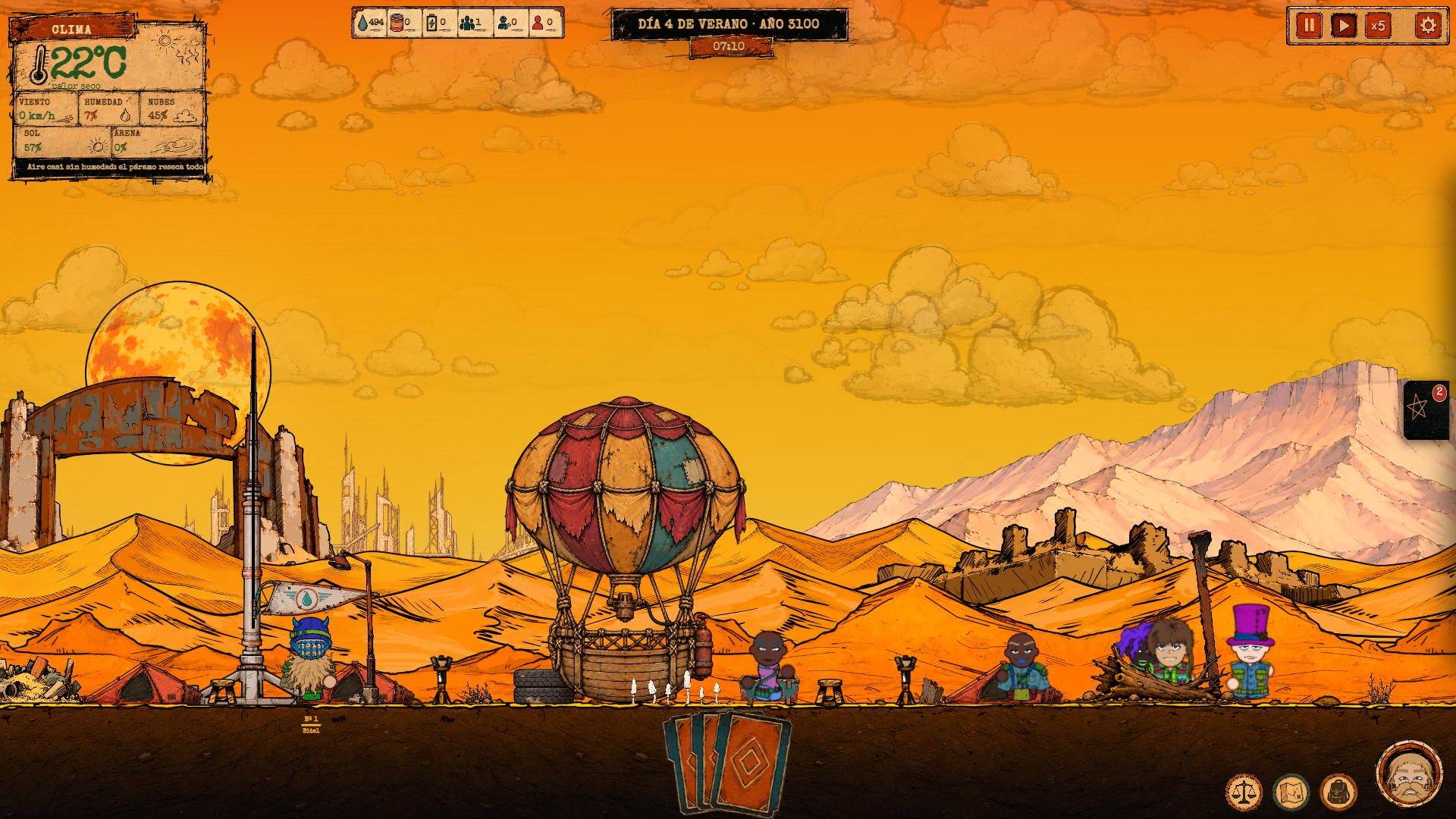
In the screenshots, a small settlement sits beneath an enormous burnt-orange sky. A wind turbine, a scattering of improvised buildings and tiny survivors occupy a narrow strip of land. Behind them: dunes, collapsed structures and the promise of a very hostile forecast.
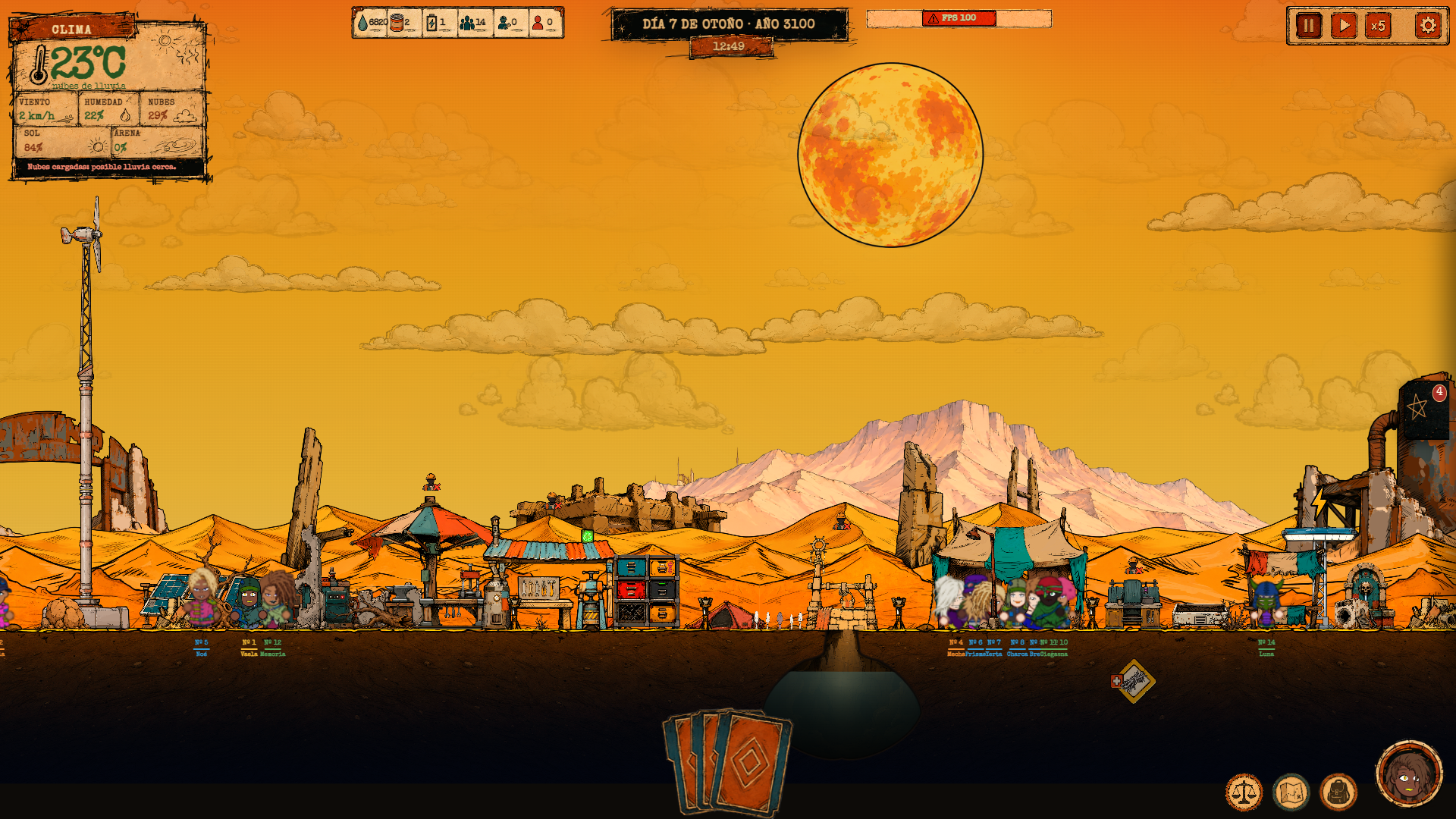
The contrast is striking. The buildings look busy and purposeful, but the landscape dwarfs them. Climate readings occupy the upper corner, while the interface tracks resources and the people who depend on them. In a conventional builder, expanding that settlement would be the beginning of a triumphant transformation. Here, every new structure is a temporary answer to a worsening problem.
The developer describes a world governed by changing weather, increasingly scarce resources and the needs of a clan whose members react to your decisions. You assign work, build what you can afford and try to respond to visitors and threats without spending tomorrow’s supplies today.
Knowledge can save you. It can also cost you.
There is a deck-building layer underneath the settlement management. Cards represent the knowledge and structures your survivors can use, and new possibilities are acquired through exploration, bartering and discovery. A card might offer a desperately needed piece of infrastructure, but securing the means to build it still competes with keeping everyone fed.
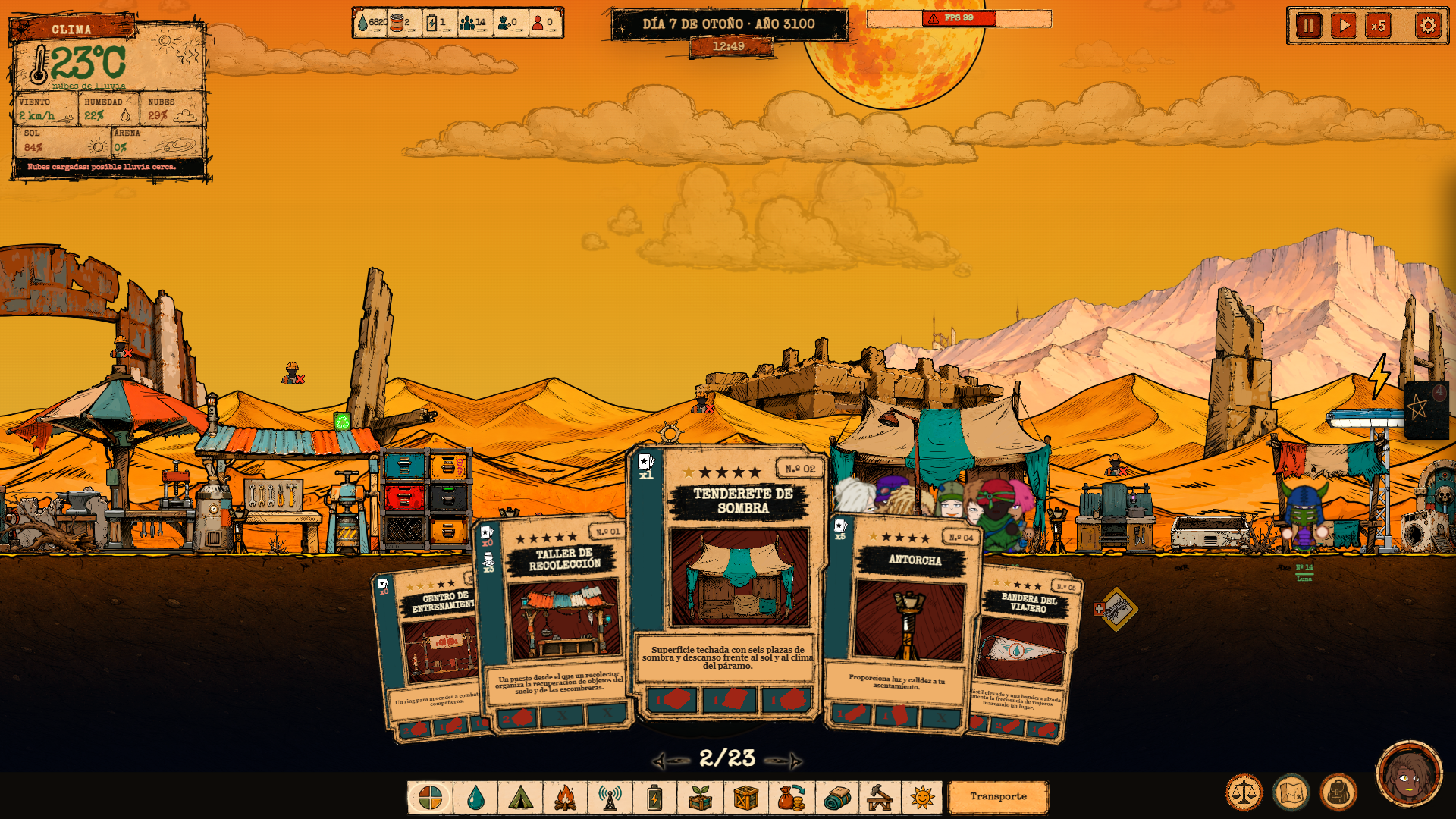
That introduces an interesting sort of tension. Your immediate problem might be food, energy or shelter. The solution might be hiding in technology you cannot yet afford, behind resources you cannot spare or among choices that will close off another possibility. Even the laws you establish for your clan are intended to carry permanent consequences through a run.
This is where Yo soy páramo could find its identity. It isn’t enough for the world to be hostile. A memorable survival game also makes the player’s compromises feel personal. Selling something important to survive a brutal season is more interesting than simply waiting for a progress bar to fill.
An apocalypse with a timetable
The developer’s version of the end of the world isn’t a single explosion. The climate deteriorates over time, and major events threaten to reshape what remains. In the developer’s correspondence, the Moon eventually falling and the approach of a permanent night are described as part of the game’s larger trajectory. The goal isn’t to prevent them. It’s to understand the systems well enough to survive their consequences for as long as possible.
It’s a potentially effective framing device. Every autumn, every cold snap and every decision made under pressure brings your small community closer to an ending that cannot be negotiated with. The ambition seems to be a game about endurance and the meaning of choices, not a puzzle with one correct escape route.
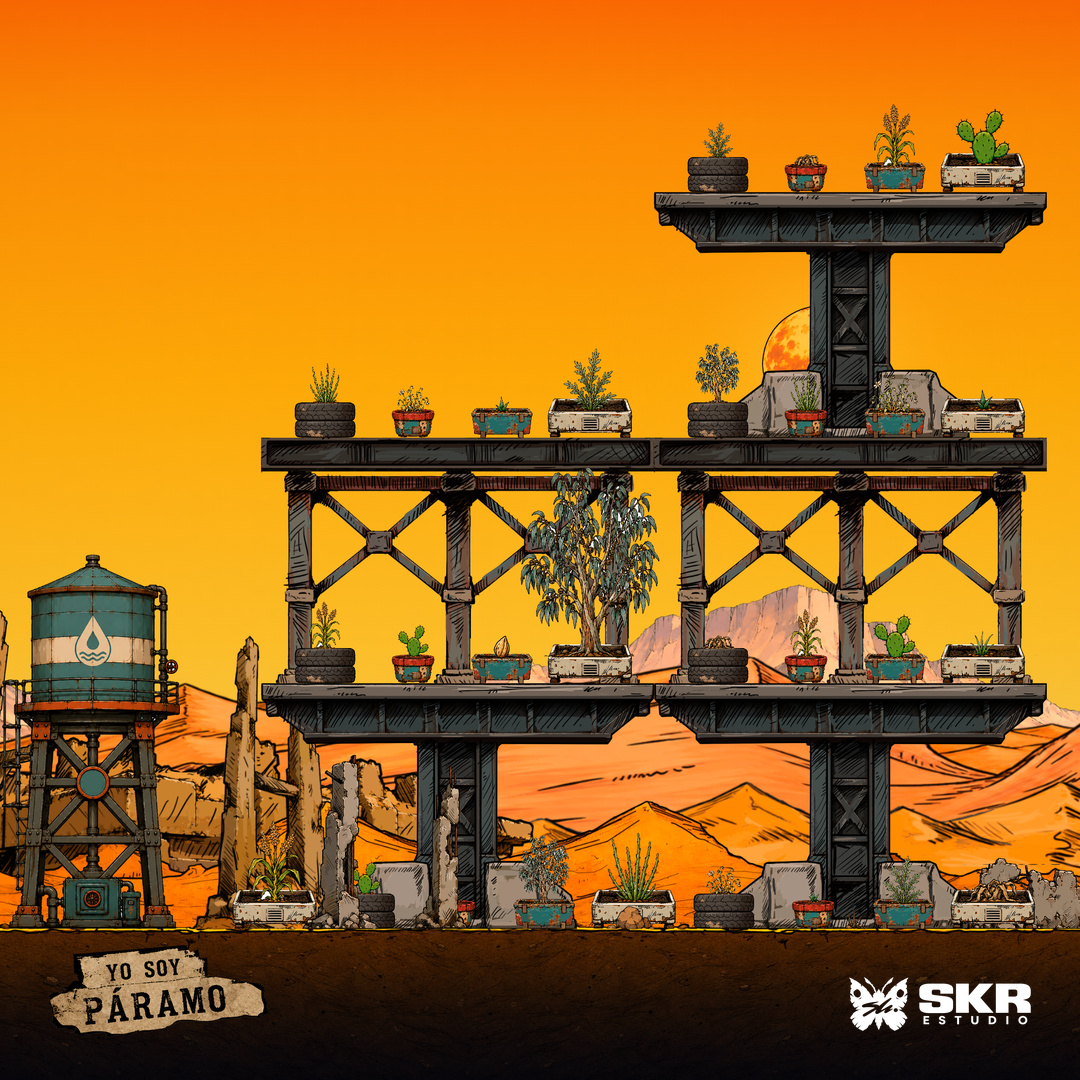
The studio’s images also show a more detailed simulation underneath the dramatic setting, including systems for tending crops and monitoring growth. Those quieter tools matter because the hardest survival decisions often arise from ordinary routines: who gets assigned a job, what gets planted, when the harvest arrives and what you do if it doesn’t.
Where development stands
Estudio SKR tells us the project is approaching a pre-alpha milestone. Public store information points towards a November 2026 release window, but there is no firm day we can responsibly give readers at present. The Steam listing is available for wishlisting, while the developer continues work on the systems and events that shape the final years of this fictional Earth.
The themes are deliberately uncomfortable, too. The developer’s store disclosures include material involving death, violence and extreme deprivation. That should be kept in mind by anyone drawn in by the colourful, illustrated presentation.
There’s a lot here still to prove. The interface will need to make complex systems readable, and the escalating catastrophes must be more than a series of unavoidable punishments. But the central idea already has a rare kind of clarity: your job is not to beat the apocalypse. Your job is to keep going while it arrives.
Where to find it: Yo soy páramo on Steam · Official English press kit. Developer and image credit: Estudio SKR. Current status: PC development / pre-alpha, with launch timing subject to change.
Editorial note: Original in-game images supplied by Estudio SKR with website/social reuse permission. No hands-on review or score is implied, and no review key has been redeemed.