
A game can remain on a storefront long after the people who made it have lost their jobs. Its logo survives. Its achievements still unlock. Players can revisit its world whenever they like. But the studio that knew how to build that world may no longer exist in the same form.
That disconnect is one of the defining tensions of the modern games business. We celebrate games as cultural works, then discuss the teams behind them in the language of costs, units and efficiencies.
The numbers are real. So are the people.
Microsoft’s September 2026 Xbox restructuring confirmed 268 additional role eliminations and significant changes to the structure of first-party studios. Ubisoft, meanwhile, has proposed closing Finland’s RedLynx, potentially affecting up to 52 roles. These are separate decisions by different companies, and their stated business circumstances are not identical. They do, however, expose a common problem: experienced development teams can become vulnerable even when the games they helped create remain valuable.
It would be too easy to say every restructuring is irrational or that every studio should operate indefinitely regardless of cost. Development is expensive. Projects can stall. Publishers must make difficult decisions. But financial necessity should not prevent us from asking whether the industry is measuring all the things that matter.
What disappears when a team breaks apart?
A studio is more than its trademarks and tools. It contains hard-won knowledge about production pipelines, player expectations, unusual design problems and the relationships that allow creative disagreements to become better games. Those skills don’t disappear when a project ends, but dispersing a team can make them harder to bring together again.
That loss rarely appears in a headline about an acquisition or a restructure. Players may notice it years later, when a series returns without the particular voice that made it memorable.
The problem with treating creativity as inventory
Big franchises provide a measure of commercial predictability. That makes them attractive when publishers are trying to reduce risk. Yet the next important franchise is unlikely to arrive fully formed as a guaranteed success. Someone has to be allowed to make something strange, difficult or initially unfashionable.
Independent developers often shoulder that risk on smaller budgets. But independence is not a magical solution: small teams face their own financial pressures, limited visibility and the burden of running a business while trying to make art.
What a healthier industry could value
Better communication during restructures, realistic production planning, sustainable project scopes and respect for experienced staff would be worthwhile starting points. None is a universal cure. The goal is to stop treating a game’s commercial life and its creators’ working lives as unrelated stories.
At Coloured Static Press, our coverage of smaller studios sits alongside reporting on the industry’s biggest companies for a reason. The people building games are not disposable parts of the product. They are the reason the product exists.
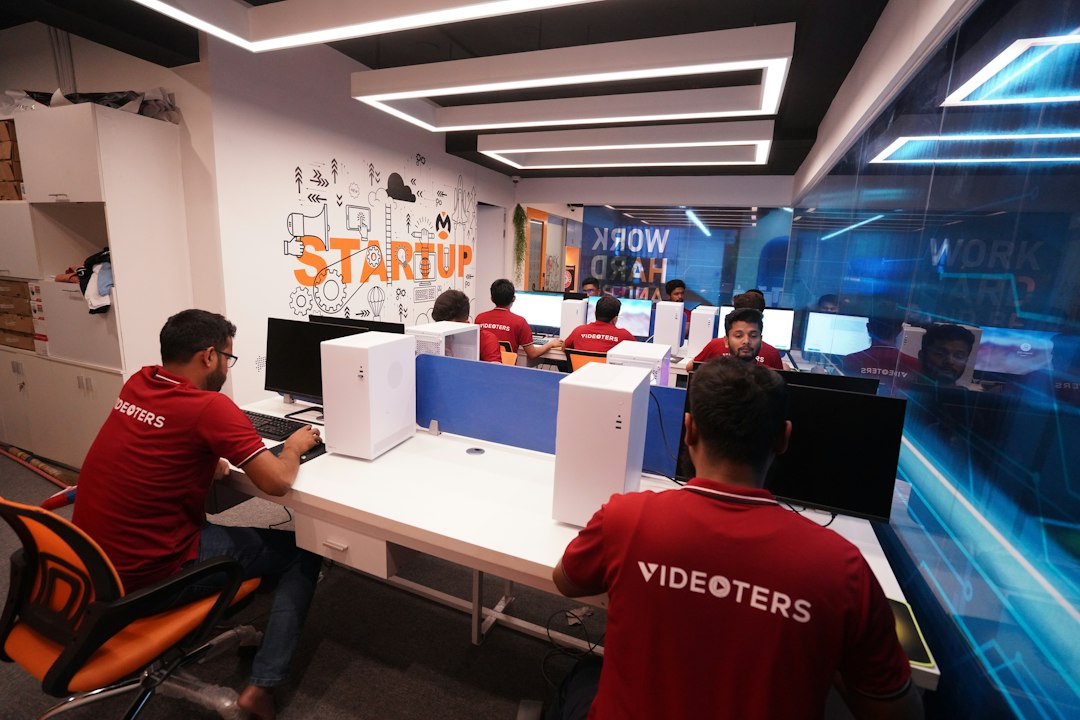
Featured image: illustrative gaming photograph by Videoters / Unsplash.
Reporting basis: Xbox’s official restructuring update, Ubisoft’s reported statement on RedLynx and The Guardian’s reporting on affected workers. This is a CSP opinion and analysis feature, not an assertion about individual companies’ undisclosed motives.