
HARDWARE / RETRO GAMING · PRE-LAUNCH FEATURE
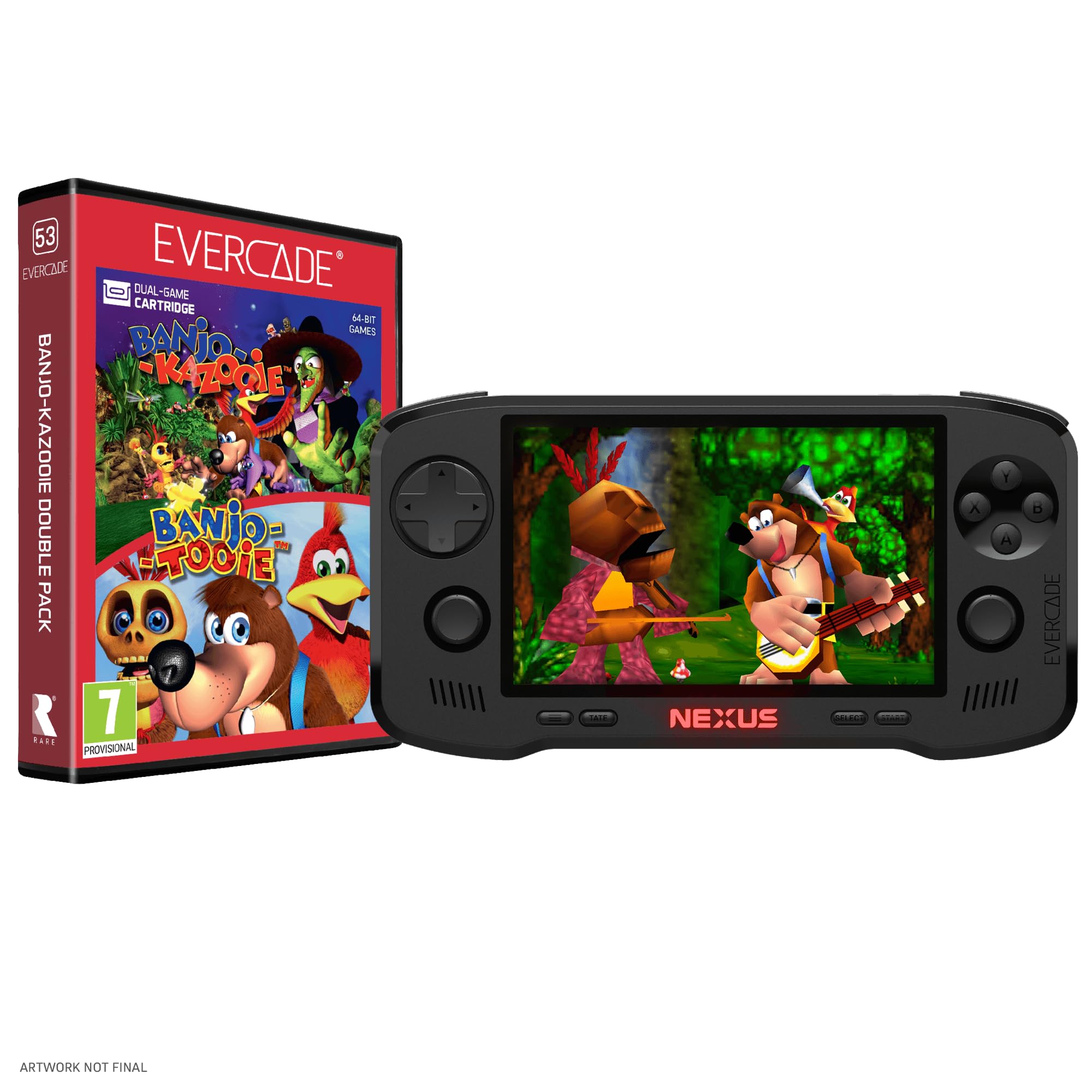
Blaze Entertainment’s £169.99 retro handheld launches on 30 October with Banjo-Kazooie, dual analogue sticks and a commitment to physical cartridges. The more interesting question is whether that commitment still matters.
There was a time when buying a game meant bringing something home: a cartridge, a box, perhaps an instruction manual. Something to lend, collect or rediscover years later. Digital storefronts have made games easier to access than ever, but Blaze Entertainment is betting there is still an audience for a different relationship with the medium.
The Evercade Nexus is not trying to outmuscle a Steam Deck or replace a modern console. It is a dedicated retro handheld with a curated, officially licensed physical library. That narrower ambition is both its greatest strength and its clearest limitation.
More than another retro handheld
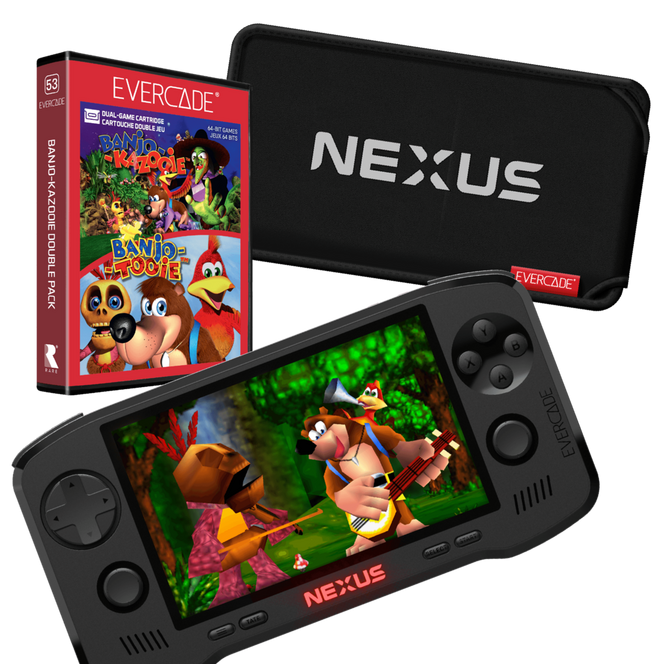
Evercade has spent years carving out a different corner of the gaming market. Rather than asking players to source ROM files or navigate an enormous digital storefront, its consoles use officially licensed cartridges containing curated collections of classics and newer independent games. The Nexus builds on that approach with a larger screen, two analogue sticks and support for existing Evercade cartridges. For collectors, compatibility matters: an upgrade should not make an established physical library redundant.
Banjo-Kazooie is the headline act
The included Banjo-Kazooie Double Pack brings Rare’s Banjo-Kazooie and Banjo-Tooie to a modern cartridge. These versions feature enhancements including widescreen presentation and revised camera controls. It is an effective introduction to the Nexus’s dual analogue sticks, but also a reminder that nostalgia is a starting point, not a substitute for evaluating the hardware itself. A familiar game can sell the idea; the device must still earn its place in a player’s bag.
What £169.99 buys
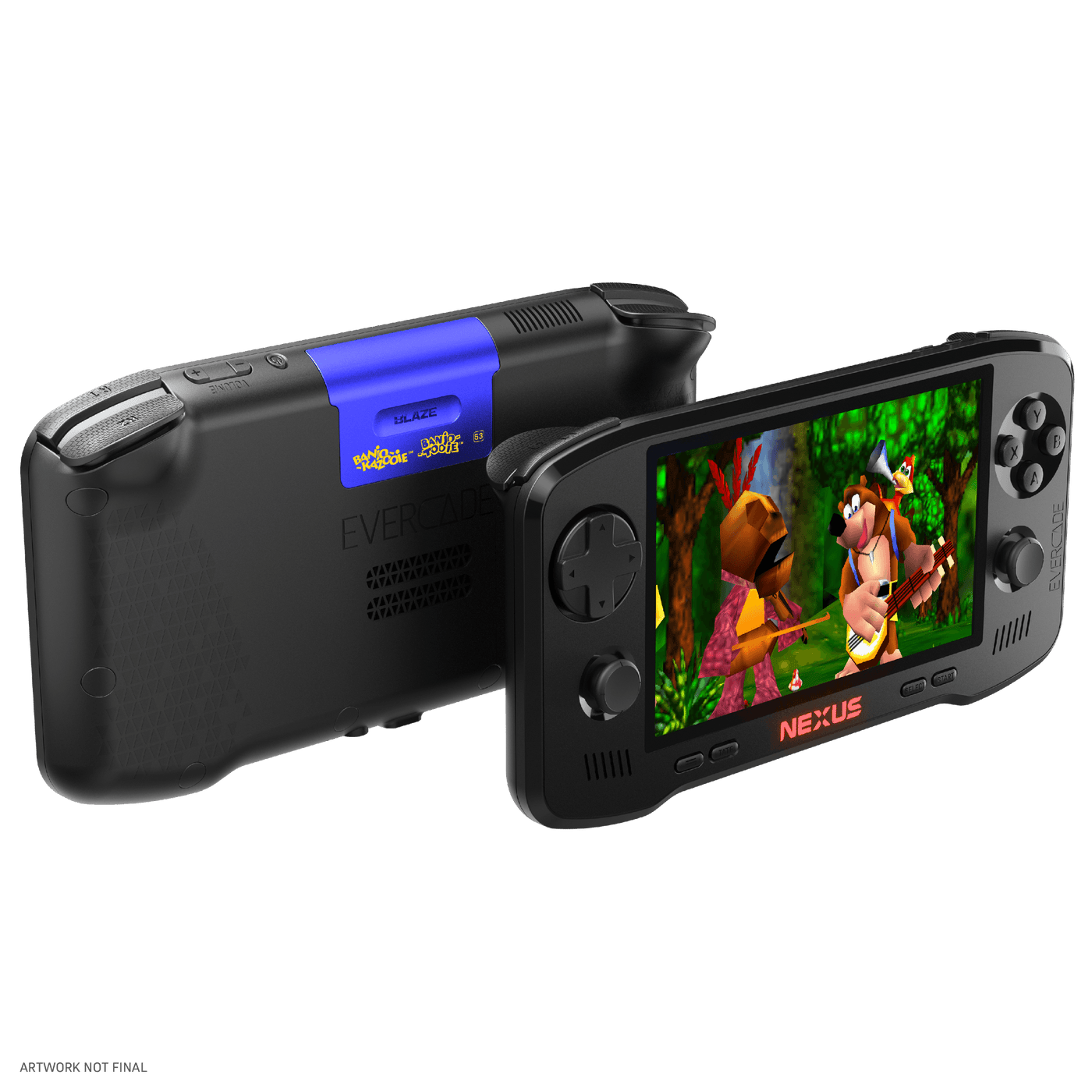
The Nexus features a 5.89-inch IPS display with 840 × 512 resolution, a quad-core 1.5GHz processor, dual analogue sticks, a 5,000mAh battery and USB-C charging. Blaze advertises more than five hours of play, although actual endurance depends on use. Bluetooth headphone support and a 3.5mm audio jack provide listening options, while the device weighs approximately 410g. There is no HDMI output, which limits its flexibility for players wanting to connect directly to a television.
| UK launch | 30 October 2026 |
| UK price | £169.99 |
| Screen | 5.89-inch IPS, 840 × 512 |
| Processor | 1.5GHz quad-core |
| Battery | 5,000mAh; claimed 5+ hours |
| Controls | D-pad, dual analogue sticks, shoulder buttons |
| Included cartridge | Banjo-Kazooie Double Pack |
| Weight | 410g |
EverSync brings back local multiplayer
EverSync allows compatible Nexus handhelds to connect for supported local multiplayer without needing an external Wi-Fi network. Its most appealing feature is that a single cartridge can be shared between two participating systems. That is a thoughtful nod to an era of playing together in the same room. The catch is equally clear: both players need Nexus hardware, and individual games must support the feature. Its value will ultimately depend on adoption and the catalogue.
Why physical ownership still matters
Digital distribution has made games easier to discover, buy and access. It has also changed the relationship between players and their libraries. Accounts, licences and online services can influence whether a purchase remains accessible years later. Evercade’s physical approach offers a tangible alternative: a game collection that exists on a shelf as well as on a screen. But physical media is not an automatic guarantee of preservation. Cartridges can fail, hardware can break and licensing can affect future availability. The strongest case for Evercade is not that cartridges solve every problem. It is that players should still have a meaningful choice.
A place for independent games
Evercade’s catalogue is not exclusively about established retro names. Indie Heroes collections and other contemporary releases have given smaller developers another route to reach an audience. For Coloured Static Press, that is especially interesting. Digital storefronts can be crowded, and a curated physical release may help a distinctive game find players who would otherwise miss it. Manufacturing and licensing mean the model will not suit every studio, but the platform demonstrates that retro-minded hardware and contemporary independent creativity need not be separate conversations.
The trade-offs deserve attention
Early independent hands-on coverage has praised the display and controls, while reviews have also raised concerns about convenience features such as the absence of a conventional sleep mode and the lack of television output. Those points matter on a handheld intended for short, portable sessions. They are reported impressions, not findings from our own testing, and we would want to assess startup behaviour, ergonomics, battery life and game performance ourselves before offering a buying recommendation.
Our view: a focused alternative, not a universal answer
At £169.99, the Evercade Nexus is not the cheapest route into retro gaming, nor the most flexible portable machine. Its proposition is more specific: licensed cartridges, an established library, familiar games and a device built to play them without fuss. Existing collectors may find the larger screen and analogue controls particularly appealing. Other players will reasonably prefer more versatile hardware. The Nexus deserves attention because it asks a useful question at a time when convenience dominates: as gaming becomes easier to access, what is worth keeping?
Editorial disclosure: Coloured Static Press has not tested the Evercade Nexus. This is a pre-launch analysis, not a hands-on review.
Sources: Evercade official product information; VGC announcement; Time Extension hands-on; GamesRadar+ review.