

Who do you trust when everyone has a story?
A single-player social-deduction horror game, twelve researchers and just nine days. We speak to Ugur Ozer of Aeon Games Canada about believable suspicions, imperfect evidence and making Antarctic isolation feel personal.
In most social-deduction games, the other people at the table create the tension. Deep Frost attempts something different: a solo investigation where a crew of researchers have changing loyalties, conflicting accounts and their own reasons to trust or distrust one another. Somewhere among them is the Thaw, a parasitic intelligence capable of copying the crew.
Ahead of the game’s planned 27 October 2026 release on Steam, Ugur Ozer, the developer behind Aeon Games Canada, spoke with Coloured Static Press about the game’s inspirations, the design behind its nine-day investigation and why telling players what a clue proves matters more than overwhelming them with clues.
“I want players to leave with a theory they can explain, and a reason to question it.”Ugur Ozer · Aeon Games Canada
In conversation with Ugur Ozer
What first inspired Deep Frost? Did the Antarctic setting come before the social-deduction idea, or did you choose isolation as the perfect place to make players doubt everyone around them?
UGUR OZER · AEON GAMES CANADA
The Thing and psychological horror were big influences. I am interested in the fear that comes from not knowing whether to trust the people around you. Canadian winters also make cold and isolation feel close to home. Deep Frost brings those influences together in an Antarctic station, where the setting reinforces the social deduction: you have to rely on the same people you are trying to investigate.
In a multiplayer social-deduction game, the unpredictability comes from real people. How have you approached giving Deep Frost’s crew convincing personalities, motives and contradictions without relying on other human players?
UGUR OZER · AEON GAMES CANADA
The crew are built around individual traits, relationships, suspicions and goals, rather than acting as one collective opponent. Someone can distrust you while trusting a person you suspect. Their response to an accusation depends on that relationship and on the information available to them.
Authored dialogue gives those reactions a voice, while the underlying systems decide when they apply. That also lets a contradiction mean something more specific than ‘this person is lying.’ A statement is a claim with a source, and a change of position needs to be considered alongside the evidence and the person making it.
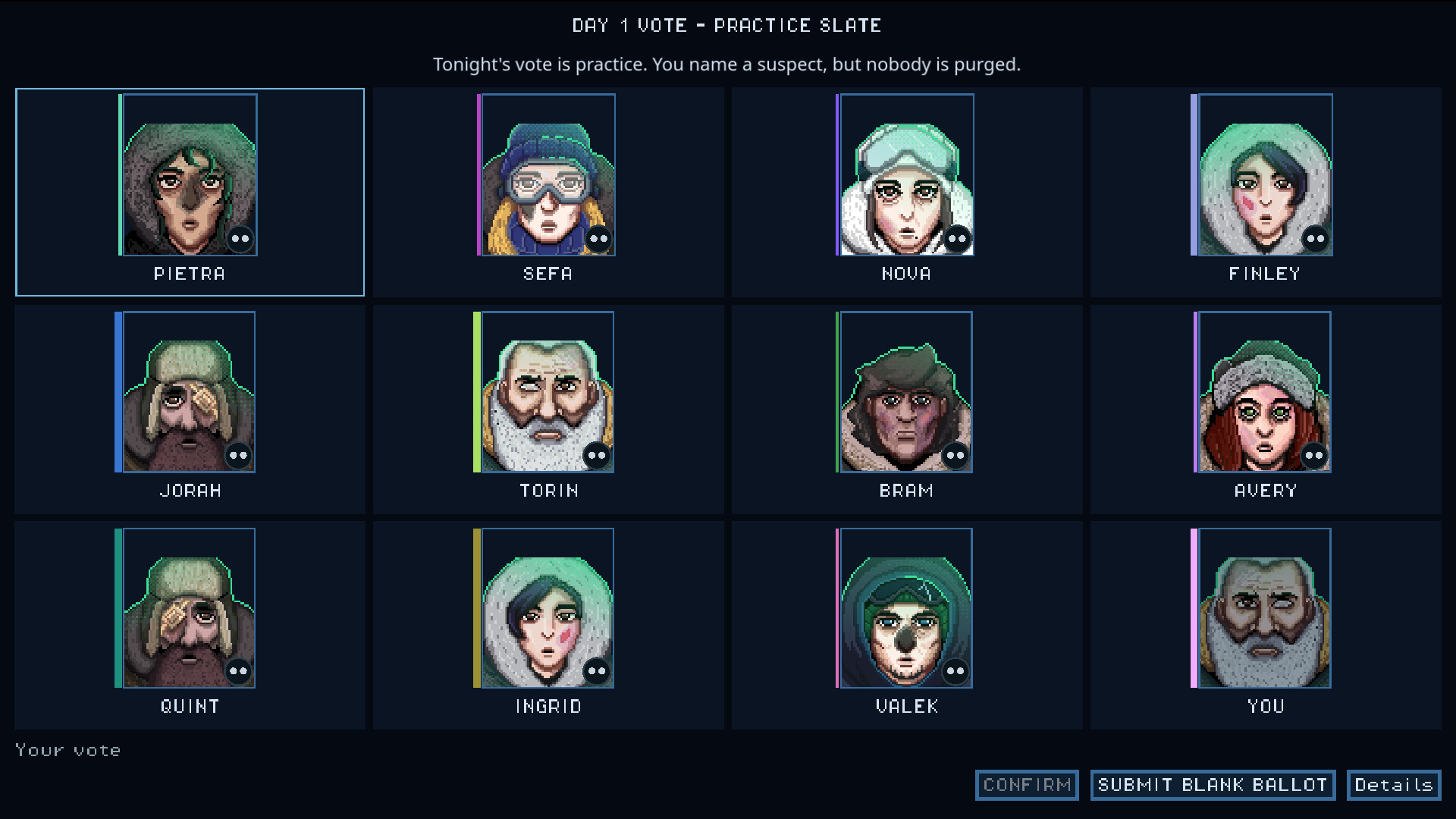
The player has just nine days to identify the Thaw. How did you balance the clues, case files and testimony so that players can reach reasoned conclusions without every mystery becoming too obvious or feeling unfair?
UGUR OZER · AEON GAMES CANADA
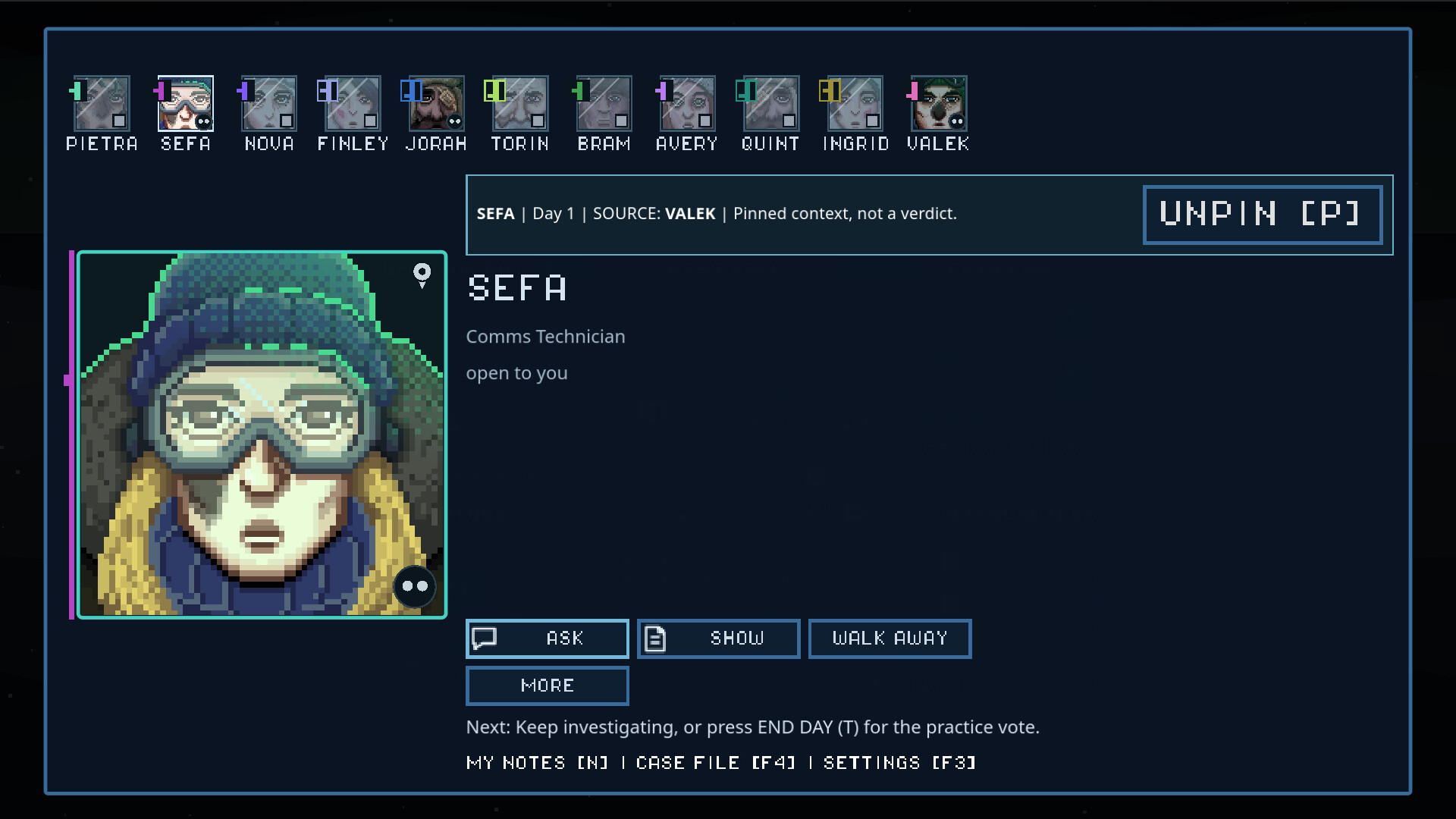
The nine-day structure puts a deadline on the investigation, but the important distinction is between collecting information and knowing what it proves. Testimony is a claim. A record has a source. Hearing the same allegation again does not automatically turn it into independent confirmation.
The Case File lets you return to accounts, records and changes in what people have said, so you do not have to rely entirely on memory. The aim is to give players reasons they can explain, while leaving room for uncertainty. Suspicious behaviour is not a guaranteed role reveal, and the vote still asks you to act before you know everything.
At the Round Table, players can voice an opinion and cast a different private vote. What led you to separate public accusation from private action, and how do those decisions influence the crew’s behaviour?
UGUR OZER · AEON GAMES CANADA
Separating the two creates a difference between trying to influence the room and deciding what you will actually do. A public accusation can give other people’s suspicions more weight. A public defence can help someone with listeners who already trust you, but it does not establish an alibi or prove innocence. You still make a separate ballot choice afterward.
Relationships and prior suspicions matter, so the crew do not simply obey every statement. They can also remember votes and react to them. I would describe the ballot as a separate decision rather than a promise of permanent secrecy: statements and voting behaviour can be compared as the round unfolds.
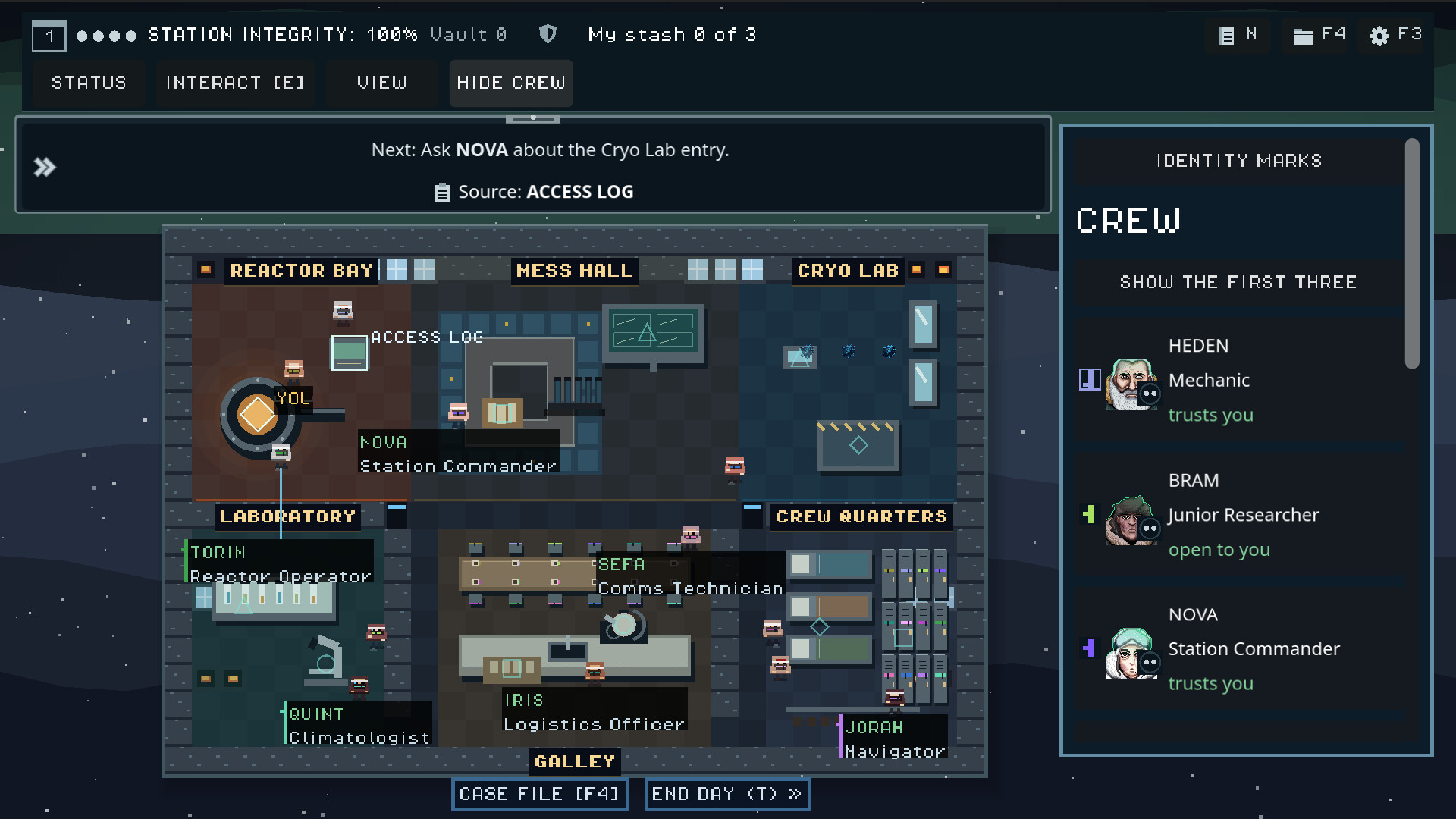
Deep Frost also asks players to keep a failing research station functioning. How do the repairs, resource pressures and survival decisions complicate the investigation, rather than simply interrupting it?
UGUR OZER · AEON GAMES CANADA
The station gives the investigation a second set of demands. You need information, but you also need the place to keep functioning. Station operations and maintenance affect survival resources, including doses and station integrity, so a day cannot be spent treating every conversation as if it were free of consequences.
That creates a useful tension: the people you are trying to judge are also the people you have to live and work alongside. Keeping the station going does not tell you whom to trust. It changes the conditions under which you have to make that decision.
You’ve discussed changing roles and relationships between runs, with the full game also exploring the Thaw’s perspective. What has been the biggest design challenge in making each run feel meaningfully different while preserving a coherent mystery?
UGUR OZER · AEON GAMES CANADA
The central challenge is keeping variation consistent with what has actually happened in that run. Roles, traits, relationships and the evidence people know can change the social situation, but a record still needs a source, and a character’s response needs to follow from their circumstances. Variation only helps the mystery if the player can make sense of it afterward.
The Thaw perspective changes the problem as well. As Crew, you are trying to work out whom to trust and remove the threat. As Thaw, you have a concealed objective and have to manage how the others see you. The station and the voting structure remain recognisable, but the same interaction can matter very differently depending on your role.
Looking back over development, what’s one decision, unexpected discovery or lesson that changed the direction of Deep Frost? And when players arrive at the station on 27 October, what do you most hope they take away from the experience?
UGUR OZER · AEON GAMES CANADA
The biggest lesson has been how difficult it is to give players a lot of information without overwhelming them. Deep Frost depends on testimony, records and changing relationships, but those systems only work if players can understand what they are seeing and why it matters. I have learned that presenting information clearly is as important as adding it. I want players to leave with a theory they can explain, and a reason to question it.
Where uncertainty becomes the horror
What emerges from Ozer’s answers is a deliberate separation between gathering evidence and making a judgement. People may behave suspiciously without being infected. Two witnesses repeating one claim do not make two independent sources. And even the way a crew member votes may tell a different story from what they said in public. The horror isn’t just the possibility of a creature wearing a human face; it’s the cost of drawing the wrong conclusion about the person standing beside you.
The game’s combination of social systems and station maintenance adds a further complication. Players must keep the outpost functioning while deciding which researchers to believe. Ugur’s focus is on making those moving parts legible enough to form a reasonable theory, while ensuring there’s never complete certainty.
Explore Deep Frost
PC · Steam · Planned launch: 27 October 2026. The free demo covers the first three days of the investigation.
Wishlist Deep Frost on Steam ↗ · Play the free demo ↗
Read our original Deep Frost First Signal discovery ↗ · More upcoming indie games ↗
Editorial note: This is a written interview. All seven answers were supplied directly by Ugur Ozer and reproduced without rewriting their substance; only paragraph layout and HTML formatting have been applied. Screenshots are official Steam assets credited to Aeon Games Canada. This article is not a hands-on review, and access to a review copy does not influence interview coverage.