
Some games are built on famous technology. Farkle: Tavern Dice was built to help prove its creator’s own engine. In our latest seven-question developer interview, Jan Bostl of Czech independent studio Pterosoft explains how the dice game in Kingdom Come: Deliverance inspired a standalone medieval tavern experience, and why every apparently simple roll became a challenge in game design and engine development.
Released on 21 October 2026 for Windows PC via Steam, Farkle: Tavern Dice invites players to bank their points or risk another throw. Behind the candlelight, physical dice and medieval music sits the studio’s independently developed Ptero-Engine. Our conversation explores the game’s origins, interface design, playtesting and future plans.
Interview format: seven original written questions from Coloured Static Press, with answers supplied by Jan Bostl, Pterosoft Studio. Answers are preserved in full, with minor reflow of email line breaks. This is a developer interview, not a hands-on review or a scored verdict.
The full interview
1. What first inspired you to create Farkle: Tavern Dice, and how did Pterosoft Studio get started?
The original inspiration for Farkle: Tavern Dice actually came from playing Kingdom Come: Deliverance. I really enjoyed the Farkle dice minigame, particularly how something so simple could become surprisingly engaging and competitive. The combination of luck, strategy, and the constant temptation to risk another roll made it one of my favorite activities in the game.
That experience got me thinking about creating a standalone Farkle game, where the dice gameplay would be the main attraction rather than a minigame within a larger RPG. I also wanted to capture the medieval atmosphere that made playing dice in Kingdom Come so enjoyable, while developing our own visual identity and experience.
Pterosoft Studio was founded in 2017 as an independent game development studio based in the Czech Republic. Since then, we’ve been working on various projects, ranging from games and development tools to graphics technologies and our own custom game engine, Ptero-Engine.
Farkle: Tavern Dice presented an interesting opportunity for us. We could create a relatively straightforward game while simultaneously putting Ptero-Engine to the test in a complete commercial release.
It’s our first commercially released game developed using Ptero-Engine, so the project represents an important milestone for the studio. It’s not just about creating an enjoyable dice game, but also about demonstrating what our technology can achieve.
2. What drew you to the push-your-luck decisions of Farkle, and why set the game in a tavern?
What I find interesting about Farkle is how much tension can come from such simple mechanics.
You don’t need complicated systems or dozens of rules to create meaningful decisions. Sometimes, the most difficult choice is simply whether to stop while you’re ahead or risk everything for a better result.
I also like that Farkle creates its own little stories. You can be having an excellent round, make one overly ambitious decision, and suddenly lose everything you’ve accumulated.
The medieval tavern setting felt like a natural environment for that kind of experience.
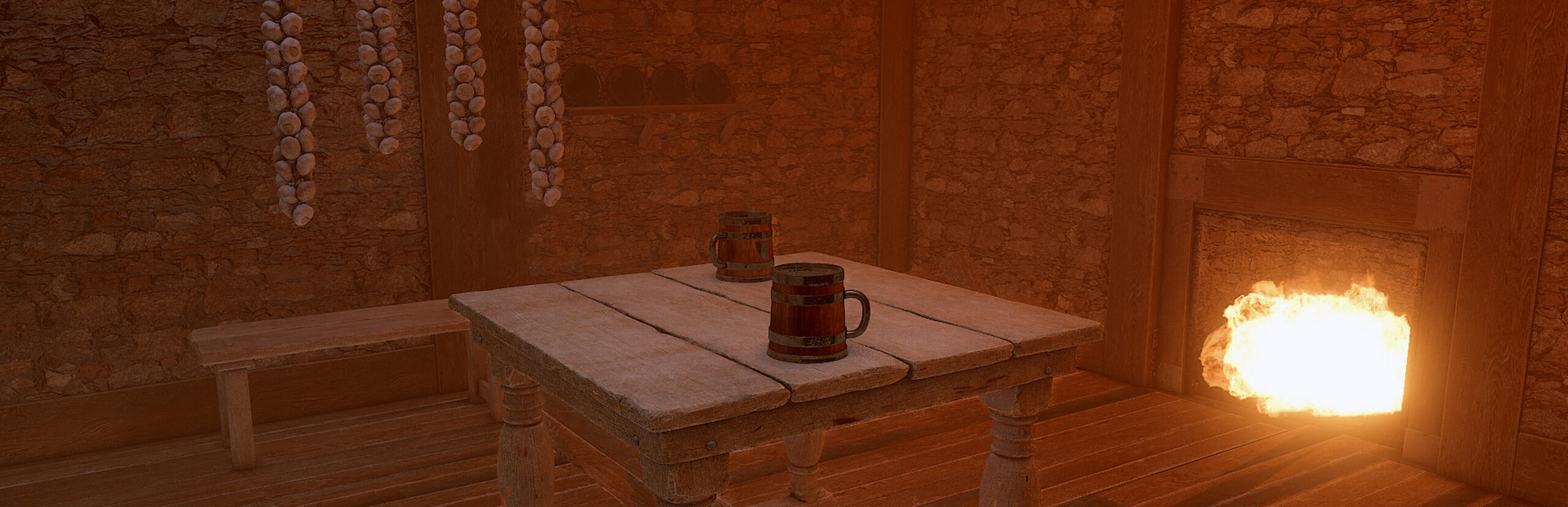
Rather than presenting the game as a conventional digital board game with a flat interface, we wanted players to feel as though they were sitting at a table in a real medieval tavern.
The lighting, music, environment, and overall atmosphere are intended to make even a simple dice match feel like part of a larger world.
3. How did you make the decision to bank your score or roll again feel tense, fair and satisfying?
The interesting thing about Farkle is that the tension already exists within the original rules.
Our objective was not to reinvent those mechanics, but to present them in a way that makes every decision understandable and satisfying.
A player needs to know what they’ve earned, what they stand to lose, and what another roll could potentially give them.
That’s why clarity and responsiveness are particularly important. Dice rolls, scoring combinations, and the presentation of results all contribute to the feeling of control.
We also wanted to preserve the unpredictable nature of the game. Sometimes taking a risk pays off, and sometimes it doesn’t.
That uncertainty is exactly what makes Farkle interesting. A satisfying game doesn’t necessarily mean winning every round; it means understanding the consequences of your decisions and wanting to try again.
4. What needed to change from traditional tabletop dice to make the experience work naturally on PC?
One of the biggest differences is how information is communicated.
When playing Farkle around a physical table, players can naturally pick up dice, discuss scoring combinations, and follow the game at their own pace.
A computer game needs to communicate the same information through its interface, animations, and visual feedback.
We therefore had to consider how players interact with the dice, how scoring is displayed, and how to make each turn progress naturally without unnecessary interruptions.
Another important consideration was balancing the atmosphere with usability.
We wanted a detailed 3D tavern, but the environment couldn’t interfere with the actual game. The dice, scoring information, and available actions always needed to remain understandable.
The goal was to retain the simplicity of traditional Farkle while making the digital version comfortable and intuitive to play.
5. How did you develop the tavern’s visual style, atmosphere and sound?
The medieval environment was one of the central parts of the project from the beginning.
We wanted the tavern to feel atmospheric and believable rather than simply serve as a decorative background.
That meant paying attention to the architecture, materials, lighting, furniture, and smaller environmental details.
Lighting was particularly important. We wanted to create a warm, inviting atmosphere, with convincing interactions between the light sources and surrounding objects.
Because the game runs on our custom Ptero-Engine, we were also able to develop and refine the underlying rendering technology throughout production.
We’ve continued improving the engine since release, including graphical enhancements, ray-traced shadows, and ambient occlusion.
Sound plays an equally important role. Tavern ambience helps the environment feel occupied and alive, while historical medieval music reinforces the setting.
Our aim was to combine these elements into an environment where players could relax, enjoy the atmosphere, and occasionally get frustrated by an unfortunate roll of the dice.
6. Which part of development required the most iteration, and what surprised you during testing?
One of the most demanding aspects was balancing game development with the continued development of Ptero-Engine.
When working with an established commercial engine, many underlying systems are already available. With our own engine, improvements to rendering, performance, and other technical systems can become part of the game’s development process.
That provides a great deal of flexibility, but it also creates additional responsibilities.
We’ve spent considerable effort refining the rendering pipeline, improving performance, and making the game run more reliably across different hardware configurations.
Another challenge with a relatively simple game is that small details become much more noticeable.
When the core experience revolves around rolling dice, the responsiveness of the interface, the clarity of feedback, and the overall presentation become especially important.
It reinforced the idea that a simple concept doesn’t necessarily mean a simple development process.
7. What have players taught you since release, and what would you most like to explore next?
Farkle: Tavern Dice was released on Steam on October 21, 2026, so we’re still in the early stages of learning from players.
One thing that has become clear is that players care about more than just the core gameplay. Features such as localization, achievements, convenience, accessibility, and hardware compatibility all contribute to the overall experience.
For example, we’ve received feedback about Steam Cloud support, which is a useful reminder that smaller quality-of-life features matter alongside major graphical improvements.
We’ve already released substantial improvements since launch, including a graphical overhaul, expanded localization, and multiplayer support.
Looking ahead, we’re particularly interested in developing the competitive side of Farkle further.
Ranked matches are one of the features we’re planning, alongside additional customization options and an in-game store.
We also intend to continue improving Ptero-Engine itself. Farkle is an important milestone for the technology, but the engine is a much larger, ongoing project.
Ultimately, I’d like Farkle to evolve into a game that players can return to regularly, whether they want a relaxing dice match or something more competitive.
From a tavern minigame to an independent release
Jan’s account reveals a particularly demanding kind of solo-studio challenge: each adjustment to dice physics, the interface or the warmth of the tavern could involve new work on the underlying engine. His team sees the game both as an approachable Farkle experience and as a meaningful commercial milestone for Ptero-Engine.
The studio says it is interested in deeper multiplayer competition, customisation and continued engine improvements. These are developer-stated plans, not guaranteed feature dates. The full game launched on Steam on 21 October; our earlier release coverage explains the original technology and release context.
Find Farkle: Tavern Dice on Steam or visit Pterosoft Studio. We thank Jan for taking the time to share the studio’s experiences. Independent editorial coverage and participation in community giveaways are considered separately; providing keys does not determine our reporting.
Original interview correspondence received 28 October 2026. Images: official Pterosoft Studio/Steam assets. Platform and launch date independently cross-checked against the developer’s Steam announcement. No hands-on review or commercial endorsement is implied.