
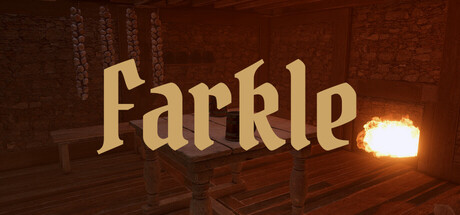
Farkle: Tavern Dice makes a simple roll into a gamble, and builds the whole tavern from scratch
Six dice. A wooden table. One choice after every roll: walk away with your points, or risk losing everything for one more throw.
Most independent projects have enough to think about just getting a game finished. Farkle: Tavern Dice, from Czech developer Pterosoft Studio, adds another unusual ambition: its warm medieval tavern and physical dice are rendered using Ptero-Engine, a proprietary DirectX 12 game engine developed by the studio itself.
The game launched on 21 October 2026 for Windows PC through Steam. Pterosoft contacted Coloured Static Press to introduce the release and specifically pointed to its home-built technology. That offers an interesting reason to look beyond the dice and ask what it takes for a small team to create both the game and the tools to power it.
The rules are simple. The decision isn’t.
Farkle is a traditional push-your-luck dice game. Each turn starts with six dice. Roll them, choose a scoring combination, then decide whether to bank the points you’ve made or roll the remaining dice for a potentially bigger total. The risk is immediate: roll without a scoring combination and the points you haven’t banked disappear.
It creates a tidy little tension between caution and greed. Do you take a respectable result and protect it, or chase that perfect turn? The rules are approachable, but the competing possibilities give players a reason to second-guess themselves after every successful throw.
Why build an engine for six dice?
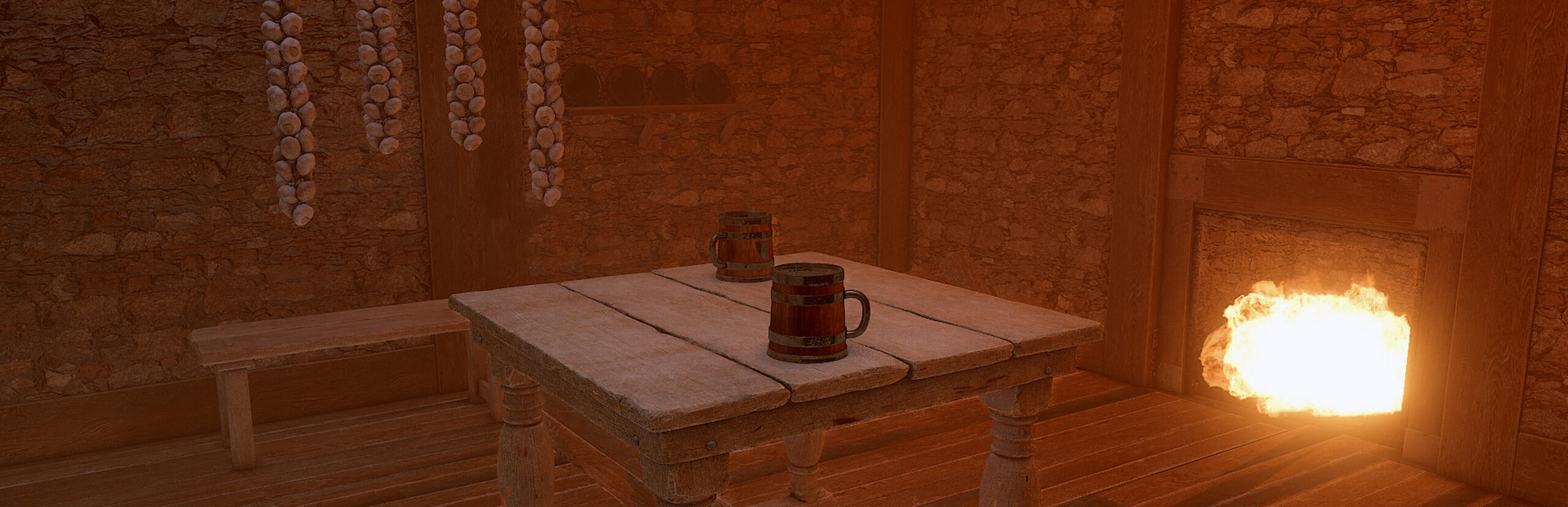
The answer is in the presentation. Pterosoft’s tavern is conceived as a detailed 3D room rather than a flat card table: wooden beams, warm candlelight, firelight, physical dice and period-style ambience contribute to the sense of sitting down in a real place. The studio says the soundtrack incorporates historic medieval music, rather than relying entirely on modern interpretations of the period.
Building Ptero-Engine in-house gives Pterosoft control over the way it renders that space, but it also carries obvious development costs and risks. On 23 October, just two days after release, the studio announced a major new engine foundation including more detailed geometry streaming, improved virtual shadow maps, global illumination, optional path tracing and reconstruction techniques it calls Ptero-SR and Ptero-AA.
Those are substantial technical claims for what appears, on the surface, to be a modest tabletop game. The engine update notes also describe support for familiar technologies such as DLSS, FSR and XeSS. It will be interesting to see whether the technical ambition translates into tangible visual quality and reliable performance across different PCs. Until we’ve tested it, we’re treating those as the developer’s stated features rather than benchmarks we’ve verified ourselves.
More than a graphics experiment
The game still has to work on the strength of its decisions. What makes a push-your-luck game entertaining is the space between a safe choice and an ambitious one. The Steam description emphasises quick-to-learn rules and sessions that can be enjoyed in short bursts or over a longer evening.
Bank the scoring dice, reroll what’s left, and try not to Farkle.
A fully rendered candlelit medieval tavern with physical dice and ambient audio.
A custom DirectX 12 renderer built and updated by Pterosoft itself.
An independent story worth hearing
There is a more interesting developer interview waiting behind the release announcement. Why did Pterosoft choose to build its own engine? Which pieces were essential for this game, and which became experiments because the team could pursue them? How much do the authentic medieval sounds and rich lighting contribute to the experience of the dice themselves?
Those are exactly the kinds of questions that can turn a Switchboard discovery into a deeper story. For now, Farkle: Tavern Dice is eligible for our released-game coverage, with its Steam release confirmed. This is a reported editorial introduction, not a review. We haven’t played it, scored it or made promises about how well it runs.
Enter the tavern
Developer: Pterosoft Studio · Platform: Windows PC · Released: 21 October 2026
View Farkle: Tavern Dice on Steam ↗
Editorial note: Information comes from Pterosoft’s direct submission, the live Steam store and the developer’s published engine-update notes. This is a discovery feature, not an independently tested review. Official Steam imagery is used for illustration.