
BEHIND THE SIGNAL / SEVEN-QUESTION WRITTEN DEVELOPER INTERVIEW
Most deckbuilders ask whether you can make the best of the cards you’ve drawn. Face Your Fate lets you put those cards on the reels, customise what a winning combination means, and decide whether to spend your remaining coins chasing a bigger result. It’s a game about constructing your own odds and then resisting the urge to press your luck one more time.
We invited Jumping Frog Studio to talk through the relationship between its reel mechanics, Fates and Chinese mythological setting. The team’s seven answers explore the actual choices behind a spin, from deciding whether to reroll to making a complicated result readable in combat.
Image provenance: The three screenshots were supplied directly by Jumping Frog Studio. They are genuine, curated in-game captures from Build 26317764, recorded on 31 October 2026. They are not from the latest development build or an independent hands-on session. The developer has authorised editorial use and requires the build/date context to accompany the images.
Seven questions with Jumping Frog Studio
1. What sparked the idea of combining deckbuilding with reel-based results?
I had a sudden thought while playing a slot machine: why couldn’t I choose its components and customize the jackpot? That sounded fun to me, almost like cheating the casino. That became the premise for Face Your Fate. The battle cards you collect feed the reels, and the Fates you equip make different combinations valuable. You can shape the machine, then decide how much to risk on each result.
2. How do you keep the outcome strategic when players can also spend coins to redraw or reroll?
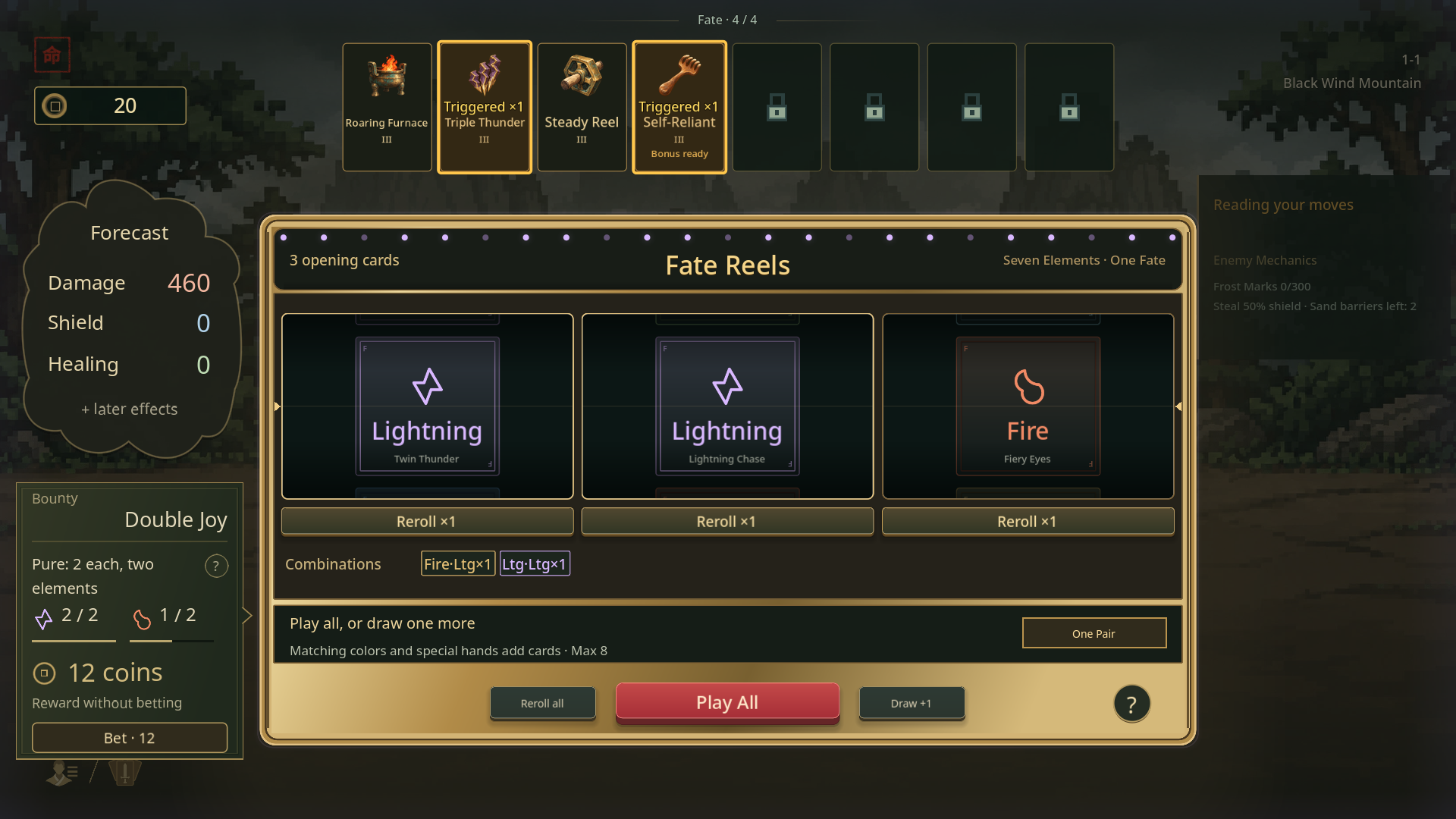
Your deck determines the available cards, and your equipped Fates determine which results are valuable. Matching another element can help one build, while keeping a card with a useful combat effect can help another. Rerolling also gives up the card currently in that column. Coins spent on extra draws are coins you cannot spend on cards, upgrades or other services later. The interesting decision is whether the possible improvement is worth losing what you already have and spending part of your future budget.
3. How did Chinese mythology shape the characters, Fate cards and combat systems?
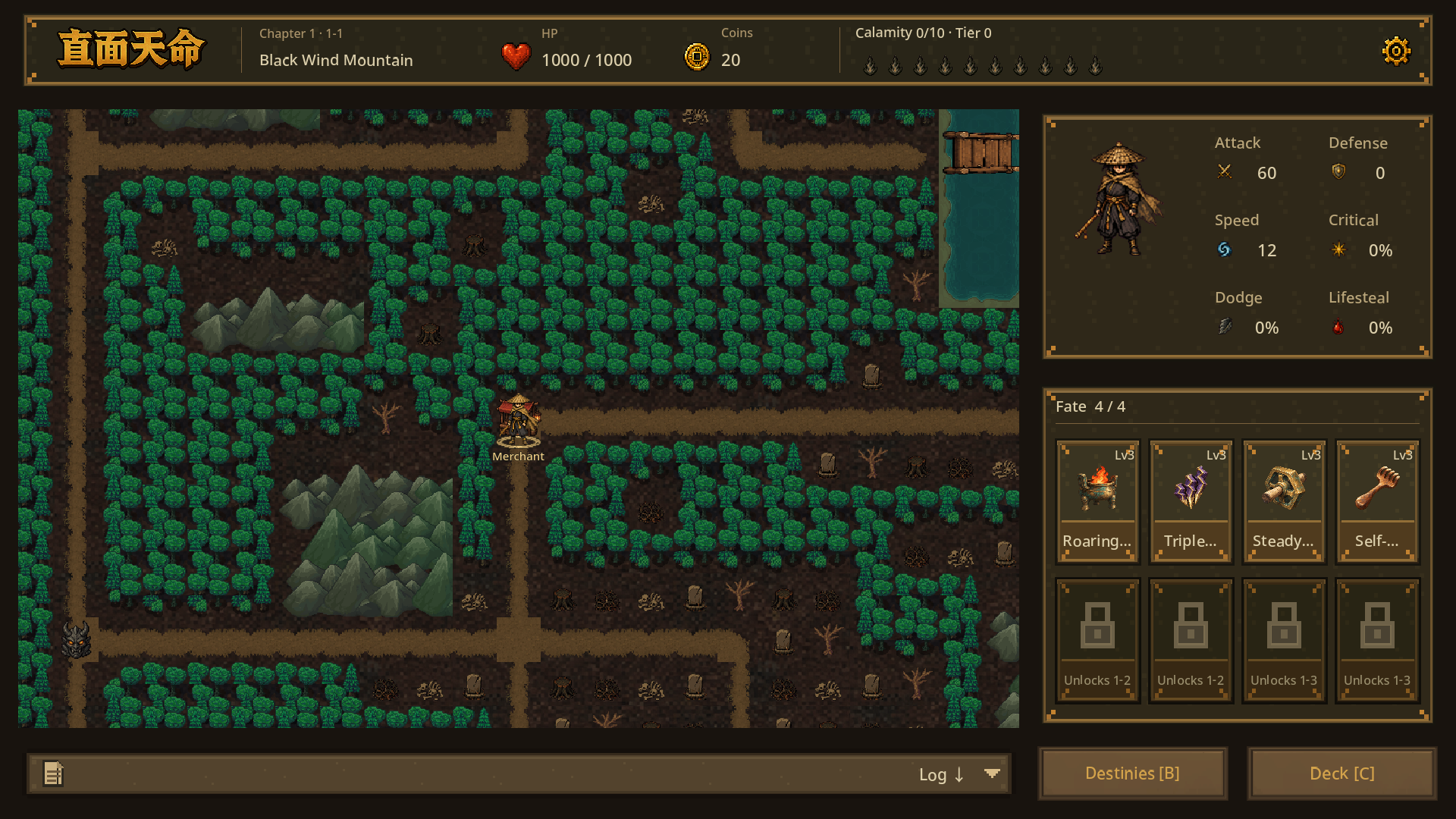
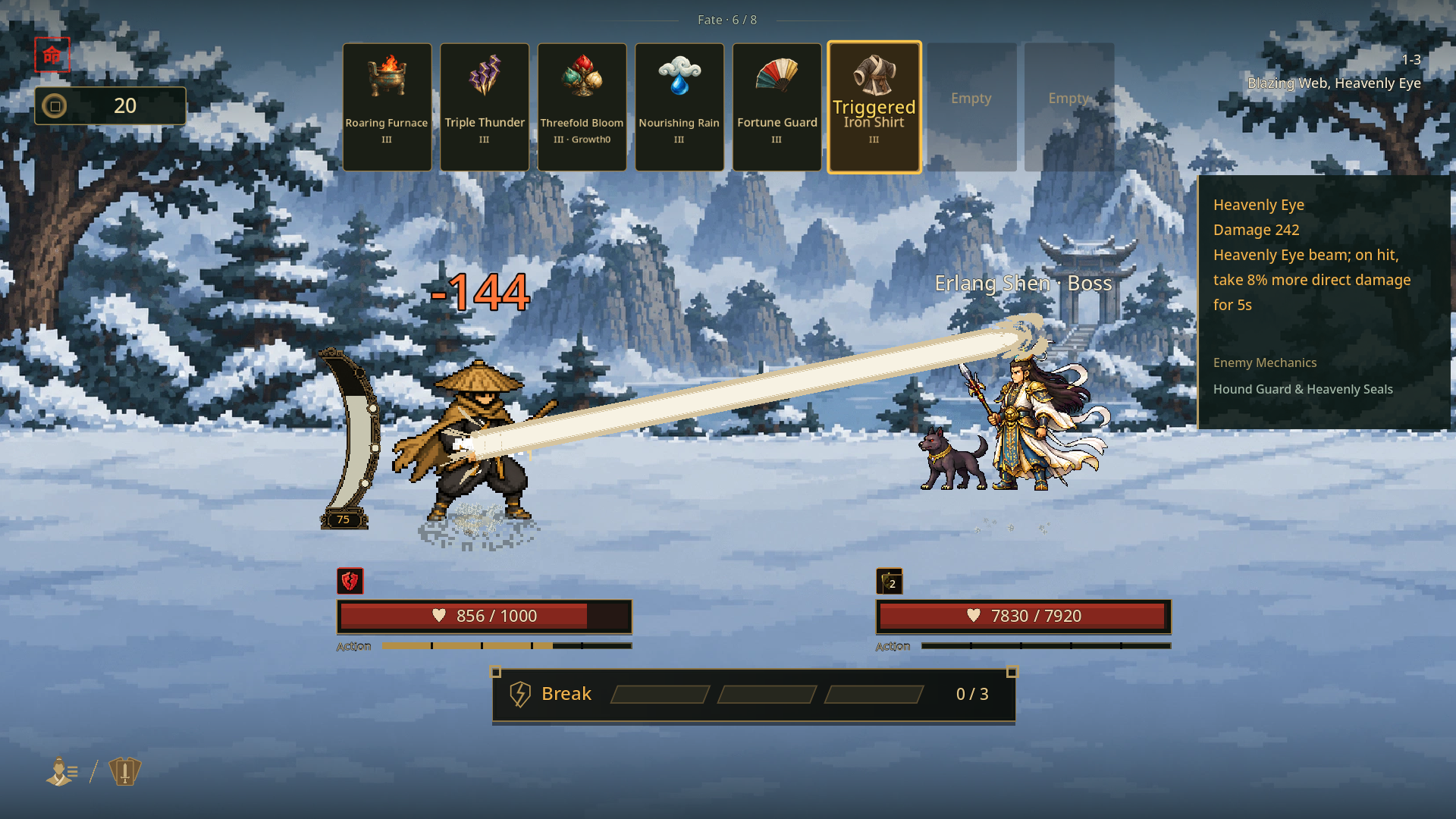
The setting connects the journey, the enemies and the objects on the cards. You explore mountain routes and face characters such as Erlang Shen, while the Fates use objects such as a furnace, a fan or an iron shirt to represent combat effects. Elemental matches connect those cards to the reels. At the largest end of the reward scale, eight matching reels produce a giant staff strike. The mythological references give the effects recognizable forms; the cards still need clear triggers and readable results during a fight.
4. What was the most difficult part of making elemental matches and extended reel combinations easy to understand?
The difficult part is showing the cause of a result. A spin can add columns, several Fates can trigger, and a seal on a particular battle card can matter too. Showing all of that at once makes it hard to tell which card did what. Recent work has focused on the sequence: a column stops, the relevant card is shown, and its activation travels toward the place it affects. The reel interface also shows combinations and a forecast. The player should be able to connect a visible card to its result before deciding whether to reroll.
5. How do you balance a rewarding lucky combination against consistent player decision-making?
The jackpot for eight matching reels is a large payoff, but it cannot be the only reason a build works. Smaller matches and useful individual cards need to contribute along the way. Current tests examine how the cards acquired on a route, the Fates equipped, and the money spent on improvements affect later fights. That includes checking a player’s wallet when they reach a service, rather than only adding up income at the end of a stage. This balance is still being refined; a strong result in a controlled test does not establish how a normal run will feel.
6. What has changed most since the first prototype, and which parts are still being refined?
Recent revisions have concentrated on the connection between the reels, the cards and the feedback during combat. The game uses seven elements for matching, starts a roll with three cards, and can expand to eight columns. Fates provide effects that respond to the result, while seals give individual battle cards another role in the build. Recent revisions have also made triggers more visible and reduced extra reward confirmation steps. Current work is examining first-chapter build progression, enemy encounters and spending decisions, alongside localization and interface readability. The game remains in development.
7. What should players pay attention to when they see their first reel spin?
Look at the Fates you have equipped, then compare their triggers with the cards that landed. Your deck supplied those cards. Before rerolling, ask what the current result already gives you and which specific improvement you are hoping to find. The first useful lesson is recognizing a hand worth keeping. A longer reel result can be exciting, but understanding why your current cards work together gives you a reason to make the next choice.
Designing the jackpot rather than waiting for one
What’s intriguing about the approach is the number of decisions taking place before the reels stop. The cards collected earlier determine what can appear; equipped Fates determine what makes a result useful; and every reroll has an opportunity cost. Jumping Frog Studio is equally aware of the downside: if players cannot identify what triggered an effect, strategy becomes noise. That’s why recent work has centred on clearer activation sequences, visible forecasts and better combat feedback.
The mythology has a practical role, too. Characters including Erlang Shen, elemental effects and objects such as a furnace or fan give abstract card triggers a form players can learn. The studio is still balancing progression and spending decisions, so none of these development descriptions should be mistaken for a final-build verdict.
Follow development
Face Your Fate on Steam lists the game as in development for Windows PC, with a Q4 2026 release window stated by the developer at the time of this interview, but no announced specific release day. The studio did not identify a public demo as available when it supplied these answers.
For the additional original images and development notes, visit the studio’s official gameplay press kit.
Thanks to Jumping Frog Studio for sharing the original captures and explaining how much design work lies behind every apparently lucky result.
Editorial note: These seven answers were provided directly by Jumping Frog Studio on 6 November 2026 and are reproduced in its own words, with paragraph formatting only. The screenshots are curated game captures from Build 26317764, 31 October 2026, authorised for credited editorial use on this site and its social channels. No hands-on play or independent testing is claimed. This article is a developer interview and has no score. Coverage is editorially independent.