
The best thing about a tavern is that it feels lived in. Pterosoft Studio has just given Farkle: Tavern Dice a much fuller life. Its major 1 November update brings 44 newly added historical recordings, a selectable music player and a fully voiced Innkeeper’s Tutorial. For a game built around little more than six dice and the decision to risk another throw, these aren’t incidental extras. They strengthen the atmosphere and tackle the biggest obstacle facing an unfamiliar player: understanding why one more roll might be a terrible idea.
It is also the sort of post-launch attention that can get overlooked when a small release arrives without a giant marketing machine behind it. Farkle: Tavern Dice launched on Steam on 21 October 2026. Within weeks, its developer was adding far more than decorative polish, making the first few minutes easier to navigate while giving returning players new reasons to stay by the fire.
Meet the developer: Independent studio Pterosoft Studio built the game and its Ptero-Engine. Explore Farkle: Tavern Dice on Steam, follow Farkle on Instagram, or meet its creator in our interview with Jan Bostl.
Watch: Farkle | Indie Spotlight
Take a closer look at the tavern, a game of risk and reward, and the growing musical atmosphere in our short original gameplay promo. Captured by Coloured Static Press on PC, this is a promotional spotlight, not a scored review.
First, pull up a chair
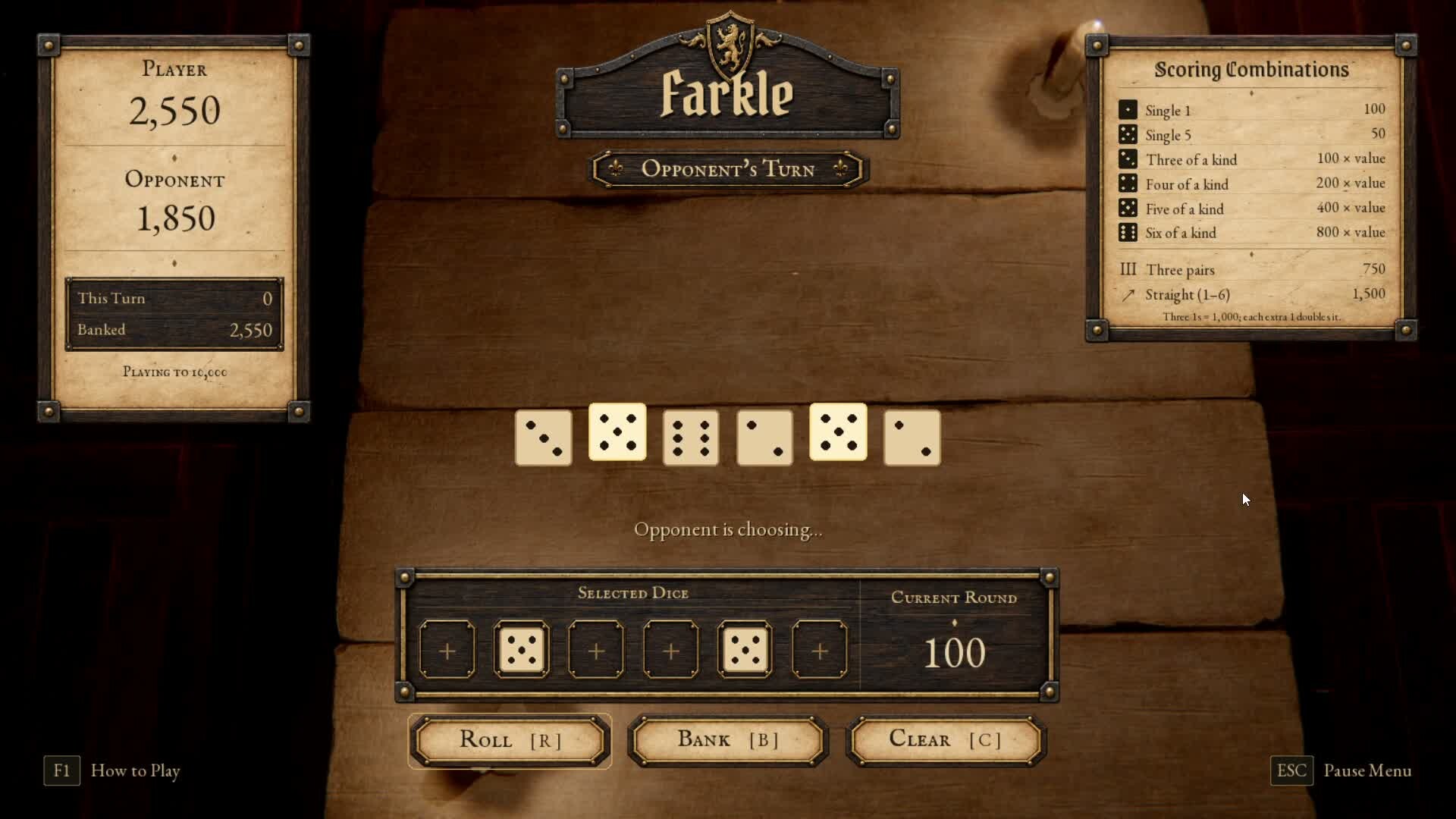
The rules of Farkle are easy to describe, but the tension they create is harder to shake. Your turn begins with six dice. Score with one combination, set those dice aside, and decide whether to bank your points or roll again. A failed roll wipes out the unbanked score for that turn. The difference between a modest win and a disaster is often the confidence you had five seconds earlier.
Pterosoft wraps that familiar push-your-luck game in a three-dimensional medieval tavern. There’s a physical wooden table, warm firelight and an attempt to make the match feel like a small event in a place that exists beyond the dice. The developer has described Kingdom Come: Deliverance‘s Farkle minigame as an important inspiration, but the goal here is a dedicated experience with its own visual identity.
Forty-four new recordings, and a soundtrack with a sense of history
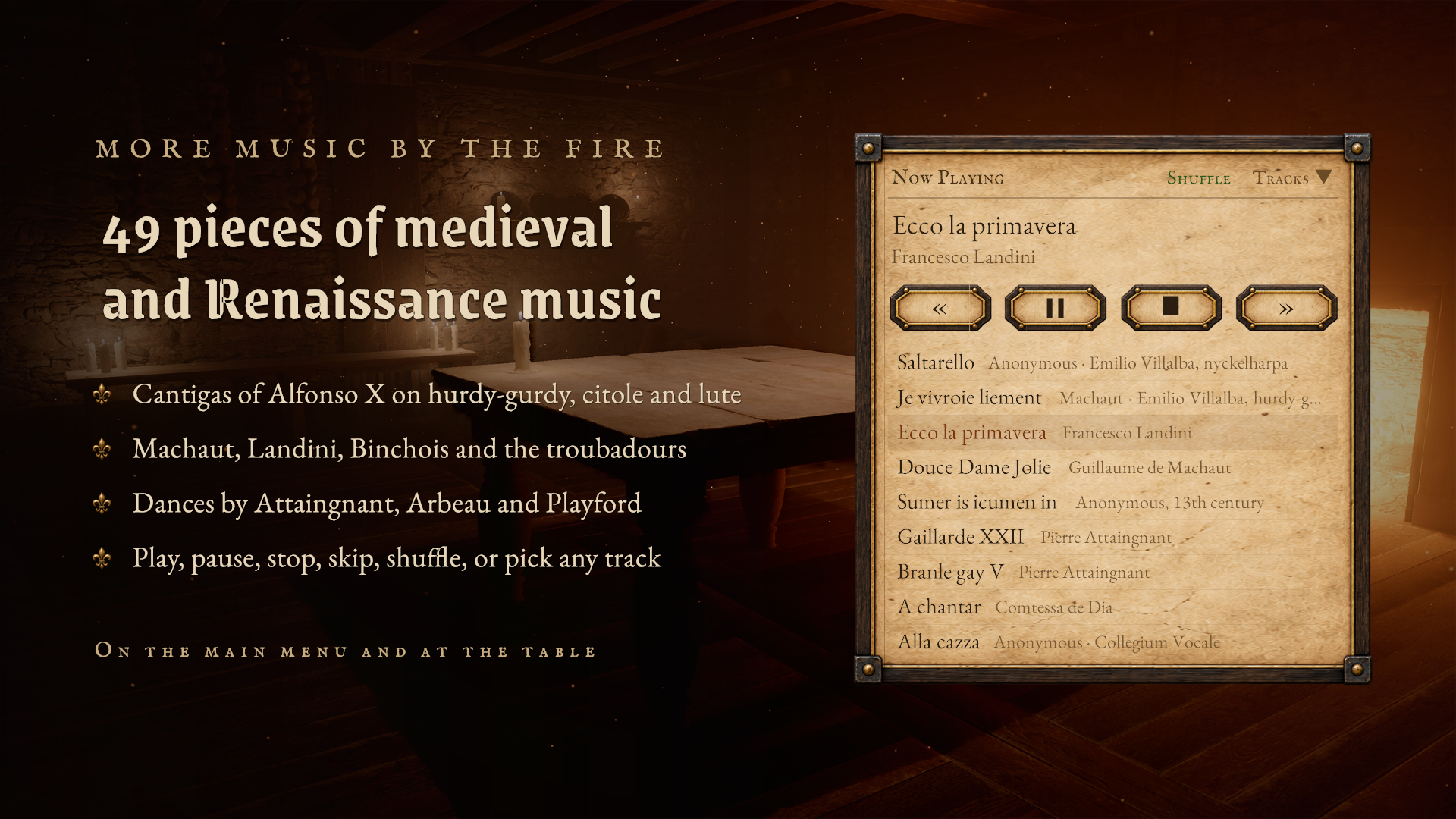
The headline addition is substantial. Where the game originally featured five historical music pieces, there are now 49, with 44 new recordings drawn from music composed between the thirteenth and seventeenth centuries. Pterosoft says the pieces are recordings of historical compositions, with performers credited and music used under their respective licences, rather than simply modern music made to sound vaguely medieval.
That distinction is part of what makes the update interesting. The collection reaches into the Cantigas de Santa María associated with the court of Alfonso X, Renaissance dances and medieval vocal traditions. The developer also names composers including Guillaume de Machaut and Francesco Landini, alongside instrumental traditions involving the hurdy-gurdy, lute, psaltery and vielle. The music is doing more than filling silence: it is helping establish the world this small game wants to evoke.
There is now an actual player for the soundtrack, too. Accessible from the menu and the table, it allows playback controls, track selection and shuffle. The developer says those choices persist between the menu and a match. In other words, the inn has gone from having a few songs playing in the corner to giving players control over the evening’s music.
The Innkeeper’s Tutorial changes the first impression
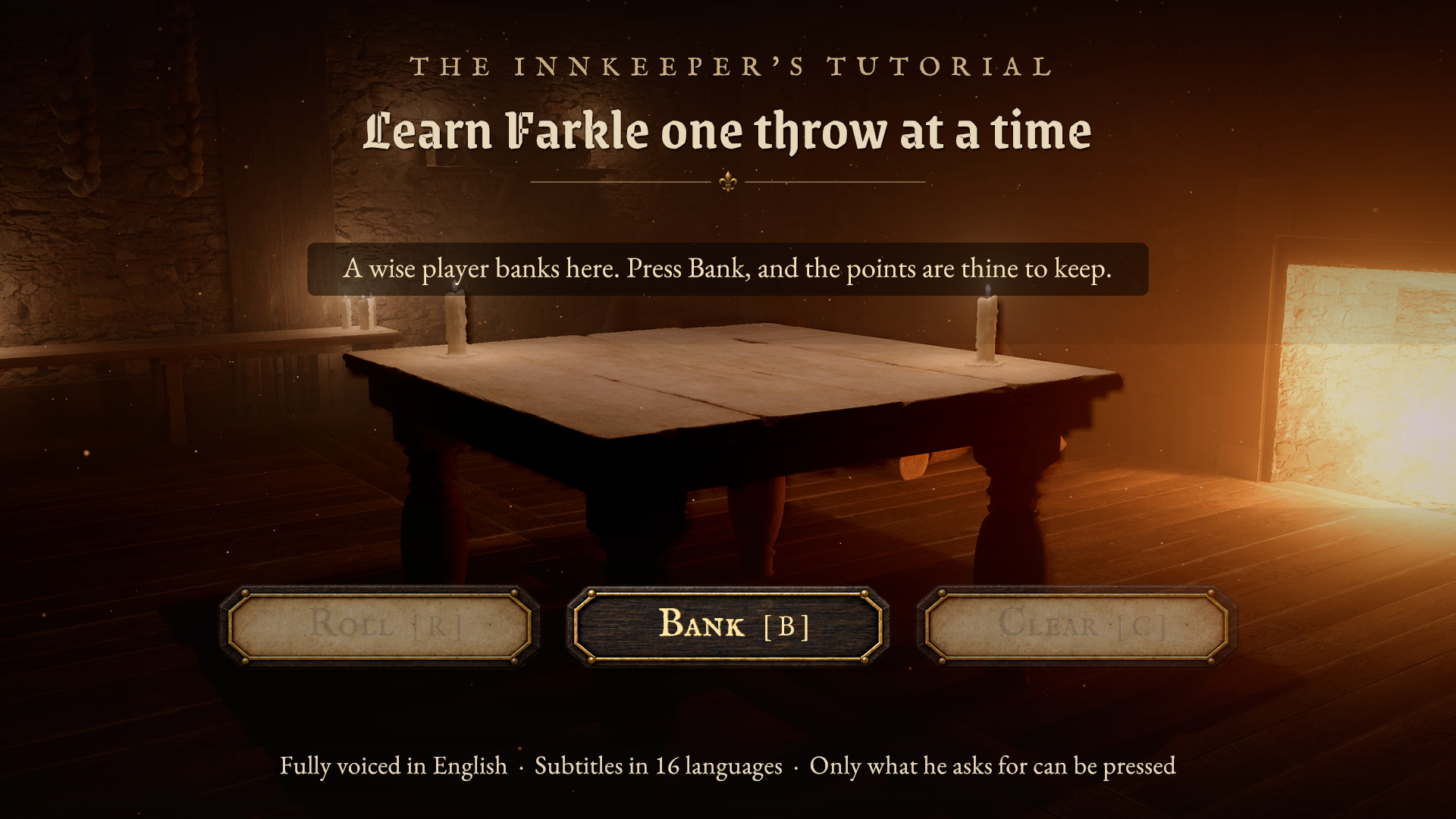
Just as significant, particularly for newcomers who have never played Farkle, is the new fully voiced Innkeeper’s Tutorial. It isn’t a wall of rules or a static slideshow. Pterosoft has structured it as a guided match against the house, with predetermined rolls that let the Innkeeper explain each scoring situation as it appears.
Players are introduced to single ones and fives, three of a kind, three pairs, straights, Hot Dice and the possibility of losing a whole turn’s score. Importantly, the game highlights the action being explained and temporarily disables unrelated controls. It is a small design decision with a big usability payoff: instead of fumbling around while someone explains the rules, you learn by making the correct decision at the table.
The voiceover is in English, with subtitles available across the game’s 16 supported languages. The music dips while the Innkeeper speaks, and the tutorial does not affect achievements or statistics, so there is no penalty for repeating it. Those details suggest someone thought about how the lesson would actually feel to play, rather than simply checking off a tutorial requirement.
Small conveniences make an enormous difference
There’s a new first-run welcome screen as well, prompting players to set their language, subtitles and brightness before choosing whether to take the tutorial. That sounds minor until you remember how much a warm, dimly lit tavern relies on presentation: brightness calibration can be the difference between a welcoming atmosphere and not being able to read the table. Those settings remain adjustable later.
Pterosoft’s update is a useful example of the things that help a modest game feel complete. The music gives an environment character. The tutorial makes the rules approachable. The welcome screen gets players to the first meaningful choice without needless friction. The headline count of new tracks is impressive, but the bigger story is the attention paid to how someone actually enters and experiences the game.
A table built for company
Our own new PC captures also show the breadth of the online menu: Quick Match, Open Table and Play with Friends. The Quick Match description explains that an AI opponent keeps the seat warm until another player joins, while friends can connect through Steam invitations. It is a fitting extension of the game’s social premise: a tavern table should not feel empty just because another traveller hasn’t arrived yet.
We’re documenting those modes and the game’s turn-by-turn scoring in a short independent gameplay promo, using our own recorded footage. This is a look at the experience and presentation, not a scored review or a claim that every multiplayer scenario has been fully tested.
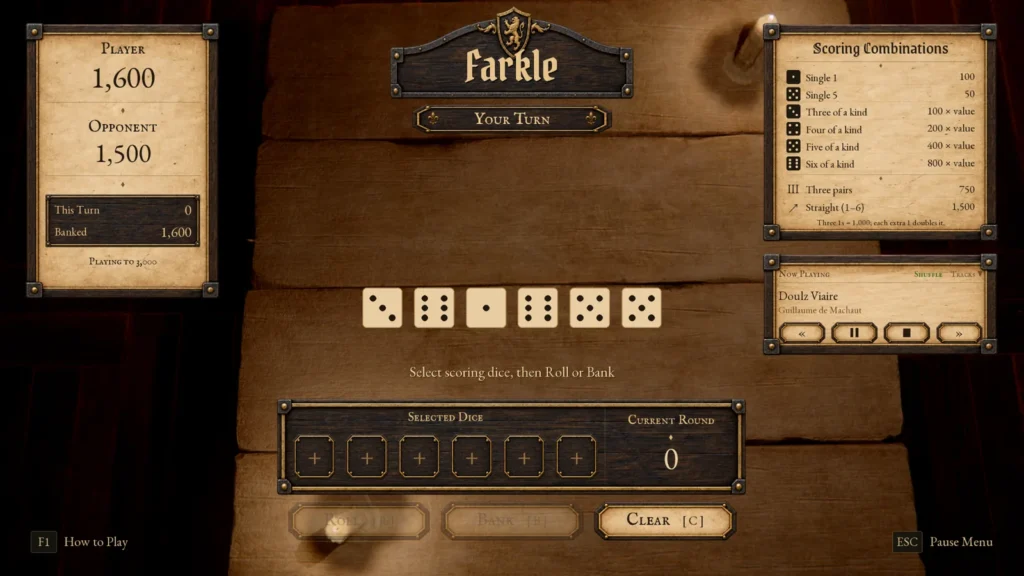
Inside the tavern: our PC capture gallery
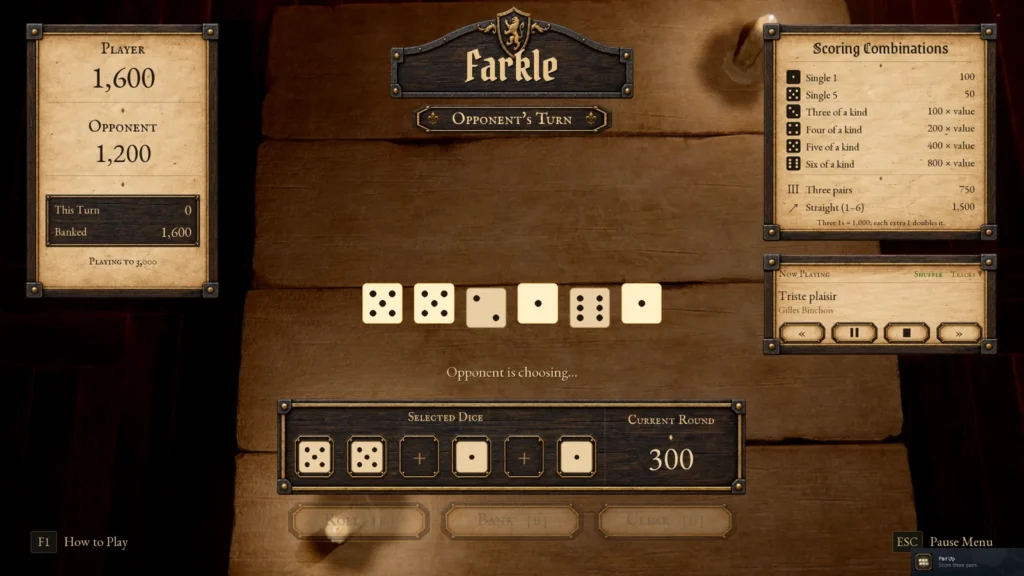
These are our own captured screens from the current PC build, showing the game in motion from the first important decision to victory, the music controls and online options.
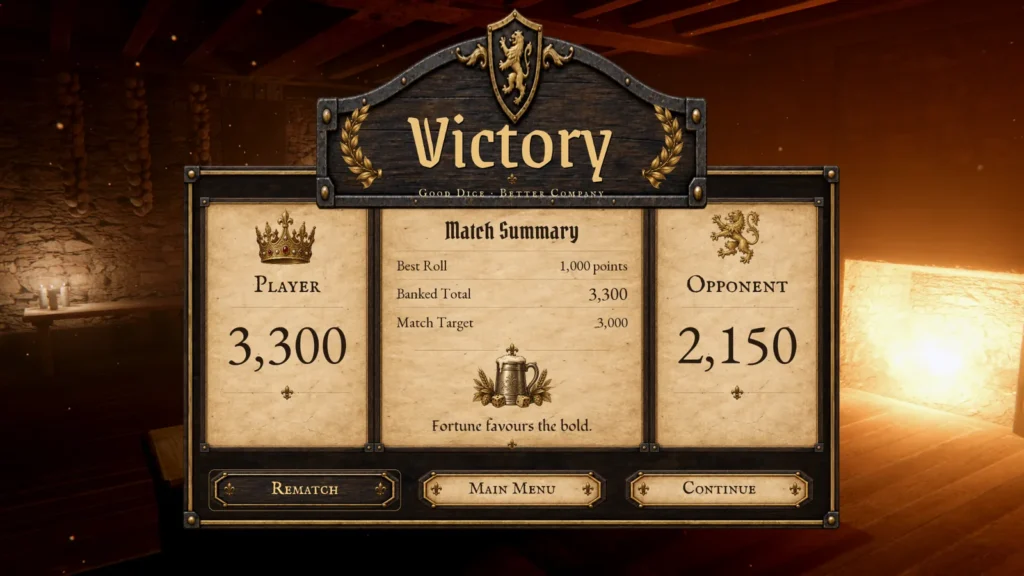
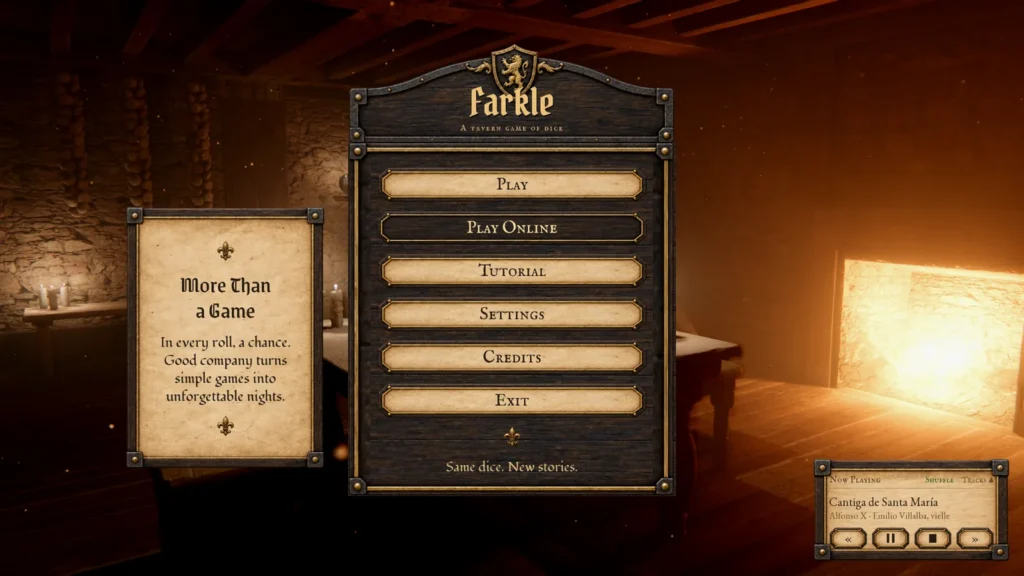
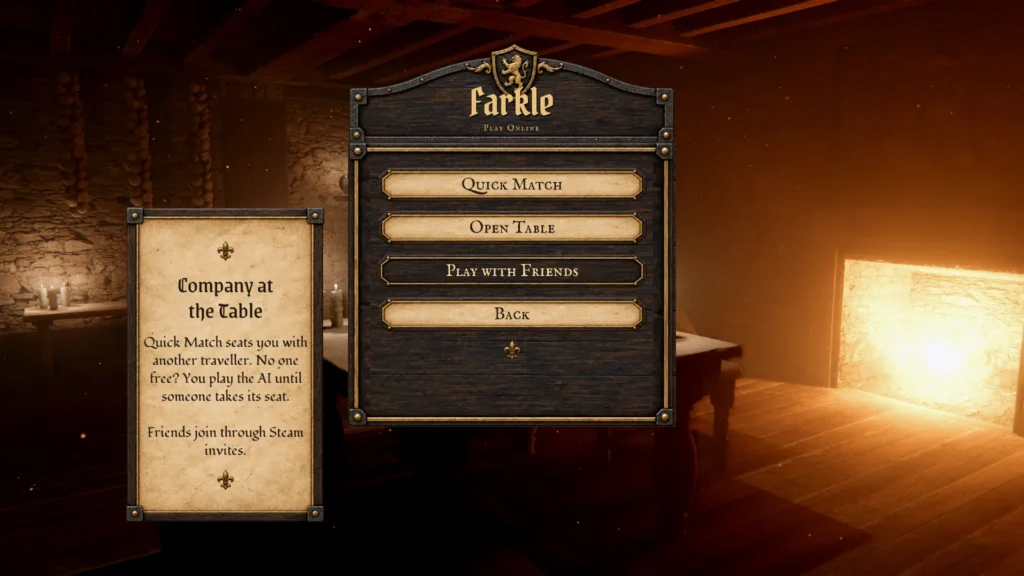
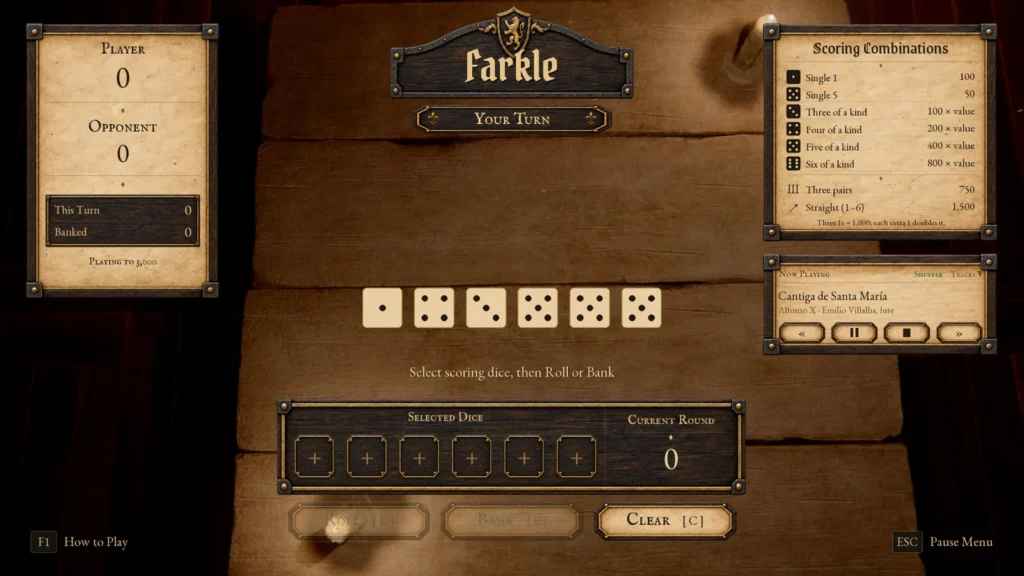
A small game built on a much larger technical ambition
There is another reason we’ve been following Farkle: Tavern Dice closely. In our original Behind the Signal interview, developer Jan Bostl explained that the project became the first commercial game built using the studio’s own Ptero-Engine. That means the team wasn’t only working on dice, menus and atmosphere; it was also developing and refining much of the technology underneath them.
Jan described the attraction of turning the memorable dice minigame from Kingdom Come: Deliverance into something that could stand on its own. He also talked about how deceptively demanding simple mechanics can be: when all eyes are on the dice and score, clarity, responsiveness and visual feedback carry an enormous burden.
That context makes the latest update more meaningful. It is not evidence of how the game performs on every PC, or proof that every concern has been solved. We have not completed a scored hands-on reassessment of this build. But it is clear, documented development work from a small studio trying to improve both the experience and the engine behind it.
Where to find the game and read the full update
Explore Farkle: Tavern Dice on Steam for the game, requirements and screenshots. Pterosoft’s 1 November developer update contains the complete track-list discussion and tutorial details. For the story behind the game, read our full interview with Jan Bostl.
Quick facts: Pterosoft Studio · Steam release 21 October 2026 · Windows PC · Medieval push-your-luck dice strategy · Major update 1 November 2026.
More independent discoveries: Enjoy unusual collecting games? We have also explored TCG: FANTASY Card Collection, a fantasy card-library game from xploit games.
Editorial transparency: This is a reported editorial feature using Pterosoft’s official update, approved imagery and our own original developer interview. It is not a scored hands-on review. Pterosoft separately supplied full-game Steam codes for a community giveaway, which does not influence our editorial decisions.