
HARDWARE SIGNAL / XBOX & PC / FEATURES EXPLAINED
A controller advertised with 8,000Hz polling sounds like a major leap, particularly to players who spend time tweaking every millisecond of input latency. But Razer’s new Wolverine V4 line comes with an important distinction: that maximum applies to PC. On Xbox Series X|S, Razer lists controller connectivity at up to 250Hz. That’s not an accusation against the product. It’s a reason to look beyond the biggest number on the box.
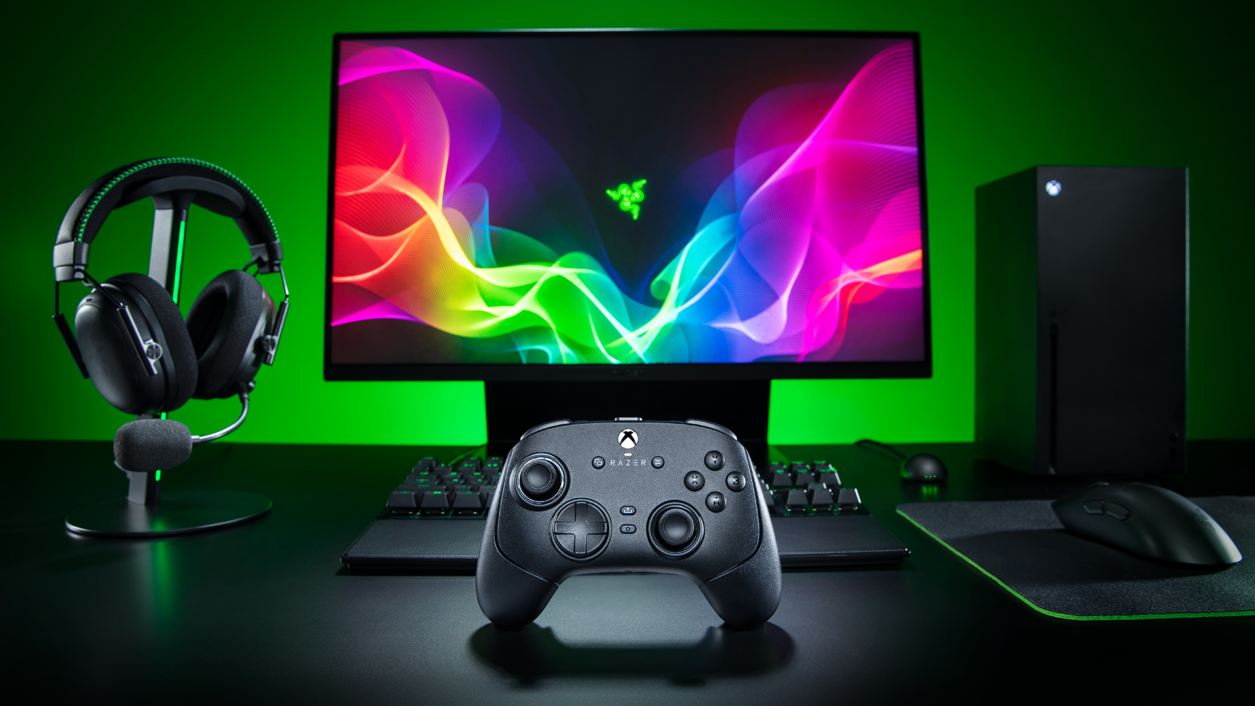
The company introduced the Wolverine V4 Pro and Wolverine V4 Tournament Edition on 6 October. The Pro is a wireless controller and the Tournament Edition is wired, aimed at competitive players who want more customisation than a standard pad provides. Both are described as compatible with Xbox and PC, but their polling capabilities are not identical across those platforms.
What do 8,000Hz and 250Hz actually describe?
A polling rate is how frequently an input device reports its state to the connected system. At a theoretical 8,000 reports per second, one reporting interval is 0.125 milliseconds. At 250 reports per second, the interval is 4 milliseconds. That’s a mathematical description of reporting frequency, not a promise that you’ll gain 3.875 milliseconds of felt response in every game. Real responsiveness also depends on processing, display refresh, frame time, game design and the whole input chain.
A higher polling rate can reduce the time between reports under appropriate conditions. But it should not be confused with guaranteed competitive improvement, and a console player should not assume the PC specification describes their Xbox experience.
The design changes are more than a polling number
Razer’s official details point to new high-resolution capacitive thumbstick sensors, which work without the same physical contact arrangement as a conventional potentiometer. Razer describes them as resistant to stick drift and magnetic interference. That is a manufacturer claim we have not durability-tested.
The V4 Pro also offers removable magnetic rear buttons, additional claw-grip bumpers, alternate stick caps, a removable faceplate and trigger settings that can switch between a shorter press and a full analogue pull. For many players, getting comfortable access to these controls may matter more than chasing the highest possible report rate.
- On PC: Razer advertises up to 8,000Hz polling, wired or wireless under supported conditions. Its published test footnote specifies its wireless dongle setup.
- On Xbox Series X|S: Razer advertises up to 250Hz, not 8,000Hz.
- For competitive play: remappable buttons, trigger settings and stick feel may change how a controller works for you, but they require first-hand evaluation.
- Before buying: confirm the exact model, supported platform features and software requirements.
What we would test before recommending one
Our priority would be consistent input tracking, stick-centre stability, trigger travel, accessible back-button placement, ease of profile switching and the difference in latency across PC and Xbox. We’d also test whether the added features justify the price for someone who mostly plays away from competition.
We already have a first-hand review of a different kind of pad in our JORREP budget wireless controller review. That article should not be read as a performance comparison with the V4, which Coloured Static Press has not used.
The Wolverine V4 line could have a strong case to make to demanding players. But the useful story isn’t simply ‘8KHz controller launches’. It’s understanding which platform gets that figure and which design improvements would still matter without it.
Editorial note: Reporting is based on Razer’s official 6 October 2026 announcement and measurement footnote, checked 18 October 2026. This is an explanatory first look, not a hands-on review. No latency, stick or durability tests have been performed by Coloured Static Press.