
BEHIND THE SIGNAL / ORIGINAL SEVEN-QUESTION DEVELOPER INTERVIEW
There’s a particular satisfaction to starting with a tiny business and gradually building something you can call your own. Grill & Grow is built around that feeling: preparing food by hand, serving customers and growing a modest burger restaurant into something more ambitious.
We invited Tunahan Sönmez, founder and solo developer at Panvera Games, to talk about the past year and a half of development, the realities of connecting restaurant systems and the personal cost of pursuing a first independent project. The answers are unusually candid about financial pressure and the loneliness that can accompany solo development, without losing sight of the pleasure of making something.
This is a written Behind the Signal interview. We have not claimed hands-on testing, and there is no review score.
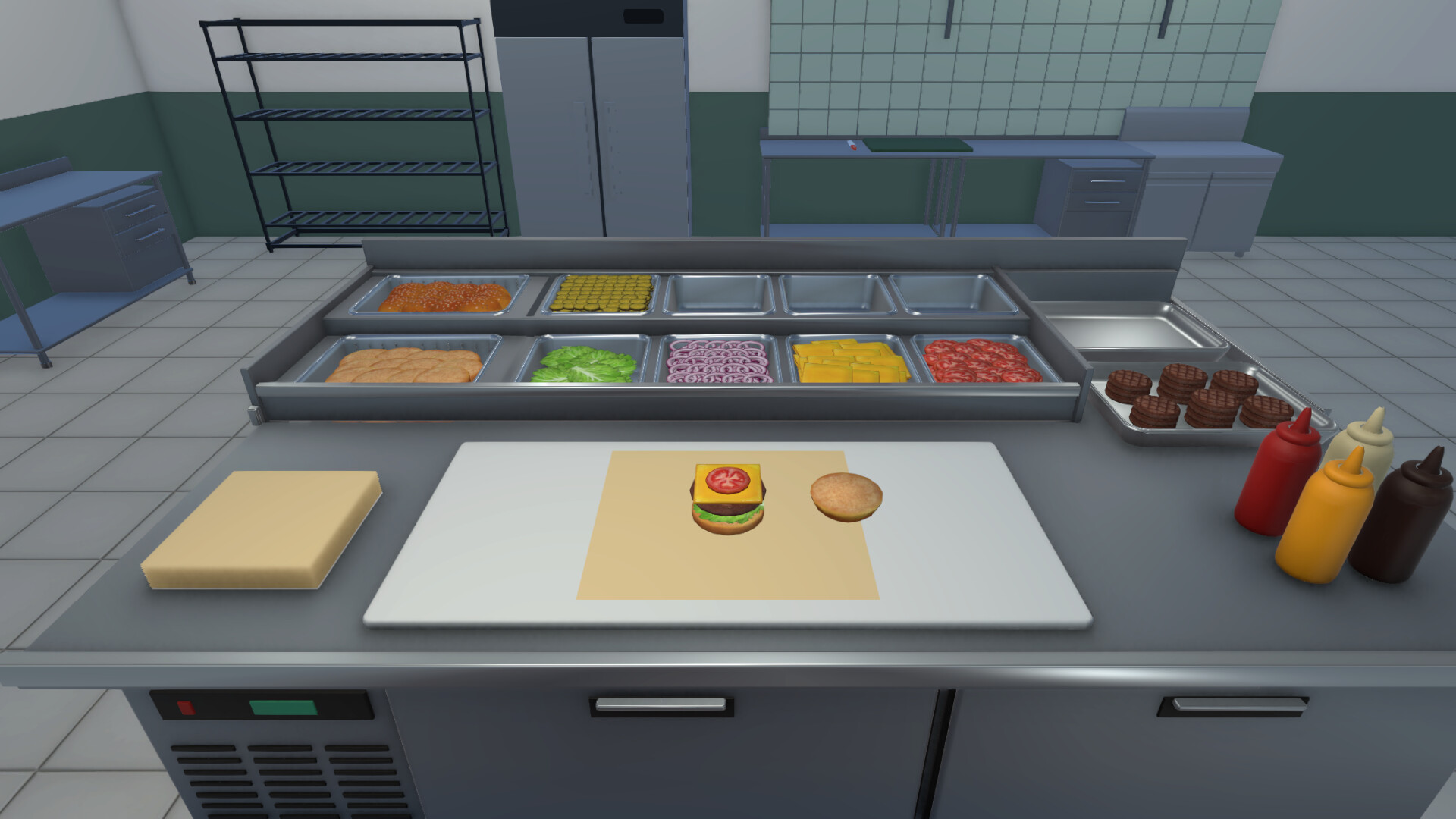
The full developer interview
1. What first made you want to build a restaurant simulator, and what was missing from the games you had played?
Throughout my life, I’ve played countless games across almost every genre imaginable. Over the years, I’ve built up an enormous amount of gaming experience, but I gradually realized that simulation games were the ones that attracted me the most.
There was something special about starting with almost nothing and slowly building something of your own. Whether it was developing a business, improving your surroundings, or unlocking new possibilities, I loved seeing how my decisions gradually transformed the world around me.
What fascinated me most was how progression could make previously difficult tasks easier. As I improved my business or environment, I could actually feel the results of my effort.
I eventually realized that this sense of growth had been keeping me engaged for hours without me even noticing.
That realization made me want to create a simulation game of my own.
With Grill & Grow, I wanted to combine that satisfying sense of progression with something more hands-on. Instead of simply clicking buttons to run a restaurant, I wanted players to physically prepare meals, organize supplies, interact with their surroundings, and gradually transform a small burger restaurant into a successful business.
For me, the most rewarding part of a simulation game is being able to look around and say, “I built this.”
2. You’ve spent around a year and a half developing Grill & Grow solo. What have been your biggest sacrifices or surprises along the way?
Honestly, this journey has been much harder than I ever imagined.
I’ve had to carry almost every responsibility on my own, from programming and game design to creating gameplay systems, implementing assets, testing, optimization, marketing, and communicating with players.
But the technical challenges were only one part of the story.
I haven’t had the financial resources or security that a project like this would normally require. I’ve gone through unemployment, spent money I could barely afford to lose, and watched my debts gradually increase while trying to keep the project alive.
There have also been periods when the psychological pressure felt overwhelming. Constant uncertainty about money, the future, and whether all this effort would eventually lead somewhere can be incredibly exhausting.
I don’t want to romanticize those struggles. Developing a game under these circumstances has been genuinely difficult, and at times, incredibly lonely.
Yet I kept moving forward, trying to improve every small detail, one system at a time.
One of the biggest surprises has been discovering how much work can hide behind even the simplest gameplay feature. Something that appears effortless to a player might require days of debugging, countless adjustments, and several interconnected systems working correctly.
But despite everything, seeing people finally play Grill & Grow has been an incredible feeling.
Every piece of feedback, every player who gives the demo a chance, and every small sign of interest reminds me why I started this journey.
3. How did you decide which cooking steps should feel tactile and which management jobs should be streamlined?
My approach has been to make the actions that define the restaurant experience feel physical and satisfying.
Preparing a burger, cooking meat, flipping patties, making fries, assembling orders, and serving customers are all activities that I wanted players to experience directly.
I believe these interactions help players feel connected to the restaurant they’re building.
However, I also understand that an enjoyable task can eventually become repetitive when you’re forced to perform it hundreds of times.
That’s where the management side becomes important.
As the restaurant grows, players should be able to improve their workflow, organize equipment more efficiently, manage inventory, and hire employees to take over certain responsibilities.
The idea is to let players experience the challenges of running a small restaurant firsthand before gradually gaining the tools to manage a larger operation.
I want progression to feel like a meaningful improvement in the way you work, rather than simply an increase in the number of tasks you have to complete.
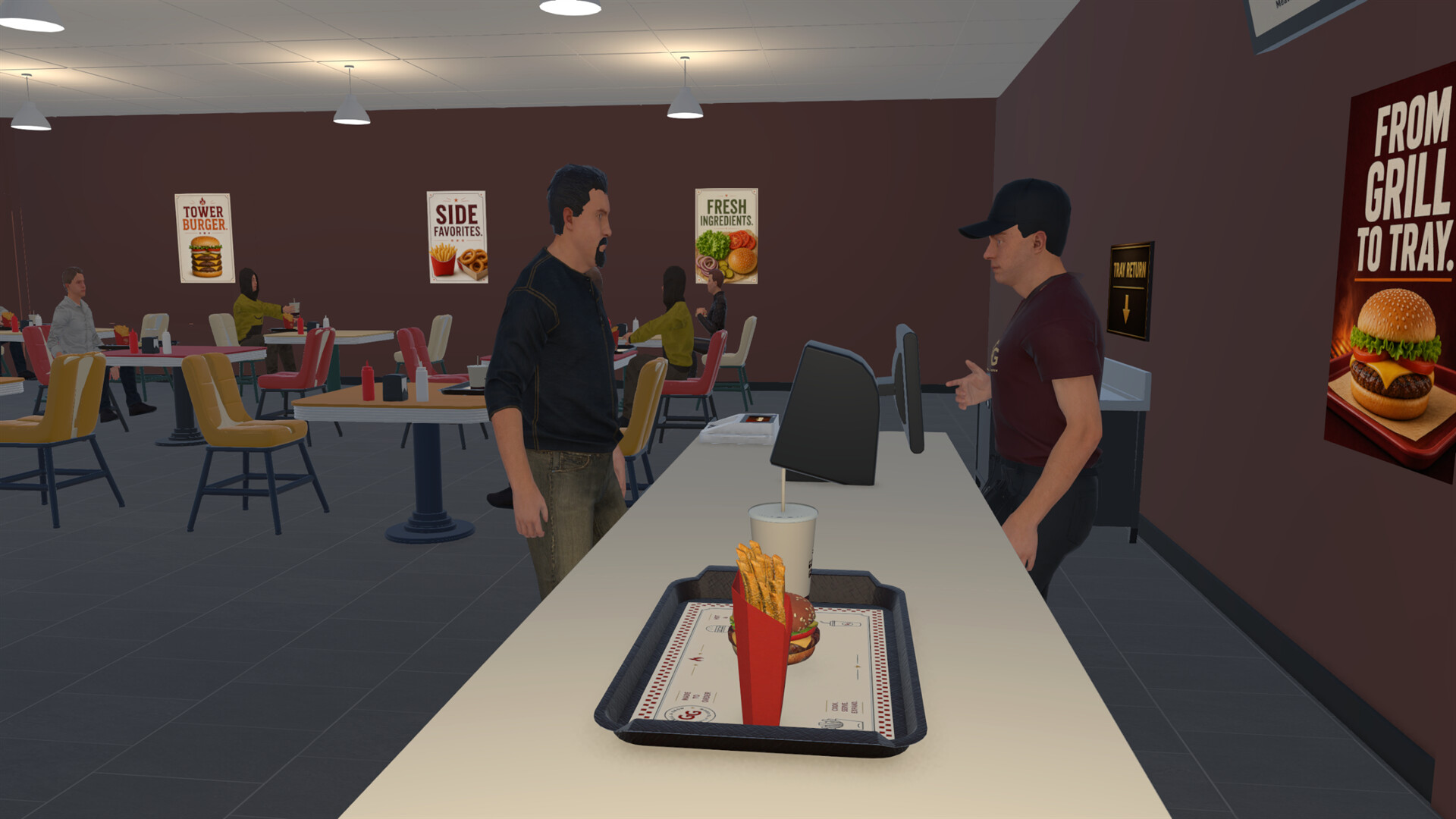
4. What was the hardest interaction to get right, from serving and stock deliveries to customers and employee AI?
One of the biggest technical challenges has been making all the different gameplay systems work together consistently.
A restaurant might look simple from the outside, but almost everything is connected.
Customers need to arrive, place orders, wait, react to service, and eventually leave. Ingredients must be available, cooking stations need to behave correctly, completed meals must match orders, and employees need to interact with the same environment as the player.
For example, a seemingly small change to how an object is picked up or transferred can affect cooking, storage, serving, and several other interactions.
Employee AI adds another layer of complexity because the restaurant needs to operate as a believable environment, even when the player isn’t personally handling every task.
Since I’m developing the game alone, debugging these connections has required a lot of patience.
My goal has always been to make the systems feel natural to the player, even when an enormous amount of logic is working behind the scenes.
5. How do you plan to make expansion feel earned rather than simply adding more repetitive tasks?
I want restaurant expansion to be about changing how you operate your business, not just increasing the size of the building.
At the beginning, players handle almost everything themselves. They prepare food, manage supplies, serve customers, and try to keep the business running.
As they earn money, they can invest in better equipment, improve the restaurant layout, hire employees, and gradually build a more efficient operation.
However, growth also introduces new decisions.
A larger restaurant may attract more customers, but it also requires better organization, reliable supplies, suitable staffing, and a workflow that can handle increased demand.
I want players to feel that every expansion represents something they genuinely worked toward.
Ideally, when someone looks back at their original restaurant after several hours, they should recognize how much their business has changed because of their decisions.
That sense of accomplishment is what I want to make central to Grill & Grow.
6. What has early feedback from the free demo taught you, and has it changed your Early Access priorities?
Releasing the free demo has been one of the most valuable parts of development so far.
When you’re working on a game alone for so long, it’s easy to become familiar with systems that might not be immediately clear to someone experiencing them for the first time.
Player feedback has helped me see the game from a completely different perspective.
For example, I received reports about certain interactions, including the in-game market interface and picking up drink cups. I worked on those issues and implemented fixes.
I also made improvements to brightness settings and have continued working on performance and optimization.
Some players have also expressed interest in controller support. At the moment, the game supports mouse and keyboard, but controller support is something I’d like to introduce in the future.
These experiences have reinforced an important lesson for me: adding new features is exciting, but making existing features reliable and enjoyable is just as important.
As I move toward Early Access, stability, performance, clearer interactions, and improving the overall player experience are among my main priorities.
7. What do you hope players understand about the project and its creator after their first shift?
First and foremost, I hope they have fun.
I want players to feel the satisfaction of preparing their first burger, successfully serving their first customers, and earning the money that will eventually allow them to build something bigger.
I hope they experience that same feeling of progression that made me fall in love with simulation games in the first place.
But beyond the gameplay, I also hope people understand that Grill & Grow is a deeply personal project.
It’s not a game created by a large studio with extensive resources. It’s something I’ve been building alone, through financial uncertainty, technical challenges, and countless difficult moments.
Every feature represents time, effort, and a genuine passion for creating games.
I know there’s still a lot I want to improve, and I’m committed to continuing that work.
If someone finishes their first shift feeling entertained, curious about what comes next, and excited to grow their restaurant, that would already mean a great deal to me.
And if my journey encourages even one person who’s struggling to create something of their own, that would make it even more meaningful.
Thank you again, Andrew, for giving independent developers an opportunity to share their stories.
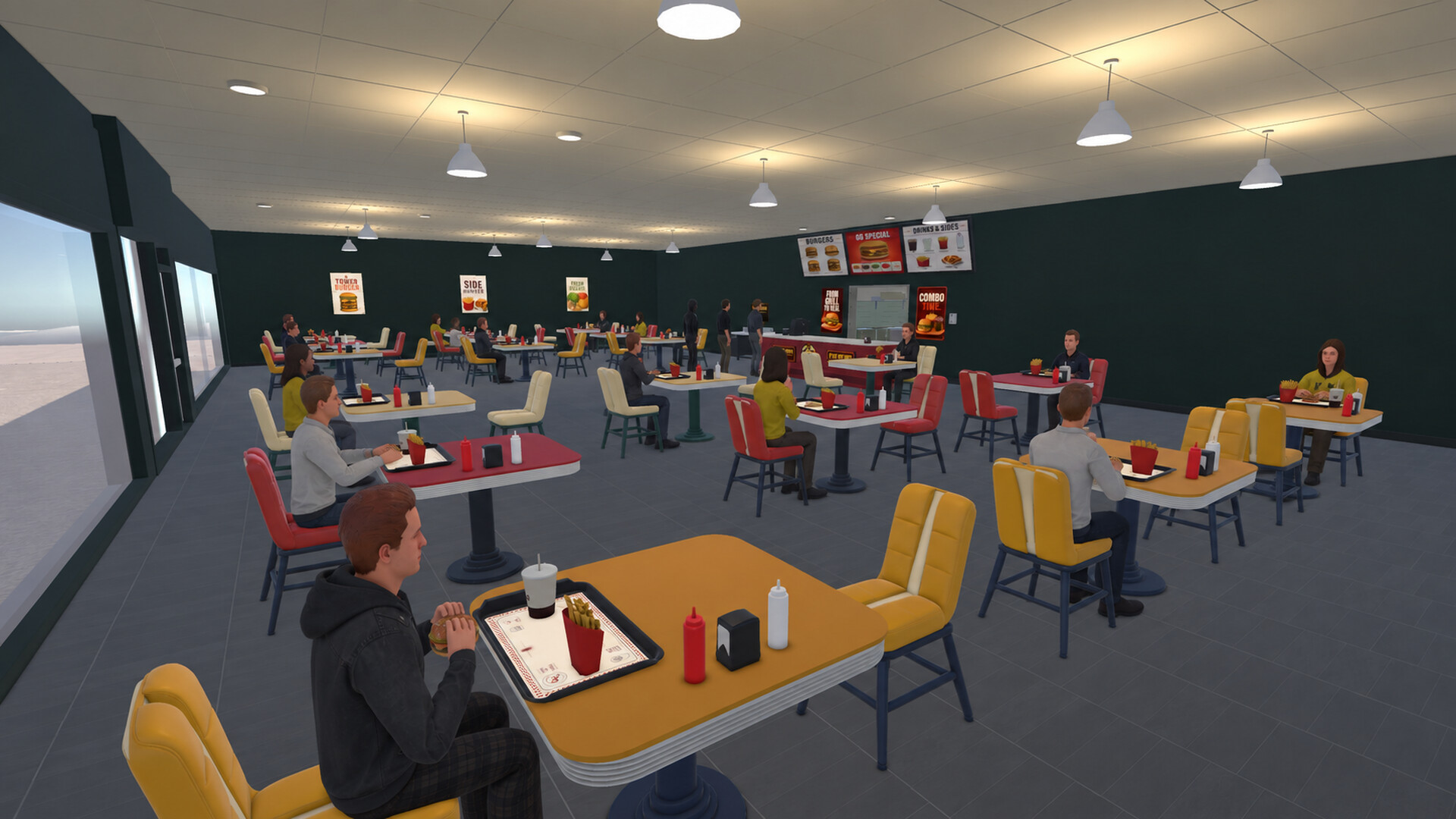
Every burger hides a dozen connected systems
The recurring theme is that a convincing restaurant cannot be built out of isolated interactions. Changing how an item is picked up can alter the cooking, storage and serving systems around it. As the restaurant grows, the challenge becomes deciding which physical tasks should stay satisfying and which routines ought to be handed to staff or better equipment.
Tunahan is also clear about the business of making the game. It has demanded financial sacrifices and periods of uncertainty; the developer explicitly does not want those struggles romanticised. Early demo feedback has already led to fixes involving the market interface, cup interactions, brightness and performance. Controller support is a future ambition, rather than a feature currently promised as implemented.
Try the demo and follow development
Grill & Grow on Steam has a public demo. The developer describes mouse-and-keyboard support today and is working toward Early Access with a focus on stability, interactions and performance. No specific full-release date is claimed in this interview.
Thank you to Tunahan Sönmez for giving such a detailed account of the creative, technical and financial realities of solo development.
Editorial disclosure: The seven written answers above were provided directly by Tunahan Sönmez on 6 November 2026 and are reproduced verbatim with paragraph formatting only. Preferred credit: Tunahan Sönmez, Founder & Solo Game Developer, Panvera Games. This is independent written editorial coverage, not a hands-on review or a scored verdict. Three unaltered original gameplay screenshots are reproduced with express permission from Tunahan Sönmez / Panvera Games (6 November 2026).