
Some stories rely on what happens. NieR:Automata also relies on how you discover it. Turning that experience into a television series means changing the very machinery of its storytelling.
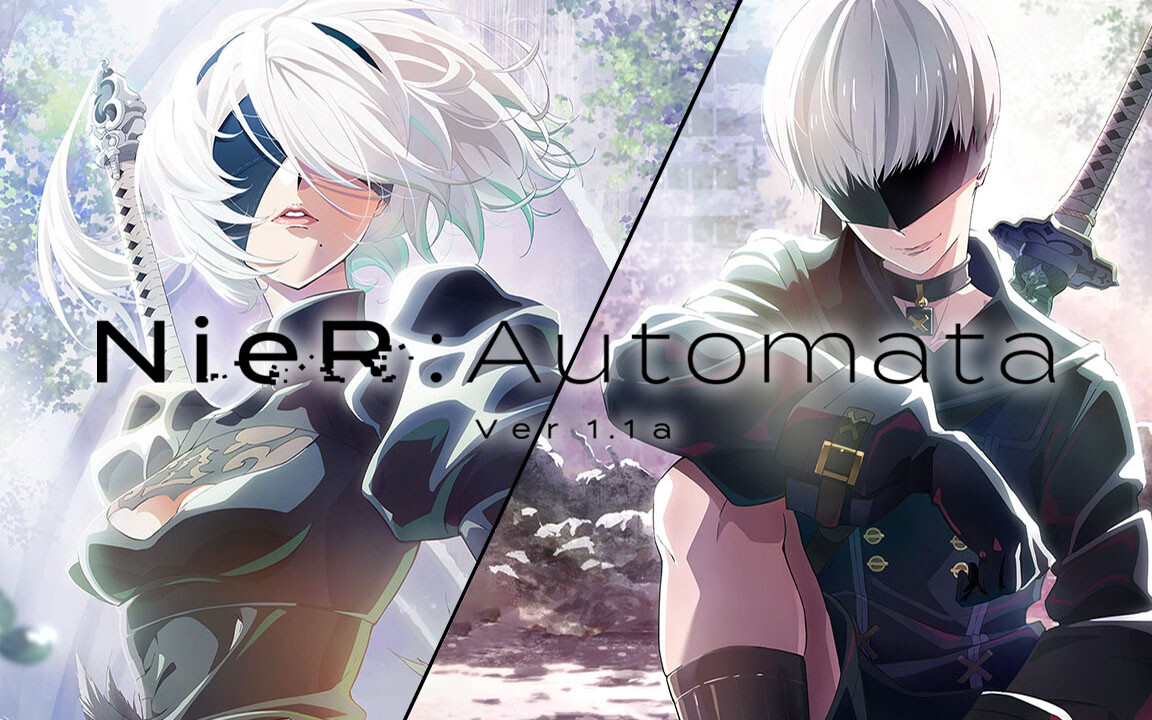
A tale that never belonged to one perspective
At first glance, NieR:Automata seems an obvious anime candidate. Android soldiers fight machine lifeforms across a ruined Earth. There are memorable character designs, striking landscapes and an unmistakable musical identity. Those are all elements that can move from a controller to a screen.
But the game’s distinctive achievement is not its surface. It is how slowly and deliberately it changes the player’s understanding of events. You don’t simply receive new information. You revisit moments and contexts until the certainty of an earlier interpretation becomes difficult to sustain.
That creates a dilemma for NieR:Automata Ver1.1a, produced by A-1 Pictures: a television audience cannot be asked to complete one route and then personally begin another. The anime must recreate the effects of altered perspective using a different set of tools.
Why ‘Ver1.1a’ matters
The version-like subtitle is an apt statement of intent. Rather than treating an animated series as a transparent window onto the exact same game, it signals that the work is another arrangement of a familiar story. Anime has the freedom to linger on a secondary character or establish information through parallel scenes, while a game often ties discovery to the character the player controls.
Even the series’ episode naming echoes the source material’s fascination with coded information and layered meaning. Its official episode guide runs to Chapter 24, ending with the [E]nd of YoRHa. That playful relationship between labels and significance fits a story interested in how systems shape what people believe.
What is lost when you stop playing?
Agency is the obvious loss, but agency isn’t just about branching decisions. It can be the simple act of choosing how long to stand in a quiet place, when to investigate something that seems irrelevant or when to attempt an optional encounter. Those personal rhythms help a world feel inhabited.
A television adaptation controls the rhythm instead. Direction, framing, sound design and scene transitions become the instruments of discovery. If animation makes a moment more immediate, it may also remove the private space in which a player found their own meaning.
Watching a character make a choice is not the same experience as being responsible for pressing the button.
What animation can give back
That does not make anime inherently a lesser form. Freed from the demands of combat and navigation, the series can place emphasis on glances, absences and carefully juxtaposed scenes. The viewer can see relationships and contrasts without needing to travel between them. What the game communicates through repetition can be suggested through editing and the arrangement of time.
There is also the issue of accessibility. Players drawn to the original’s ideas may not enjoy action RPG combat or have the time to work through its structural twists. An anime can introduce them to the world on different terms. The trade-off is that knowing the story is not necessarily the same as having undergone its interactive process.
Which should you experience first?
There isn’t one correct order. Someone who starts with the anime may become curious about how the game makes its revelations feel participatory. A player returning through the series may enjoy watching familiar themes reframed. The danger comes when either is treated as a substitute guaranteed to provide precisely the same experience.
Our recommendation is to approach Ver1.1a as a companion interpretation rather than a checklist of which scenes were preserved. Watch for what changes when control is removed: the pacing of revelations, the treatment of supporting characters and the shift between private discovery and shared observation.
The larger lesson for game adaptations: fidelity isn’t measured only in costumes, dialogue or plot beats. Sometimes being faithful to an original work means finding a new way to create the emotion that its original medium made possible.
Official sources: Aniplex series overview · Official episode guide. Explore our Anime & Games coverage.
Play the game: NieR:Automata on Steam | Browse PC games at Loaded (affiliate). Loaded link opens the general store; game availability, platform and region must be checked.