
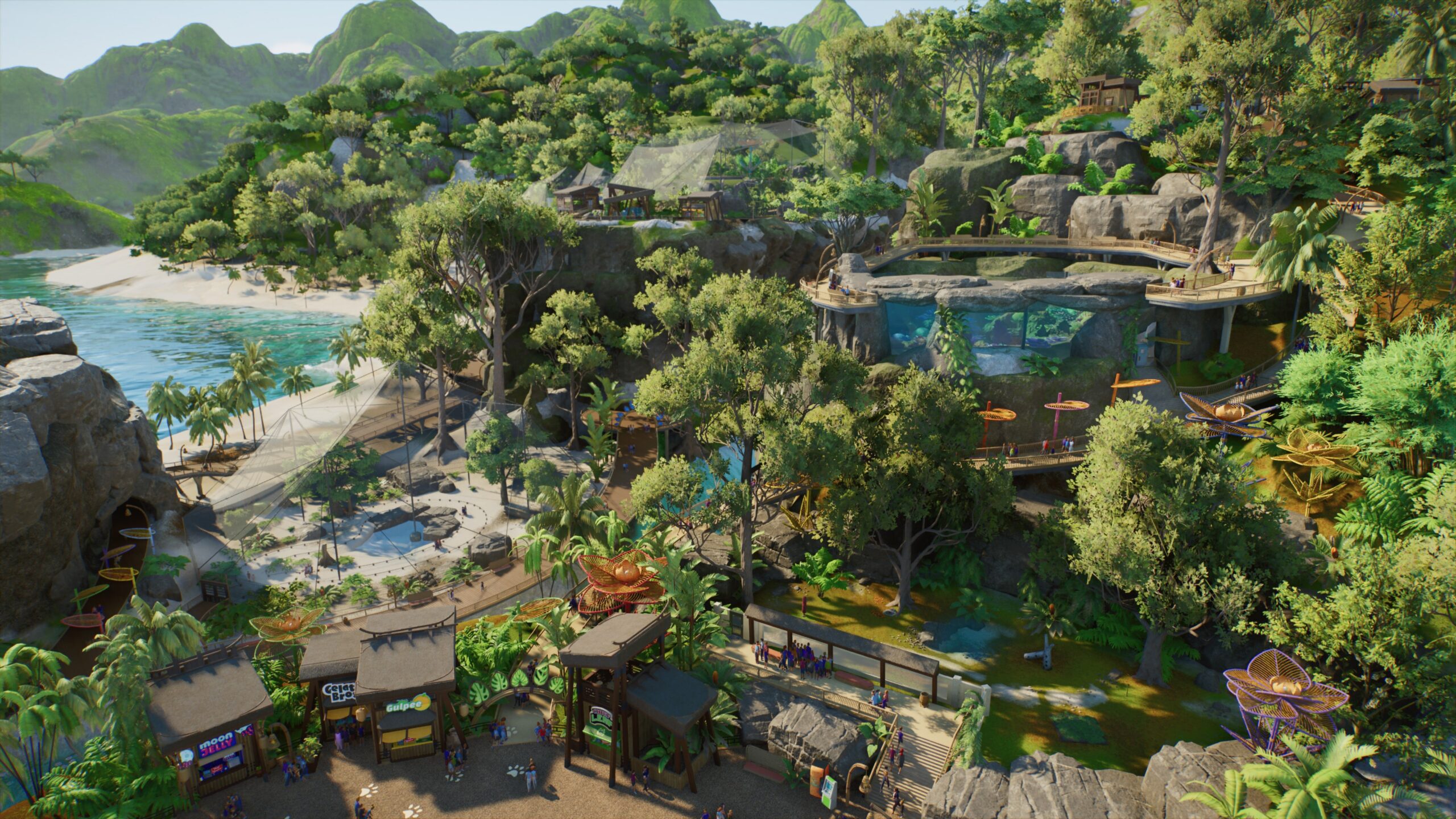
COLOURED STATIC PRESS / EDITORIAL PREVIEW / PLANET ZOO 2
Editorial note: This is a researched, post-launch preview based on official Frontier materials and published updates, not a hands-on assessment. We have not yet played or scored Planet Zoo 2. All images are official publisher imagery, not screenshots captured by our team.
Building the perfect zoo is easy in your head. There are sweeping habitats, visitors watching animals from cleverly placed viewpoints, and not a single staff member stuck behind a scenery object. Then you begin building, and the smaller decisions become the game. Which species need space? Which paths are actually usable? Can you care for the animals without spending your entire evening fighting the management menus?
Those are the questions we have always found fascinating about Frontier’s management games. And they are exactly why Planet Zoo 2 deserves more than another recap of its headline features.
The sequel launched on 13 October 2026 for PC, PlayStation 5 and Xbox Series X|S. Frontier’s additions are substantial: more than 130 animals, proper aquariums and aviaries, and Wildlife Reserves that move conservation beyond zoo boundaries. Yet the real promise is not a bigger species list. It is whether those new systems make the work of building and caring for a zoo meaningfully richer. Frontier’s official launch announcement provides the foundation for those claims.
Aviaries and aquariums change the shape of the challenge
In the original Planet Zoo, a great enclosure was already a careful exercise in design and welfare. Planet Zoo 2 adds different dimensions to that work. Water-dwelling species need habitats with space to swim; flying birds turn the vertical layout of an exhibit into something much more consequential than scenery.
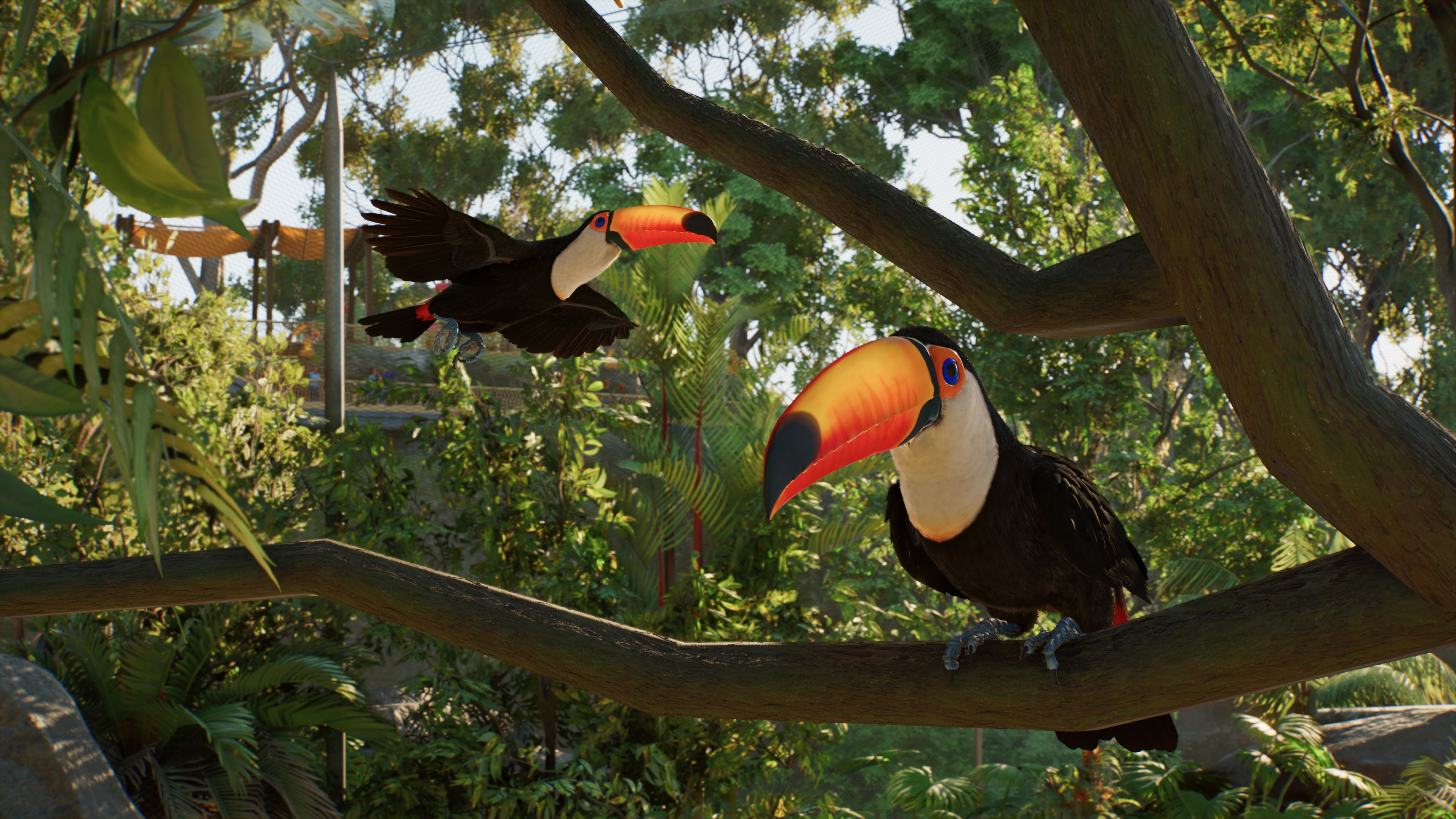
What interests us is how much of that additional complexity feels purposeful. Does an aviary encourage genuine experimentation with perches, vegetation and viewing areas? Is constructing an aquarium a thoughtful creative process, or does the interface introduce more obstacles than possibilities? Can a player understand why an animal’s needs are not being met without resorting to trial and error?
Frontier’s pitch suggests an impressive toolkit. The hands-on question is whether those tools offer freedom and feedback in equal measure.
Conservation should be more than another progress bar
Wildlife Reserves are potentially the sequel’s most important addition. As a Conservation Coordinator within the Fauna and Ecosystems Network, players can work on restoration and rewilding projects, returning animals to ecosystems beyond their visitor-focused zoos. The central Planet Hub is designed to connect these activities across a growing conservation network.
There is a compelling idea at the heart of this. Instead of conservation being something that happens almost offscreen once an animal is ready to be released, a reserve could make recovery, stewardship and long-term planning part of the actual game. But it needs to be more than a second checklist beside the original zoo-management checklist.
We’ll be interested in whether the reserves feel like distinct environments with their own choices and consequences, and whether the journey from healthy zoo populations to functioning wildlife projects gives players a reason to think beyond profit and park ratings.
The first few weeks also tell an important story
A preview written after launch should acknowledge more than the marketing. Frontier has continued issuing fixes and sharing its priorities with players. Its 5 November Update 1.0.9 addressed a crash involving Loony Bloons and Souvenir shops, while the studio’s 4 November Under Investigation update outlined further work around stability, animal storage, staff and building behaviour, with another update planned for the week beginning 9 November.
That continued support is encouraging, but the need for fixes is also relevant context. Zoo-management games live or die on hundreds of small systems working together. A brilliant habitat builder loses much of its charm if performance is inconsistent, staff become trapped or a save cannot be loaded reliably.
We won’t claim those problems are widespread, fixed on every platform or personally encountered by us. They are matters Frontier itself has discussed publicly. Readers considering a purchase should check the latest official Steam update notes and platform-specific reports before drawing conclusions.
What our eventual review needs to answer
- Animal welfare and behaviour: do the advertised improvements create believable creatures, and can their needs be understood and managed?
- Habitat creativity: how flexible are aquarium, aviary and terrain tools when building something complicated rather than following a tutorial?
- Conservation and progression: do Wildlife Reserves add meaningful decisions, or mainly more administration?
- Day-to-day management: how well do staff, guests, paths, menus and animal-trading systems hold together as a zoo grows?
- PC performance: what does the game actually feel like at 1440p on our review system, across an increasingly complex park rather than a quiet introductory scene?
- Accessibility and control: how easy is it for a newcomer to interpret the simulation, and how comfortably can players navigate its building tools?
Career, Franchise and Sandbox modes give us different ways to approach those questions. None should be judged solely by a feature list or a trailer. The point of a proper review is to spend time with the systems, identify where they shine and explain where they still ask too much of the player.
A bigger zoo is only half the ambition
There is plenty to be excited about here, particularly for people who have spent hours adjusting habitats in the original Planet Zoo or watching a carefully constructed Jurassic World Evolution park come alive. Flying birds, aquatic exhibits and a network of reserves all feel like natural next steps. They also create opportunities for new frustrations if the game’s everyday tools and simulation can’t keep pace.
Our verdict will have to wait for genuine hands-on time. For now, Planet Zoo 2 looks like a sequel with the right ambitions, plus a post-launch development story worth following closely. We hope to explore both in depth rather than rush to a score.
For the confirmed launch details, editions and original feature overview, read our Planet Zoo 2 launch coverage. You can also visit the official PC listing on Steam.
Disclosure and sources: This independently written editorial preview uses Frontier Developments’ October launch materials and its official November patch communications. Coloured Static Press has not been supplied a review copy and has not played Planet Zoo 2 as of publication. No hands-on claims or review score are made. Official imagery is credited to Frontier Developments. We have not been paid to publish this article.