
Rolling Front puts kingdoms, diplomacy and enormous battles into a world of rolling armies
Raise a kingdom, build an economy, play rival rulers against each other, then settle the argument with an army of rolling spheres.
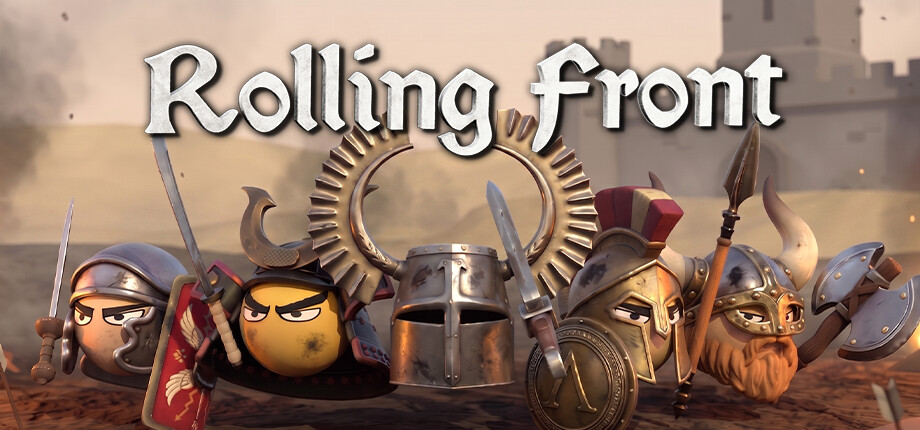
There’s something pleasingly direct about a classic real-time strategy game: establish a settlement, harvest resources, put your economy to work and watch your carefully constructed plans collide with those of your neighbours. Rolling Front, from developers ShinyScouter and Promeduz, offers that familiar loop with a distinctive visual style that turns its units and kingdoms into animated rolling armies.
Its developers contacted Coloured Static Press with a pitch and later followed up with a press kit. The public Steam page confirms a free demo, while the full game is marked as coming soon to Early Access, without a confirmed release date.
From a small base to a very big argument
According to the game’s Steam description, players choose a faction from across human history and work towards becoming the dominant kingdom on a large map. You start by gathering resources, building settlements and growing your population. Once the supply lines are in place, those resources feed weapon production and the armies you need to secure your borders.
It’s a structure strategy fans will recognise immediately. The intrigue lies in how the game handles multiple kingdoms, shifting allegiances and large engagements, rather than simply who can produce the most soldiers in the shortest amount of time.
Thirty-two factions, thousands of years
The Steam listing currently promises 32 factions drawn from different historical periods and cultures. Its examples include Greeks, Vikings, Egyptians, Crusaders, Saracens, French, Ottomans and Russians. Each faction has a distinct appearance and bonuses, creating room for players to approach the same map with different strengths.
The premise raises a familiar challenge for historical strategy: a broad faction roster provides variety, but only if those differences have practical consequences for the decisions players make. How the team balances its factions and how distinctly each one plays will be important questions for a later hands-on assessment.
Establish towns, run simple resource chains and prepare weapons for an expanding army.
Make diplomatic overtures, offer gifts, make demands and pressure other rulers.
Deploy thieves and spies, disrupt rival economies and fight for control of territory.
There’s more to conquest than fighting
One of the more interesting details is the political layer. The developers describe options for flattering enemy courts, sending gifts, demanding support and even forcing rival kingdoms into vassalage. Covert actions reportedly allow players to sabotage buildings, steal supplies, ruin crops or target an opposing ruler.
That could be the difference between a straightforward battle simulator and an RTS where diplomacy becomes another kind of weapon. A player who cannot win an open confrontation might undermine a neighbour’s economy or manipulate alliances until the balance changes.
Why Early Access makes sense here
Rolling Front’s Steam Early Access notes are unusually candid about the work left to do. The developers say their core RTS loop and multi-kingdom system are established, but faction balance and diplomacy require more testing. Their tentative plan is for roughly eight to twelve months in Early Access, with feedback informing more factions, improved AI, changes to the visuals and further tactical systems.
That’s a reasonable approach for a game that depends on interacting systems. Adding another faction or mechanic can change the difficulty of every other faction, so player feedback becomes particularly valuable. However, an Early Access roadmap is a plan, not a promise, and the overall quality of the demo remains something to judge separately.
Why Rolling Front belongs on our radar
We haven’t played the demo yet. The developers have offered further screenshots, gameplay clips and review access, but this feature is based on their direct submission and official Steam information rather than first-hand testing.
What caught our attention is the ambition. It’s a compact indie team taking on territory normally reserved for much larger strategy projects: dozens of distinct historical factions, diplomacy, espionage, economic development and warfare at scale. The game’s deliberately playful rolling-unit art also helps it stand apart visually.
There is plenty to explore with a future developer interview. Why rolling armies? How do they balance thirty-two kingdoms? And what is the team’s philosophy about making diplomacy genuinely useful in a game where war is always an option?
Explore Rolling Front
Developers: ShinyScouter and Promeduz · Platform: Windows PC · Status: Coming soon to Early Access, free Steam demo available
Editorial note: This First Signal article is an independent discovery based on the developers’ submission and official Steam materials. CSP has not played the public demo for this feature. No score or hands-on claims are made. Release timing and Early Access plans may change.