
Behind the Signal / Tabletop & Fantasy
Built to be painted. Made to be yours.
A conversation with Tony at Wargames Atlantic about accessible hard-plastic miniatures, creative freedom and why the smallest design decisions matter once a model reaches the painting desk.
Ask miniature painters what they want from a kit and the answers often sound simple: useful poses, details they can actually reach with a brush, and enough options to make the model their own. Getting those things right is less simple.
For our Painting Desk series, we spoke with Tony at Wargames Atlantic about the company’s hard-plastic philosophy, why interchangeable parts still matter, how a sculpt can help or hinder a painter, and the challenge of making tabletop gaming more accessible. The discussion also covers Les Grognards Cavalry, Badger Hardsuits, and where the manufacturer wants to take its historical and fantasy ranges.
The following is our full written interview, with answers supplied directly by Tony. Views about other manufacturers are his own.
What did you want Wargames Atlantic to do differently when you first started, and how much of that original thinking still guides the company?
I wanted to build an open, multi-genre company but keep it 100% hard plastic. Historical, fantasy and sci-fi all sitting side by side, with hard plastic kits at prices ordinary hobbyists could afford. I see us as heirs to a line that runs from Wells and Scruby through Airfix, Foundry, etc. Games Workshop has largely retreated into a closed ecosystem, and really aren’t a wargaming company anymore. And I wanted to make sure we (as soon as we had the resources) could help individual creators and smaller companies make the leap into hard plastic.
We started in 2019 as basically me and some freelancers with some big goals, but the foudning principle is the same now: make the hobby more open, not less.
You’ve spoken candidly about how your design philosophy differs from some of the established manufacturers. Where do you think those differences matter most to someone buying, building and painting miniatures?
28mm is a very strange beast proportions-wise. To make a model look great on the tabletop requires it to have some "interesting" proportions. Foundy, I feel, were one of the first to hone in on this in a big way – and of course a huge number of sculptors from there went on to work in other places and their own companies and that "standard" proliferated. Those "interesting" proportions and styling is why many sculptors who came to it via digital and video game type stuff have a real hard time getting it right. Too proportional (which looks reedy on the tabletop), too much detail which creates muddy figures that are hard to paint.
Earlier this year we locked down a "house style" based on Rob Macfarlane’s work and we have ongoing training with our design team to elevate what they are doing. All parts – torsos, arms, and heads are standardized on a dolly system Rob created and that becomes a starting point for the other guys. As we go from 130+ sets to 200, 300, 500 plastic sets – it will be a wonderful library to kitbash almost anything.
How do you balance historical inspiration, science-fiction creativity and the practical constraints of moulding, posing and production?
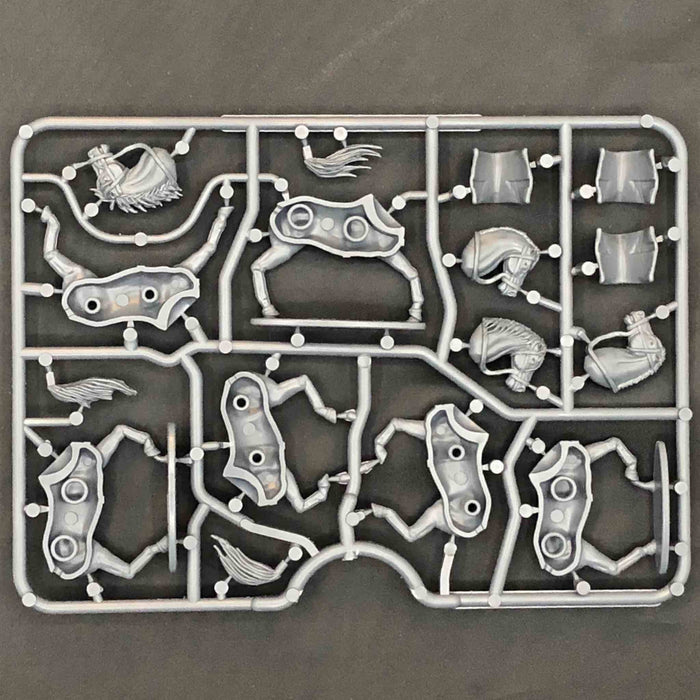
It’s not that big a deal really. Anything can be molded if it’s in enough parts! But we of course try to really limit making anything that’s like GW’s – what we call "puzzle" kits. Puzzle because they are odd shaped parts that can only go together one way. GW made a philosophical design switch several years ago where they wanted their models to be put together in basically one way with very limited options for the modeler. We take the opposite approach. We want interchangeable arms, heads, etc that work across the range. Will it all look good together – absolutely not. But why limit someone’s creativity. I personally feel kitbashing is one of the most interesting and enjoyable parts of the hobby.
As a miniature painter, I’m interested in what makes a sculpt enjoyable once it’s actually on the desk. How much do assembly, accessibility to details and opportunities for conversions influence your design choices?
Enormously. We think about where a brush will go before a sculpt is approved: are the faces reachable, can you paint the chest before the arms go on, are there crisp breaks between materials. Splitting a model into sensible sub-assemblies is a painting decision as much as a molding one. We limit details – it’s better to go with fewer, larger details than try to make a scale accurate figure – because all those fine details will only come out with some expert painter spending hours and hours on them. You need to design models to be easy to paint, quick to paint (unless you WANT to spend the time).
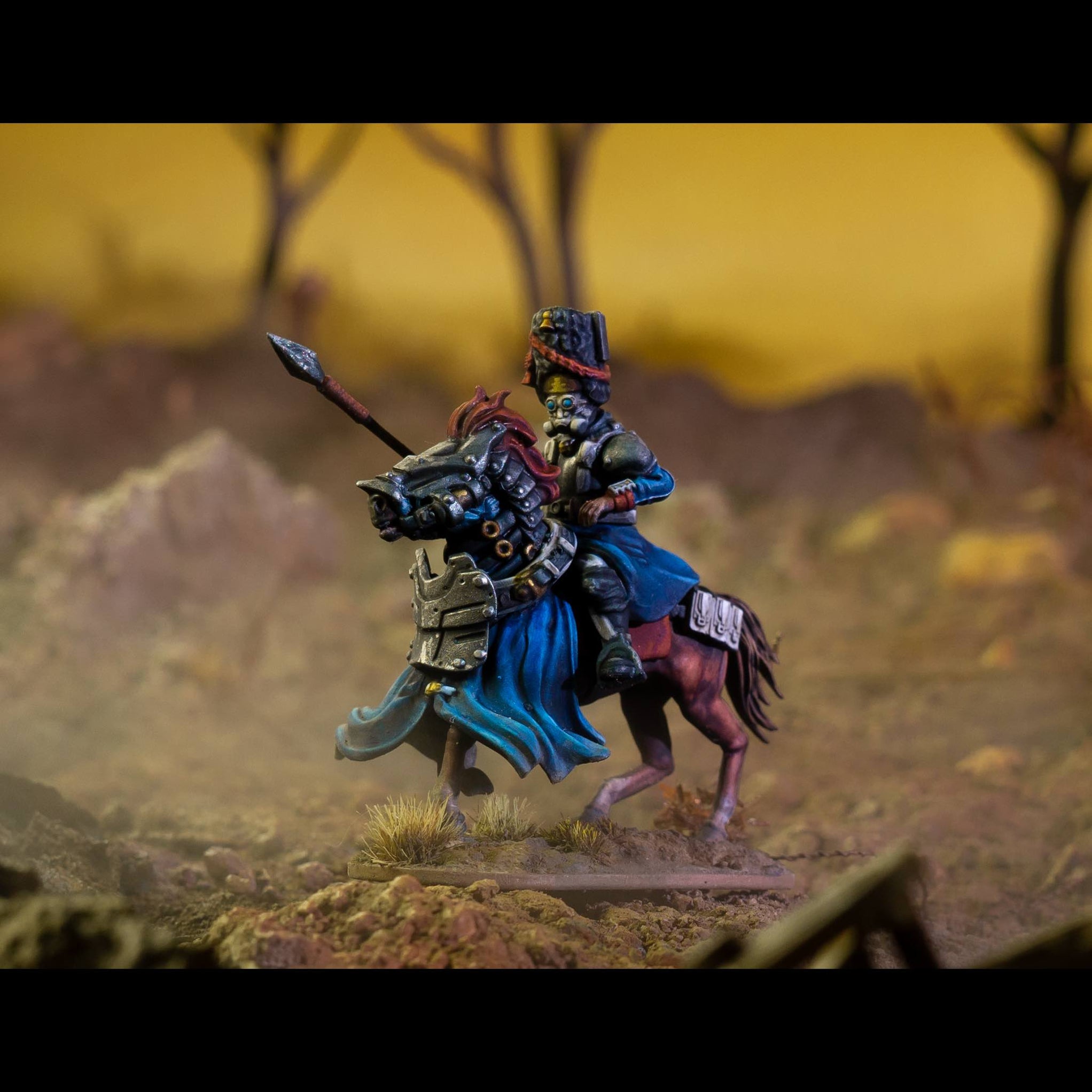
Les Grognards Cavalry really caught my eye. Where did the concept for those mechanical mounts come from, and what painting or conversion possibilities were you particularly excited about?
I think that was just Thieu running with the idea to be honest – there was no real artwork before the sculptures were done! Like the rest of our stuff we try to make things standard so that multiple rider types can work on multiple mounts. We didn’t always get that right but now we’re spending more time on it. For example – anything that can fit on our light horses will work on our new camels too.
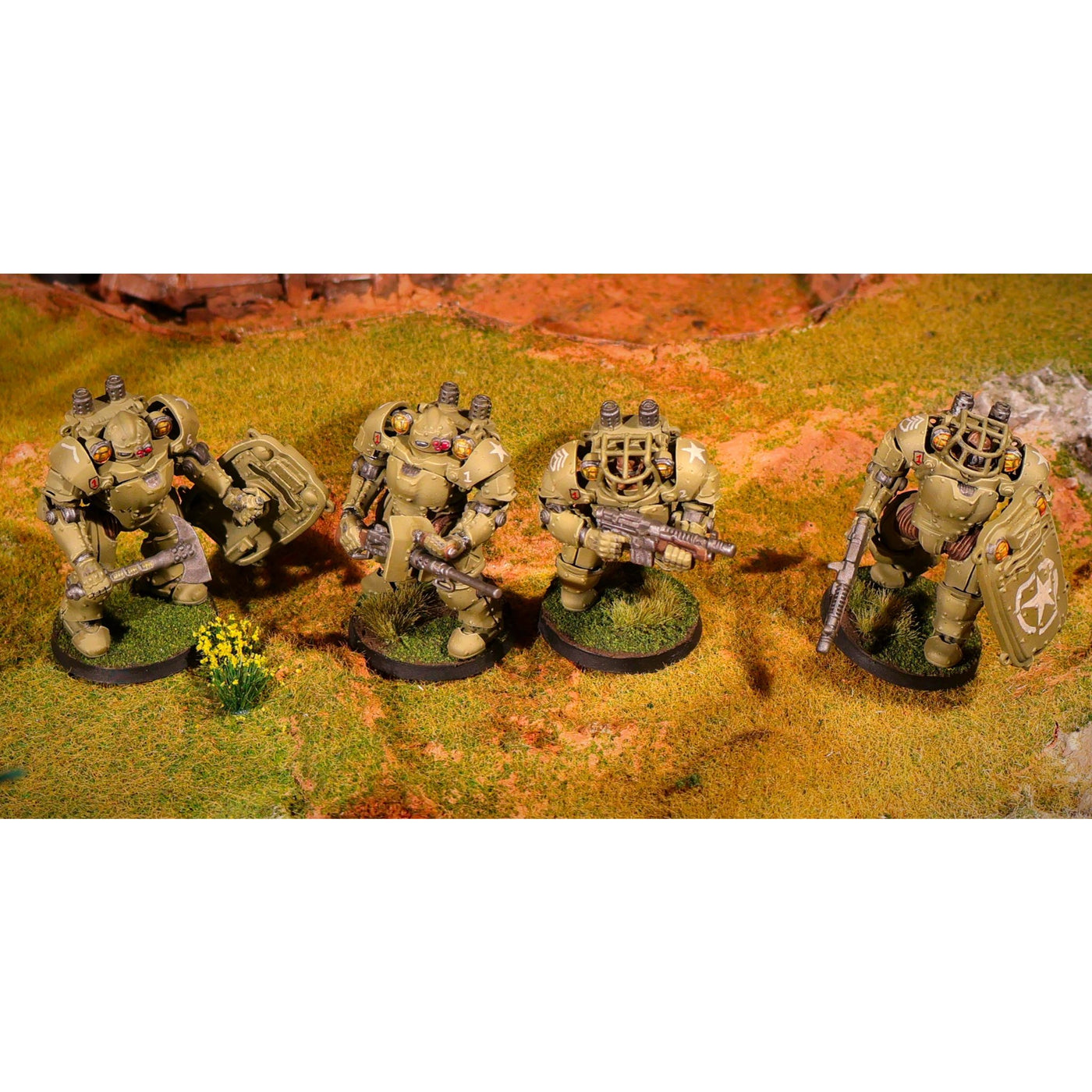
The Badger Hardsuits have a different appeal as chunky science-fiction models. What were the most interesting design decisions behind that kit?
The Badger Hardsuits are part of our Marcher line, which we do for Golden Dragon Games. The most interesting decision was committing to a premium multi-part build: several frames per box, with proper separation of the armor, arms, and equipment. That gives you genuine posing and a substantial miniature, rather than a flat, simple kit. When Jackson Jewell of Golden Dragon designed it he went really into pose-ability which makes for a really versatile kit. He has three new sets on the way (four if you count terrain) and we’re looking forward to expanding his Marcher universe with him.
What have hobbyists told you about your kits that genuinely changed your approach to a later release?
Most people love us for our randomness. When I started I identified several gaps in the marketplace or other ranges that were dying for hard plastic sets. At the beginning we didn’t have any rules/games so no need to make sets for a specific range/line and could be more freeform. The goal of the first five years was to just get as much hard plastic out as possible. But now that we are more focused on games we do have to make sure we’re supporting each on a regular basis – although this doesn’t mean we have to turn our back on the random factor. For example we just did female French Partisans and Elven and Dwarven villagers. Nobody was expecting those. The next one like that are Polish Winged Hussars. Just a great set that lots of people can use for different rule systems and/or for fantasy/conversion.
As the cost of building a tabletop collection increases, what does good value look like to you, and how do you keep the hobby welcoming to new painters and gamers?
We’ve always been focused on delivering great value. The upfront costs on a plastic set are enormous compared to doing something in metal or resin, but the material is so much more accessible and "desired" by the wargaming community. As we’ve streamlined our manufacturing (which we own our tooling factory – we use partners for injection) and as we’ve grown our distribution we can have a plastic set get to profitability in a very short timeframe. So this gives us a lot of freedom to keep the costs reasonable and not gouge the buyer.
Are there any lesser-known Wargames Atlantic ranges you wish more people would discover, or something upcoming you can safely hint at?
Most everything is pretty popular relatively. Some of the historicals obviously sell less than sci-fi and fantasy. All the existing ranges will continue to expand – and now we’re going to start having rules/games for each of them too over time. I’m excited for Classic Fantasy Battles – our 10mm mass battle game (Grand Battle Scale as we call it). And the 10mm historicals are also going to be fun as we have games for Azincourt and some other periods in the works including the Seven Years War. I’m most excited to launch some completely new historical periods in both 10mm and 28mm from scratch with two player starters. We’ll be getting into that more in 2027.
Finally, what’s the one thing you’d like readers to understand about Wargames Atlantic that rarely comes across in a product listing?
That we have a mission focused on the wargaming hobby itself. We aim to have the most extensive catalog across a variety of historical periods, sci-fi, fantasy, and other genres and licensed IP with deep and broad ranges in each – all in hard plastic. This is a marathon not a sprint although sometimes it feels like that! We want to uplift the whole hobby, help wargaming become more visible and find more people like us that are interested in these types of things but perhaps find the whole thing scary and intimidating to get into. We have a lot of ideas around how to do this and who to reach out to. A rising tide lifts all ships and wargaming is a vibrant and growing hobby – there is a lot of room to grow it even more!
Explore Wargames Atlantic
Interested in the kits and ranges Tony discussed? The official Wargames Atlantic website is the best place to explore the full catalogue and read more about the releases.
Miniatures and starter sets
- Les Grognards Cavalry: the multipart sci-fi cavalry featured in our interview
- Marcher: X19A2 Badger Hardsuits: hard-plastic science-fiction models designed with posing options
- Quar: Clash of Rhyfles: the two-player starter set, featuring the Western Arnyarans and Creevish
- The Barons’ War Retinue Box: a historical miniature force-building set
More from the manufacturer
- The Quar are Coming!: Wargames Atlantic’s announcement of the redesigned Clash of Rhyfles starter set
- Barons’ War Starter Set and Retinue Back in Stock!: the manufacturer’s update on the historical range
All links above lead directly to Wargames Atlantic. They are provided as further reading and product information, not as a paid endorsement.