
Reviewed by the Coloured Static Press team / Game review / Management roguelite
After around four hours of Dark Rail, we finally reached day 22. We had carefully managed our buildings, collected prisoners and survived no shortage of questionable decisions. Then our own people sacrificed us. There are undoubtedly more conventional ways to lose a management job, but apparently the Inquisition does not believe in written warnings.
That spectacularly unpleasant end captures the appeal of this grim management roguelite. Every resource matters, every decision has consequences and even a reasonably well-organised settlement can collapse if you take your eyes off the revolt meter for a little too long. It is demanding, often cruel and occasionally frustrating. We thoroughly enjoyed it anyway.
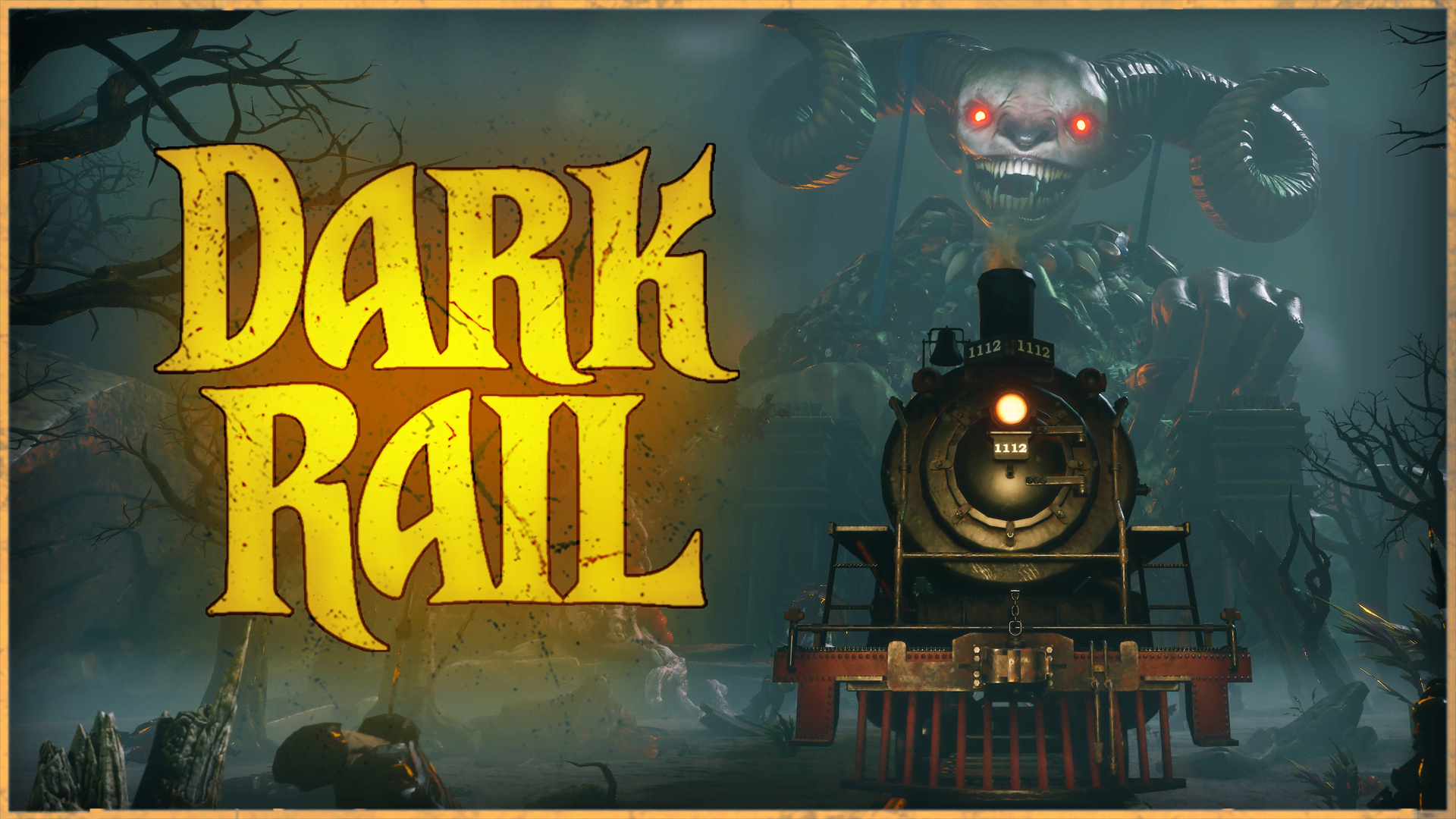
A management position with a uniquely terrible retirement plan
Created by Spanish solo developer Steam Veil Games and published by JanduSoft, Dark Rail puts you in command of the Inquisition in an industrial settlement on the edge of an empire. You must produce resources, upgrade buildings, gather prisoners and complete shipment quotas, all while preventing revolt and madness from bringing the whole operation to a grisly conclusion.
On paper, that might sound like fairly familiar strategy-game territory. Build things, manage the economy, complete objectives and gradually become more efficient. In practice, the game makes those responsibilities overlap in uncomfortable ways. Almost every improvement creates a new decision, and every problem you solve has the potential to make something else worse.
It is a wonderfully bleak premise. We are not running a pleasant little village, ensuring the crops are growing and everybody has enough bread. We are attempting to keep an entire industrial nightmare functioning with prisoners, sacrifices and a population that can apparently vote the manager out of existence.
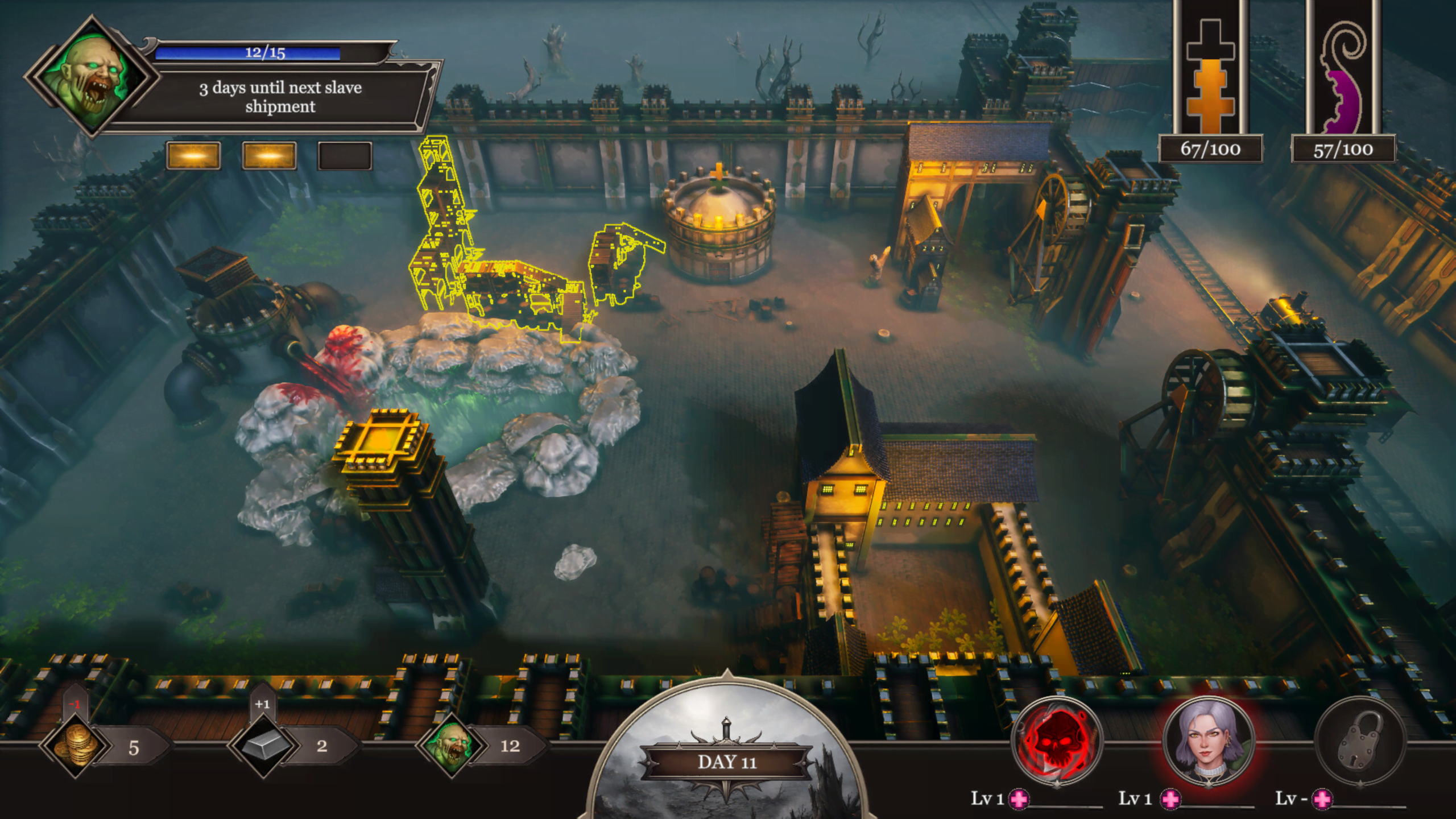
Six coins, six days, and absolutely no room for optimism
Resource management is the main event, and it starts with an unusually tight grip on your finances. Buildings produce the materials you need, but upgrading them requires care. Use more than you can generate and the settlement begins sliding towards a shortage that may be difficult to correct.
Early resource acquisition is painfully slow. Every decision to spend has to be considered against what might happen next. We frequently found ourselves staring at the available options, wondering whether we should invest in the future or hold on to the tiny amount of currency that might be needed to prevent a crisis tomorrow.
Take the revolt meter. During our playtime, spending six coins could bring it down. That sounds relatively affordable until you discover that earning those six coins can take six entire days. It changes the question from “Should we calm everyone down?” to “Can we possibly afford to remain in charge for another week?”
When revolt reaches its limit, the consequences are not subtle. Our eventual day-22 sacrifice was a suitably memorable reminder that the population has very little patience with a leader who has run out of ways to restore order. We would have preferred a strongly worded letter. The locals apparently favour a more theatrical approach.
That constant struggle is what makes the economy interesting. You are forced to prioritise. Spending on one emergency means not spending on something else, and waiting for resources to accumulate can feel genuinely dangerous. When the game works, every successful extra day feels like a small victory earned through careful decisions.
Madness, prisoners and the worst possible accounting exercise
Revolt is only half the trouble. Madness is another meter demanding attention, and one way to reduce it is through the sacrifice of a prisoner. Of course, the prisoners themselves are valuable because you need enough of them to satisfy your objectives.
There lies a particularly nasty choice. Do you sacrifice someone to keep madness under control, or keep hold of them and push closer to your quota? It becomes more difficult when prisoners are scarce, and every loss represents time and effort that you will have to replace.
These are the sorts of decisions that give Dark Rail its character. The themes are unpleasant, but they are not simply decoration. The terrible things your organisation does are tied directly to its mechanics, and the game is very good at making you understand why a desperate leader might contemplate another desperate decision.
We were particularly proud of accumulating 25 prisoners during one attempt. That sense of achievement was, in retrospect, poorly timed. Our people evidently had concerns about the state of the organisation, and their chosen method of communicating those concerns turned out to be fatal.
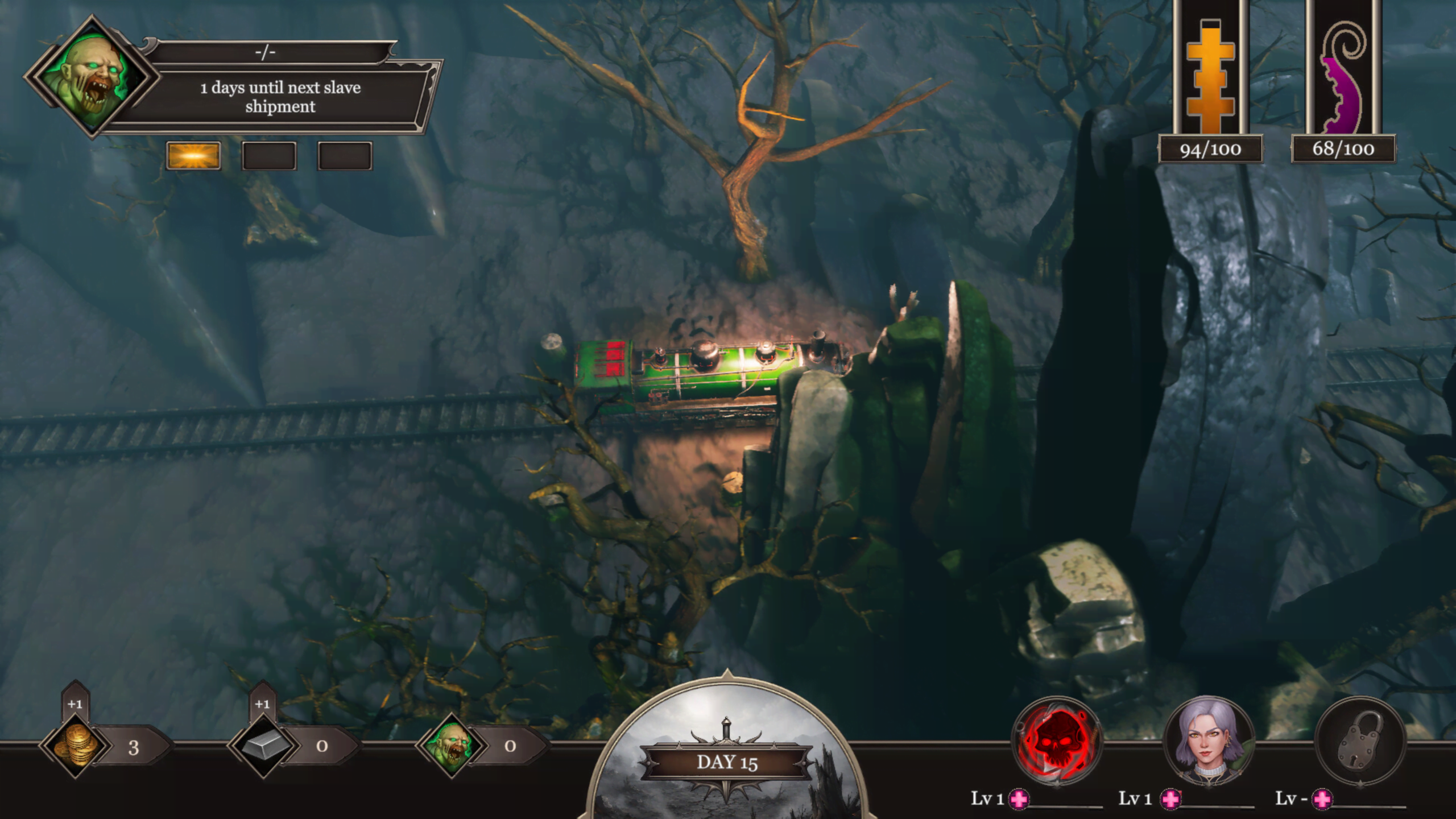
All aboard the train of extremely questionable decisions
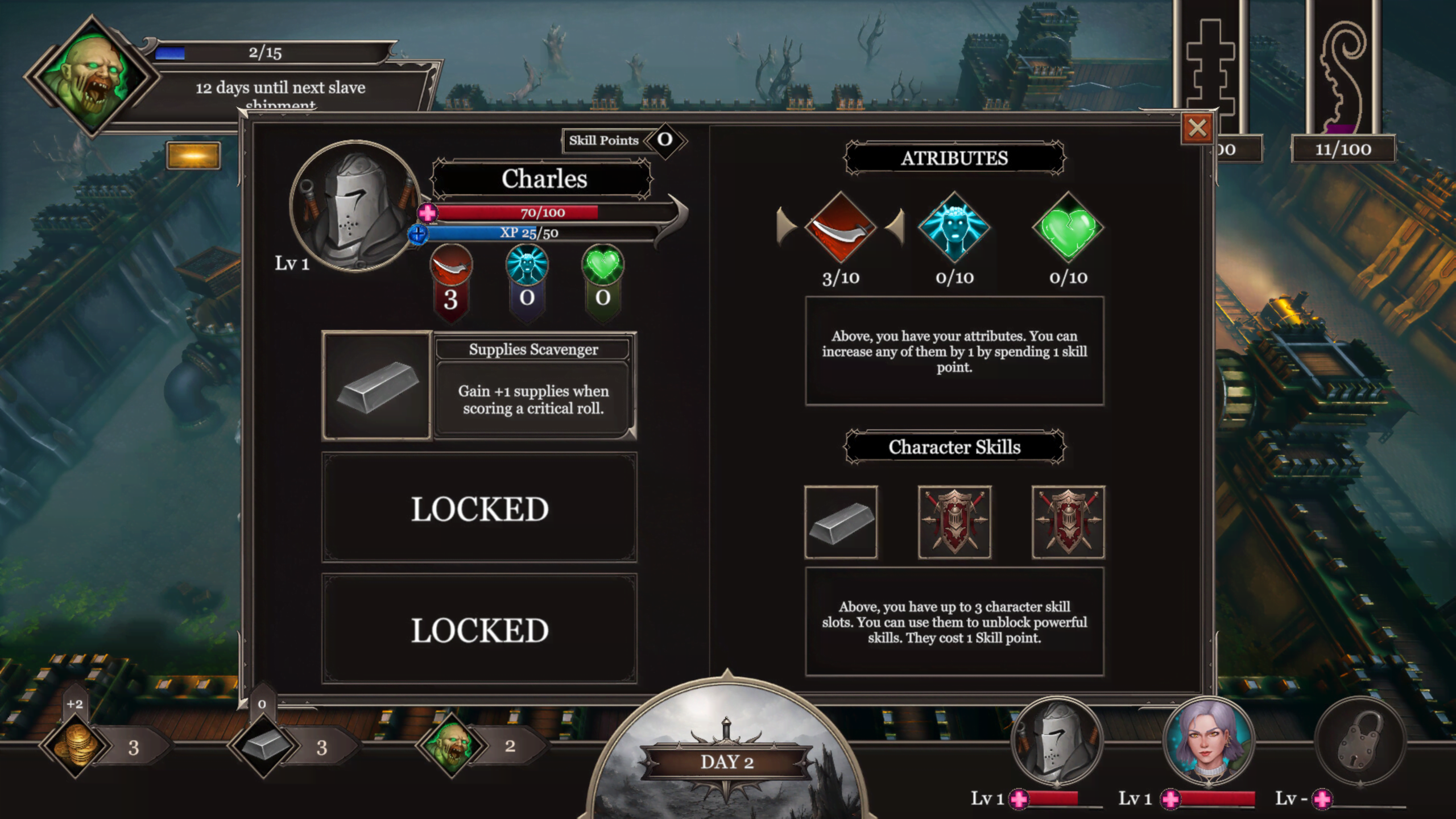
Once you have enough resources, you can undertake quests aboard the train, taking one of your available companions along for the journey. Their individual statistics matter, so choosing the right person for an expedition requires some thought. We enjoyed having another strategic decision to make beyond the settlement walls.
The official game description frames these journeys as hunts for heretics and dangerous creatures. Expeditions bring their own risks and are an important part of meeting the demands being placed on your Inquisition. They also introduce a particularly influential component of the experience: dice rolls.
A good sequence of rolls can make an expedition feel like a beautifully planned triumph. You have selected the right companion, prepared carefully and are finally making progress. Then the dice stop cooperating and the carefully planned afternoon begins disappearing into the nearest industrial furnace.
The randomness creates tension, but it is also the source of our biggest criticism. Sometimes a streak of unfortunate rolls can undo a remarkable amount of hard work. There is a difference between a situation becoming difficult because of your decisions and watching it deteriorate because probability has decided today is not your day.
When the dice decide you are not going home
We enjoy roguelites precisely because they are unpredictable. If every attempt unfolded the same way, there would be considerably less reason to return. The problem here is that the balance can sometimes lean too heavily towards luck.
When resources have taken many turns to acquire, a bad outcome carries a great deal of weight. Several poor dice rolls in succession can leave a situation looking almost impossible to recover from. We occasionally felt that sound decision-making deserved a little more power to protect us from the worst of those streaks.
Other players may love that uncompromising uncertainty. There is undeniably a thrill in surviving when everything appears stacked against you. We simply wished that more of our successes and failures had felt firmly connected to the choices we made, rather than the whims of a handful of cubes.
It is not enough to spoil the game, but it does create moments of frustration. We could accept that our leadership was sometimes questionable. We were less enthusiastic about having the dice officially confirm it.
A little turn-based combat between administrative disasters
Expeditions can lead to enemy encounters, adding turn-based battles to the management formula. These fights ask you to manage battle points and decide when to attack or defend, rather than simply charging ahead and hoping the opposition will politely fall over.
We enjoyed the combat as a change of pace, even though it was a relatively small part of our overall experience. Most of our attention remained on the economy, prisoner shipments and the twin threats of revolt and madness. The fighting offers a welcome break from staring at resource totals, while reminding you that the wider world is not especially hospitable either.
That balance works. Dark Rail does not need to become a full-time combat game to justify its expeditions. Its strength lies in how travelling out into danger feeds back into the increasingly fragile operation you are trying to maintain at home.
Death is temporary. The blood points are not.
We spent much of our opening time learning the hard way. Some runs ended because we mismanaged resources. Others collapsed under mounting pressure, and the dice were occasionally delighted to contribute to the disaster. But failure does not leave you completely empty-handed.
Blood points can be spent on permanent upgrades, giving future attempts a much-needed advantage. One particularly useful investment increases the number of coins you start with, easing the brutal shortage that makes the earliest days so difficult.
It was only after buying a few of these upgrades that we felt we had a proper fighting chance. Suddenly, we could afford to make slightly more considered decisions without every early expenditure feeling like an invitation to immediate collapse.
This long-term progression is one of the smartest elements of the experience. It turns even an unsuccessful run into progress, encouraging you to try a different approach and see whether the lessons of your previous disaster will help you survive longer. The pattern becomes strangely addictive: fail, learn, improve, try again, and hope your employees have finally reconsidered the merits of ritual sacrifice as a management tool.
Industrial horror with an excellent sense of atmosphere
Visually, Dark Rail does an excellent job of making its world feel oppressive. Grim industrial buildings, strange fungal growths and grotesque enemy designs combine to create a place that feels rotten in more ways than one.
The presentation complements the mechanics beautifully. When you are constantly dealing with madness, sacrifices and the threat of rebellion, it helps that the world itself looks as though something has gone fundamentally wrong. The horrors are not just numbers in a menu; they are part of the environment.
The soundtrack is appropriately eerie and sinister, while some sound effects are particularly unsettling. The screams during sacrifices, for example, are highly effective at making a grim moment feel genuinely unpleasant. We cannot say we would put them on our relaxing Sunday playlist, but they certainly serve their purpose.
Together, the visuals and audio give the game a distinctive identity. There is more than enough atmosphere here to keep the experience absorbing even when the strategy is doing its very best to break your spirits.
A little more guidance would go a long way
The opening hours can be unforgiving, and not all of that comes from the intended challenge. We would have appreciated clearer guidance when first learning how the systems fit together. There are many moving parts, and understanding why one decision has created a problem elsewhere can take several attempts.
Learning through trial and error is part of the roguelite appeal, but there is a point where a clearer explanation would make the challenge feel more rewarding rather than simply less confusing. The game would lose none of its harsh personality by helping new players understand the fundamentals a little sooner.
We also noticed a couple of minor spelling errors, including the memorable “overcrouding”. This is hardly the worst catastrophe to befall our Inquisition, but a little additional proofreading would help polish what is otherwise a very confident and atmospheric presentation.
Our central concern remains the reliance on luck. There is an engaging, demanding strategy game here, and we would love to see its strongest decisions matter a little more consistently when the dice turn particularly nasty.
The CSPress verdict
Dark Rail is an absorbing, deeply sinister management roguelite that asks you to juggle scarce resources, mounting revolt and spreading madness while meeting objectives that rarely seem interested in your long-term survival. We loved the atmosphere, the difficult economic choices and the sense of meaningful progress from permanent upgrades.
The game can be punishing, particularly before those upgrades begin to soften the early economy. Its onboarding could be clearer, and repeated bad dice rolls can make an already demanding situation feel unnecessarily helpless. But the underlying loop is strong enough that we kept wanting to try again.
After approximately four hours, our best attempt had reached day 22 before the locals decided that their leader would make a more useful sacrifice than administrator. We were frustrated. We were amused. Most importantly, we were already thinking about what to do differently next time.
85/100. A dark, addictive and beautifully oppressive management challenge whose occasional overreliance on luck cannot quite derail its strengths. Our next strategy involves watching the revolt meter very carefully, preferably before celebrating our twenty-fifth prisoner.
Review context: The 85/100 verdict comes from approximately four hours of original Coloured Static Press gameplay notes, including a run to day 22. The notes do not specify whether the game was played through a demo or pre-release review build. At the time of writing, the full game’s release is scheduled for 18 November 2026. Developer, publisher and launch details were checked against the official JanduSoft page. This review does not claim that all upgrades, routes or possible outcomes were tested.