
DUNGEONS & DRAGONS / CSPRESS GUIDES / START HERE
You’ve got friends, a vague interest in swords and sorcery, and absolutely no idea what happens when somebody says “roll initiative”. Excellent. You’re exactly where you need to be.
There are two ways to prepare for your first night of Dungeons & Dragons. The first is to gather a few people, learn a handful of rules and tell a story together. The second involves buying three rulebooks, seventeen sets of dice, a hand-carved dice tower and a miniature dragon large enough to claim council tax exemption.
We recommend the first. We completely understand the appeal of the second.
D&D is a tabletop roleplaying game. One person, the Dungeon Master (DM), describes the world and plays its inhabitants. Everyone else plays a character within that world. Players say what they want to do, the DM describes the results, and dice help settle the moments where success is uncertain. That’s the basic engine. Everything else is detail, imagination and the occasional appalling decision involving a locked chest.
This is the CSPress guide for people who actually want to sit down and play, not complete an apprenticeship in imaginary medieval administration. We’ll explain the equipment, the characters, how a turn works, the rules that matter, and how to survive your first adventure without turning it into a six-hour committee meeting.
Quick route through this guide: Find your party · What you need · Choose a character · Understand the dice · Get through combat · Run your first adventure · First-night checklist.
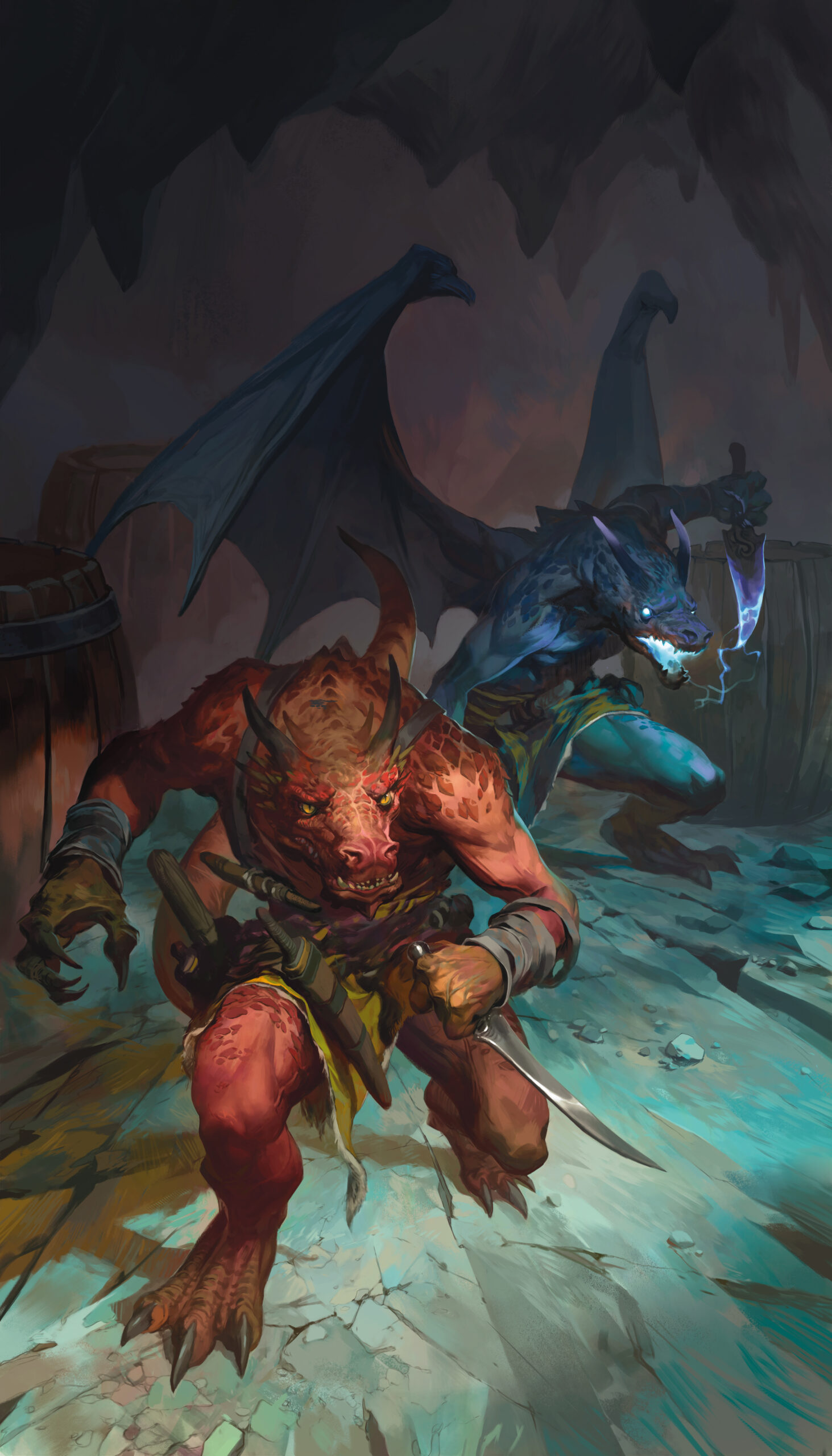
Lead illustration: Kobolds from the official Dungeons & Dragons Monster Manual, artwork by Viktor Titov / Wizards of the Coast. The remaining photographs in this feature are credited individually.
THE FIRST FIVE MINUTES
D&D in plain English
One person runs the world. Everyone else plays a character. You describe what you try. The DM explains what happens. Dice settle the uncertain bits. That’s the game.
First-night mission: play one short adventure, have a laugh, and leave wanting a second session. The goblins can wait until everyone’s found their character sheet.
1. First, find your people. Preferably people who can agree on a date.
For a comfortable first game, aim for three to five players and one DM. Smaller or larger groups can work, but a modest party gives everybody room to participate without turning each decision into a parliamentary debate.
Don’t worry if nobody has played before. Somebody can learn to DM using the free rules and a short prepared adventure. The DM isn’t supposed to defeat the players. They’re the referee, narrator, supporting cast and occasional voice of the increasingly exasperated town guard. The goal is to help everyone have fun, not to win a private war against a party of level-one adventurers.
Start with a one-shot, an adventure intended to be completed in a single sitting, rather than promising a five-year campaign before you’ve even established who is bringing the biscuits. Allow about three hours for play, plus a little time to make introductions and work out which die is which.
If you’re joining an existing group, tell them you’re new. A welcoming table will explain the basics, help with a character and avoid expecting you to know the difference between a saving throw and a soufflé.
2. What you genuinely need, and what the shops would love you to think you need
A STARTER KIT, NOT A SHOPPING SPREE
What belongs on the table tonight?
And snacks. They’re not in the rulebook, but morale is a valuable resource.
Here’s the beautifully short shopping list:
- Rules: use the free updated D&D rules on D&D Beyond. The updated fifth-edition rules are now also labelled 5.5e on D&D Beyond; you’ll still see the older 2014 fifth-edition rules referred to as 5e. Agree which version your group is using and stick with it for your first night.
- Characters: have a ready-made character sheet for each player, on paper or digitally. The official How to Play guide is a useful starting point.
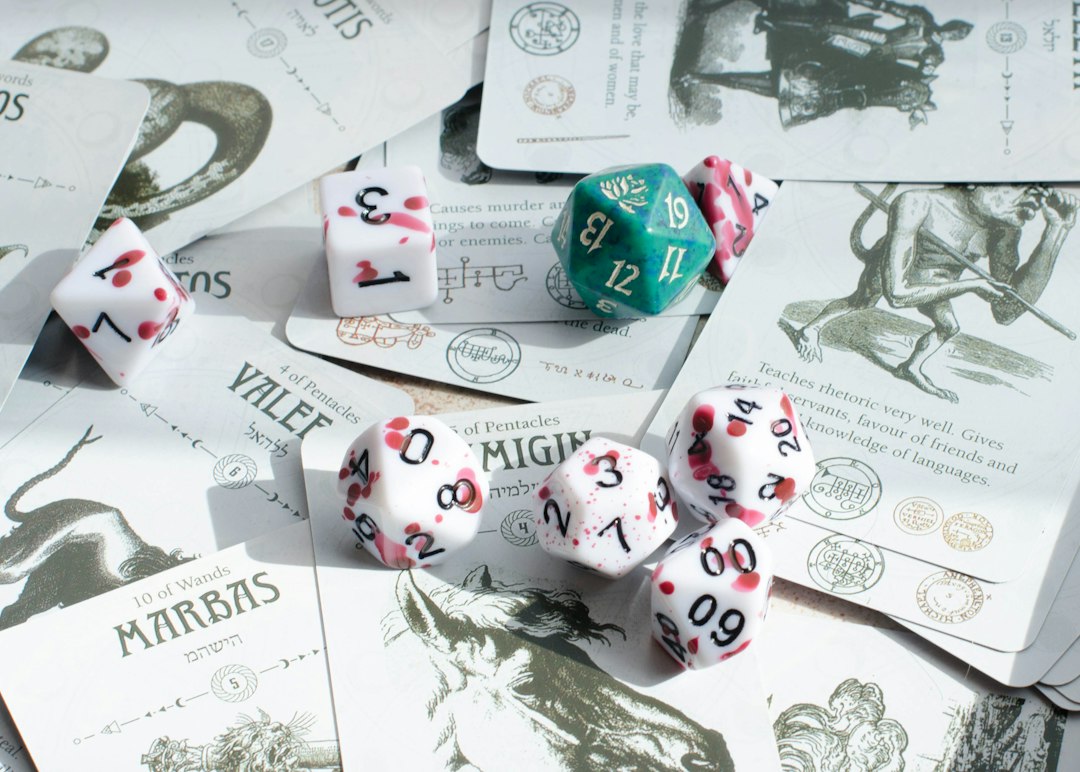
- Dice: a traditional seven-die set is handy, but a digital dice roller is perfectly acceptable. You do not need colour-coded gemstones blessed under a full moon.
- An adventure: a short prepared scenario, or one straightforward original mystery for the DM to run.
- Something for notes: pencil, paper or a phone. The suspicious innkeeper will have a name. Someone will forget it immediately.
- Time and a comfortable place: a kitchen table, an accessible club space or an online call with a shared dice roller will do.
You do not need painted miniatures, elaborate terrain, a custom gaming table, a subscription, the complete book collection or a professional voice-acting career. All of those things can come later if you enjoy the hobby. It is entirely possible to have a legendary evening with two pencils and some deeply questionable character voices.
3. Your character: who are you, what can you do, and why are you in this tavern?
A character sheet may initially resemble the tax return of a very violent elf. Don’t panic. Start with three decisions: what sort of hero sounds fun, what they’re good at, and why they’d join the adventure.
Choose a class before you agonise over everything else
- Fighter: a capable weapon user with a clear role. A friendly first pick if you’d like to learn through action.
- Rogue: stealth, clever tricks, spotting opportunities and possibly behaving like every unattended pocket is a public invitation.
- Cleric: magic and support alongside a sturdy role in the party. Ideal if you like helping, protecting and occasionally smiting.
- Wizard: a toolbox of spells and wonderfully ambitious plans. More reading, but rewarding if magic is what drew you in.
- Barbarian: powerful, direct and built for dramatic confrontations. “I would like to hit it” is sometimes an excellent tactical assessment.
- Bard: charm, performance and magical versatility. The class for someone who wants to talk their way out of danger and then write a song about it.
There are other classes too, and none of the above are mandatory team slots. You aren’t building an esports roster. Pick somebody you’ll enjoy inhabiting. A brave fighter who is terrified of geese can be more memorable than fourteen pages of tragic royal ancestry.
You’ll also choose details such as species, background and ability scores. The six abilities describe broad strengths: Strength, Dexterity, Constitution, Intelligence, Wisdom and Charisma. Your class tells you what kinds of actions and special abilities you get. Your background gives flavour and useful mechanical details. You can learn the finer points as you play.
For a first session, I’d recommend a level-one pre-generated character unless the group specifically wants a character-creation evening. Learn where your Armor Class (AC), Hit Points (HP), main attack and useful skills are. Circle those boxes. Everything else can introduce itself when it becomes relevant.
A good roleplaying prompt is simply: “What does my character want, what are they afraid of, and what’s one thing they would never leave behind?” That’s enough personality to start. The dramatic family betrayal can wait until session three.
4. The d20 explained without requiring a mathematics degree
The twenty-sided die, or d20, is the star of the show. When you’re trying something uncertain, the DM may call for a check. Roll the d20, add the relevant ability modifier and add your proficiency bonus if you’re proficient in that skill or task. Compare the result with the Difficulty Class (DC) the DM has chosen.
Example: the party needs to climb a damp stone wall. The DM asks for a Strength (Athletics) check against DC 15. Your character rolls an 11, has a +3 Strength modifier and a +2 proficiency bonus in Athletics. 11 + 3 + 2 = 16. You make it. The wizard, meanwhile, has decided the wall probably owes him money.
Some actions don’t need a roll at all. Opening an ordinary unlocked door isn’t usually an Olympic event. The DM should call for dice when failure is plausible and interesting, rather than asking the party to roll to put on their shoes.
Advantage means rolling two d20s and using the higher result. Disadvantage uses the lower. It’s a wonderfully quick way to model favourable or difficult circumstances. A natural 20 is famously exciting, but don’t assume it automatically succeeds at every impossible skill check; the game’s special critical-hit rules apply to attacks.

KEEP THIS HANDY
The dice-and-rules cheat sheet
If somebody says “roll initiative” and you temporarily leave your body, glance here.
- d4, d6, d8, d10, d12, d20: dice with that many sides. “2d6” means roll two six-sided dice and total them.
- Ability check: a roll to see how well you attempt a task.
- Saving throw: a roll to resist or avoid something nasty, such as poison or a spell.
- Armor Class (AC): the number an attack generally needs to meet or beat to hit you.
- Hit Points (HP): your capacity to keep going before dropping to zero and potentially getting into serious trouble.
- Proficiency bonus: a bonus for training in relevant tasks, tools, attacks or saving throws as your character rules specify.
- Initiative: the order in which creatures take turns when combat begins.
5. So you’ve angered a goblin. What actually happens in combat?
COMBAT, WITHOUT THE PANIC
Your turn, in five steps
Remember: attacking means rolling to hit first, then rolling damage if the attack connects. Some spells instead require saving throws.
First, congratulations. You have discovered D&D’s oldest diplomatic tradition.
When fighting starts, the DM asks everyone to roll initiative, generally a d20 plus their Dexterity modifier. Turns then proceed in order. On your turn you can normally move up to your speed and take an action. Certain class features or spells also give you a bonus action to use, while a reaction can happen in response to a trigger, sometimes outside your own turn.
Your action might be attacking, casting an eligible spell, helping a friend, dashing for extra movement or doing something creative that the rules and DM can accommodate. For a weapon attack, roll a d20, add the appropriate attack modifier and compare the total against the target’s AC. If you hit, roll the weapon’s damage dice and add any applicable bonus. Keep your attack roll and damage roll separate.
Spellcasters don’t all work like weapon users. Some spells require an attack roll; others ask the target to make a saving throw. Read the wording on the spell. The card or character sheet tells you which it is, usually more reliably than your mate who “definitely remembers this from a podcast”.
Spell slots are limited resources used to cast many levelled spells. Cantrips are spells you can generally cast without spending slots. You don’t have to memorise the entire spell list. Write down two or three options your character will actually use and look up the others when necessary.
Most importantly, fighting isn’t the only solution. You can negotiate, trick enemies, flee, distract them or discover they were simply defending their home. D&D is strongest when players can make choices rather than follow a predetermined series of combat arenas.
6. Roleplaying isn’t acting. Unless you want it to be.
Some players love performing accents. Others say, “My ranger asks if anyone has seen the missing child.” Both are roleplaying. So is deciding that your honourable paladin won’t steal food from a starving village, even if the party rogue regards the place as an unusually well-stocked buffet.
Try stating what your character wants to achieve, not inventing a theatrical monologue on command. The DM can ask a follow-up question if the details matter. Nobody should feel pressured to do voices, speak in character all night or disclose personal feelings to make the table “immersive”.
And if you do adopt an elaborate accent, remember that it may need to survive another thirty sessions. A decision made in a moment of enthusiasm can become a lifelong administrative burden.
7. Session zero: the five-minute conversation that saves five future arguments
Before anyone draws a sword, spend a little time agreeing what sort of evening you’re actually having. Is this a light-hearted adventure, serious fantasy, spooky mystery, or complete chaos featuring a bard and an unattended goat?
- Tone and expectations: how serious, silly, combat-heavy or story-focused should this be?
- Boundaries: what themes do people want excluded or handled off-screen? Agree that anyone can pause or redirect an uncomfortable scene without being questioned.
- Practicalities: start and finish times, breaks, food, accessibility, online tools and how the table will handle absent players.
- Rules approach: are you using updated 5.5e rules or the older 5e rules? What happens when nobody knows a rule?
- Sharing the spotlight: quieter players deserve a turn too. The person who speaks loudest shouldn’t automatically become the main character.
For an ongoing group this is often a full session zero; for a single beginner’s adventure, a short version before the session is a very sensible start. You don’t need to make it formal. You do need to make sure everyone is comfortable and welcome.
8. First-time Dungeon Master? You don’t have to write The Lord of the Rings by Thursday.
CSPRESS DM TIP
Never hide the only important clue behind a single failed roll.
Your players are perfectly capable of missing the obvious when it’s glowing, labelled and being waved at them by an unusually helpful NPC. Give them another way forward.
Here’s the secret: a DM doesn’t need a completely invented kingdom, twelve dynasties and 400 years of political intrigue. You need a starting situation, an interesting problem, a few characters and room for the players to surprise you.
Start small. A village has lost something important. Someone is lying about why. A nearby location holds clues. The players can investigate, talk, sneak, fight or make everything dramatically worse through a decision you couldn’t possibly have predicted.
Prepare what the NPCs want, not six pages of dialogue they’ll only hear if the group enters through the correct door. If players ask a question you didn’t anticipate, answer based on what makes sense in the world. If a rule brings everything to a halt, make a reasonable temporary ruling, note it down and check the official rule later. Consistency beats twenty minutes of frantic browser tabs.
Two practical rules: don’t hide the only essential clue behind one failed roll, and don’t punish creativity just because it wasn’t in your notes. If the entire mystery depends on finding a letter, let them discover the letter through investigation and use the roll to determine how quickly or cleanly they find it.
PLAY THIS TONIGHT · AN ORIGINAL CSPRESS ONE-SHOT
The Bell of Brackenford
Brackenford’s warning bell has vanished just as the evening fog rolls in. Two villagers are still out on the marsh road. The mayor blames woodland thieves; the bell-ringer calls that nonsense. Somewhere near the abandoned mill, the truth is considerably less convenient.
PARTY
3–5 level-one characters
PLAY TIME
About 2–3 hours
ADVENTURE STYLE
Mystery · choices · optional combat
FOR THE DM · READ THIS FIRST
What actually happened?
The bell hasn’t been stolen by monsters. Orin Pike, the millkeeper, and Lysa Fen, his apprentice, removed the village’s small warning bell and carried it to the mill by wheelbarrow. The bell’s enchanted peal also activates an old sluice gate. Normally, the gate diverts rising marshwater into a safe overflow channel. Its damaged hinge now sends the flow towards Brackenford’s lower lane if the bell is rung. They hoped to repair the mechanism and return the bell before nightfall, but the fog arrived early.
Mayor Elira Voss knew the gate was faulty and postponed the repairs. Her tale about woodland thieves is an attempt to cover that mistake. Bell-ringer Bram Quill only knows that two travellers, Ina and Seth, are due back along a road almost impossible to see in fog. Everyone is protecting something; nobody needs to be a cartoon villain.
Your job: offer clues, let the party investigate, reveal the truth, and give them a real choice about how to warn the travellers. This adventure needs no purchased bestiary or prepared battle map.
Three faces to remember
- Bram Quill · the worried bell-ringer. Helpful and increasingly frantic; he knows the travellers’ route and can lend lanterns.
At the table: “If those two are still on the marsh road, they need something to follow home.” - Mayor Elira Voss · the tidy, evasive village leader. She knows about the cracked sluice mechanism and has a repair order tucked in her ledger.
At the table: “There is absolutely no cause for alarm. Please stop looking at my paperwork.” - Orin Pike and Lysa Fen · the millkeeper and apprentice. They moved the bell to prevent flooding; they will explain themselves if approached peacefully.
At the table: “We were going to put it back. After we fixed the bit that floods everyone’s kitchen.”
Rules at a glance: use the official free D&D rules. The suggestions below use DC 10 for easy tasks and DC 15 for moderately difficult ones. Adjust to your table. Never require a successful roll to uncover the only clue that keeps the story moving; a failed check should cost time, add a complication or reveal less detail, not end the session.
The adventure, scene by scene
SCENE 1 · 15–20 MIN
The empty bell tower
Brackenford’s square smells of rain and fresh bread. Above the market stalls, the bell tower stands silent. A rope swings where the warning bell should be, and a grey bank of fog is crawling across the fields. Someone near the fountain mutters, ‘Well, that’s inconvenient.’
Give the players a reason to care: Bram tells them Ina and Seth are due home before dark. Without the bell to guide them, the fork in the marsh road is easy to miss. The mayor interrupts to blame ‘woodland creatures’, but nobody has seen any.
What players can do: speak to Bram or the mayor, examine the tower, or follow marks left by a loaded wheelbarrow. If they don’t choose a direction, Bram points out that the tower bolts were removed carefully, not torn away by an animal.
DM prompt: ask each player what their character notices or wants to do. Reward a sensible idea with information before reaching for dice.
SCENE 2 · 20–30 MIN
Three clues, one suspicious wheelbarrow
The party can investigate in any order. Every clue below is discoverable without a roll when players look in the right place:
- The tower: clean tool marks on the mounting bolts show that somebody deliberately took the bell down.
- The yard: wheelbarrow ruts lead away from the square toward the mill. One handle has a shiny brass scrape. It’s almost as though somebody tried to disguise a twenty-kilo bell with a wheelbarrow and optimism.
- The mayor’s ledger: a repair notice says ‘sluice linkage unsafe; inspect before next bell test’. It’s dated before tonight, with Elira’s initials beneath it.
Suggested checks: DC 10 Wisdom (Survival) finds the ruts in the mud quickly; DC 10 Wisdom (Insight) notices Elira dodging questions; DC 15 Intelligence (Investigation) reveals that the tower’s bell mechanism is linked to the old mill by enchanted copper fittings.
If rolls fail: the clues still lead to the mill. The party simply arrives later, with the first wisps of fog already on the road. Do not make them spend forty minutes interviewing a cabbage seller because everyone rolled a three.
SCENE 3 · 25–35 MIN
The mill, the bell and the people who took it
The waterwheel turns with a tired wooden groan. Through a broken window you see a lantern, two anxious figures, and a bell half-hidden beneath a tarpaulin. Somewhere under the floor, a metal mechanism gives an unpleasant shudder.
Orin and Lysa aren’t hostile. Orin admits they took the bell because another full ring could trigger the damaged gate and spill marshwater down the village’s lower lane. Lysa shows the players a bent connecting pin and the old warning marks on the sluice housing. The ominous noises are from machinery, not a secret monster waiting to eat the party.
Ways into the conversation: talk openly; offer help; quietly inspect the machinery; or ask why they didn’t tell the village. Orin explains he asked the mayor to act and was ignored. If accused, he doesn’t attack. He points at the bell and says, ‘Take it, then. But I hope somebody knows how to swim.’
Optional obstacle: an old shutter has jammed across the access stairs. Opening it is a DC 10 Strength (Athletics) check, a clever tool-based solution, or several characters helping together. Failure makes noise and costs time, not access to the adventure.
Want a short combat lesson? Make it optional. A single shambling bundle of marsh reeds comes alive when the old machinery rattles. This is an original, simplified practice foe: AC 11, 7 HP, Speed 20 ft, one strike at +3 to hit for 1d4 bludgeoning damage. For four or five players, use at most two. They retreat when one is defeated, can be frightened away with bright lanterns, and do not pursue anyone. Skip the encounter entirely if the group prefers investigation. These are homebrew training creatures, not official monster statistics.
SCENE 4 · 20–30 MIN
The choice nobody else wanted to make
The fog reaches the mill. Bram’s lantern appears on the road below: the travellers still haven’t returned. The party now has three clear ways forward, and you should welcome a fourth if they invent one.
- Repair, then ring: steady the damaged hinge and replace the pin using a sensible plan. One DC 10 check with suitable tools or Strength can hold the gate; a DC 15 check can make the repair secure enough for a full ring. Multiple helpers, improvised materials or a good plan can reduce the risk. If a roll fails, the first attempt slips and splashes everyone; they can try a different solution instead of being trapped.
- Isolate the bell: Orin shows the party how to disconnect the old enchanted linkage (DC 10 with suitable tools, or a clever magical workaround). They can then ring the warning bell without activating the gate. The gate still needs repairs tomorrow.
- Keep the bell quiet: organise lanterns and a guide rope along the road, using Bram’s route knowledge. With enough volunteers and equipment, this works without a roll. The group may need to walk out into the fog to escort Ina and Seth home.
What if they simply ring it? Don’t veto them. The damaged gate sticks open and water runs into the lower lane. The bell still guides the travellers home, but a few gardens and ground floors are soaked. The party can help with sandbags and evacuation. Choices should matter without turning a beginner’s session into a mass casualty event.
The mayor arrives: Elira asks the party not to mention the repair notice. Let the players decide whether to protect her reputation, demand an apology or tell the village. This is the moral choice at the heart of the story, not an excuse for a lecture from the DM.
SCENE 5 · 15–20 MIN
The road home and the morning after
Ina and Seth are found cold, muddy and thoroughly unimpressed with their evening’s navigation. The players’ approach determines the final scene:
- The gate is repaired: the bell rings clearly; the travellers follow it home; the lower lane stays dry. Orin raises a mug to whoever held the pin steady.
- The bell stays disconnected or silent: lanterns and a human chain guide the travellers back. The village is safe for tonight, but the repairs and a better warning plan remain tomorrow’s work.
- The gate floods: everyone gets home, but the lower lane is soaked. The mayor must answer for ignoring the warning, and the party can help residents save belongings. Nobody needs to be punished for choosing to prioritise lives.
A closing beat: Bram offers the party a little brass token stamped with a bell and a meal at the inn. Ask every player for one thing their character did after the excitement, then let the evening end on a laugh, an apology or a promise to return.
If you want another session, the damp repair notice hints at an abandoned workshop farther along the marsh road. But that’s tomorrow’s paperwork, and tonight Brackenford has had quite enough administration.
PANIC-PROOF NOTES FOR FIRST-TIME DMS
If the players are stuck: have Bram point out the wheelbarrow ruts, Lysa leave a lantern by the mill, or Orin call for help. Keep the plot moving without solving the players’ choices for them.
If the party splits up: cut between the two groups after a brief scene each, so nobody spends ages watching somebody else’s adventure.
If you’re short on time: begin with Bram handing them the repair notice, skip the optional combat and go straight to the mill.
Content and comfort: agree beforehand how perilous the fog should feel. The default here is suspenseful but non-graphic, with no unavoidable character death.
Independent original CSPress adventure. Not an official Dungeons & Dragons module. Suggested checks and optional homebrew creatures are for this scenario; use the official free rules and adjust them for your table.
A sensible three-hour first-night timetable
- 0–20 minutes: introductions, quick expectations and character sheets.
- 20–45 minutes: opening scene and the first meaningful choice.
- 45–100 minutes: investigation, conversations and exploration.
- 100–115 minutes: break. Hydration is a surprisingly powerful adventuring ability.
- 115–165 minutes: confrontation, discovery or a short fight.
- 165–180 minutes: ending, favourite moments and whether anyone wants another session.
It’s a guide, not a stopwatch. If everybody is having a wonderful time interrogating a cabbage merchant, you can shorten the dungeon. Nobody will complain that the cabbage merchant’s emotional journey was not in the official itinerary.
9. Maps, miniatures and elaborate terrain: brilliant fun, absolutely optional
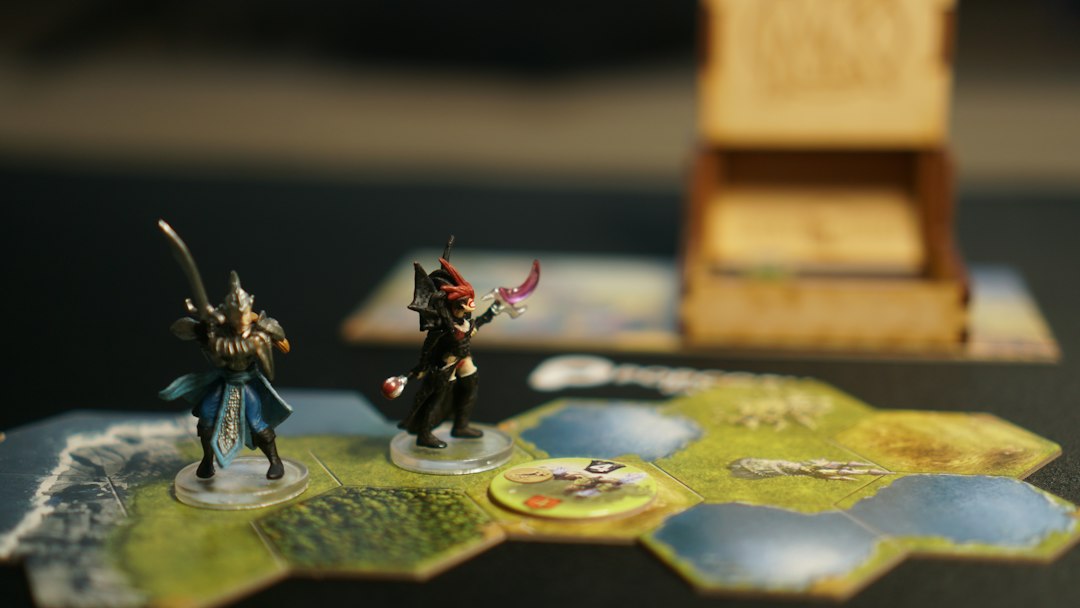
Theatre of the mind means the DM describes the action and everyone imagines it. It works particularly well for conversations, travel and simple encounters. If combat positioning gets fiddly, a sheet of squared paper, a rough sketch, tokens or spare dice can show who is where.
Miniatures and scenery make battles easier to picture and can become a hobby of their own, especially if you enjoy painting. They are not proof that a table is “proper” D&D. An unpainted miniature is still a perfectly capable hero. A coin is still a goblin if the DM says it is. A biscuit can theoretically be a dragon, although we suspect it won’t survive until the final round.
We’ll continue exploring miniatures, terrain and tabletop accessories through the CSPress D&D Corner, but we’ll judge accessories on whether they improve real play, not simply because they photograph well under dramatic lighting.
10. Playing online, finding a group and avoiding the awkward first message
Can’t get everybody into the same room? D&D works online using voice chat, shared character sheets, digital dice and, if helpful, a virtual tabletop. The DM can describe scenes just as effectively without requiring a six-camera production studio.
If your friends aren’t interested, start with local hobby shops, libraries, tabletop clubs, community groups and organised-play events. D&D Beyond has an Event Finder and information about Legends of Greyhawk organised play.
A good message to a prospective group is simple: “I’m completely new, I’d love to try a beginner-friendly one-shot, and I’m happy to learn.” You don’t have to submit an adventuring CV. Any group that expects fluency in obscure spell interactions before letting you sit down probably isn’t the beginner-friendly table you’re looking for.
11. Things beginners worry about that genuinely don’t matter
“What if I get the rules wrong?”
You will. The DM will. Someone who’s played for twenty years will confidently quote an old rule from the wrong edition. Keep the game moving, be fair, and check the detail afterwards.
“What if my character dies?”
Characters can face serious danger and sometimes die, but a new DM can set expectations and choose fair beginner-level challenges. Ask about the table’s tone first. D&D isn’t supposed to be an elaborate trap for punishing people who bought their first set of dice yesterday.
“Do I need to know the lore?”
No. A setting may have mountains of background material, but your first game needs only the information relevant to the adventure. Nobody should be expected to revise three centuries of elven dynastic politics for an evening involving a missing cow.
“Can kids or complete beginners play?”
Yes, with a group and adventure suited to their ages, interests and comfort. Simplify the material, help with reading and calculations, and discuss tone beforehand. The official material varies in complexity, so a patient DM matters more than an enormous book collection.
“What if I’m quiet?”
That’s fine. You can describe actions in the third person, make decisions without performing them and take time to think. A considerate DM will invite everyone in without putting anyone on the spot.
SAVE THIS FOR GAME NIGHT
12. The CSPress first-night checklist
- Choose a date and reserve roughly three hours.
- Find a DM and a manageable group of players.
- Agree on which version of the rules you’re using.
- Pick a short one-shot and prepare level-one characters.
- Have the free rules, dice or a roller, sheets and notes ready.
- Talk about boundaries, tone, accessibility and breaks.
- Learn where HP, AC, your attack modifier and main abilities live on the sheet.
- Give the group an obvious opening situation and more than one way forward.
- Stock biscuits or another agreeable snack. Do not underestimate this step.
- Finish with a satisfying ending, and ask if the party wants to return.
“That isn’t the game going wrong. That is the game happening.”
And then? Stop preparing and start adventuring.
Your first session will be messy. Somebody will lose their initiative die. The DM will forget a character’s name. A plan built around stealth will collapse because the barbarian has decided subtlety means shouting from a slightly greater distance.
That isn’t the game going wrong. That is the game happening.
The best first D&D night isn’t the one with the most expensive gear or the strictest recitation of the rules. It’s the one where your friends leave the table laughing about a ridiculous decision, a narrow escape or the innocent shopkeeper they spent half an hour investigating for no reason.
And when somebody says, “Same time next week?” you’ve found the most important rule of all.
Official resources: How to Play D&D · free updated rules · D&D Event Finder.
More from CSPress: Explore our D&D Corner. Independent beginner’s guide. Illustrative photographs are authentic images with individual credits; hero illustration credited to Wizards of the Coast and Viktor Titov. No accessory or miniatures product mentioned here is presented as a hands-on review.