

OPINION & EDITORIAL · COLOURED STATIC PRESS EDITORIAL · 21 NOVEMBER 2026
Grand Theft Auto VI might turn out to be one of the finest games Rockstar has ever made. It might also be a staggering technical achievement with design choices that divide players. Right now, both possibilities deserve room to breathe. What it does not deserve is a Game of the Year verdict on a timetable that barely allows the public to start playing it.
Our position is simple: GTA VI belongs in the 2027 awards conversation, not the 2026 one. Not because it is unworthy of consideration, but because the very idea of judging the best game of a year should require a meaningful opportunity to experience the complete game.
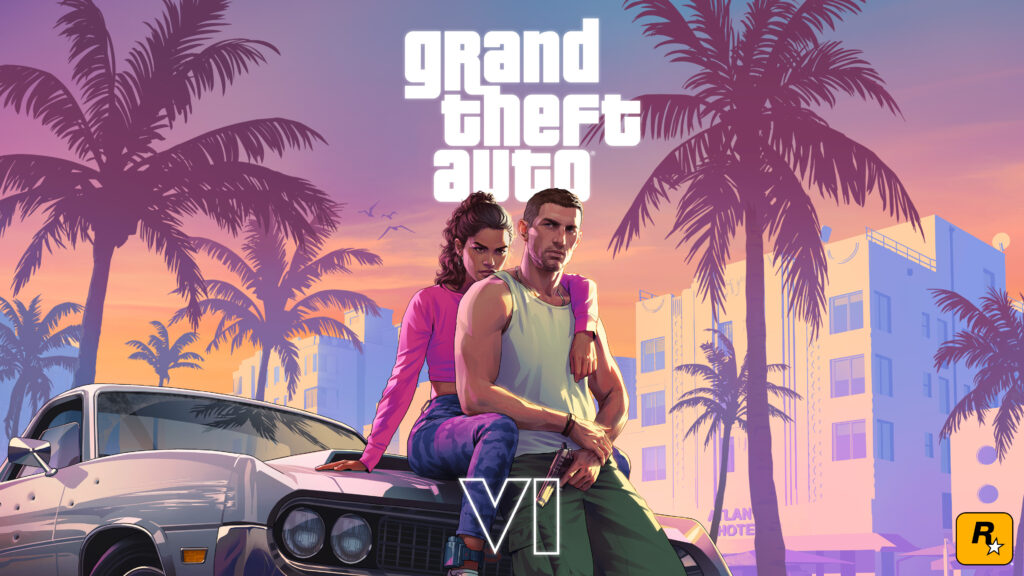
Nominated before launch. Eligible one day before the deadline.
The nominations for The Game Awards 2026 were announced on 17 November. GTA VI received eight nominations, including Game of the Year. Its public release followed on 19 November, while the awards’ official eligibility deadline was 20 November at 9pm Pacific. The ceremony itself is scheduled for 10 December. The announced nomination list and the event’s own rules establish those facts.
That means the game was nominated two days before the wider public could buy and play it. By the eligibility cutoff, the public had had roughly a day or two with it, depending on location and the time they first sat down to play. For a huge open-world game, that is barely enough time to stop being distracted by the scenery, let alone assess every part of the journey.
The rules allow it. Rockstar has not broken them, and we should not pretend otherwise. But a perfectly legal nomination can still expose a flaw in the system.
A game is more than the first few hours
Great games are not judged solely by how impressive they look during their opening sequences. What matters is how they play: the responsiveness of their controls, the depth of their systems, the quality of their mission design, the consistency of their performance and how their mechanics develop as the hours pass.
There is also the narrative to consider. Does a story maintain its momentum? Are its characters interesting beyond the first act? Does the open world remain rewarding after the initial spectacle wears off, or does it become a very expensive commute between mission markers? And are accessibility, technical stability and the full player experience up to the standard suggested by the trailers?
None of those questions can be answered by a sales chart. Nor can they all be settled by a couple of evenings and a heroic determination to avoid sleep.
On a related note, our own first few hours with GTA VI have not been quite the mind-blowing revelation some of the coverage elsewhere might have led us to expect. There are things we want to praise, things we want to question and, crucially, a great deal of the game we still need to experience. We will cover our impressions properly in our full review, once we have played enough to judge the complete experience with the care and accuracy a review deserves. Being first to publish is considerably less important than being fair to the game and useful to the reader.
We have also come across reviews appearing the day after public release claiming 24-plus hours of playtime. To be clear, that number is not proof anyone is being dishonest. Reviewers may have had advance access, and those hours need not have been played in one sitting. But if someone really has put in a near-continuous 24-hour shift to get a verdict online, another question presents itself: how reliable is anyone’s critical judgement when sleep has become an optional side quest? Sleep deprivation is hardly famous for improving attention, memory or decision-making. We cannot speak to anyone’s caffeine intake, although the mental image of a reviewer surrounded by an architecturally ambitious tower of energy-drink cans is difficult to shake.
That is not an accusation against any particular outlet, nor a claim that every early review lacks merit. It is a challenge to a culture that treats speed and a giant hours-played figure as proof of thoroughness. Twenty-four hours on a clock do not automatically equal 24 hours of considered criticism. We would sooner publish a review after a few decent nights’ sleep than rush out a score while our final remaining brain cell is still trying to remember where it parked the controller.
A short, tightly designed game can be assessed thoroughly in a relatively brief period. A vast open-world release may demand much longer. That is not an argument for treating every game as the same length or insisting every critic complete every optional activity. It is an argument for giving each game a reasonable opportunity to be assessed on the experience it actually delivers, rather than on anticipation alone.
A game’s release date should determine when the public can begin judging it, not how quickly we must pretend the verdict is complete.
Advance review access matters, but it is not the whole answer
There is an important counterargument. The Game Awards uses an international jury of media and creator outlets, and its published FAQ explicitly permits publishers to provide advance copies or pre-release access so outlets can evaluate games before the ballot deadline. Its winners are decided through a blended vote of 90% jury and 10% public voting.
So it would be wrong to claim jurors could not have played GTA VI, that every positive review was rushed, or that its nomination demonstrates wrongdoing. We do not know each juror’s access arrangements or the hours they spent with the game. Assertions about paid reviews or manufactured praise require evidence, not suspicion dressed up in a headline.
But the permission to distribute early copies does not settle the fairness question. Advance access may enable extensive professional evaluation, yet the general audience still cannot test the nominated product before nominations are announced. Different outlets may also have different amounts of time and access. A system designed to recognise a year’s best work should not depend so heavily on the privileges of an unusually early review window.
Our proposed fix: 30 days in public hands before nominations
There is a straightforward change we would like The Game Awards to consider: require every newly released game to have been publicly available for at least 30 days before nomination ballots close. Anything too late for that window would roll into the following year’s eligibility period. One game, one fair awards cycle, no penalty for releasing in November rather than October.
Under that proposal, GTA VI would be considered for Game of the Year 2027. So would any other title that launches too close to the 2026 nomination deadline, regardless of whether it comes from Rockstar, Nintendo or a tiny independent team working out of a spare bedroom. The rule should apply consistently, not be invented solely because one enormous release makes the problem impossible to ignore.
A month would not guarantee that every massive game had been fully explored by every critic or player. It would, however, create a sensible minimum window for hands-on evaluation, technical reporting, accessibility feedback and discussion beyond the people given advance access. The point is not to make awards perfect. It is to make their timing defensible.
This would require a published and predictable carry-over policy, rather than leaving late-year releases in limbo or letting the same launch compete twice as a new game. It should be agreed before each awards cycle and applied to every publisher equally.
The best game should win, not the best release date
Imagine a title launched on 19 November that squeezes into the current awards, while another arrives on 21 November and is left waiting until the following year. Those two days tell us nothing about the quality of either game. Yet under a strict date cutoff, they change the awards conversation entirely. It is a triumph of calendar management over criticism.
GTA VI has already achieved extraordinary commercial success. We have covered Rockstar’s reported $3.79 billion day-one retail sales, and none of this diminishes that achievement. But extraordinary sales do not settle whether the missions are engaging, the pacing works, or the experience deserves to stand above every other game released this year.
The same principle applies in reverse. A smaller game does not deserve an award simply because it has less money behind it. It deserves to be assessed on what its developers actually built. That is the standard we want for every title we cover, and it is why the question of proper eligibility matters.
For context, our Game Awards nominations analysis examines the wider 2026 field and the independent titles competing for attention. For ongoing launch reporting, hands-on coverage and confirmed updates, see our GTA VI news hub. This piece is about the rules, not a demand to hand the trophy to a different game.
Let 2027 be the verdict
If GTA VI turns out to be a masterpiece, it should have every chance to prove it. Let people finish the campaign. Let technical analysis develop beyond launch day. Let different perspectives emerge, from players who love its world to those who find parts of its design frustrating. Then judge the whole experience against its peers in a fair, clearly defined awards cycle.
We are not asking The Game Awards to punish Rockstar. We are asking it to give games the time their creators, critics and players deserve.
You can buy a game in two days. You cannot assume you have understood everything it offers in two days. And Game of the Year ought to mean rather more than winning the race to an eligibility deadline.
Editorial note: This is an opinion piece advocating a change to The Game Awards’ eligibility policy. Under the current published rules GTA VI is eligible for the 2026 awards. The proposed 30-day assessment window and 2027 deferral are Coloured Static Press recommendations, not existing event requirements.
Sources: The Game Awards: FAQ and voting rules; 2026 official nominees; Gematsu: nominations reported 17 November 2026. GTA VI image: official Rockstar Games artwork from the CSPress media library. Reporting and opinion: Coloured Static Press Editorial.