
Game Reviews / Indie / Original hands-on review
There are murder mysteries that make you feel clever by pointing an enormous arrow at the culprit. Then there’s Death at Fleming Manor, which hands you the evidence, expects you to read it properly and makes you explain yourself on an official form. Suddenly, being a detective involves a surprising amount of administration.
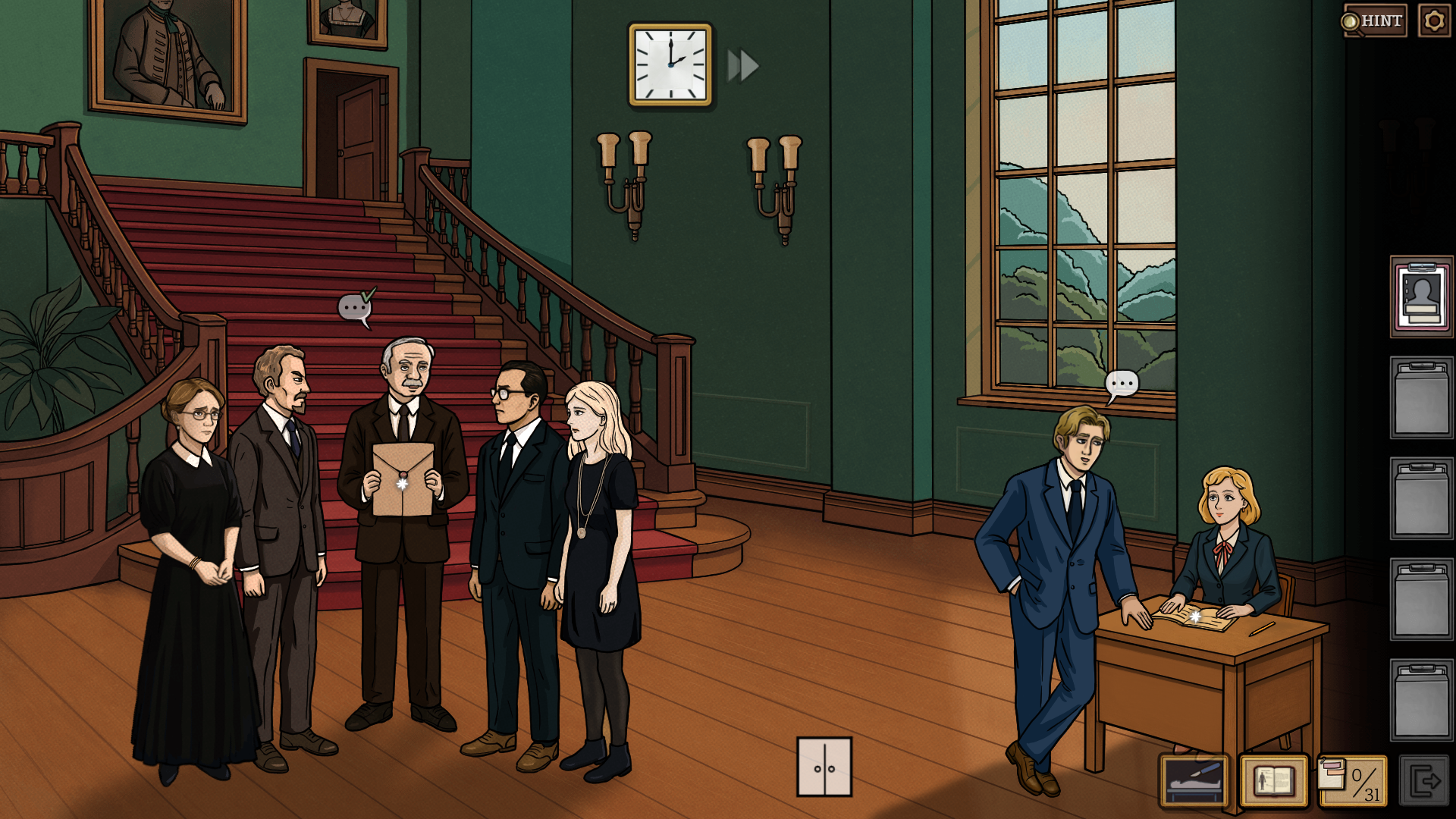
The best detective games give us a mystery worth solving and then have the confidence to get out of the way. Developed by SUPERTHUMb and released on Steam on 3 November 2026, Death at Fleming Manor understands that appeal. Set around a British country estate in 1959, it asks you to examine scenes, study documents, work through testimony and establish exactly how people died. A suspicion is not enough. You need the evidence to back it up.
And that’s where it starts to shine. During our time with the game, we repeatedly found ourselves staring at something we’d already examined, convinced the answer must be elsewhere, only to realise the clue had been sitting there all along. That moment of recognition is what detective games live or die by, and this one delivers it remarkably well.
Less hand-holding, more actual detective work
At its heart, this is a game about paying attention. The important information isn’t always presented with a convenient glow, dramatic music or somebody loudly announcing that a certain document looks suspicious. Instead, you’re expected to notice the details: a particular comment, a discrepancy in a record, an injury that doesn’t quite fit the supposed explanation or a name that suddenly means something when you put two sources together.
It becomes a genuinely satisfying process of comparison and elimination. We found ourselves cross-checking handwriting, studying medical details, questioning whether an apparent accident really was one and using fragments of information to establish identities. None of this sounds especially glamorous when written down. In practice, piecing it together is absorbing.
There’s a wonderful shift in the way you look at a scene after a few investigations. At first, you examine an item because it looks interesting. Later, you start considering why it’s there, who might have mentioned it, and whether it changes what you thought you knew. We began treating every scrap of paper with a degree of suspicion usually reserved for the final character introduced in a television murder mystery.
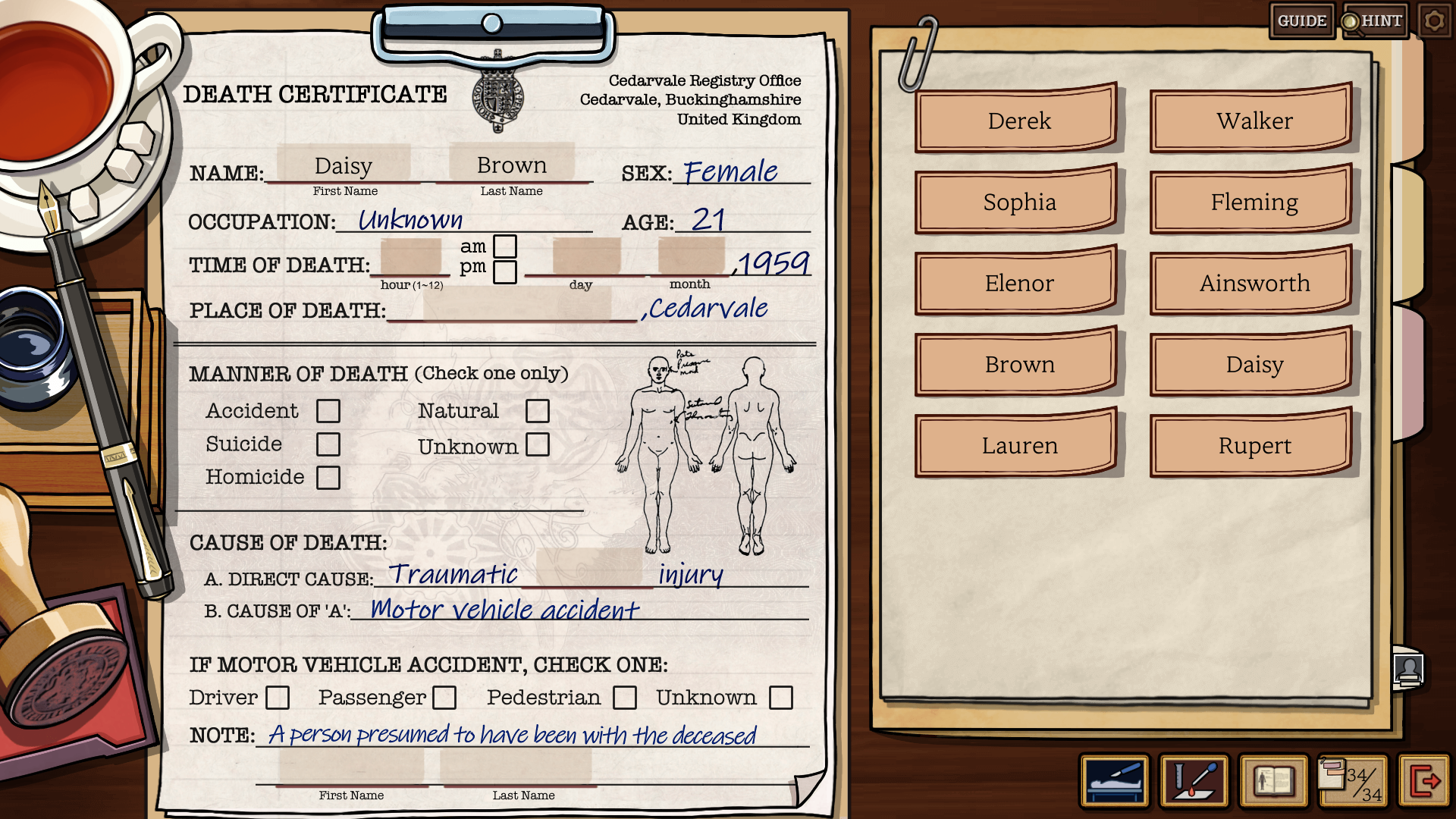
Crucially, the game doesn’t simply ask whether you have guessed the right person. Its death certificates and reports demand specific findings, from identities and circumstances to the cause and manner of death. That makes each completed case feel earned. You haven’t merely picked a convincing answer; you’ve had to assemble an explanation that holds together.
The cases aren’t content to stay in one room
One of our favourite surprises was the amount of variety within the investigations. Just as we settled into the rhythm of examining a suspicious death, the game shifted into a wartime medical setting and presented a different kind of puzzle entirely.
Here, identifying injured soldiers and assessing the urgency of their treatment calls for the same powers of observation, but applies them in a new way. Wounds have to be assessed, ranks identified and personnel records checked. Even when a soldier’s identification is missing or damaged, conversations and surrounding evidence can help work out who is lying on the bed in front of you.
That is much more interesting than simply selecting a medical category from a list. Sometimes identifying the injury is the easy part. The challenge is remembering what somebody said earlier, finding the corresponding name in the records and making sure all the pieces genuinely belong together.
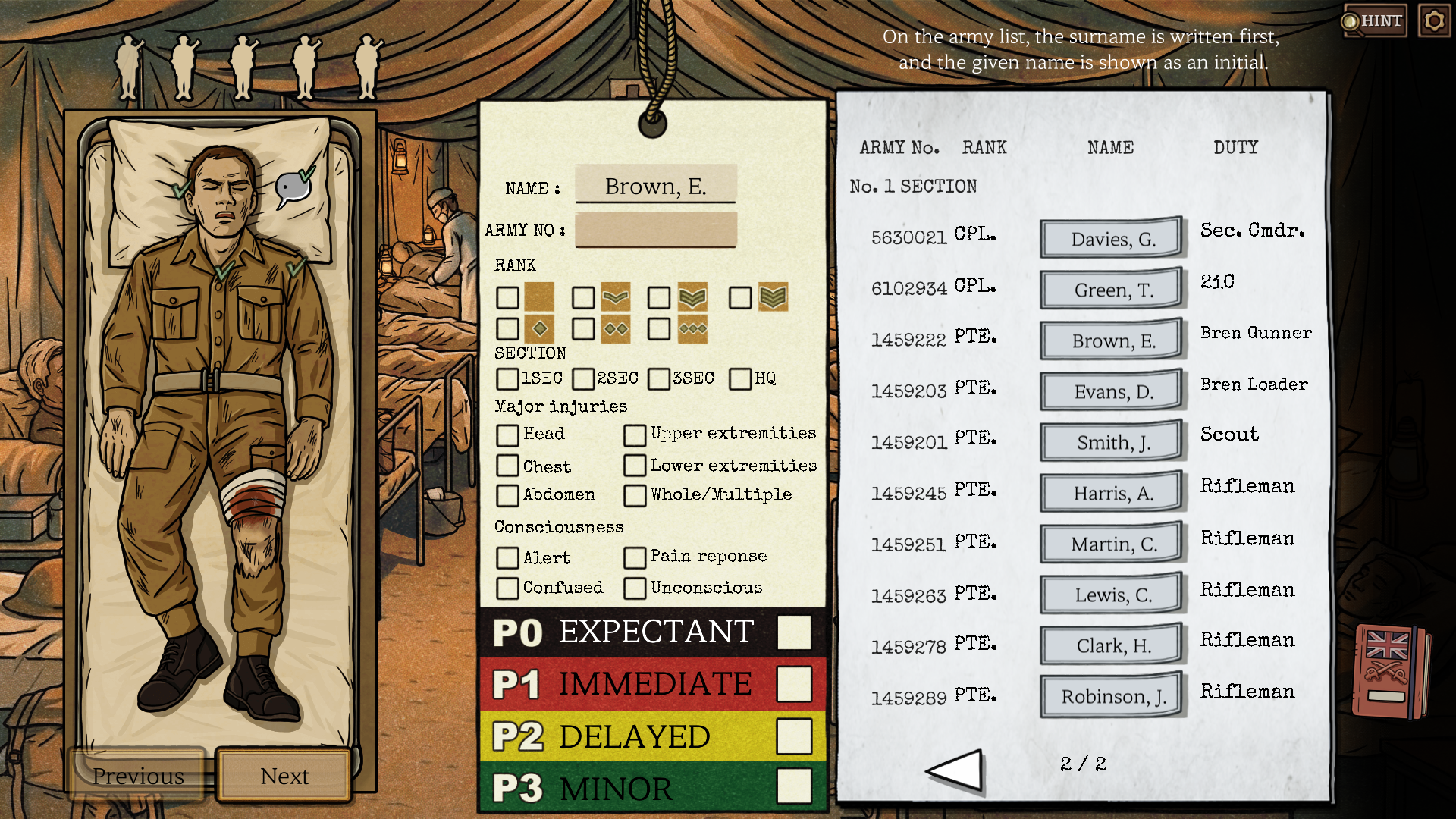
We liked how the game uses these changes of setting to keep its central idea fresh. You’re still gathering evidence and making deductions, but the shape of the problem changes enough that it doesn’t feel as though you’re completing the same worksheet over and over. Which is fortunate, because the amount of paperwork would otherwise make this the world’s most suspicious office job.
When a textbook becomes useful
The medical material adds another layer. Rather than expecting players to arrive with specialist knowledge, Death at Fleming Manor provides reference information that can be studied and applied. We spent time working through medical terminology, considering symptoms and injuries, then returning to the case with a better understanding of what the evidence might be telling us.
It’s an elegant way to make the player feel that they’re learning something rather than merely ticking boxes. Finding the right page is not always the end of the puzzle; you still need to interpret what you’ve learned and decide how it fits the circumstances. That little extra step makes the deduction more rewarding.
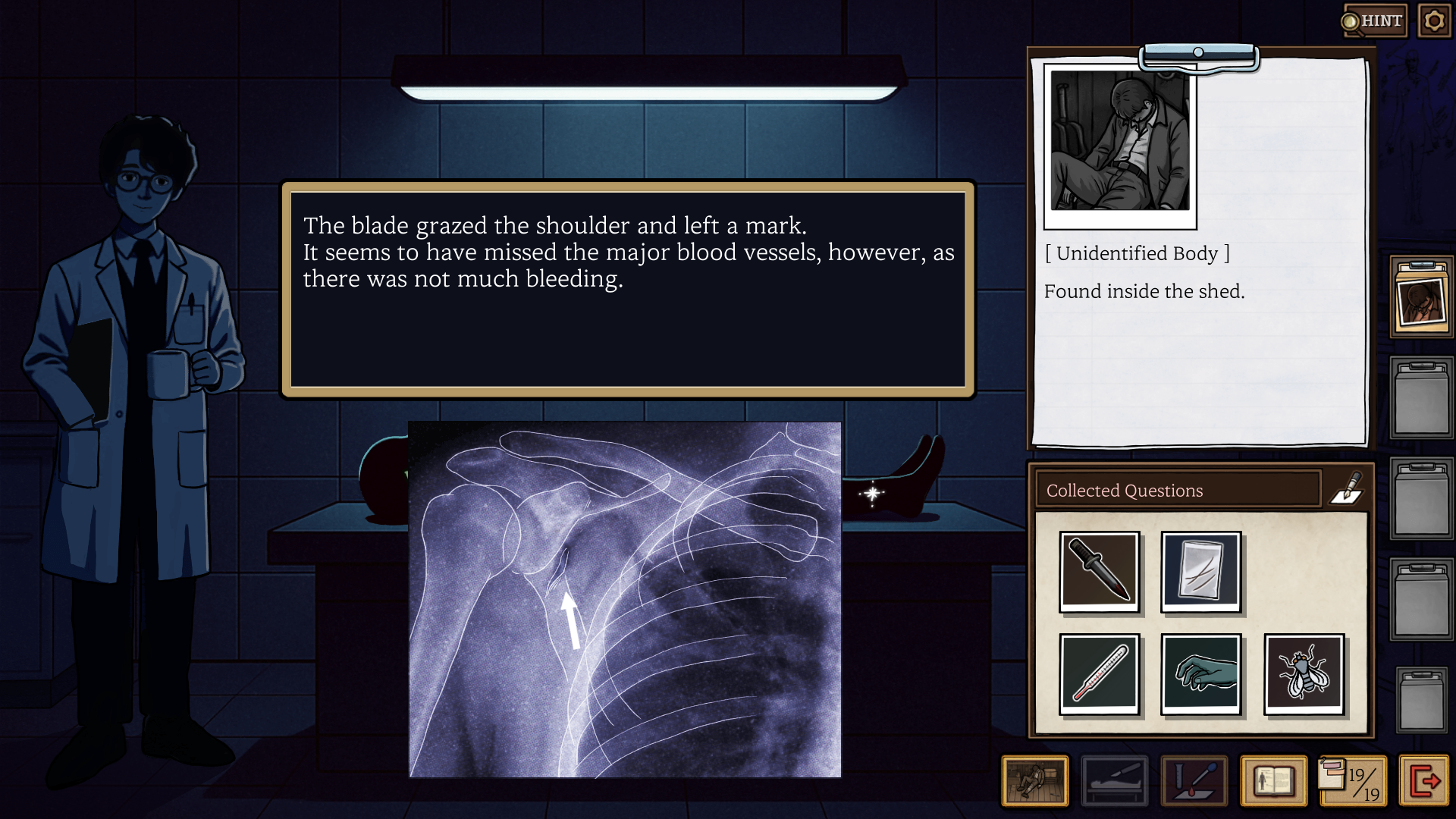
And there is a clear distinction between being confused and being challenged. When the evidence came together, we felt we’d reached the answer through our own reasoning. Those are the moments that kept us interested even when individual cases demanded considerably more patience than expected.
It looks far more cheerful than its subject matter
Visually, the game has a lovely personality. Its colourful, illustrated characters and environments look approachable at a glance, but they sit alongside suspicious deaths, medical reports and some decidedly uncomfortable questions. That contrast suits the material far better than a permanently gloomy palette would.
SUPERTHUMb’s hand-drawn style draws on the clean lines of European mystery comics, and it makes even fairly ordinary spaces feel distinctive. Interiors, character portraits, records and investigation screens are all designed to belong to the same world. The result is a game that looks inviting while quietly reminding you that something is very wrong.
Documents are also an important part of the presentation, not just a way of delivering exposition. Examining them feels like part of the detective process. You aren’t opening a text log to skip through background information; you’re reading a potentially useful piece of evidence and deciding what it tells you.
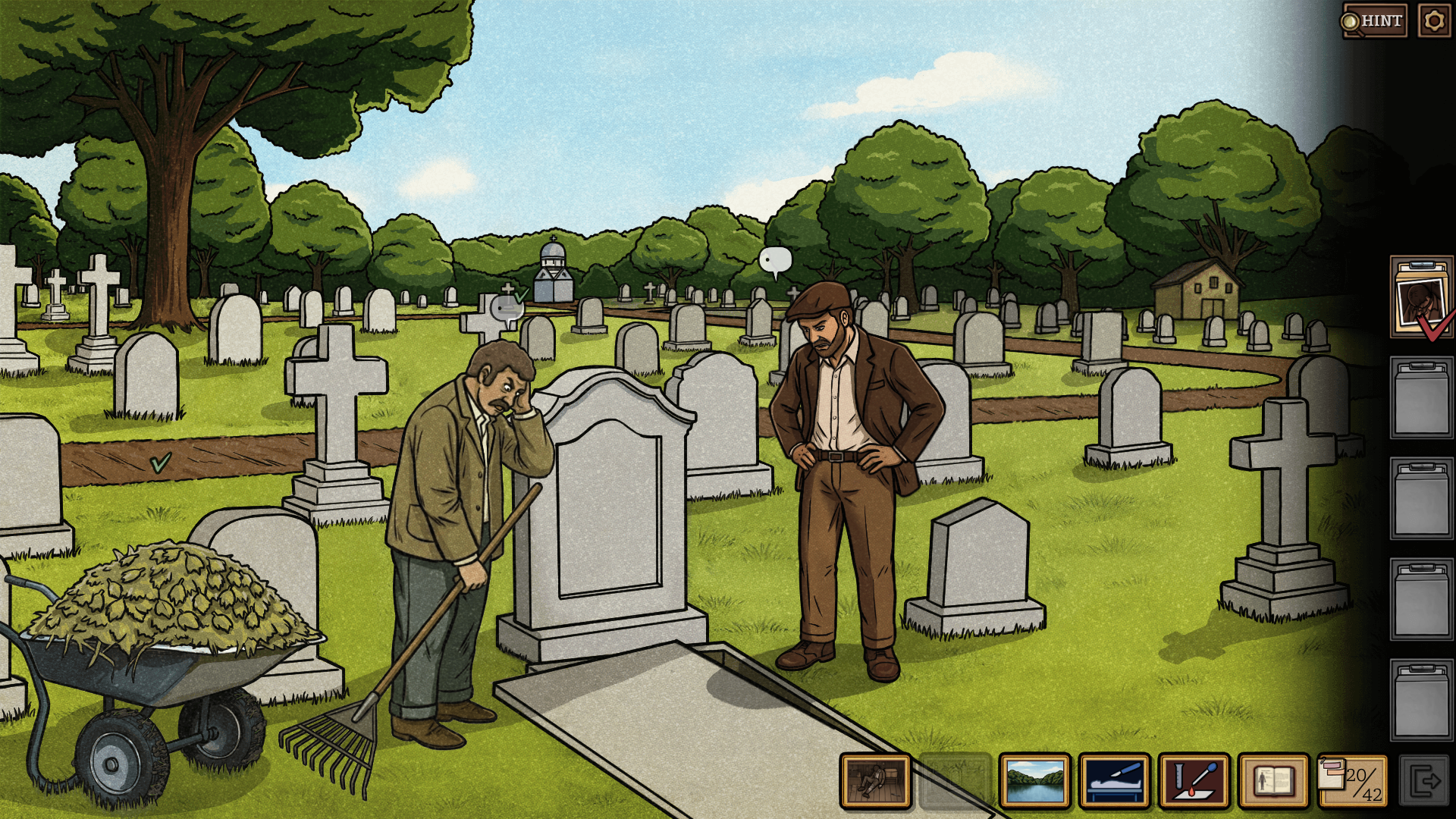
That approach gives the game a strong identity. There’s something darkly funny about moving between expressive cartoon-style faces and the altogether less cheerful business of establishing how somebody died. It’s a tonal combination that shouldn’t be underestimated.
A soundtrack fit for a suspicious cup of tea
The music deserves credit too. During our playtime, the soundtrack created just the right old-fashioned detective atmosphere: mysterious, gently suspenseful and well suited to long stretches of close observation. It builds the sense that you’re making progress towards a revelation, even when the reality is that you’ve been examining the same document for several minutes and are beginning to question your own literacy.
We didn’t notice voice acting in the sections we played, but the absence didn’t undermine the experience for us. The focus remains on reading, watching and understanding what the evidence is saying. The music gives those quieter moments enough atmosphere without demanding constant attention.
Sometimes the toughest suspect is the answer system
For all its strengths, Death at Fleming Manor can be a little unforgiving. Some investigations require very precise selections, and there were occasions when we felt we’d understood the overall situation only to discover we’d still chosen the wrong detail, missed a box or failed to complete something exactly as expected.
The game certainly lets you know when that happens. A red flash and a visibly unimpressed character can make an incorrect report feel less like a minor clerical error and more like you’ve personally embarrassed the entire profession.
There’s an argument that this strictness is appropriate. If you’re filling out an official death certificate, accuracy should matter. Still, the distinction between misunderstanding the mystery and struggling with the interface isn’t always as clear as it could be. On the rare occasions we knew what we wanted to say but couldn’t quite make the answer system accept it, the frustration interrupted an otherwise excellent rhythm.
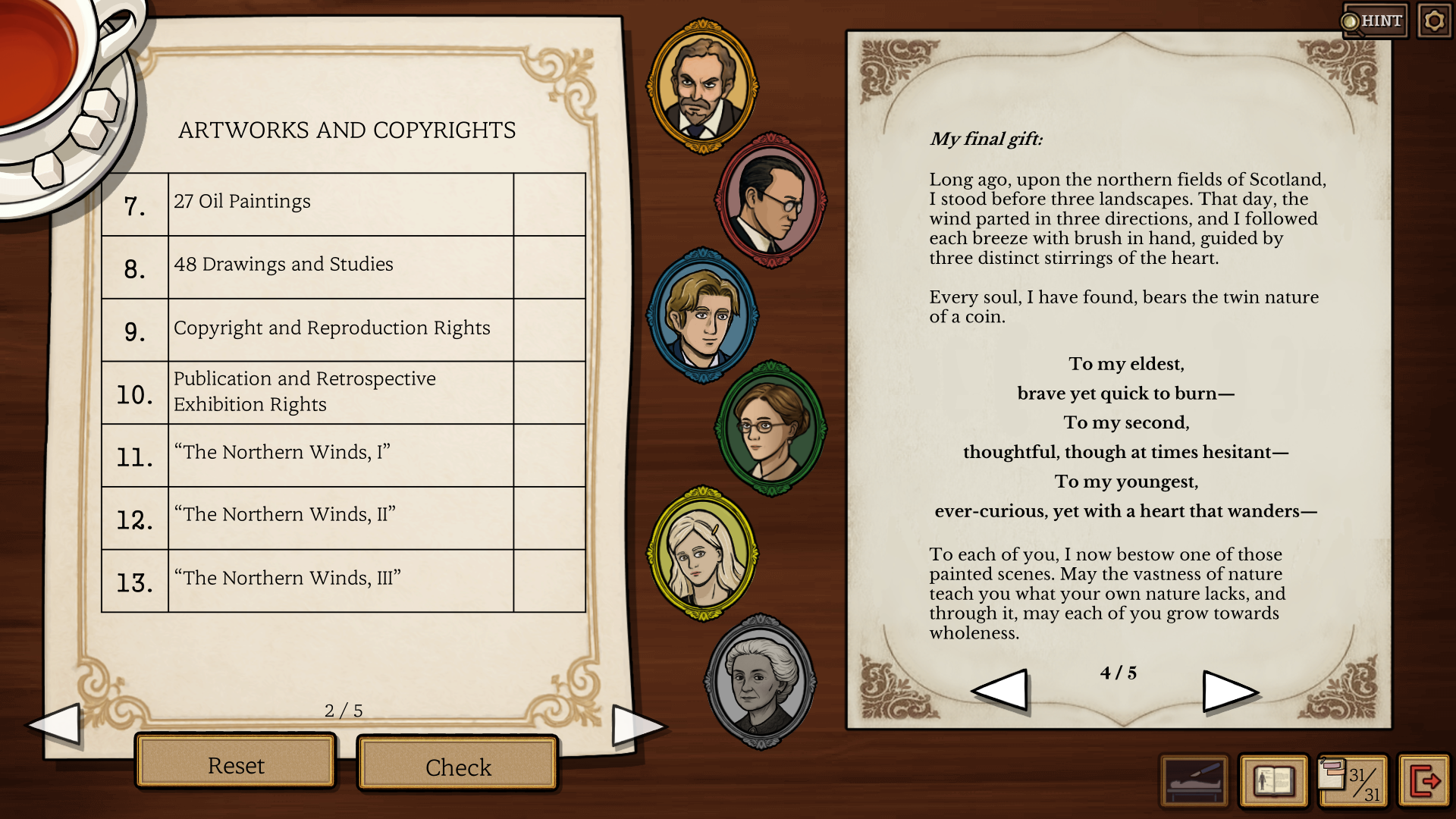
Moving between episodes and working out precisely what the game expects can also take some getting used to. The more elaborate investigations ask you to hold several pieces of information in your head at once, and a missing connection can send you back through documents you’ve already read. If you like puzzles that let you breeze through on instinct, this probably isn’t your ideal evening.
But the important thing is that we rarely felt the puzzles themselves were fundamentally unfair. More often than not, the evidence was there; we simply needed to look at it from another angle. That’s a much easier kind of difficulty to forgive than the sort that demands a random guess or an obscure interaction with an object nobody would sensibly touch.
Just one more investigation…
What surprised us most was how difficult it became to stop. Every time we thought we’d reached a sensible finishing point, another question appeared, another document demanded attention or a new case promised the chance to apply everything we’d learned.
It isn’t a game built around speed or spectacle. Much of the enjoyment comes from sitting with uncertainty long enough for a solution to emerge. One moment you’re thoroughly stuck; the next, a stray piece of testimony changes the entire picture. We kept going back for that feeling.
The experience demands patience, and occasionally a fairly forgiving attitude towards its user interface. In return, it offers something far more valuable than a sequence of convenient clues. It gives you the pleasure of doing the thinking yourself.
Final verdict
Excellent
Wonderfully engaging detective work, a distinctive visual identity and clever changes of pace make Death at Fleming Manor an easy mystery to recommend. Its demands for absolute precision and occasionally awkward progression can test your patience, but its best deductions make you feel genuinely accomplished. If you want a game that respects your intelligence and gives you a proper case to crack, this one belongs on your radar.
Rewarding evidence-led deductions; varied cases and wartime medical triage; distinctive hand-drawn presentation; atmospheric music; a hard-to-resist “one more case” pull.
Very precise answer requirements; occasionally frustrating incorrect-response feedback; some unclear navigation and progression expectations.
Where to play: Death at Fleming Manor on Steam (Windows and supported Apple-silicon Macs). Developed and published by SUPERTHUMb; released 3 November 2026.
Review notes: Original hands-on review written from gameplay observations provided to Coloured Static Press. The verdict and 87/100 score are independent editorial judgements. In-article visuals are original gameplay captures supplied with the review, not generated illustrations. This article avoids major mystery and ending spoilers. Review by the Coloured Static Press team.