What happens when a story everyone knows starts going wrong? HAEON STUDIO is reworking Cinderella into a dark point-and-click puzzle adventure, where the most ordinary household chores can become the most unsettling. With a free Windows demo available now and a planned Q1 2027 release, the studio joined us for Behind the Signal to explain its approach to puzzles, storytelling and horror.
We spoke to Kyle (Seokjin Jang), Chief Technology Officer at HAEON STUDIO. His answers are reproduced below as supplied, with only paragraph formatting added. We have kept the discussion within the studio’s requested spoiler boundaries.
Explore the free Wretched Tales: Cinderella demo on Steam · Visit HAEON STUDIO
Behind the Signal: seven questions with HAEON STUDIO
1. What drew you to Cinderella as the starting point for a dark point-and-click adventure?
From the very beginning, we wanted to start from a fairy tale that almost everyone in the world already knows, and then tell the hidden story underneath it in our own way. To get there, we read through a lot of darker versions of classic fairy tales and spent time studying myths, folklore and old beliefs from different cultures.
We had several candidates, and to be honest, there wasn’t one single logical reason Cinderella won. It was more of a pull. Cinderella is remembered as a story about hope being rewarded, and that’s exactly why we wanted to see what it would look like as a tragedy. The more familiar a story is, the more unsettling it becomes when it quietly starts going wrong.
2. How do you transform familiar chores and preparations for the ball into disturbing but fair puzzles?
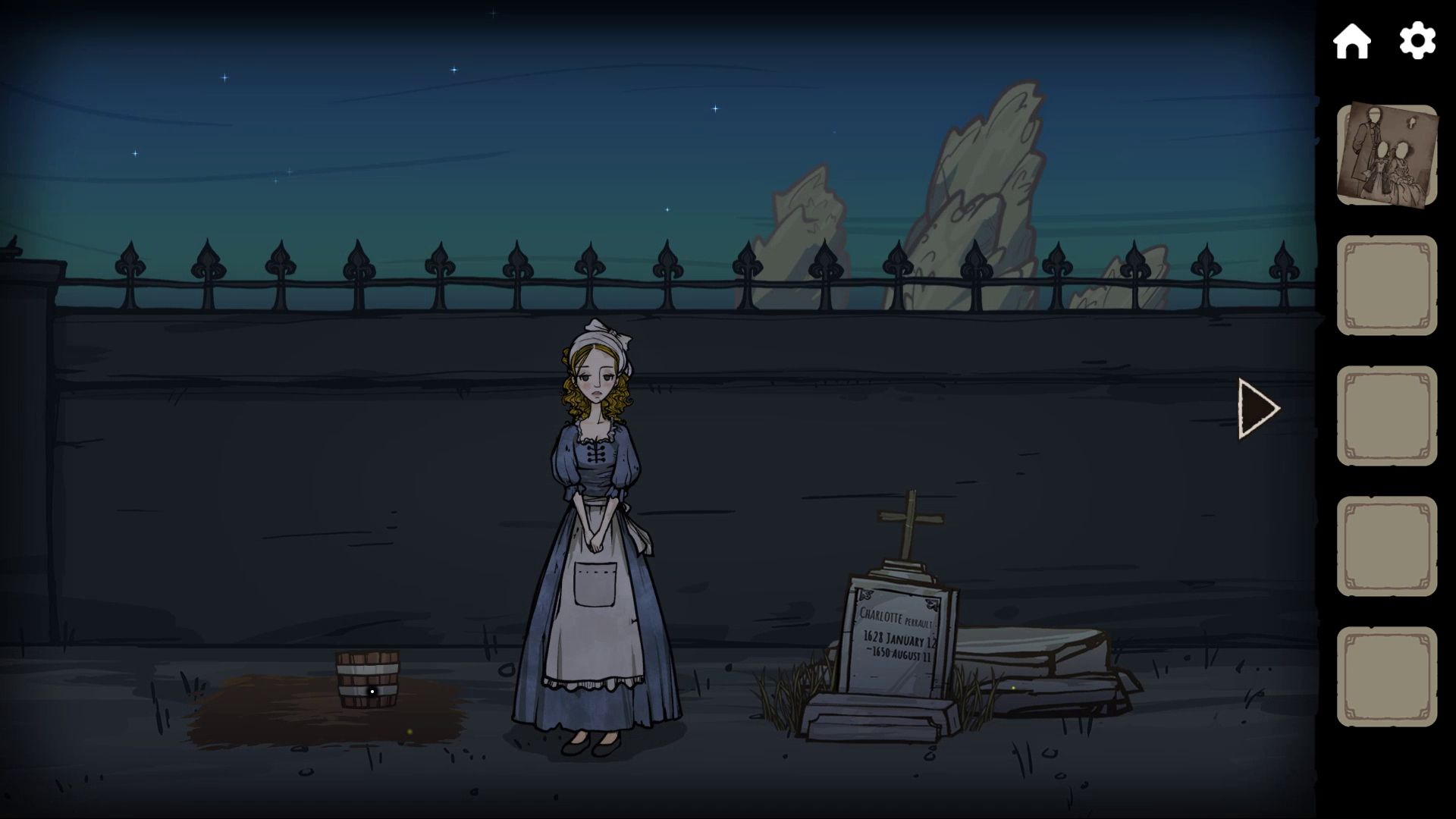
The tasks themselves are very ordinary. You plant a hazel branch and prepare a meal, the kind of household work Cinderella would be expected to do. We wanted the goal to feel almost boring, so that everything around it could slowly stop feeling safe.
The unease comes from two directions. The first is the house. While you work, small things react in ways they shouldn’t: something growing out of a flowerpot that isn’t a plant, a well that seems to look back at you, a family portrait that isn’t quite right. Some of these changes aren’t the house’s doing at all. Something else has touched them, and once you notice it, the house never feels quite the same again.
The second is how you use your items. Some solutions are what you’d expect, the right tool in the right place. Others ask you to do things a normal person wouldn’t: reaching for poison as the answer, or feeding something that should never be fed. Even the ingredients aren’t always what they seem. We keep the logic consistent, so the answer always makes sense once you see it. The discomfort comes from realising you’re willing to do it.
3. Without spoiling the story, what role does the world of Querencia play alongside the familiar fairy tale?
Querencia is the one watching this story unfold, and it was never part of the fairy tale you know. It has a purpose, and everything it does moves toward that purpose. Rather than explaining it, we’d like players to watch how it gets there, step by step.
It almost never acts directly. Instead, its influence shows up in other ways: in objects, in people, in small changes that don’t quite add up. You rarely see it, but you can always feel that something is quietly arranging things. And by the time you understand what it’s been doing, it may already be too late.
4. Your puzzles rely on visual changes and subtle reactions. How do you help players learn to interpret those clues?
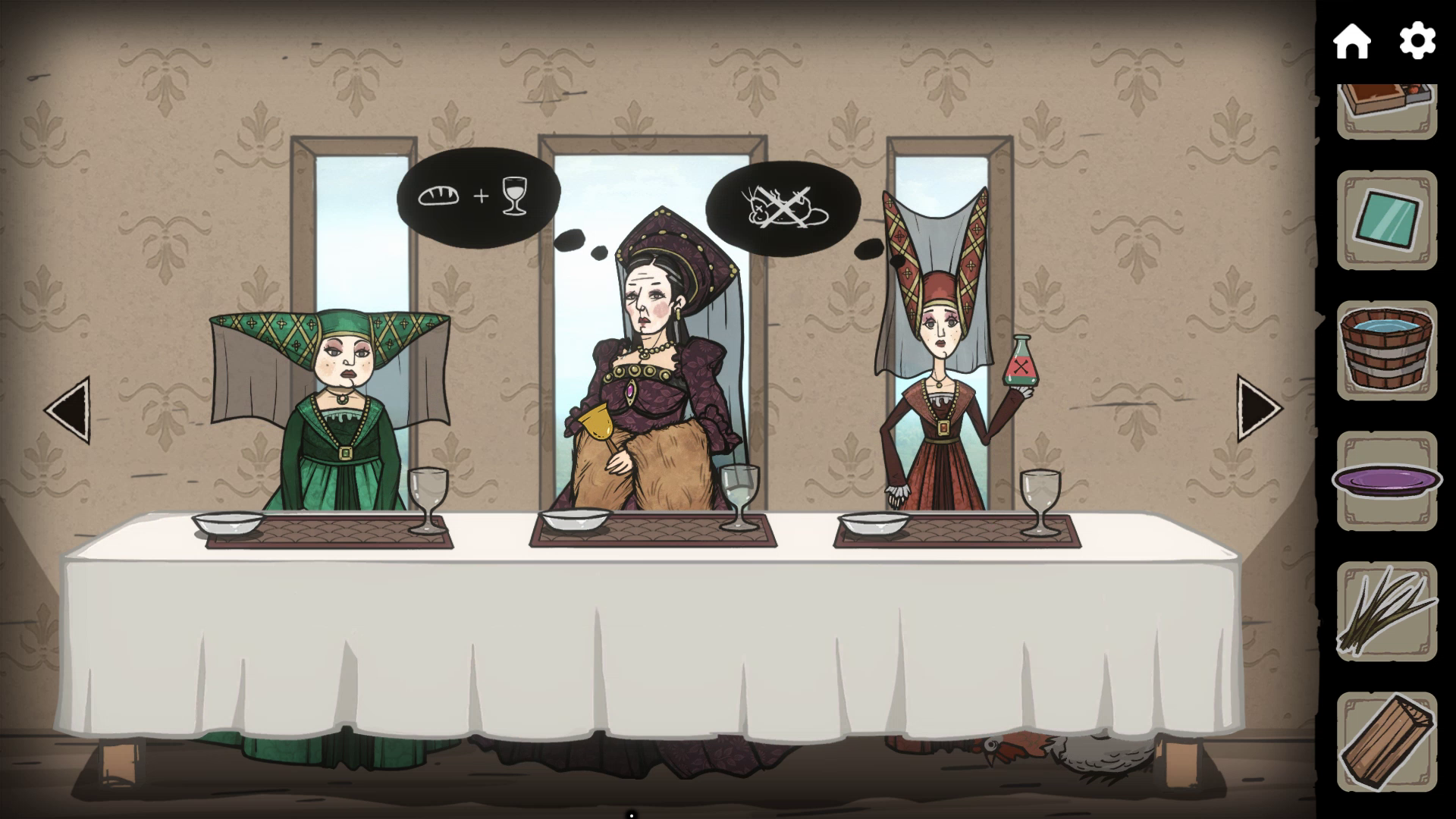
Each chapter opens with a short cutscene that sets up the story, but once you’re solving puzzles, there’s no dialogue at all. Everything has to be said through what you see. Characters communicate with small image bubbles, expressions and gestures, and the environment answers you in the same way: something moves, something changes, something that was watching you suddenly isn’t.
We don’t stop to explain any of this. Instead, we let the world react to you, and players pick up quickly that if something responds, it means something. Once that clicks, they start looking at every corner for what’s changed since the last time they were there.
After that, consistency matters most. The same kind of reaction always points to the same kind of meaning, so players can build their own understanding instead of guessing. Playtesting taught us a lot here. Some puzzles were simply hard, which is fine, but the feedback we took most seriously was about items: players had the right item in hand and just couldn’t tell where it was meant to be used. That’s not the kind of difficulty we want, so we’re putting a lot of work into making those places a little easier to read, without giving the answer away.
5. How do you balance grotesque imagery, psychological unease and dark humour?
We think of it less as a balance and more as a slope. The story begins on quiet ground. Early on, the horror is mostly psychological: an ordinary task that feels slightly wrong, a detail you notice a second too late, and the slow realisation that the familiar things around you are no longer quite what they were. We wanted players to settle into that unease before anything openly violent happens, so that by the time it does, they’re already part of it.
As the story moves toward its climax, the slope gets steeper. The imagery becomes more direct, and some scenes are genuinely brutal. The old versions of Cinderella were never gentle about what people would do to themselves for a chance at the ball, and neither are we. But we try to make sure every one of those moments is earned by what came before, so it lands as a consequence rather than a shock.
Dark comedy grows alongside it. The closer the story gets to its peak, the more absurd it becomes that everyone is still so committed to playing their part in the fairy tale. Sometimes the most uncomfortable moment and the funniest one are the same moment, and we’ve learned not to be afraid of that.
6. What have been the biggest creative and technical challenges for HAEON STUDIO, and what have you learned from the public demo?
As a small independent studio, scope is always our first challenge. Every idea has to earn its place, because each one costs real time.
Creatively, the biggest challenge was letting go of the story we started with. Our original plan followed Cinderella’s plot quite closely, chapter by chapter. Partway through development, we realised the game became far more interesting when every character in the tale had their own story to tell, not just Cinderella. Restructuring the game at that stage was painful, and some finished work didn’t survive it, but we’re confident the game is much stronger for it.
Technically, a lot of our effort goes into things players hopefully never notice. Every object has to remember what you’ve done to it, so the world feels continuous even when you leave a room and come back. Getting that right across many scenes, along with save data and platform features, takes much more work than it looks.
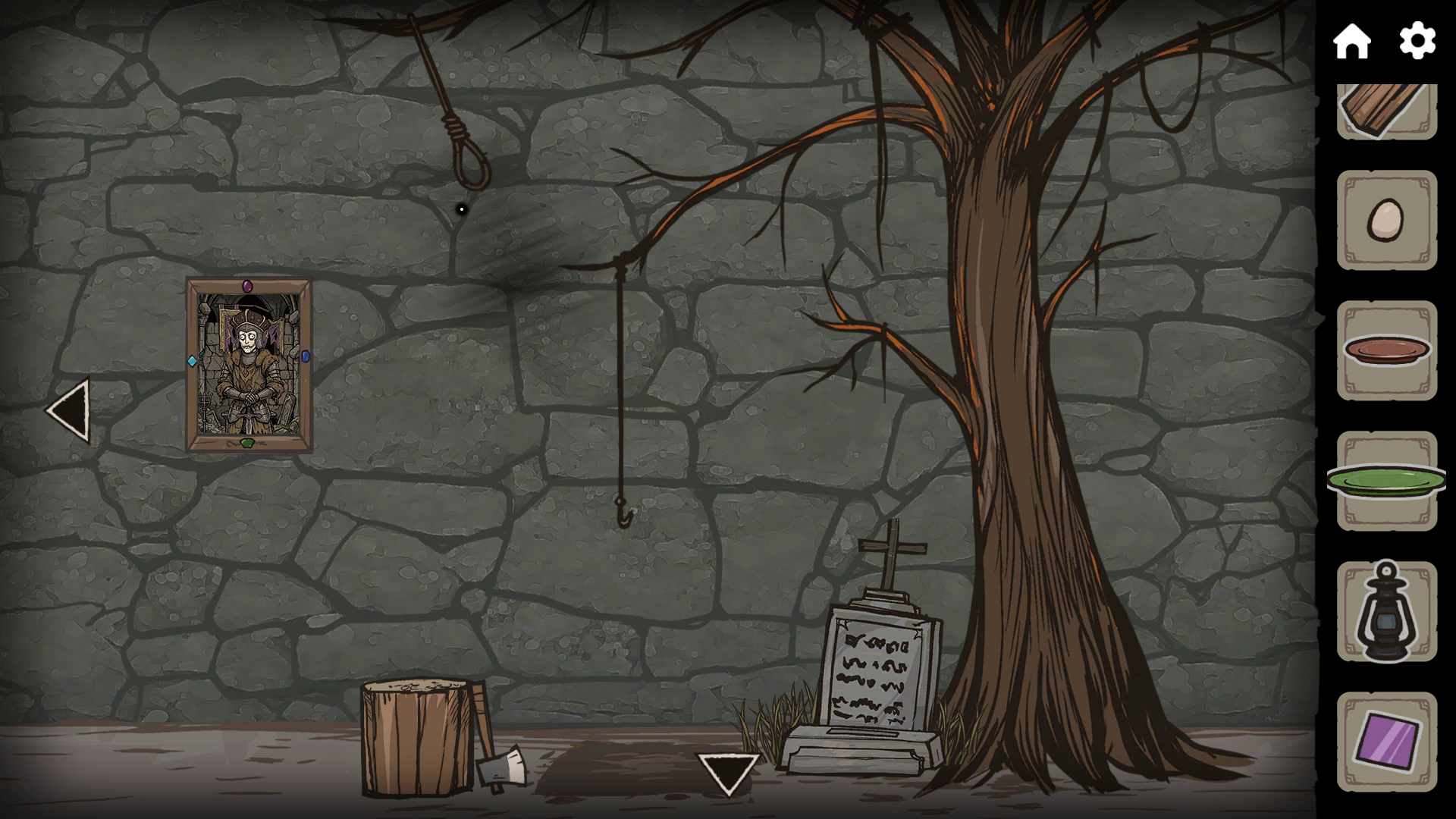
On the art side, perspective was something we cared about a lot. The game is viewed from fixed, front-facing angles, and you’re constantly moving between a full room and close-up views of objects within it. If the perspective doesn’t line up between those views, the space stops feeling real, and the unease falls apart with it. So we spent a lot of time making sure every angle and every close-up reads as part of the same physical space. The same goes for the small details of staging: how long something pauses before it moves, which way an eye turns, how an object settles back into place. Because there’s no dialogue during puzzles, those tiny details are what tell you something has changed.
The public demo taught us to trust players more in some places and less in others. They were braver and more curious than we expected. They poked at everything, and some of them found solutions we hadn’t planned for. But we also saw exactly where they lost interest, and that was humbling. A moment we thought was clever could be the moment someone closed the game. Watching that happen changed how we look at pacing more than anything else.
7. Looking towards the planned Q1 2027 release window, what do you hope players take away from their journey to the ball?
We hope that by the time players reach the ball, it doesn’t feel the way they thought it would. In the fairy tale, the ball is the night Cinderella’s wish finally comes true. We’d like players to get there a little unsettled instead, aware of everything it took to arrive and unsure whether it was worth it.
But we never want that unease to get in the way of the fun. At its heart, this is a game about the joy of figuring things out: the moment a strange puzzle suddenly clicks, the small thrill of trying something you probably shouldn’t and watching it work, and the pull of wanting to see what’s waiting in the next room. We want players to be uneasy and still unable to put it down.
And afterwards, we’d love for people to look at the original fairy tale a little differently. Cinderella has always been told as a story about hope being rewarded. If players finish our game having had a great time, and also wondering what that story might have been hiding all along, then we’ve done what we set out to do.
Our perspective
What’s interesting here is how much thought HAEON STUDIO is giving to feedback on puzzle readability. A horror game can be unsettling without making its players fight the interface, and Kyle’s account of changing puzzles after observing the demo suggests a studio willing to separate productive uncertainty from frustration. The larger test will be whether that balance holds through the full game.
More from Coloured Static Press: Try the free public Windows demo on Steam. The game is targeting Q1 2027 and has no confirmed release day.
Original written interview answers supplied by HAEON STUDIO. The studio requested that we avoid spoilers beyond the public demo and not speculate about Querencia. Approved original gameplay screenshots used with permission. Interview by the Coloured Static Press team; this is not a hands-on review.