
Coloured Static Press / Game review / Precision platformer
A tiny yellow jelly, a laboratory full of lethal machinery, and a seemingly innocent request to collect some diamonds. How hard could it possibly be? The saw blades would very much like to answer that.
At first glance, GeoJelly looks like an unusually pleasant way to spend an afternoon. You guide a bright yellow blob through stark laboratory environments, gather diamonds and bounce between platforms in pursuit of freedom. It has a charming little protagonist, a clean look and the sort of straightforward premise that suggests you might be in for a relaxing session.
Then the machinery starts turning. The saws begin spinning. And it becomes clear that this is less a gentle escape adventure and more a practical examination in how many times a single blob can be reduced to regret.
The game certainly has an audience. Fans of demanding, trial-and-error platformers may relish its insistence on careful positioning and repeat attempts. But our team’s experience revealed a problem that became harder to overlook with every retry: there is a difference between making a jump difficult and making the landing feel like an argument with the controls.
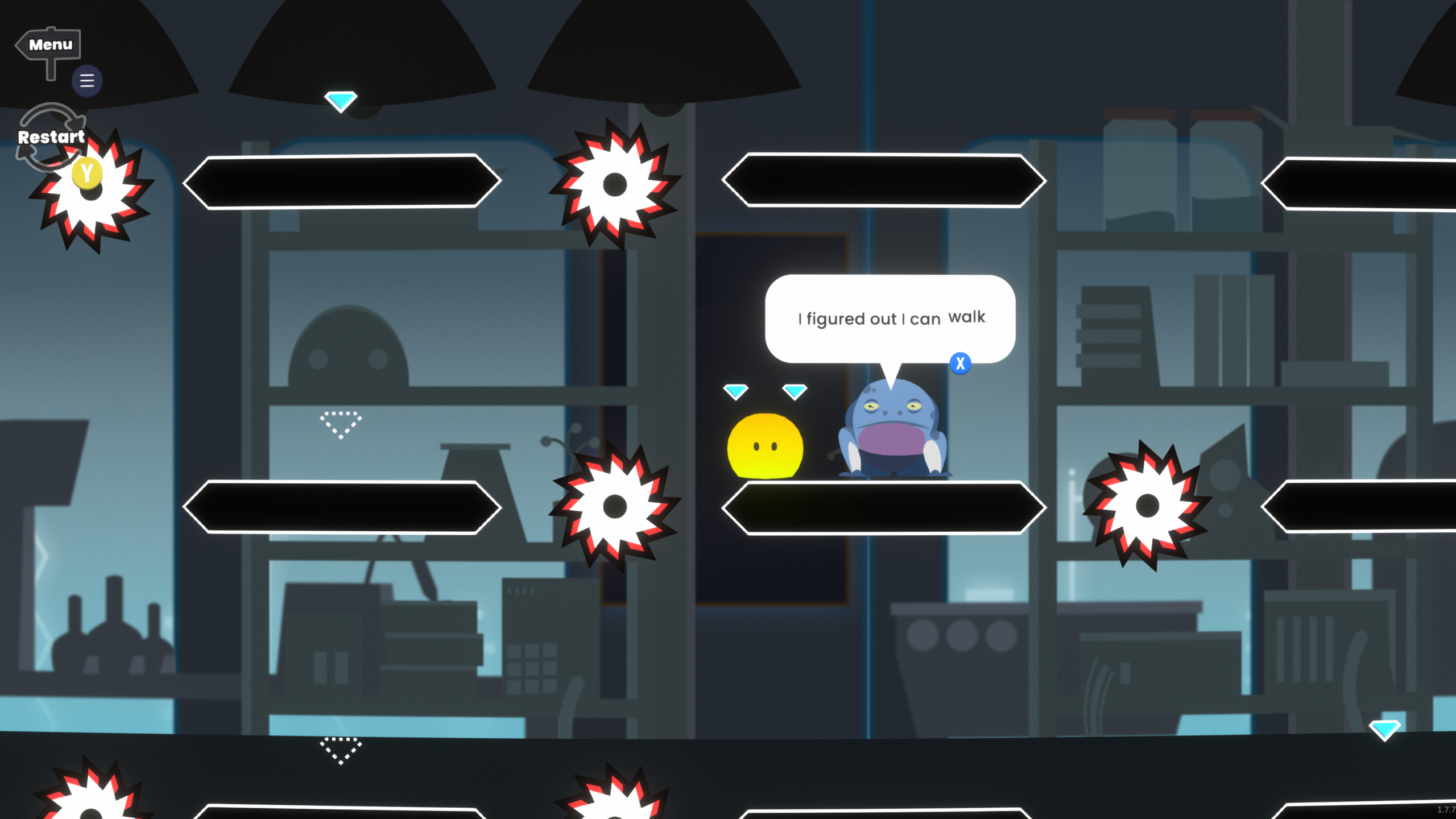
One small blob, one very hostile laboratory
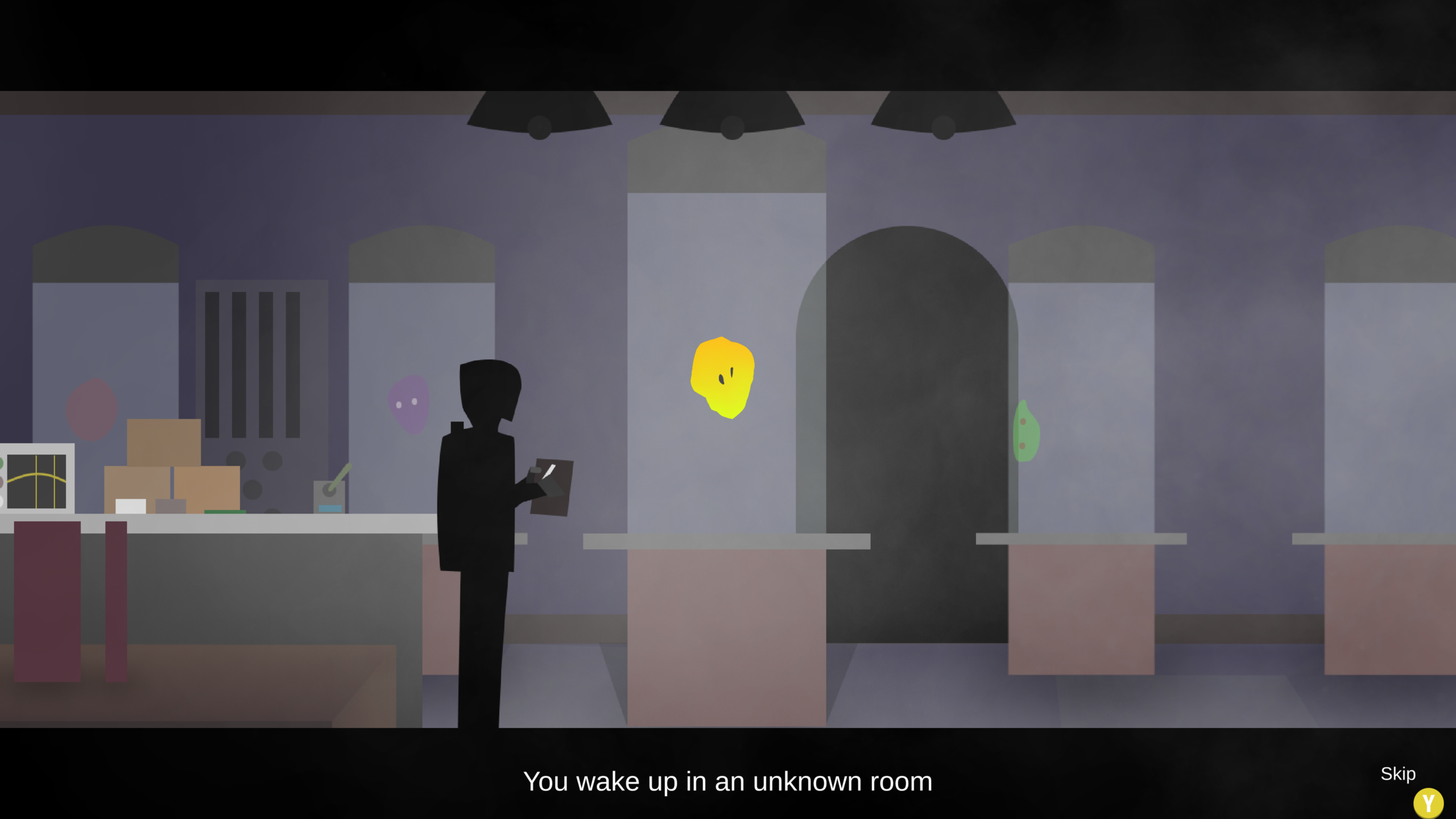
Developer Source Byte keeps the presentation deliberately restrained. Dark, industrial backdrops frame black platforms with stark white outlines; the little yellow protagonist stands out immediately, and bright diamonds give you something worth risking your gelatinous existence for. The result is readable and full of character without needing a mountain of visual effects.
There is something enjoyably absurd about watching such an innocent creature negotiate a facility that appears to have been designed by an engineer with a personal grievance against dessert. Mechanical hazards and narrow landing spots give each room its own problem to solve, while diamonds reward more thorough runs.
Early stages offer some real satisfaction. Our playthrough even delivered a perfect result on one level, a rare moment when everything lined up and we could briefly entertain the dangerous idea that perhaps we were getting rather good at this.
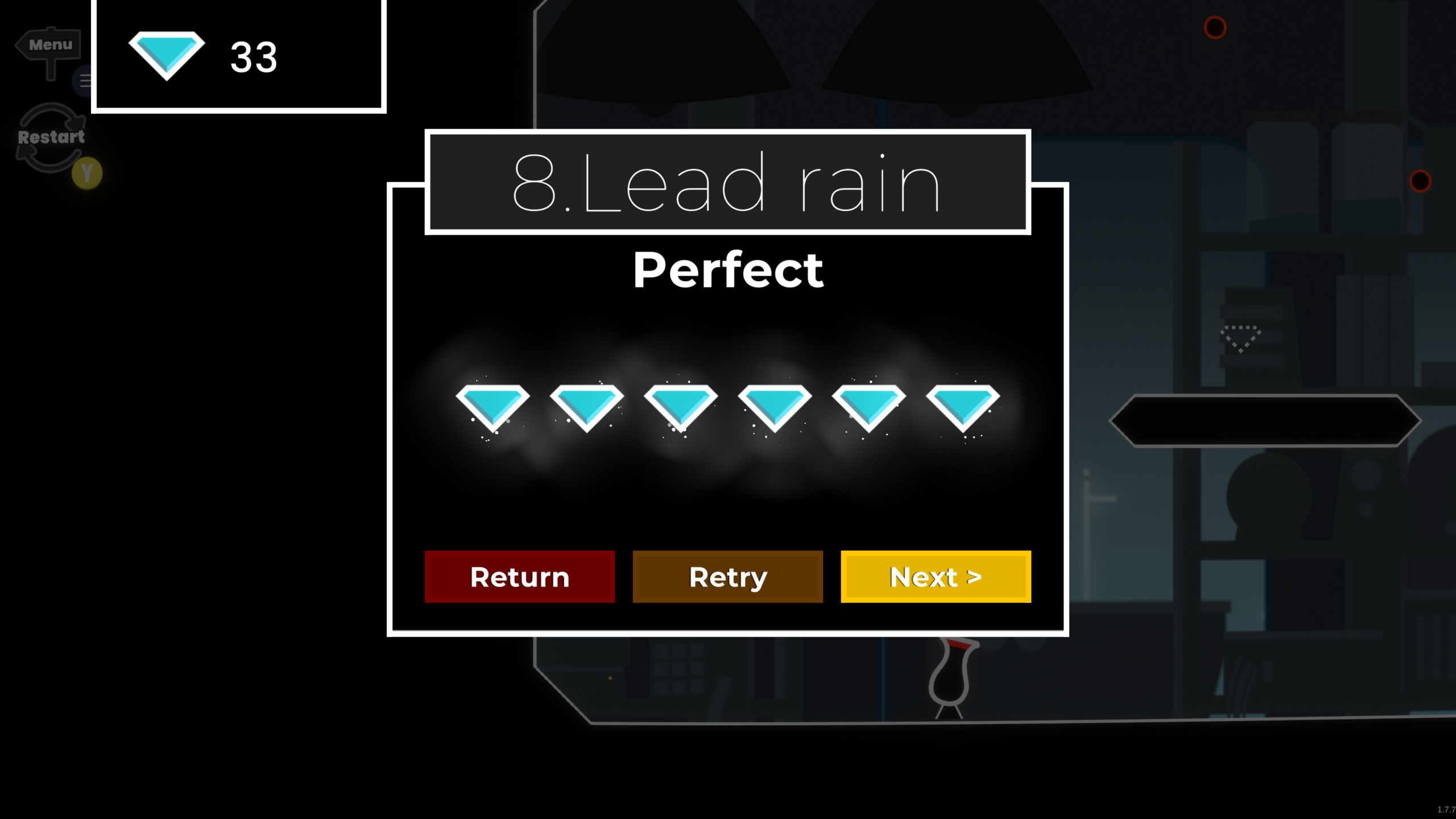
Charge, jump, pray
The core movement is deceptively simple: charge a jump, choose the angle and commit. Once airborne, you cannot casually adjust your trajectory halfway through. In theory, that makes every leap a small exercise in planning. You need to read the distance, consider where the jelly will land and make a decision that will still seem sensible two seconds later.
We enjoy a platformer that asks players to learn its rules. A successful sequence of carefully judged jumps can be immensely rewarding, and GeoJelly occasionally delivers exactly that feeling. Its tighter rooms ask for genuine focus, and the immediate feedback makes it easy to see when a jump has gone badly wrong.
Unfortunately, landing safely isn’t always the same as stopping safely. After longer leaps, the jelly has a habit of sliding across the platform. More than once, the initial jump looked successful, only for the remaining momentum to carry our little hero off the edge and into the nearest piece of industrial equipment.
That particular combination is where the challenge starts to feel less rewarding. There is no mid-air correction to compensate for a slightly imperfect approach, and even a successful landing can become a delayed failure. You can learn the timings, but the frustrating part is often what happens just after you’ve done the hard work.
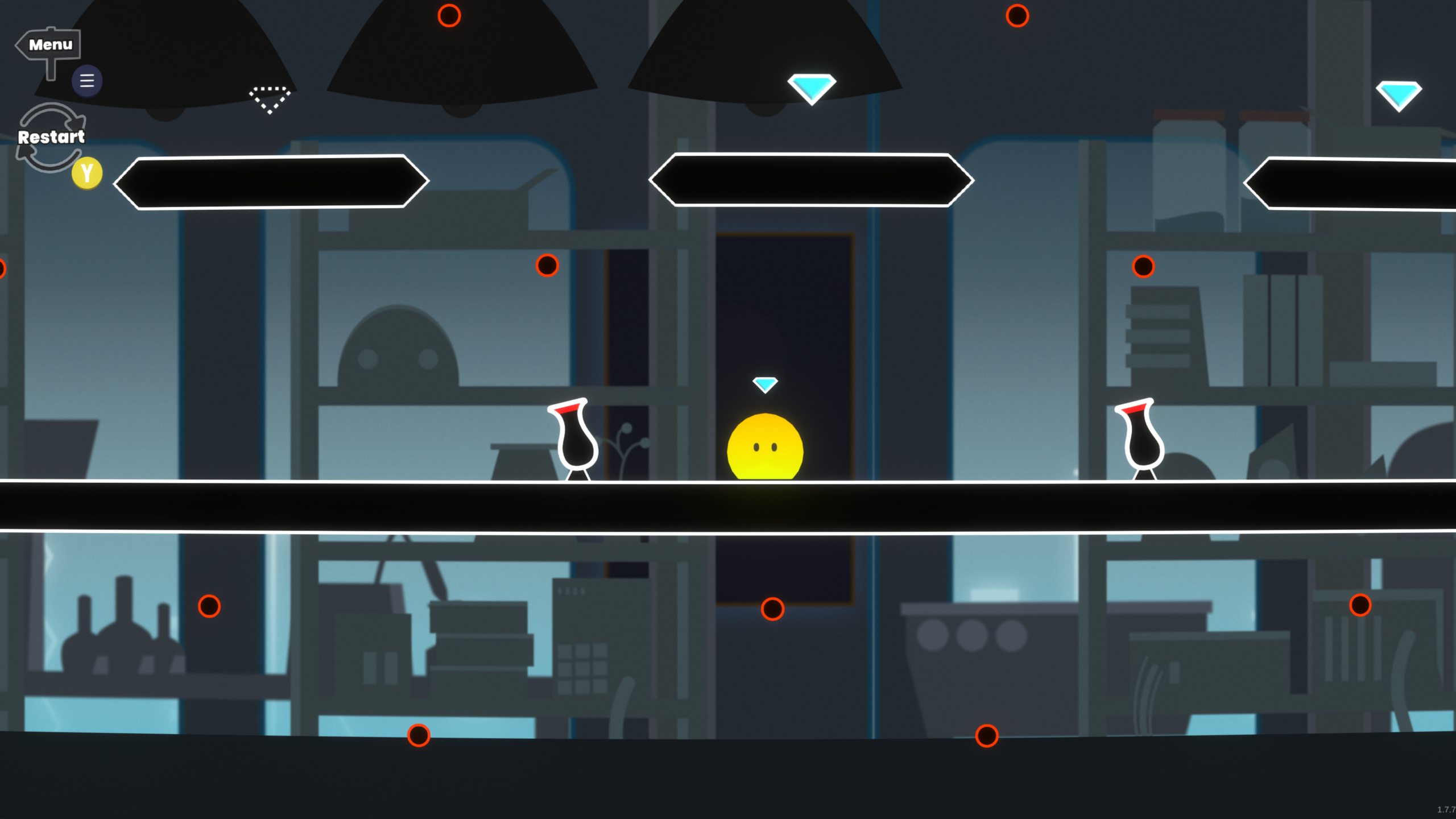
Death by saw blade. Again. And again.
One later encounter summed up the experience rather neatly. After a prolonged battle with a room full of spinning saws, our reviewer had finally collected three diamonds and survived several of its more awkward jumps. The end of the ordeal appeared to be in sight. This was the moment to celebrate, perhaps even consider telling somebody about our incredible platforming prowess.
Instead, the jelly landed on a platform, slid toward its sharp edge and dropped straight into a saw.
Achievement unlocked: an involuntary practical demonstration of why workplace safety regulations exist.
The frustration wasn’t simply that the level was hard. Hard levels are welcome when their demands feel clear and their failures teach you what to do differently. This particular death arrived after a difficult section had been navigated successfully, with residual movement rather than an obviously reckless decision delivering the final blow. It took what should have been a triumphant little moment and turned it into another restart.
We cleared the saws, collected the diamonds and landed the jump. Unfortunately, the jelly had apparently booked a second appointment with the saws.
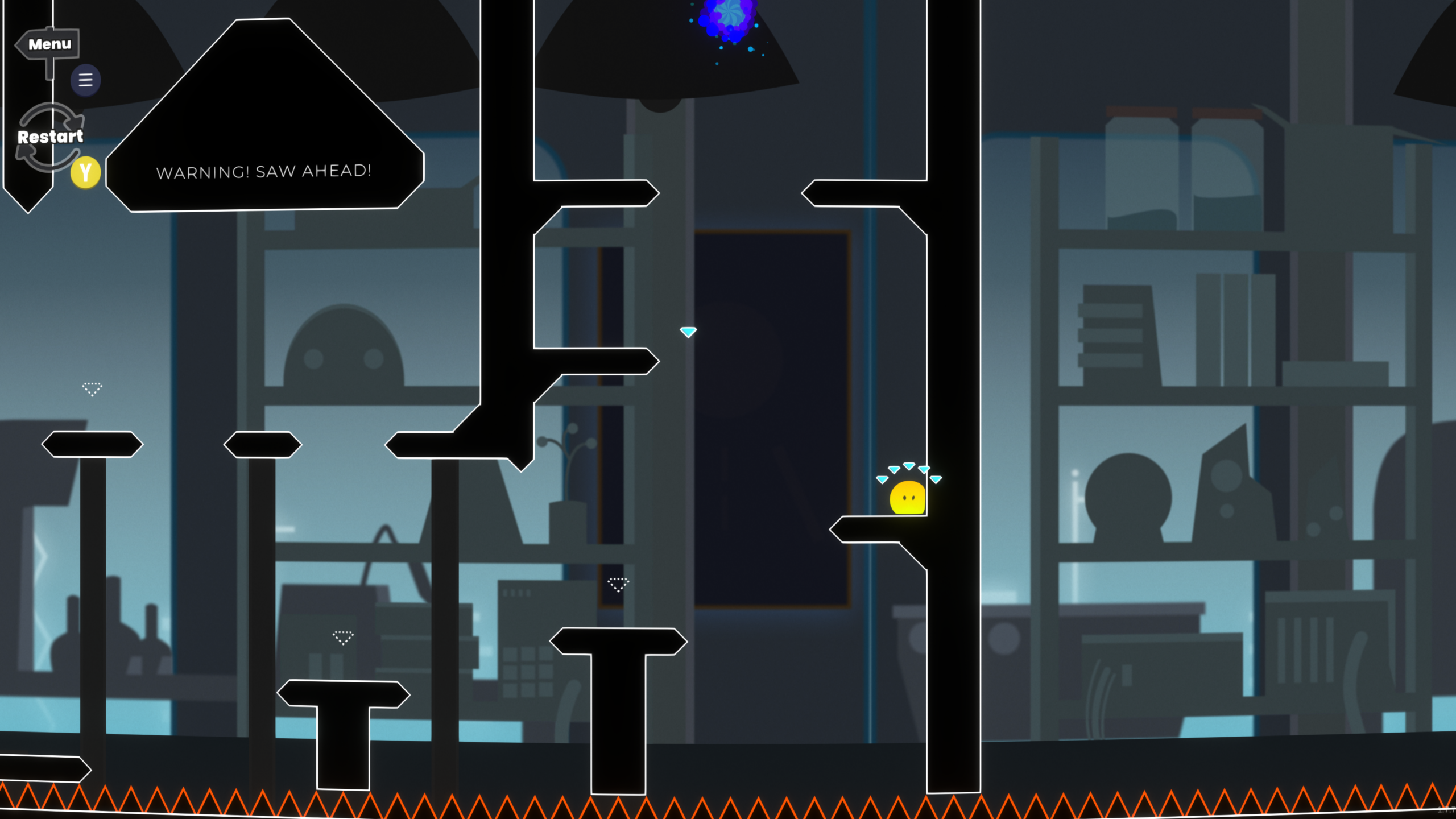
At least the restart button understands the assignment
There is a genuine positive buried beneath all that jelly-flavoured despair: failure sends you straight back to the start. There are no tedious loading screens or long animations between attempts. When a game expects you to die repeatedly, a quick retry is one of the kindest design decisions it can make.
But the reset carries a sting. Diamonds collected during that attempt are lost, meaning one poor landing can undo several minutes of careful work. The restart may be instantaneous, but rebuilding the same run is not. After enough repetition, the loop stopped feeling like a challenge we wanted to conquer and started feeling like a task we were being made to repeat.
That is a particularly important distinction for precision platforming. The best examples make you desperate to try again because success feels within reach. Here, the combination of locked-in movement, sliding landings and complete level resets eventually drained the enthusiasm from our playthrough.
An odd little soundtrack, in the best way
Thankfully, the music makes for surprisingly good company. The soundtrack shifts between cheerful and slightly unsettling tones, which suits a laboratory populated by an impossibly cute creature and a frankly excessive collection of hazards. Our reviewer even found themselves distracted trying to work out what the music reminded them of.
The contrast works. The audio has a playful strangeness that gives the minimalist environments a little more personality. It doesn’t solve the issues with movement, but it does make the repeated attempts rather less grim than the machinery would suggest.
Who should take the leap?
If you enjoy memorising hazards, refining charge timings and eventually executing a route almost perfectly, GeoJelly may have plenty to offer. Its strict movement makes accuracy matter, its short retry loop reduces downtime, and that moment when an awkward series of jumps finally clicks is undeniably satisfying.
For everyone else, the question is how much frustration you’re prepared to accept on the road to that satisfaction. We found the little yellow protagonist endearing and the atmosphere nicely judged, but the repeated loss of progress and those slippery landings undermined the pleasure of improving. The game wanted precision; too often, it felt as though the physics wanted something else.
Final verdict: 61/100
GeoJelly is a charming, minimalist platformer with a quirky soundtrack and some genuinely satisfying challenges. Its instant restarts are a welcome touch, and completing a difficult run can feel excellent. Yet the unforgiving jump commitment, tendency to slide after landing and punishment for a single mistake too often turn hard-earned progress into irritation. Precision-platformer devotees may find a satisfying test here, but our team eventually felt more at odds with the movement than in control of it. The jelly has earned a rest. Preferably somewhere with no spinning blades.
Game details: GeoJelly is developed and published by Source Byte Sp. z o.o. Official storefront listings include Steam, Nintendo Switch and Xbox. The score reflects the original gameplay experience provided for this review, not an assessment of every listed platform.
Editorial note: This review is based on our team’s original firsthand gameplay report, preserving the original 61/100 verdict, the successful perfect level and the frustrating saw-blade incident. Screenshots supplied by the team are original gameplay captures. Review credit: Coloured Static Press team.