
Coloured Static Press / Indie review / Narrative adventure
A missing car, a recurring dream and a therapist with questions worth answering. Interactive Dreams has an intriguing story to tell. If only it would let us reach the next part at something approaching walking speed.
Distinctive idea. Frustrating execution.
60/100
There is an oddly specific panic reserved for forgetting where you parked your car. You know you arrived in one. The keys are in your hand. The car, however, has apparently decided to pursue new opportunities elsewhere.
A Dream About Parking Lots takes that everyday annoyance, stretches it into a recurring dream and sits you opposite a therapist who would quite like to know why this keeps happening. It’s a genuinely interesting foundation for a game, particularly one prepared to look inward rather than fill every available space with objectives and explosions.
We went in curious about the story. We came out wishing our dream-self had been issued a bicycle.
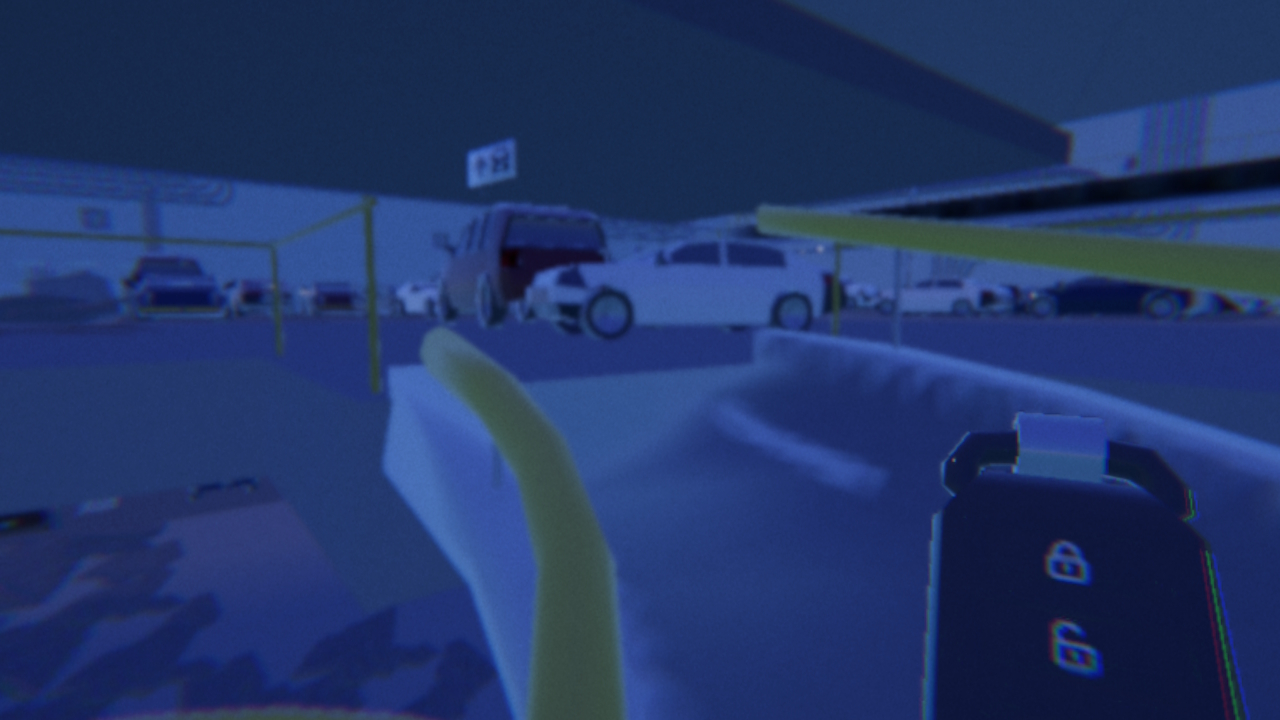
Lost in a car park. Possibly lost in life.
Developed and published by Interactive Dreams, this is an unusually personal experiment. The developer describes it as a short experience about trying to understand recurring dreams, anxiety and creative blocks. Your immediate job is straightforward: walk through a series of strangely familiar car parks, use your key fob and find the vehicle that is supposed to be yours. Meanwhile, a conversation with a therapist begins to reveal why that simple task might carry more weight than it first appears.
The contrast works conceptually. A mundane search becomes an expression of feeling directionless. A place designed for arriving and leaving becomes somewhere you cannot quite escape. The dialogue is a welcome reminder that the missing car is not really the entire point; it’s the thing your mind has chosen to worry about while avoiding something harder.
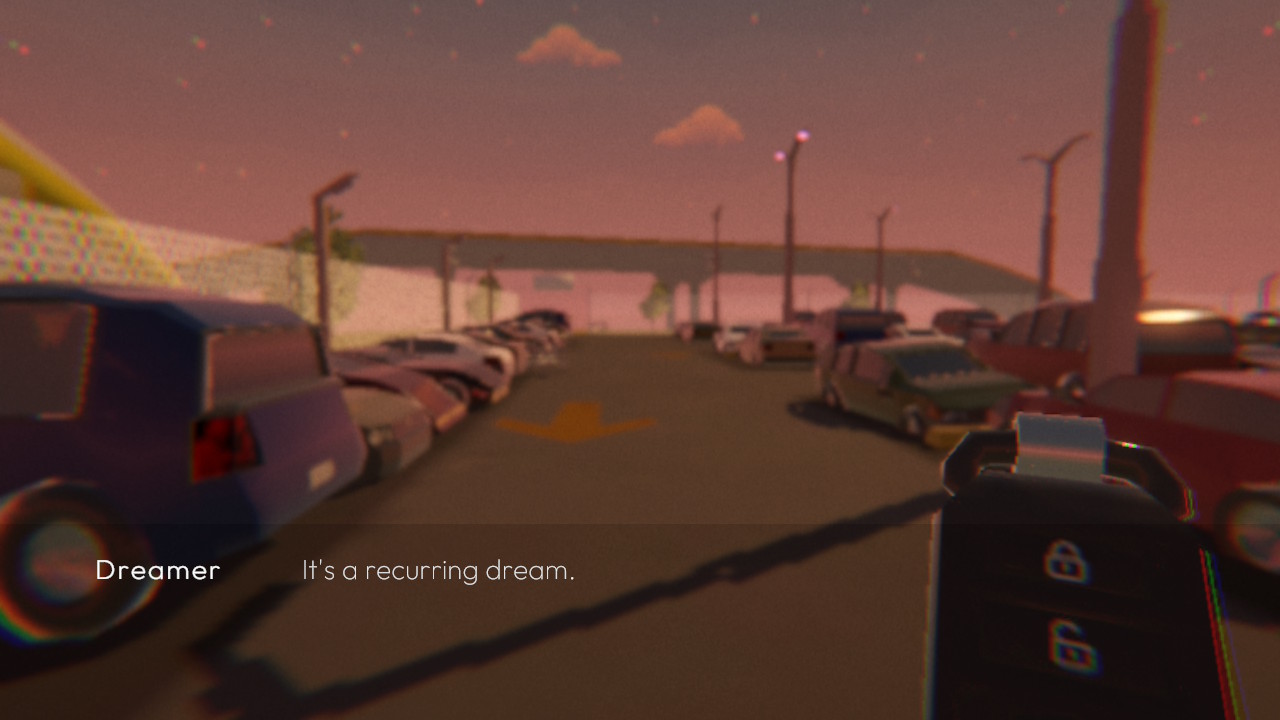
There is more authenticity here than the premise initially suggests. In a remarkably open development postmortem, Interactive Dreams director Luis León describes an actual dream about a multi-storey car park, as well as a real-life occasion when he spent roughly an hour trying to find his car after a concert in Mexico City. He explains that the Dreamer and Therapist draw on his personal experiences, while remaining fictional representations rather than actual therapy.
Knowing that background makes the premise more affecting. Someone hasn’t simply decided that car parks are eerie enough to make a quick indie game. There’s a recognisable human frustration at the centre of it, and a desire to turn something very private into a story other people might recognise.
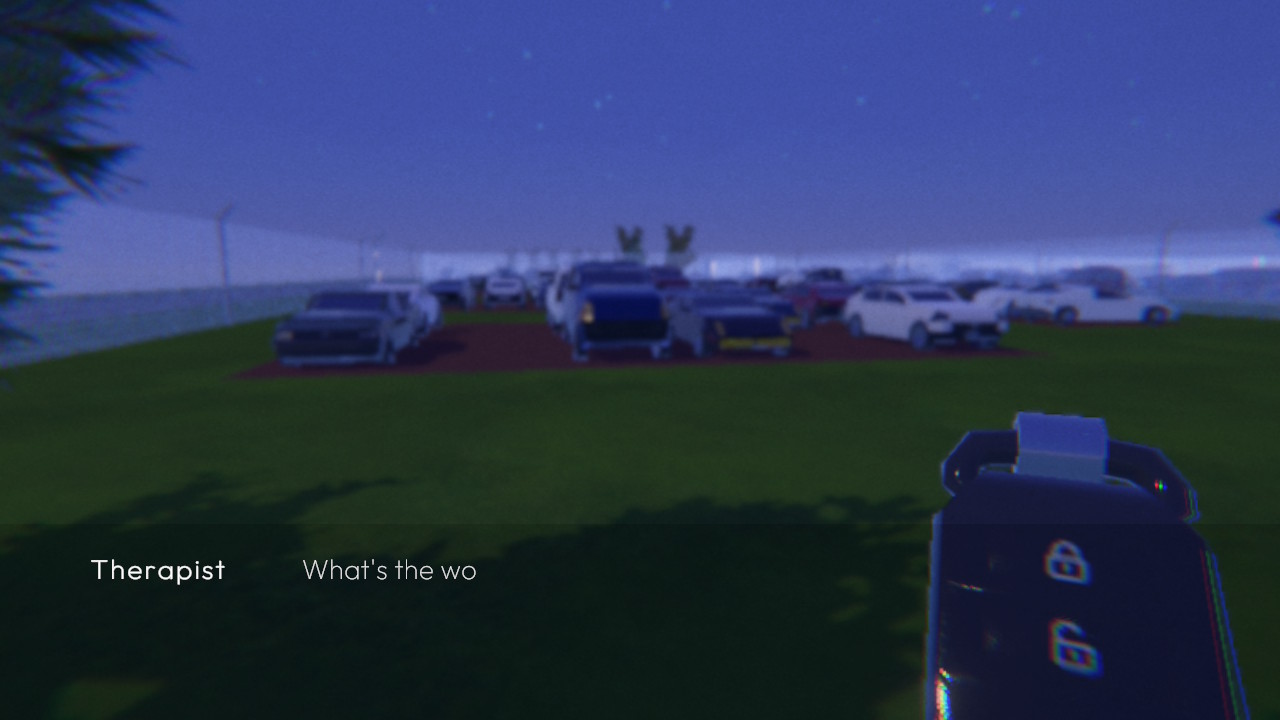
The narrative has momentum. Your feet do not.
Our biggest problem was the pace. Not the fact that this is a quiet game, or that it asks for patience. Some of our favourite indie experiences are unhurried. The problem is that the movement itself feels far too slow for the spaces we’re being asked to cross, and the repeated search for a car rarely offers enough interaction to justify all that travelling.
After the initial curiosity wears off, those stretches become frustrating. We’d find ourselves interested in the next exchange with the therapist, then have to trudge through yet another expanse of vehicles and indistinct corners to get there. It is a peculiar feeling to have a game’s storytelling pulling you forward while its movement mechanics seem determined to keep you exactly where you are.
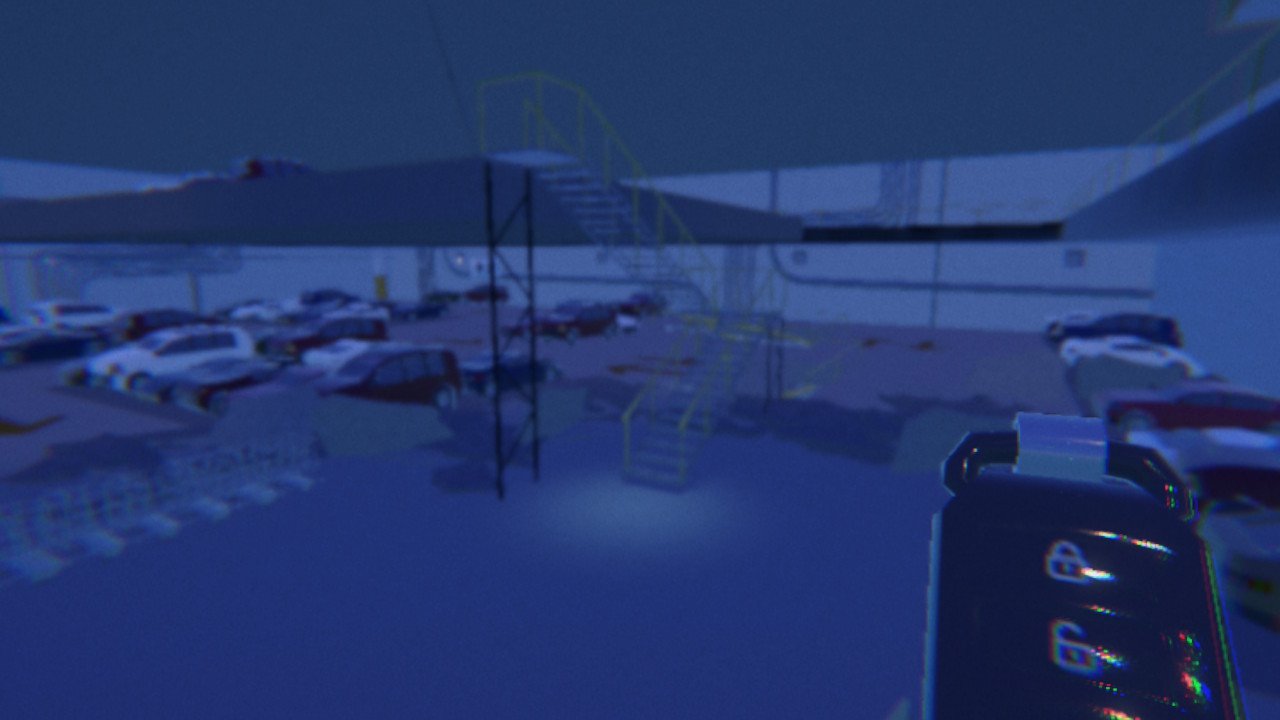
The key fob is a nice thematic touch. It’s an instantly recognisable little ritual: press the button, hope for a reassuring sound, and start looking. But the concept isn’t deep enough to carry the repeated wandering on its own. A slightly more generous movement speed, more meaningful visual clues or simply tighter routes could have made an enormous difference without changing the game’s character.
At one point we were less concerned about interpreting the Dreamer’s subconscious and more concerned about whether the therapist could recommend a decent pair of running shoes.
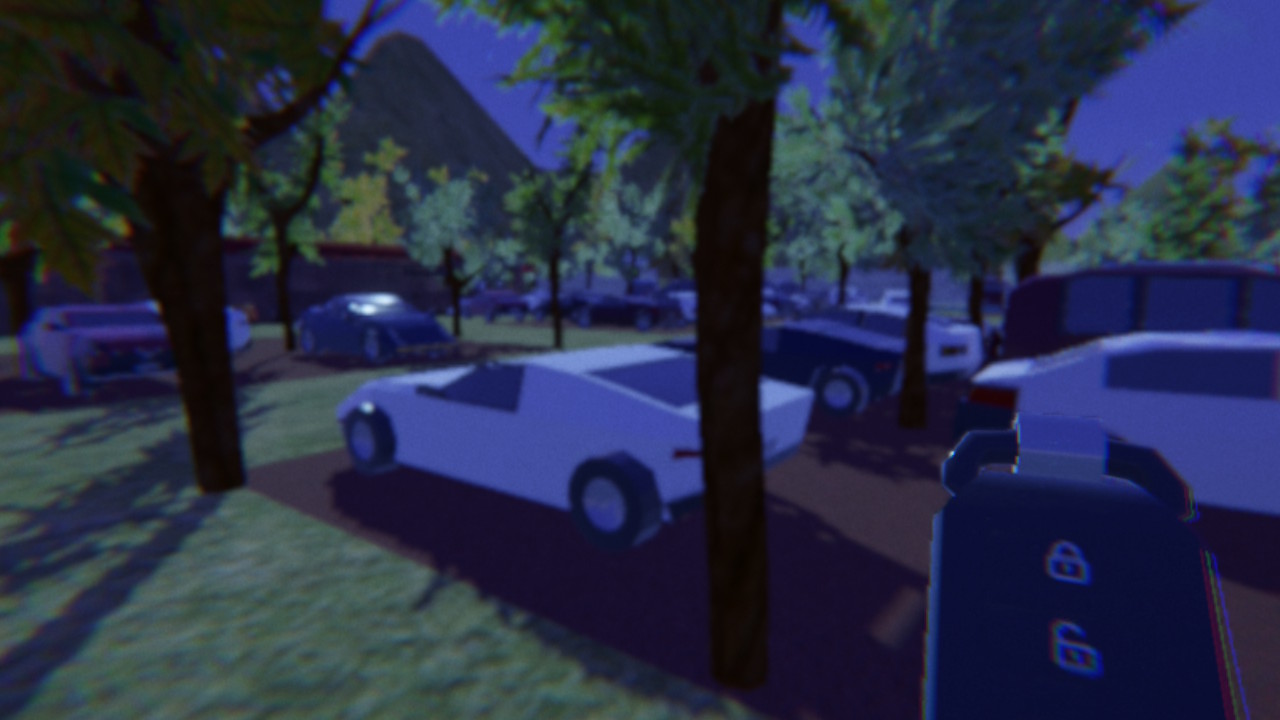
A dreamlike look that becomes difficult to look at
We understand the artistic intention. The low-poly cars, washed-out blues, peculiar lighting and softer, almost unstable image give the world the appearance of somewhere you remember rather than somewhere you’ve actually visited. The warmer orange-lit scenes also help individual locations feel different. That’s a legitimate direction, particularly for a small experimental game built around dreams.
But there’s a difference between using visual distortion to create an atmosphere and making the whole experience harder to read. For us, the heavy blur, indistinct environmental shapes and uneven contrast too often crossed that line. We found it genuinely difficult to look at for extended periods, and the lack of clarity made navigation less pleasant precisely when the game needed the environment to do more of the work.
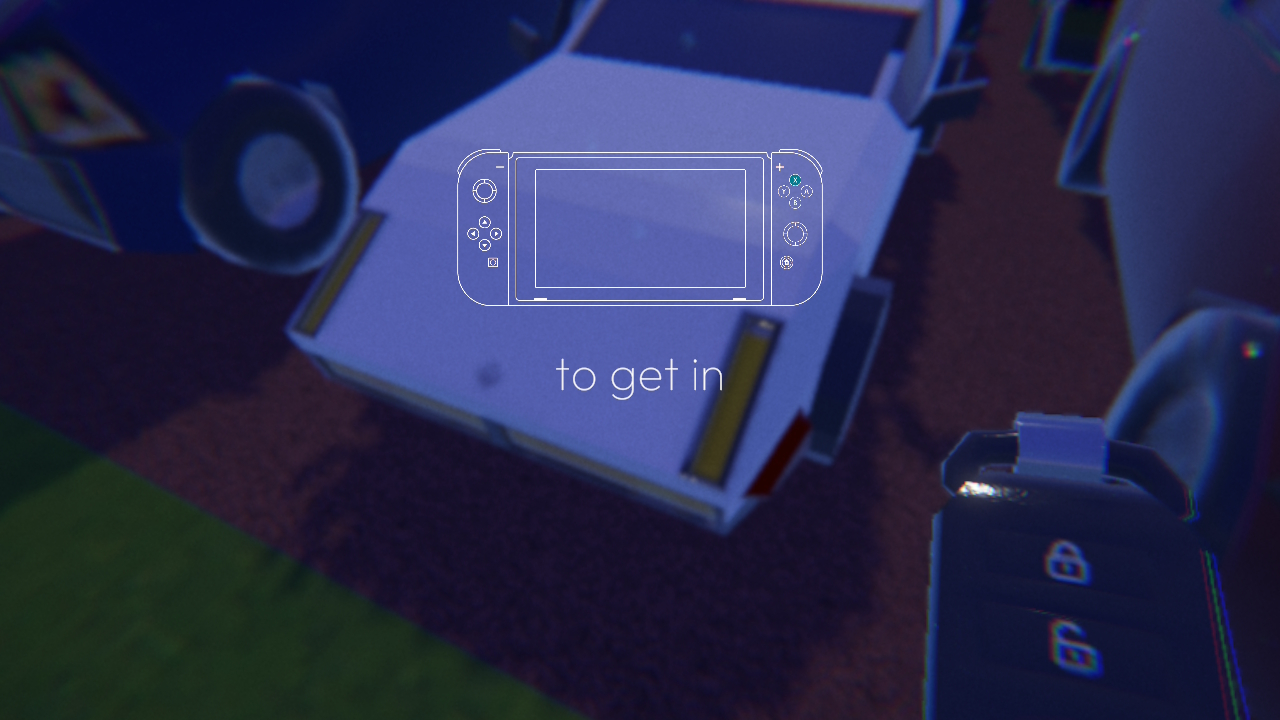
Importantly, improving this wouldn’t necessarily require expensive effects, higher-resolution textures or a more demanding engine. More selective blur, stronger silhouettes, cleaner contrast and more carefully placed landmarks could help preserve the dreamlike mood while making the car parks easier on the eyes. Deliberate simplicity can be beautiful. It just needs to be deliberate all the way down.
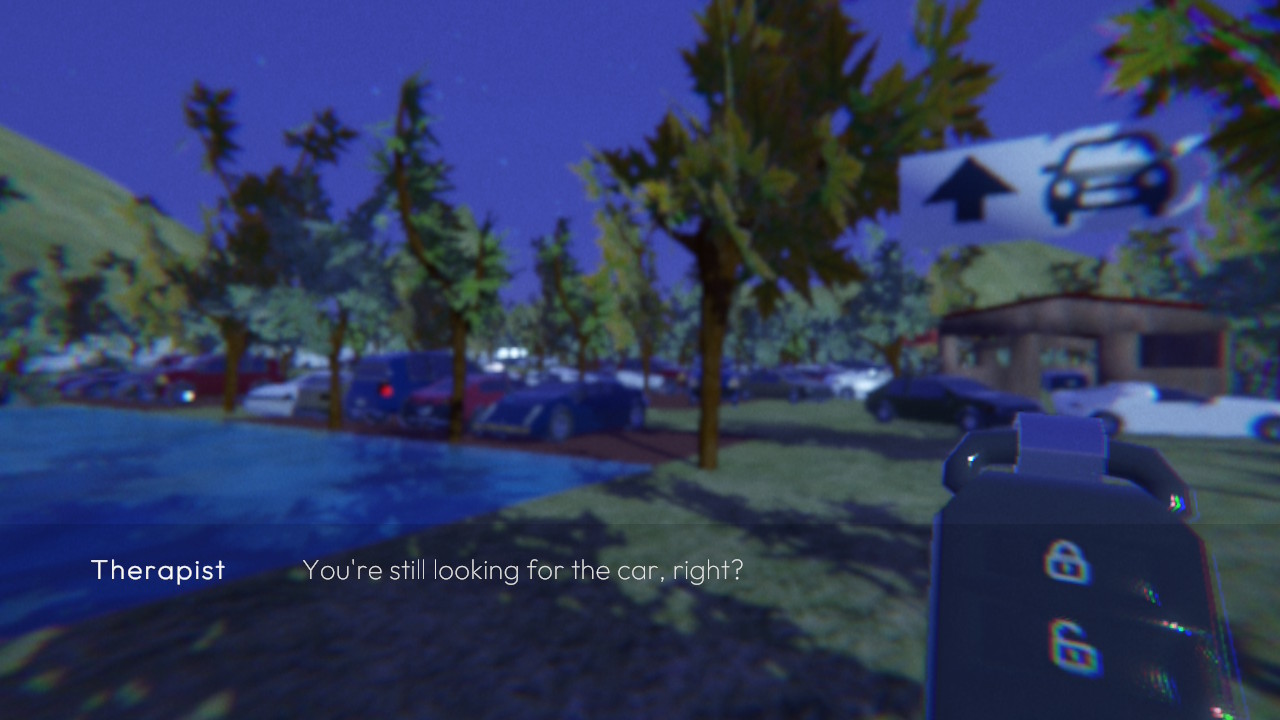
Short enough to finish, but still long enough to test our patience
The official Steam description estimates 30–40 minutes, which makes this a compact interactive story rather than an evening-consuming adventure. We appreciate the restraint. Not every game needs fifty hours of content, a skill tree or a map littered with collectibles. There is real value in a small idea that knows what it wants to say.
The difficulty is that the limited running time doesn’t automatically make the downtime work. When a game offers relatively little to do between moments of narrative interest, every slow walk becomes more noticeable. The environments change, but the central routine stays familiar. We were interested in the questions, less so in repeatedly pacing between parked cars in pursuit of the next answer.
Players who enjoy experimental interactive fiction, liminal spaces and deliberately quiet storytelling may find more to love here than we did. Those who rely on responsive traversal or clearly readable environments to stay engaged are likely to share our frustrations.
Our verdict: 60/100
A Dream About Parking Lots is a more interesting story than it is a game to move through. The deeply personal premise and the conversation about feeling lost deserve credit. The search for the car is a clever metaphor and, for a moment, a clever mechanic. But the sluggish movement, repetitive traversal and overly murky presentation hold the whole thing back.
We wanted to spend longer thinking about what the Dreamer was saying and less time wishing the Dreamer would walk a little faster. There’s a thoughtful short story parked here. It’s just harder than it should be to reach.
- A genuinely intriguing, personal premise
- Thoughtful connection between dreams and feeling lost
- Distinctive liminal atmosphere
- Compact, self-contained experience
- Movement far too slow for the spaces
- Repetition overwhelms the small interaction set
- Blur and contrast make environments difficult to read
- Presentation needs more polish, not necessarily more horsepower
Review note: Written from Coloured Static Press hands-on observations, with release facts and creative context verified against the official Steam listing and Interactive Dreams’ own postmortem. All seven images are original gameplay screenshots supplied for this review, not AI-generated artwork. The 60/100 score reflects our hands-on editorial assessment. The game’s narrative is discussed without revealing its ending.