
BEHIND THE SIGNAL | DEVELOPER INTERVIEW
Most cleaning games ask you to pick things up. Unmess Co.: Rewind the Wreck wants you to put the clock in reverse, then work out why you cannot simply undo every disaster at once. It’s a clever problem to hand a clumsy restoration robot, especially one employed by an apparently high-tech company that seems reluctant to replace its battered equipment.
Following our First Signal look, we sent developer Traveler Ant seven questions about building satisfying object puzzles, keeping an atmosphere relaxed and listening to players. The studio gave us full written answers, including news that the demo has grown from two locations to three.
This is a written developer interview, not a hands-on review. The questions and answers below retain the studio’s own words, with paragraph formatting adjusted for readability.
1. What first gave you the idea of a clumsy robot repairing objects by reversing time, rather than simply cleaning up a mess?
The idea of restoring an environment came first. We enjoy games about repairing, cleaning and putting things back in order: they can be calming, especially after a long day. We wanted to bring something of our own to that experience. Rewinding individual objects offered a different approach to restoration, and watching scattered fragments come back together is very satisfying.
The robot grew out of the company concept. Unmess Co. is a large, high-tech organisation whose employees do not need to visit every site in person: they can work through robots. But there is a gap between the company’s impressive image and the equipment people actually have to use. The robot is clumsy, and its tool is visibly worn. A company can look large and serious without keeping all its equipment in great condition. We liked the humour in that contrast.
2. When objects obstruct one another, players must discover the correct order of restoration. How do you design those dependencies so the solution feels satisfying rather than arbitrary?
Creating each room and arranging its objects takes a lot of time. One of the hardest tasks is finding a balance between an interesting puzzle and a relaxing pace.
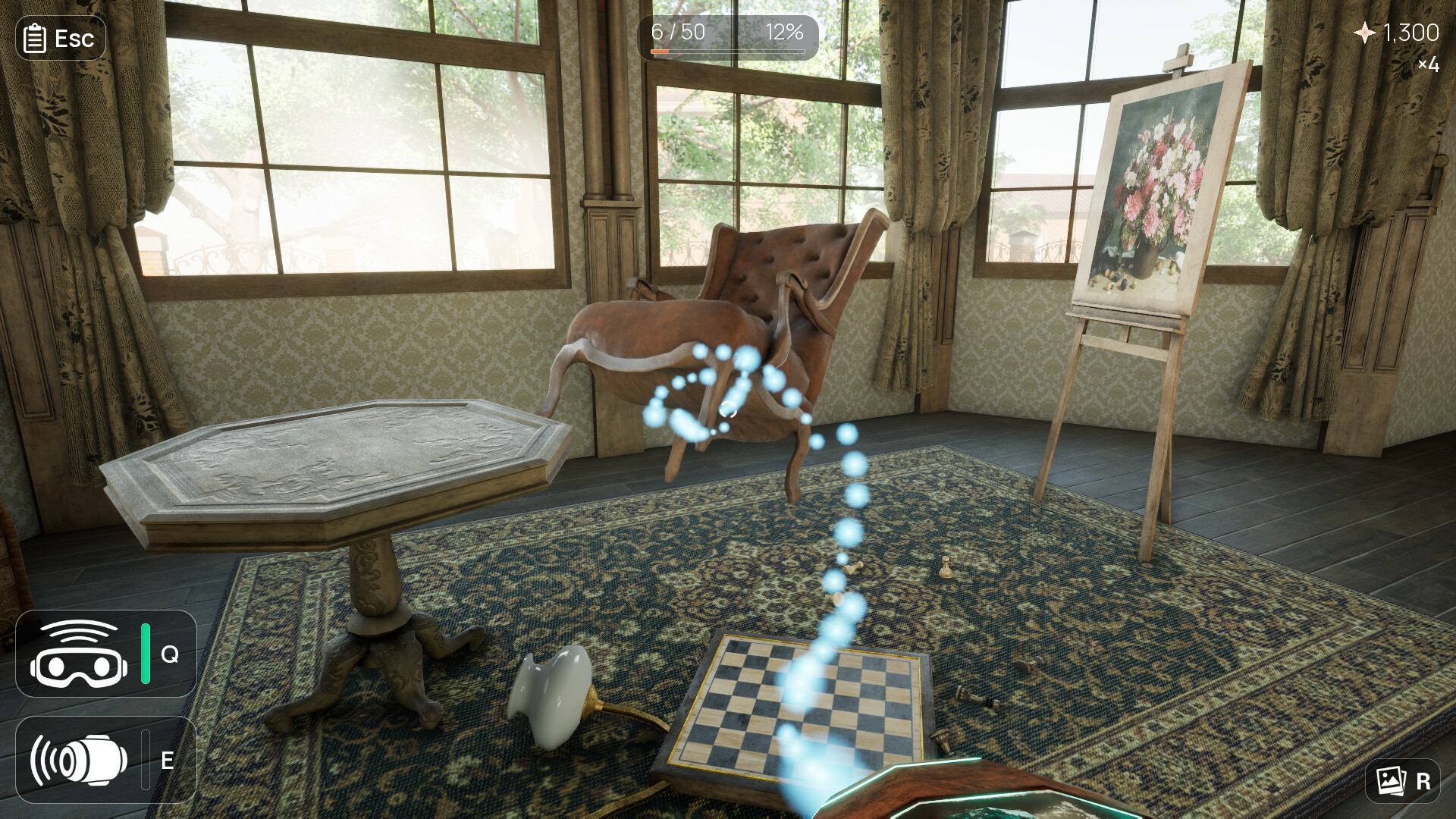
We try to communicate the dependencies through the environment itself. By looking carefully at a fallen object or its fragments, players should be able to understand what is preventing it from being restored. To make this clearer, we added highlighting: aiming at a fragment highlights not only that piece but the other parts of the same object. This makes it easier to locate them and see the obstacles.
3. How did you decide what the player should learn in the opening puzzles before introducing more complicated combinations?
The demo’s main purpose is to introduce the core mechanic and get feedback on how interesting and enjoyable it feels. So our first priority was teaching players to restore individual objects and understand how those objects can obstruct one another.
For convenience, we added a scanner to help players find objects that have not yet been restored. As we developed new locations, we gradually introduced additional features and mini-games. The demo helps us understand which ideas players enjoy and which should remain experiments rather than become part of the full game.
4. How do the two locations in the public demo differ, and what do they reveal about the design possibilities of the rewind mechanic?
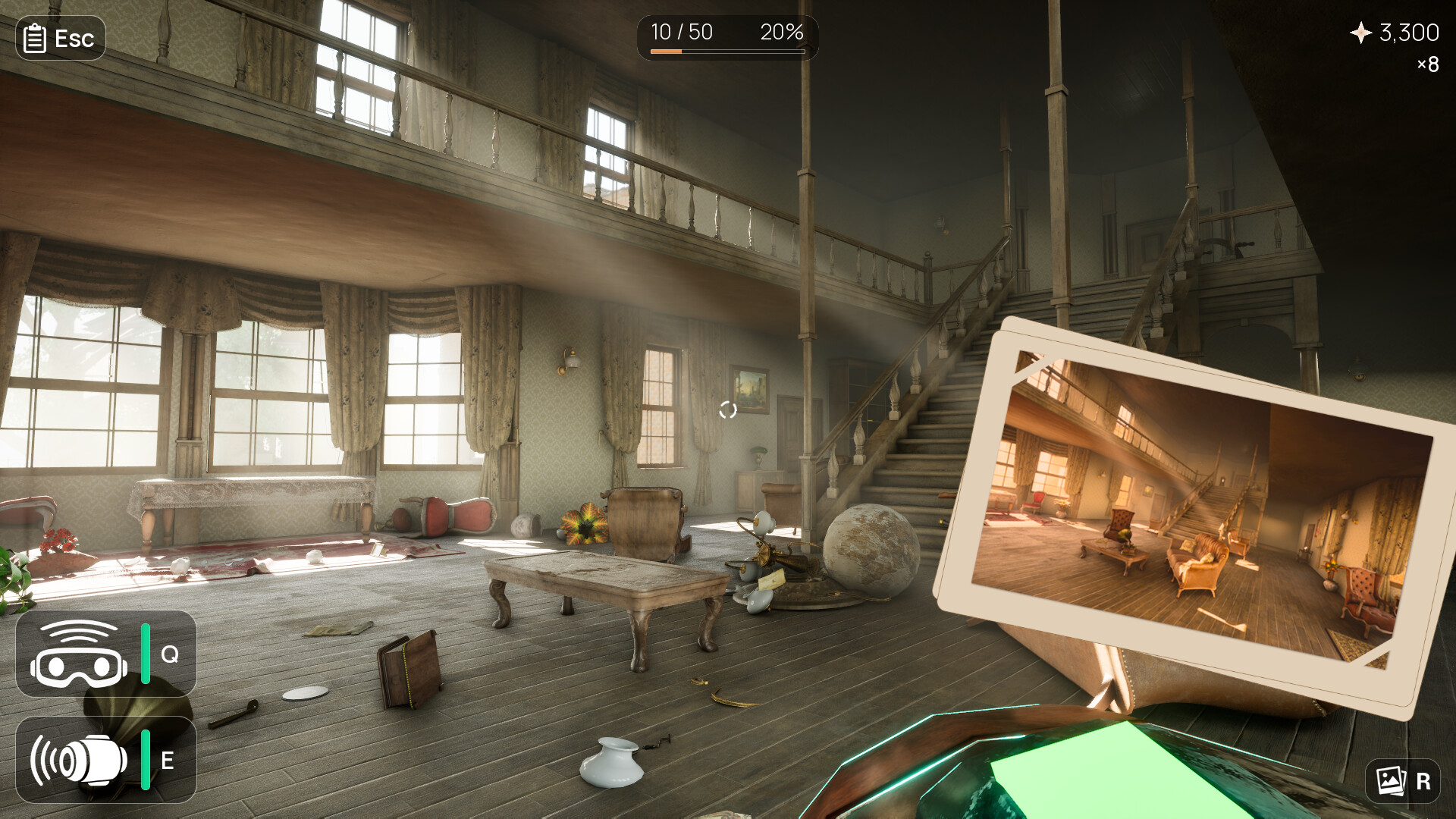
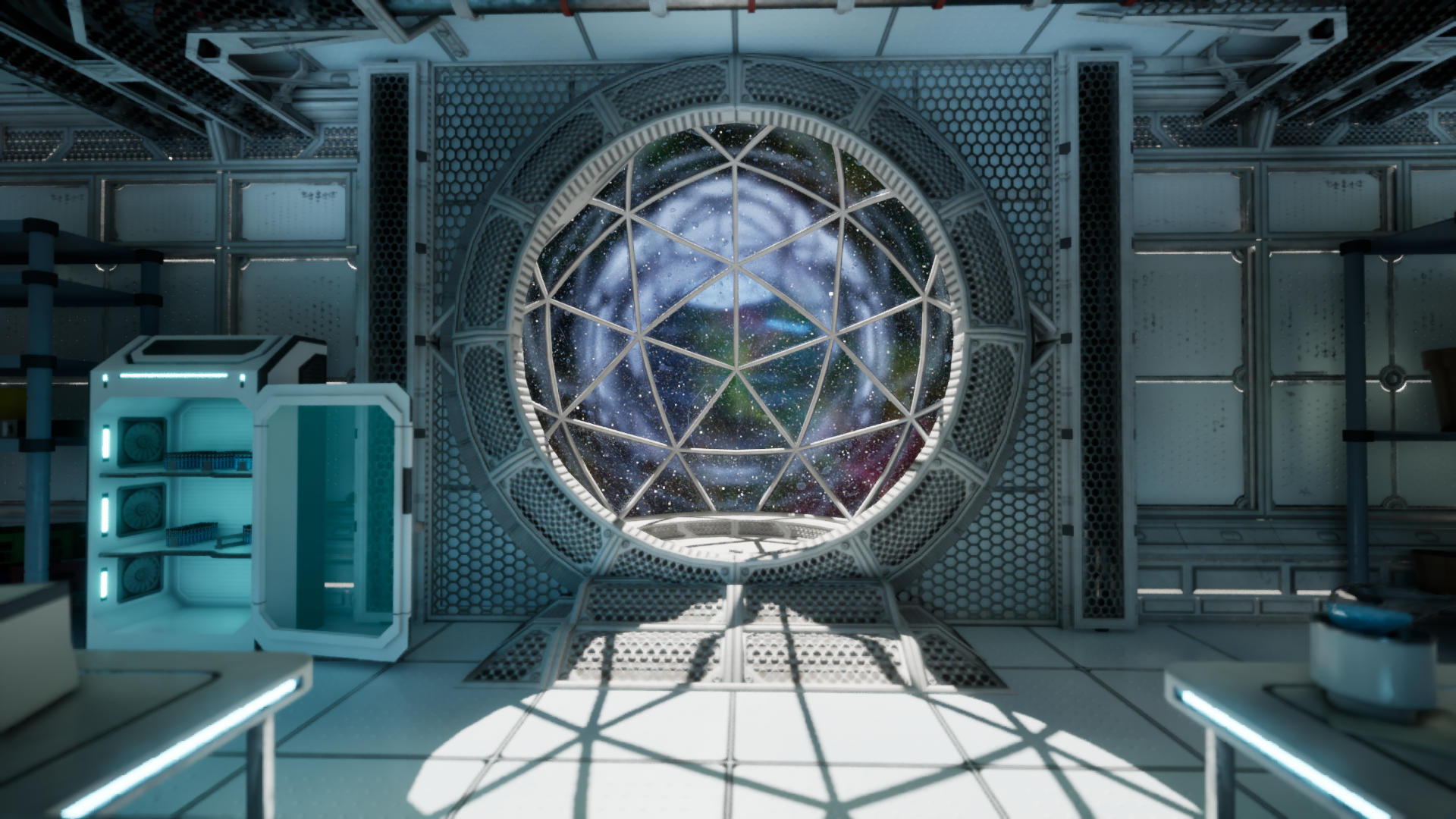
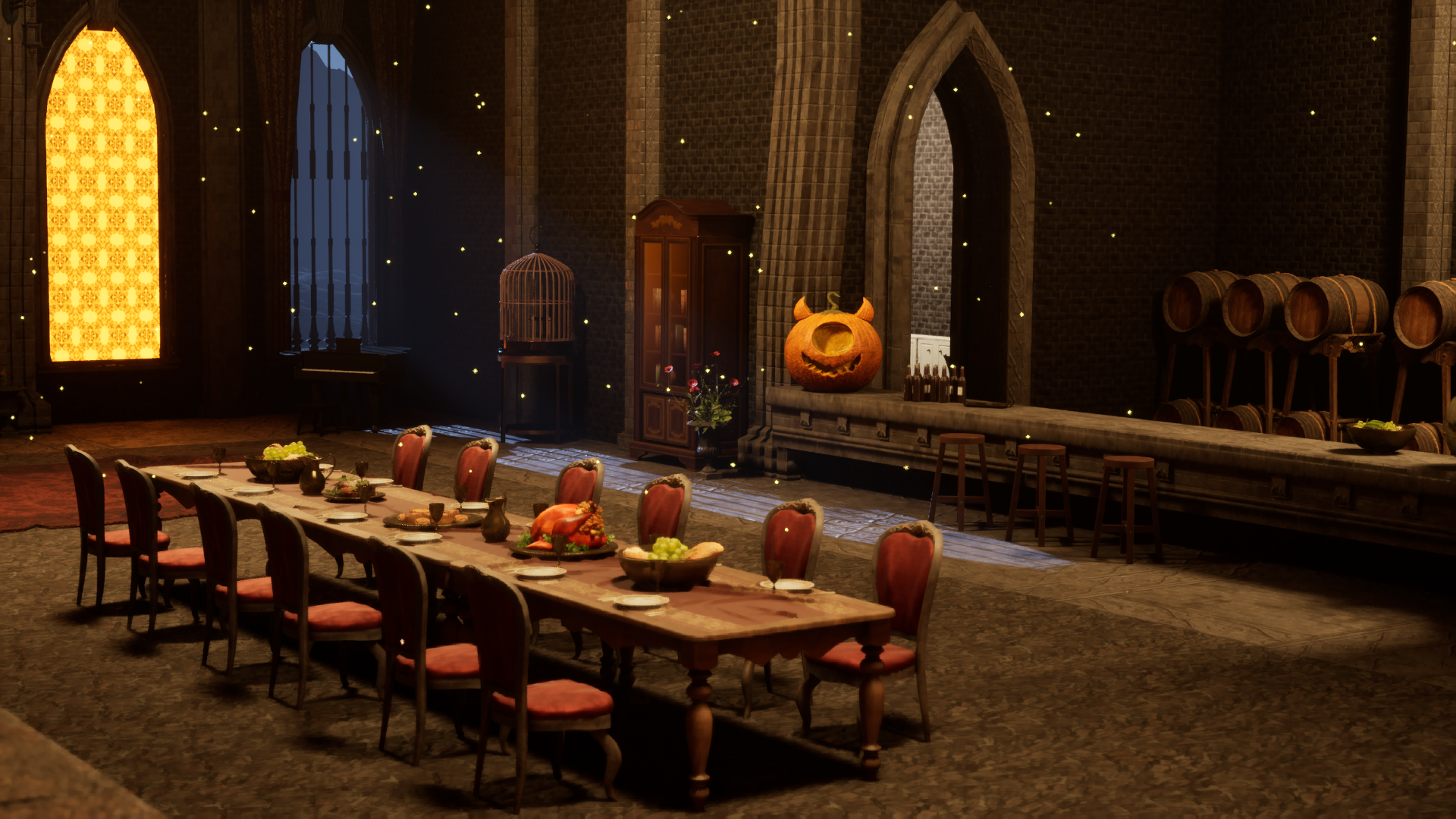
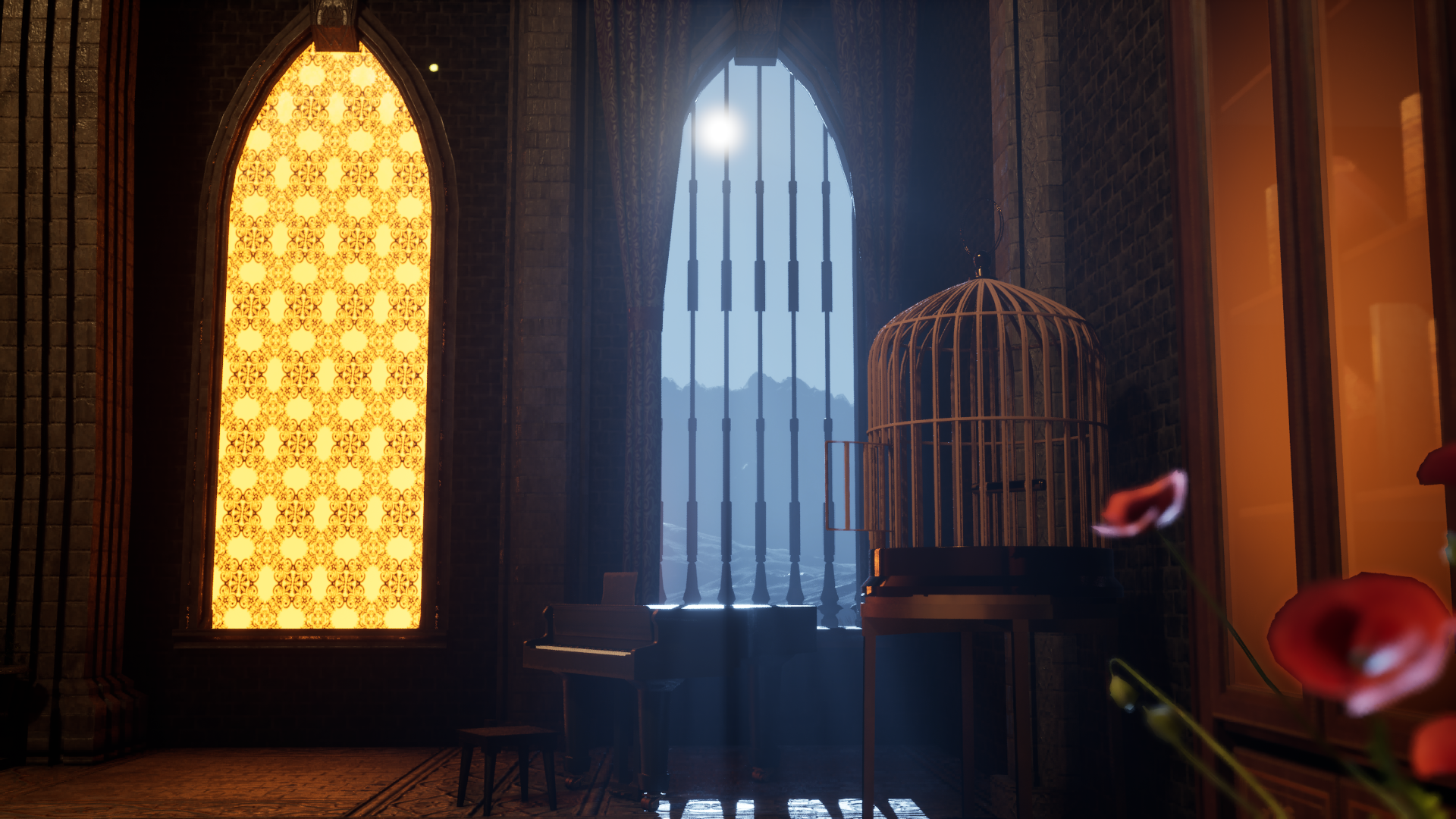
Since receiving your questions, we have added a third location to the demo. The first is an old mansion, the second is a space station, and the third is a Gothic castle with a Halloween theme.
We wanted the settings and visual styles to feel very different. Bringing different worlds into one game can spark curiosity: where will the next assignment take you? The restoration mechanic connects these places, but we do not want every location to feel the same.
We have also gradually introduced additional features, including mini-games, to vary the core gameplay. Through the demo, we are finding out which additions interest players and which are better kept as experiments.
5. A calm atmosphere can be difficult to balance against challenging puzzles. What choices did you make in the visual design, audio and pacing?
We want players to think without feeling that they need to rush. There is no time limit for completing a location. We show the completion time at the end for players who enjoy setting themselves an extra challenge. Finishing faster is an option, not a requirement.
We are currently planning to add leaderboards for the full release so that players who enjoy competition can compare their results and compete for the top spots.
Visually, we try to make the puzzles readable. For example, highlighting all the fragments of an object helps players understand what might be preventing its restoration.
We aim for pleasant, unobtrusive audio. Each level has its own music, and we pay particular attention to the sounds of rewinding and objects returning to their places. We want those sounds to complement the cosy atmosphere rather than become irritating.
6. What did people understand immediately, or struggle with, during Steam Next Fest, and has their feedback changed anything in development?
Looking at feedback on the demo as a whole, we were surprised by the demand for controller support. We had not originally planned it: in games where you aim at objects, we personally prefer a mouse and keyboard. But after several requests, we added controller support in the next update.
We also noticed that players sometimes group objects differently from us. We considered size, visual distinctness and placement; some players grouped objects by meaning, shared function or activity. Another surprise was how rarely some players used the scanner, which we had considered very useful.
These reactions reminded us that our familiarity with the game is very different from a new player’s experience. Controller support is the most direct example of feedback changing our plans.
7. Looking beyond the demo, what part of the full experience are you most excited for players to discover?
We are interested in developing the game around its core restoration mechanic, rather than simply adding rooms that all work the same way. We want to explore small additional mechanics, interactive details and story elements that bring variety to the experience.
The final scope is not yet settled. We are gradually adding elements to the demo and seeing how they feel and how players respond. When people experience something differently from what we expected, we take that into account when deciding our next steps.
Our take
The best detail here may be how the team has responded to an assumption that turned out to be wrong. Traveler Ant initially didn’t think controller support was needed. Players disagreed. Rather than arguing with the people trying to restore its virtual chaos, the studio added it. The same applies to how people group broken objects, sometimes by their meaning rather than the clues the designers expected.
With three very different locations, a scanner and a commitment to making puzzles readable, there is more to this demo than putting a vase back on a shelf. Now the challenge is making sure the full game continues to surprise, without sacrificing that pleasantly unhurried pace.
Try it: Play the free Unmess Co. demo on Steam or visit the full game’s Steam page.
Interview responses provided in writing by Traveler Ant. Official developer-supplied screenshots reproduced with explicit permission. All editorial content credited to the Coloured Static Press team.