Reviewed by the Coloured Static Press team / Game review / Arcade fantasy brawler
After working our way through rather a lot of beat ’em ups recently, we had begun to suspect the genre was personally offended by our existence. Clunky movement here, brutal difficulty there, and enough frantic button mashing to threaten the structural integrity of a controller. Then Blades & Battles arrived, handed us a sword and, to our considerable surprise, let us have a genuinely good time.
This medieval fantasy brawler knows where its roots lie. There are goblins to dispatch, skeletons to dismantle and some considerably larger enemies who clearly did not get the memo about fighting fair. Yet there is a welcome modern sensibility beneath the arcade nostalgia: controls that respond when you ask them to, attacks that feel satisfying and a combat system that does not demand a degree in medieval sword mathematics.
And here is the most impressive statistic of all. During our time playing, we died exactly twice. Given some of our previous experiences with this genre, we are considering having a commemorative plaque made.
A sword, a legend and a much friendlier arcade experience
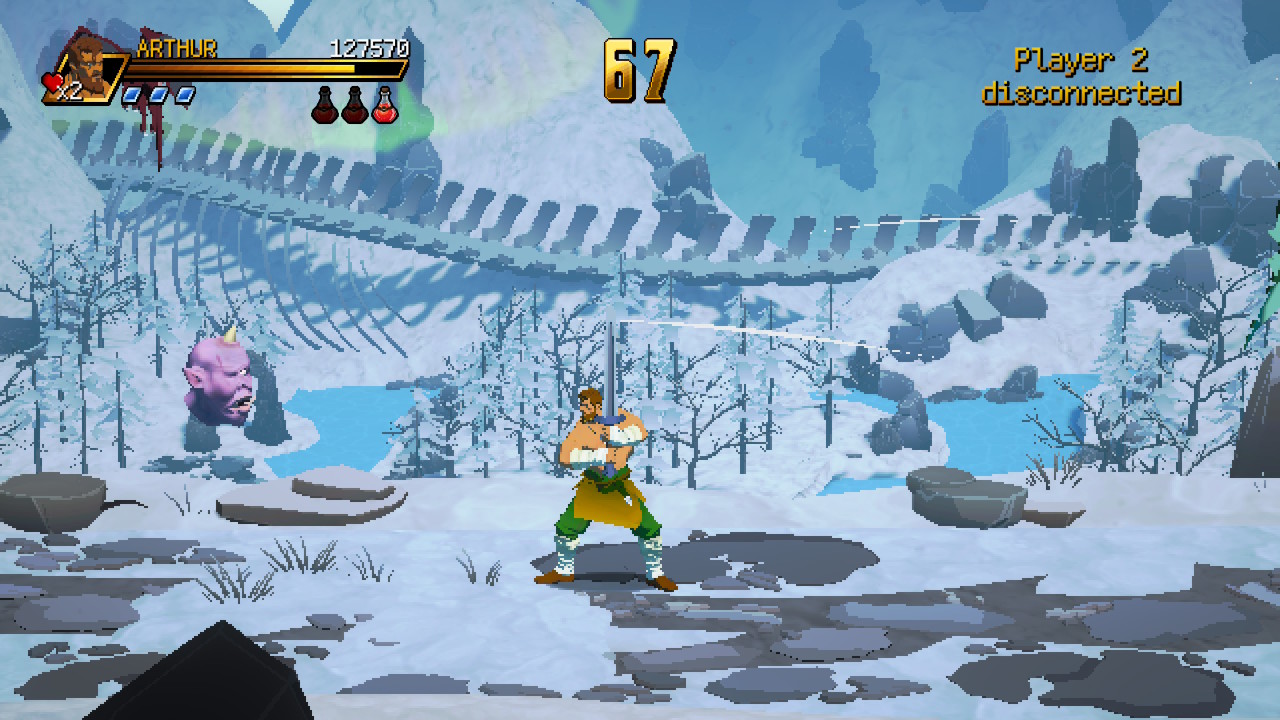
Developed and published by QUByte Interactive, Blades & Battles is a modern take on the classic side-scrolling fantasy beat ’em up, inspired by the likes of Golden Axe. The official game includes Arthur and Lancelot as playable heroes, each with a different approach to combat, as well as local cooperative play. Our own playthrough focused on Arthur, so that is the perspective behind this review.
The premise is familiar in the best way. Advance through an environment, encounter something hostile, persuade it to stop being hostile with the appropriate application of steel, then repeat until you meet a boss that requires a little more consideration. The formula has worked for decades. The trick is making the journey between those encounters enjoyable enough that repetition feels comforting rather than exhausting.
For us, that is where this game succeeds. Having recently revisited several older beat ’em ups, we immediately noticed how much more comfortable this one felt to control. It keeps the straightforward spirit of an arcade cabinet without insisting on preserving every historical inconvenience.
Combat that feels like cooperation rather than an argument
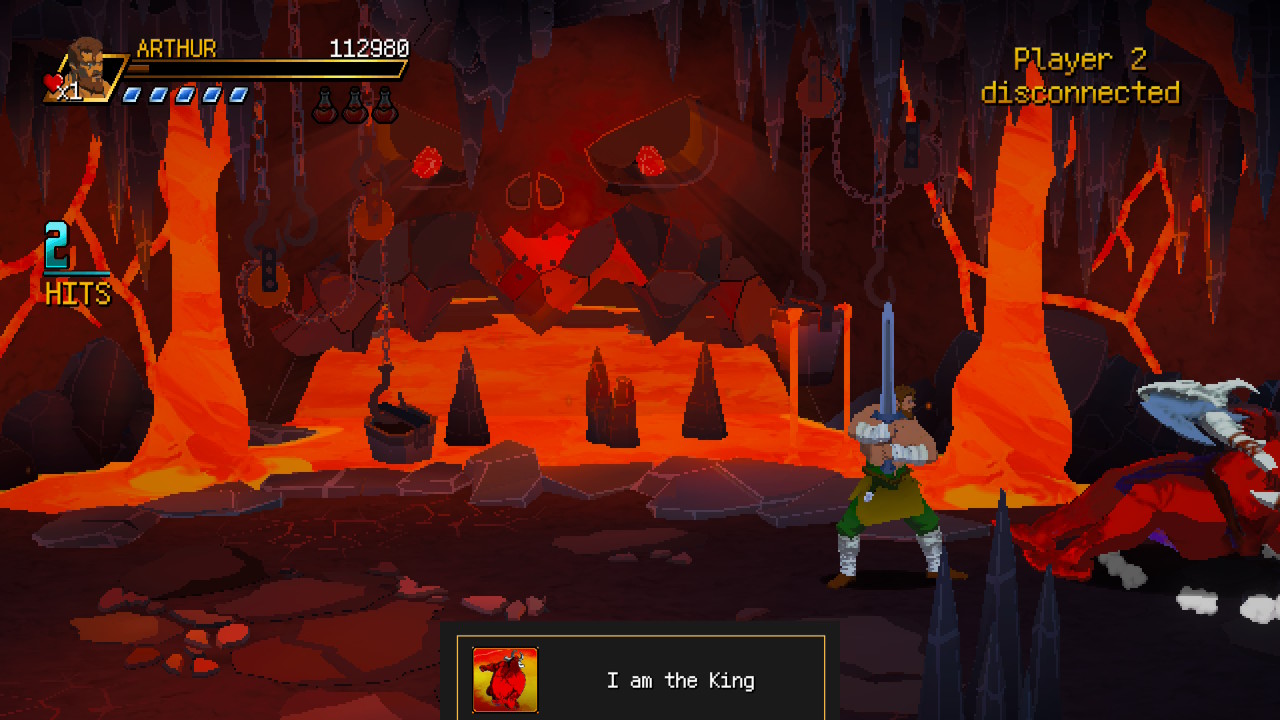
There is a satisfying immediacy to Arthur’s attacks. When we wanted to strike, we could strike. When we wanted to experiment with different moves, the game gave us enough breathing room to do so. That may sound like faint praise, but after being on the receiving end of some rather uncooperative old-school combat systems, responsive controls feel like an extremely generous gift.
The range of attacks is varied enough to make encounters interesting without burying the player beneath endless combinations and technical explanations. We could focus on understanding our opponents and getting into a rhythm rather than trying to remember which combination of buttons summoned the one move we actually needed.
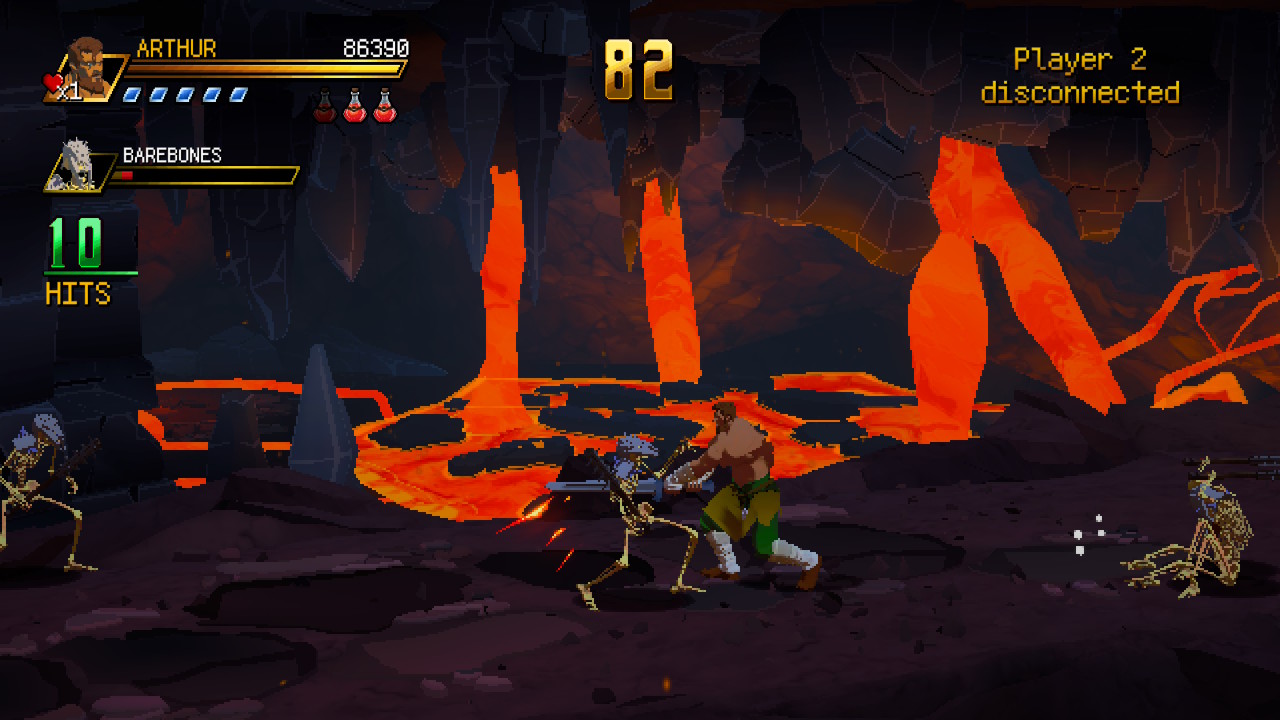
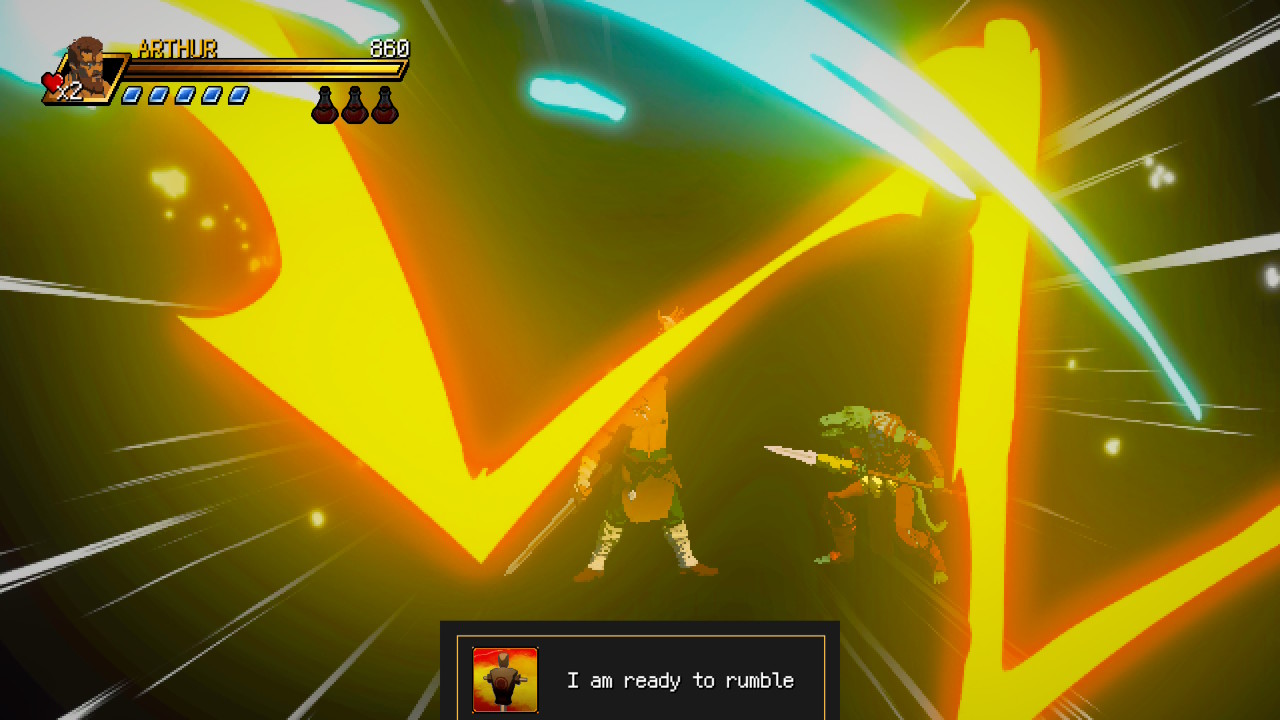
There is still a proper sense of impact to the fighting. Arthur’s sword swings are accompanied by pleasing effects and appropriately enthusiastic battle noises. The presentation adds weight to the action without making it difficult to follow what is happening on screen.
It struck us as a particularly good balance for anyone who enjoys the genre but does not necessarily want every encounter to become an exercise in survival through sheer stubbornness. You can experiment, make a few mistakes and still feel as though you are participating in the fight instead of merely enduring it.
A desperation attack with a very specific warning label
One of the more useful tools at Arthur’s disposal is a desperation strike, particularly when enemies start getting uncomfortably close. It is an excellent emergency option, but there is a catch that deserves more attention than we initially gave it.
The attack draws on mana. If you have enough, wonderful. If you do not, the game will happily help itself to your health instead. It is a rather direct reminder that there is no such thing as a free lunch, even when the lunch in question involves hitting a goblin very hard.
That little trade-off gives the move some genuine tactical value. Do you spend the resource to get yourself out of trouble now, or save it for a later encounter that might prove even more demanding? And if you are short on mana, is taking a hit to your health bar worth the immediate breathing room? It is an accessible choice with consequences, exactly the sort of mechanic that adds depth without turning a straightforward brawler into homework.
We also managed to activate our special attack by accident on more than one occasion, generally at a moment when it was spectacularly unnecessary. There was no strategic genius behind these decisions. Just an impressive animation, a completely wasted opportunity and a quiet hope that nobody had been watching.
To be fair, the special effects are dramatic enough that we almost felt the mistake was worthwhile. Almost. If the game ever introduces an achievement for unnecessarily unleashing your most powerful move, we expect to be an early contender.
Only two deaths. We are still processing the achievement.
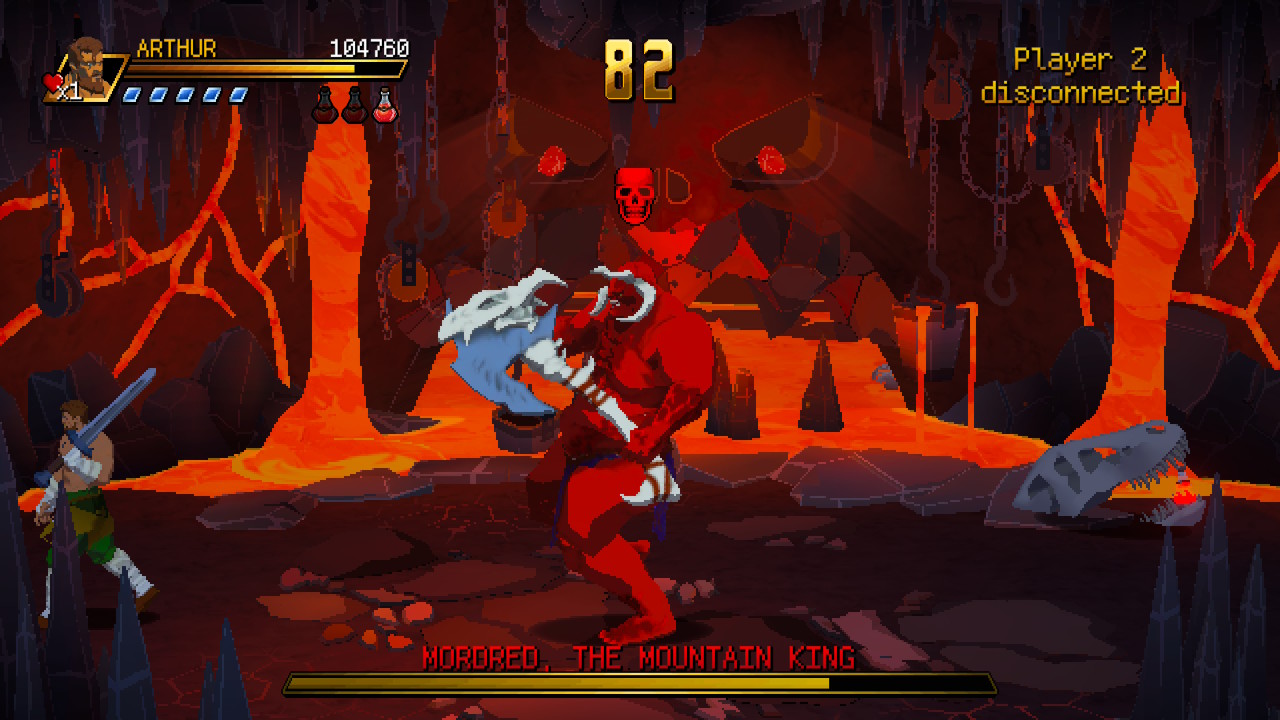
Being more forgiving does not mean Blades & Battles is entirely toothless. Certain enemies are much harder to read and defend against, especially when dodging their attacks becomes the difference between comfortably progressing and being reminded that Arthur is, in fact, mortal.
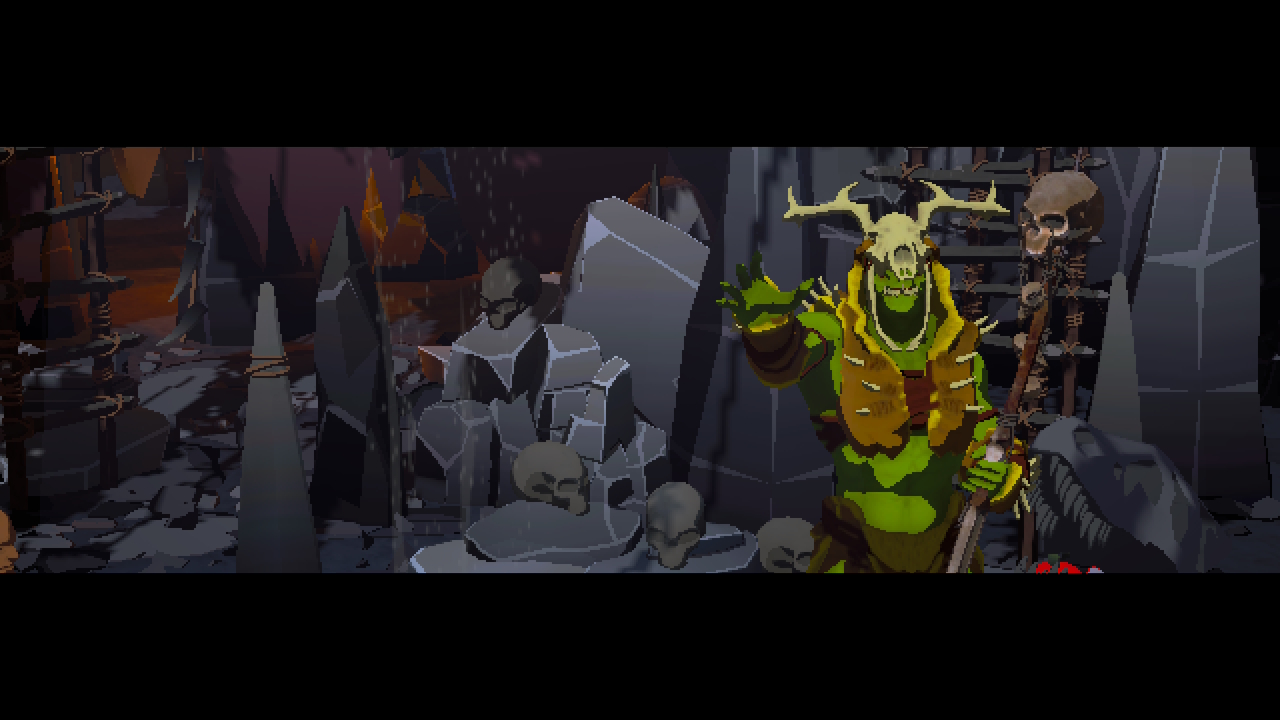
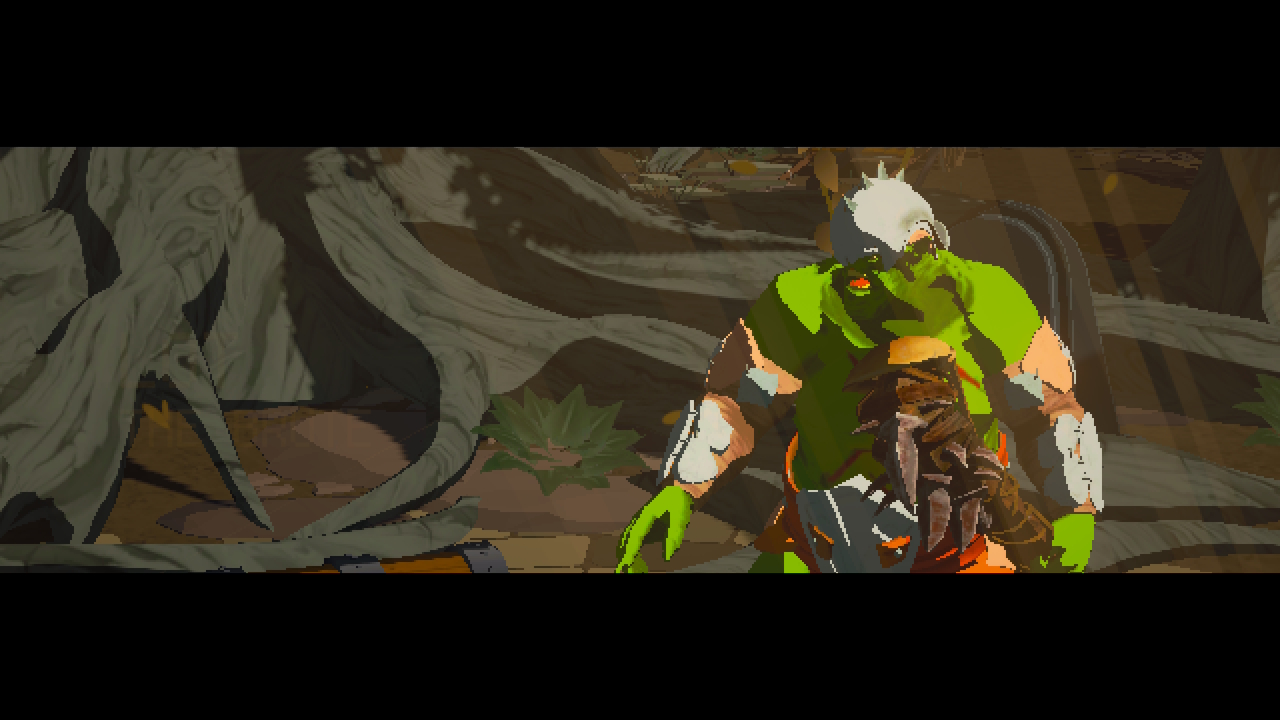
The larger bosses also require patience. They interrupt the comfortable rhythm of cutting through ordinary enemies and force you to spend a little more time observing, adjusting and choosing the right moment to strike. That shift in pace is welcome, and it helps prevent the campaign from becoming a mindless procession of identical encounters.
What matters is that the difficulty did not feel determined to humiliate us. We encountered challenges, learned from mistakes and kept moving. During our playtime, the death counter reached the dizzying total of two. For a player who has spent a considerable amount of time being thoroughly battered by other beat ’em ups, that felt like something worth celebrating.
Not because a low death count automatically makes a game good, of course. Rather, it suggested that the combat was communicating its intentions clearly enough for us to react. We had room to improve without needing to be punished at every turn. It was challenging, but approachable.
A fantasy road trip with scenery worth stopping for
The game’s visual identity is another highlight. It blends a stylised modern presentation with the familiar side-scrolling structure of the classics, creating a world that feels recognisably retro without looking trapped in the past.
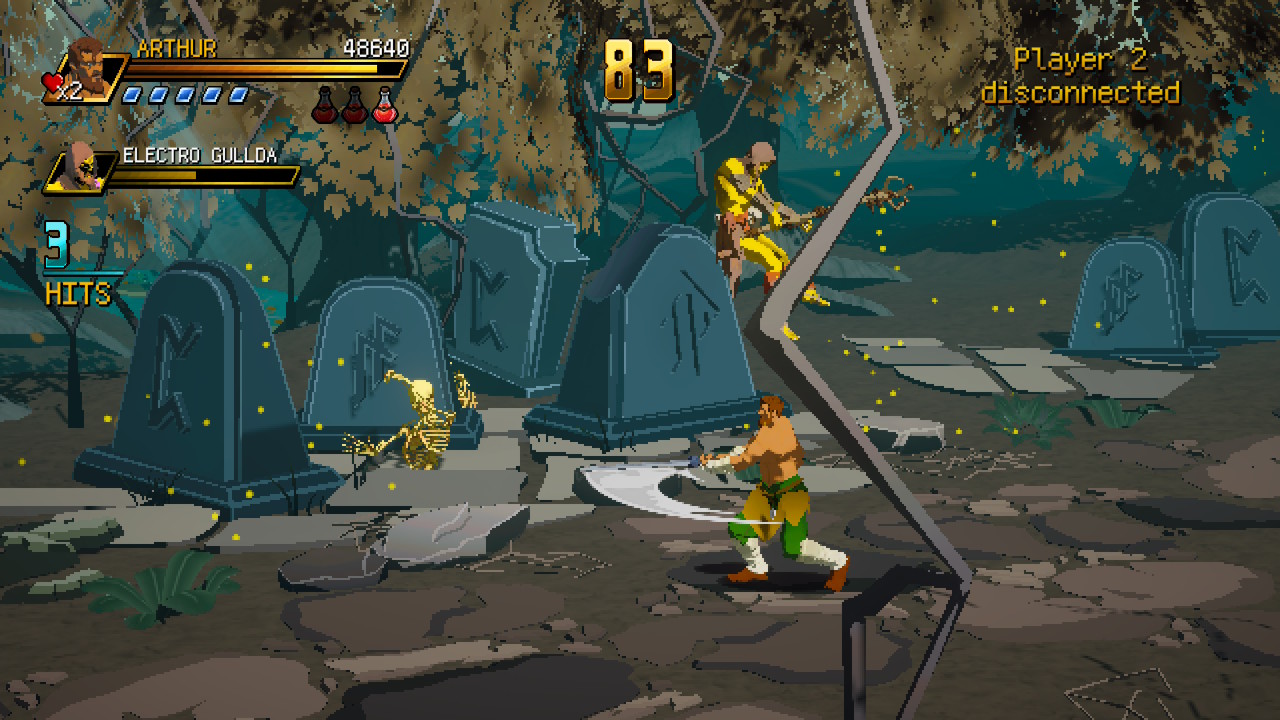
The environments change often enough to keep the adventure visually interesting. We moved through twisted woodland, eerie graveyards, glowing volcanic caverns and snow-covered landscapes, each offering its own atmosphere and colour palette. That variety makes a meaningful difference in a game built around moving forward and fighting whatever appears next.
The snowy area made a particular impression, especially the enormous skeletal remains visible in the background. It is the kind of environmental detail that invites you to pause for a second, admire the scale and briefly wonder what sort of creature might have left those bones behind. Preferably something we will not be expected to fight with our current equipment.
The volcanic areas, meanwhile, use their glow and colour to deliver a very different feeling, while the graveyards and woodland keep the more traditional fantasy mood alive. These are not merely palette swaps in our memory of the experience. Their distinct visual personalities helped keep the journey feeling varied.
Combat effects are bright and dramatic, particularly when those special attacks come out. The animations have enough flair to make Arthur feel powerful without completely obscuring the straightforward appeal of swinging a sword at a group of incoming enemies. Sometimes, a fantasy brawler just needs to let its swordplay look spectacular.
That unmistakable arcade soundscape
We have a soft spot for the audio of a good old-school brawler: the grunts, the battle cries, the satisfying noise of an attack connecting and the music that seems to insist you keep marching forward. Blades & Battles captures that atmosphere rather well.
Arthur’s sword swings come with the sort of traditional combat sounds that instantly evoke arcade memories, even though the world around him has a more contemporary look. The soundtrack supports that feeling of being in a classic fantasy action game, without requiring the actual inconvenience of feeding coins into a machine.
That mixture of familiar sound design and updated presentation is important. The game does not seem embarrassed by its influences. It embraces them, then gives the player enough modern comfort that the nostalgia feels enjoyable rather than like a historical reenactment of bad controls.
Familiar foundations, but that is not necessarily a weakness
There is no pretending that Blades & Battles completely reinvents the genre. The underlying structure remains very traditional: defeat groups of enemies, advance, meet more enemies, occasionally encounter a boss that requires a change of tactics. If you are looking for a radical new approach to side-scrolling action, this probably is not where you will find it.
But familiarity is not a problem when the fundamentals work. The changing environments, different enemy designs and enjoyable combat gave us enough variety to remain engaged. We did not need an elaborate web of interconnected systems or a dozen additional mechanics distracting from the reason we were there in the first place.
It is particularly refreshing following some recent experiences with the genre where the movement and combat themselves were a source of frustration. Here, the challenge usually came from what we were fighting, rather than how difficult it was to convince the character to do what we wanted.
The game’s official feature list includes Lancelot as a second playable character and local cooperative play. Those are welcome options for players who want to approach the campaign differently or bring a friend along, but we are not going to claim first-hand conclusions about them when our notes are based on an Arthur playthrough.
The CSPress verdict
Blades & Battles feels like a reminder of why the classic fantasy beat ’em up has endured. It is easy to understand, satisfying to play and full of wonderfully familiar arcade energy. We liked Arthur’s responsive controls, the accessible range of attacks and the way the difficulty provided a worthwhile challenge without constantly getting in the way of our enjoyment.
The distinctive environments deserve praise, particularly the snowy landscape with those enormous skeletal remains, and the colourful combat animations help make every successful strike feel suitably dramatic. We also appreciated the special attacks, even when we spectacularly mismanaged them ourselves.
Its basic formula is familiar, and some enemies and boss encounters can demand more careful dodging than the regular fights. But those are relatively small reservations in an experience where the controls are inviting and the atmosphere is so enjoyable.
82/100. A satisfying, approachable medieval fantasy brawler that understands the joys of arcade combat without clinging to every frustration of the past. We died twice, accidentally wasted our special attack and still came away feeling remarkably heroic. Somebody notify the Round Table.
Review context: This 82/100 score and the gameplay observations come from original Coloured Static Press play notes, covering a solo Arthur playthrough. Official details about Lancelot, local co-op and the September 2026 release were checked against the game’s Steam listing. Those additional modes are not represented as tested in this review.