
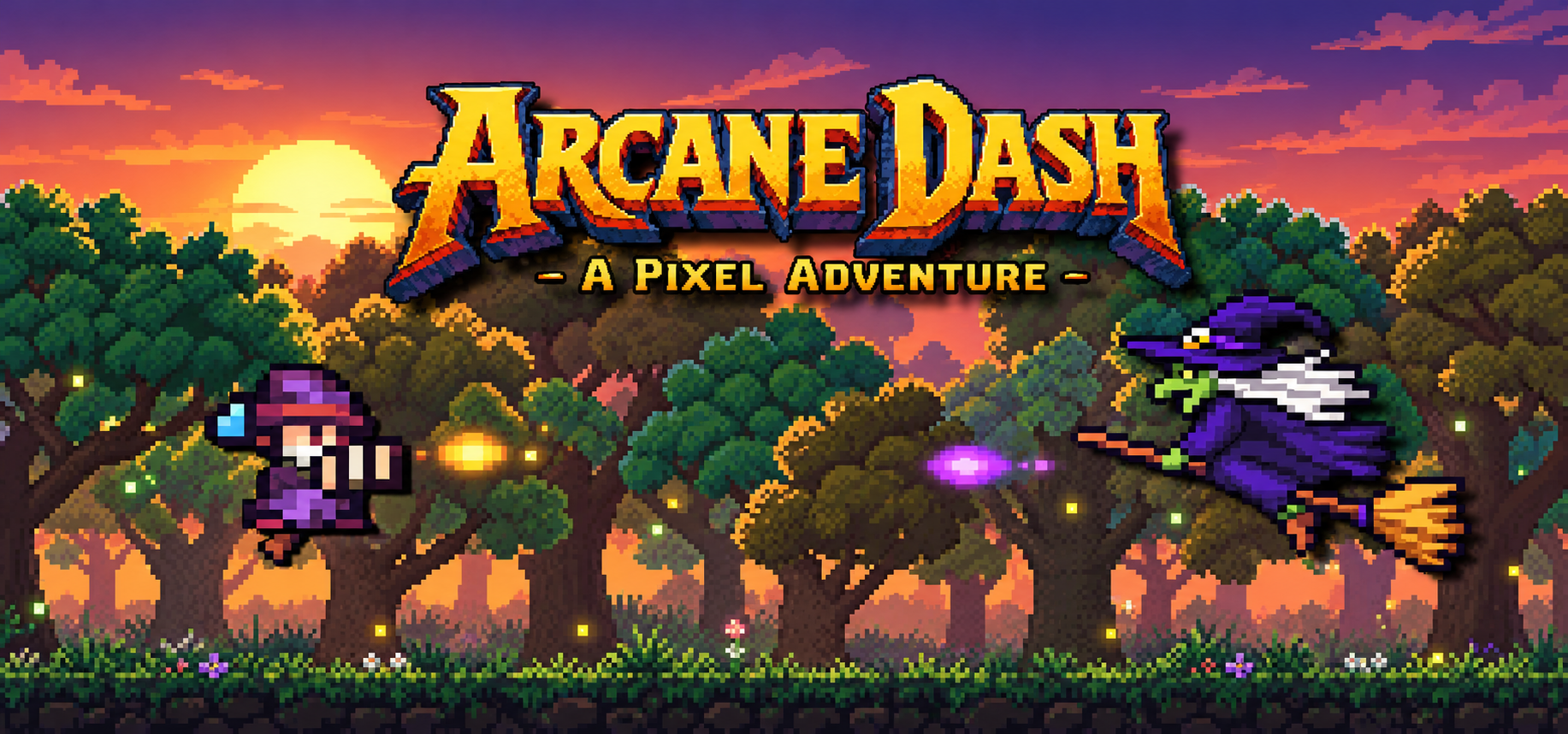
Arcane Dash: thirty years in the making
From Commander Keen and Hocus Pocus to a generous shareware-style demo, the developer behind Arcane Dash talks about building an engine from scratch, the difficulty of getting jumps right and a cat that can clear a room of enemies.
Making the platformer you grew up with
Some games begin with a market opportunity. Arcane Dash began with a dream that has been waiting three decades. Its creator grew up with the energetic platformers of the Apogee and Epic era, especially Hocus Pocus. This is an attempt to recover that feeling without pretending game design stopped in the 1990s.
“It’s been 30 years of dreaming of making a game like this, and this year I finally sat down and did it.”Arcane Dash developer
Shareware means sharing a real slice of the game
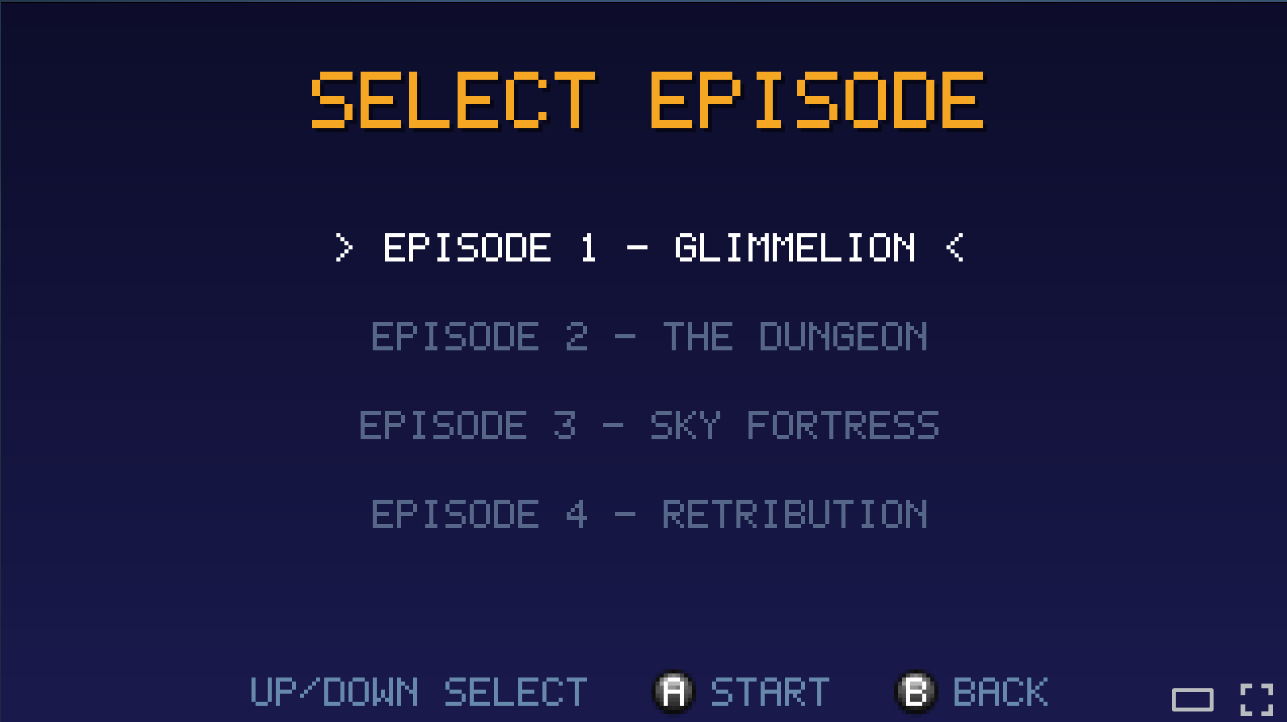
The developer’s commitment to the old shareware model is especially interesting. Instead of a brief teaser, the free demo includes all of Episode 1: a quarter of the 36-level game, with no time limit. That gives players a meaningful opportunity to decide whether they enjoy the game before buying the rest.
Its four locations include the forests of Glimmelion, a castle dungeon and a Sky Fortress, before returning to Glimmelion for the finale. The pixel art is rooted in the period that inspired it, while modern lighting adds atmosphere.
Our time with the demo: nostalgic, but never stuck in the past
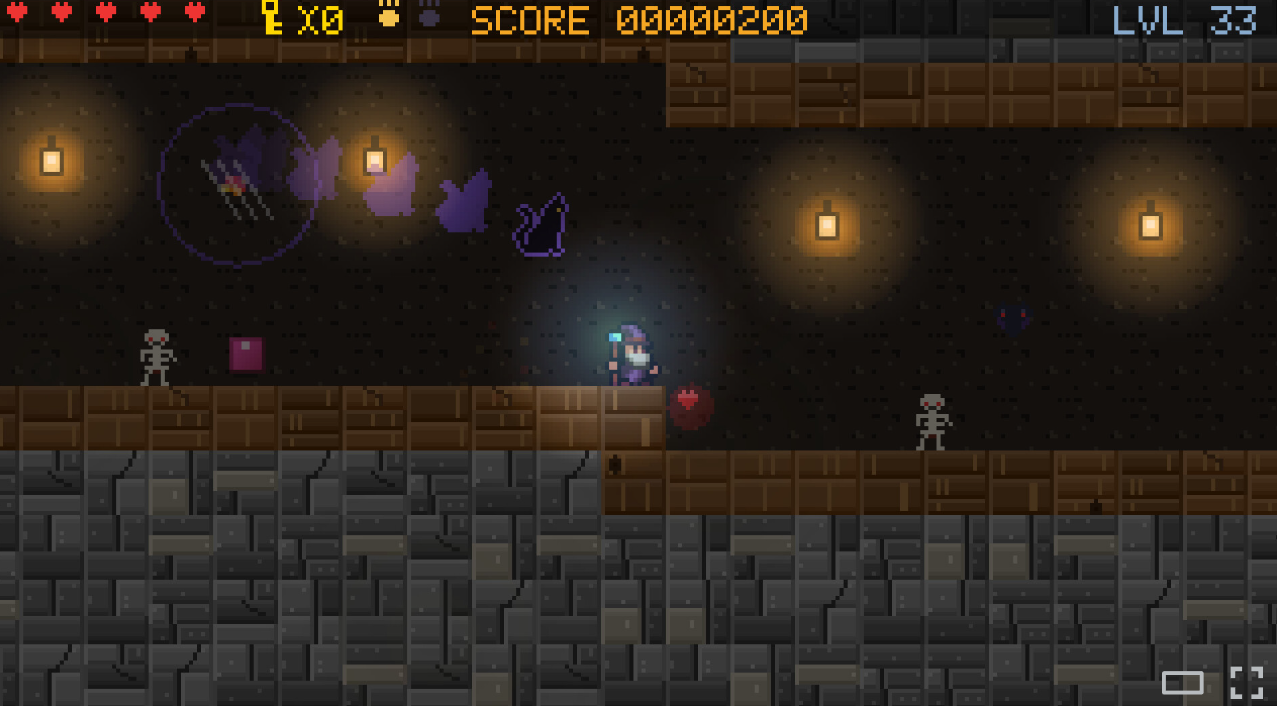
We’ve played the Arcane Dash demo, and thoroughly enjoyed it. The colourful pixel-art presentation immediately recalls the platformers that made the 1990s so memorable, but the controls have a distinctly modern responsiveness. Movement feels quick and precise, and jumps respond naturally to input. It’s a pleasing combination: the warmth and character of a classic platformer, without making you fight the controls to enjoy it.
That matters more than any checklist of retro influences. Nostalgia might get someone to try a game, but the way it feels in your hands is what keeps them playing. Our experience with Episode 1 has left us looking forward to exploring the complete adventure. A full Coloured Static Press review is coming soon, once we’ve spent proper time with the full game.
The difficulty of a single jump
The biggest technical challenge, the developer explains, was simply making the fundamentals of a platform game feel right. Rather than choosing an existing game engine, the Java developer built one from scratch, including jumping, camera movement and scrolling backgrounds. It was a considerable learning experience, even if they acknowledge an off-the-shelf engine could have been faster.
Knowing how enjoyable and responsive the demo feels makes the developer’s account of building and refining those basic mechanics particularly interesting. Player feedback has shaped the result. The developer describes work on responsive jumps, leaderboards inspired by a playtester and practical changes to the pause menu, control prompts and background parallax. Beyond the basic campaign, ten Ascension modes and a secret epilogue offer additional reasons to return.
Shadowtongue is more than a rescue mission
The story begins with a quest to rescue the hero’s cat, Shadowtongue. But she is not left behind once the rescue is over. From Episode 2, players who find a hidden golden paw can summon her twice per level to dispatch up to five visible enemies. It’s the sort of memorable detail that gives a retro platformer an identity of its own.
“Making the game was the part I knew how to do, and marketing was completely unknown to me.”Arcane Dash developer
From development to discovery
Our conversation also returns to the challenge facing so many independent developers: making something and getting noticed are two different jobs. The developer changed the game’s capsule artwork, learned to approach content creators and found that their own posts on X brought in more traffic than other channels. It’s an experience that will sound familiar to many of the indie teams we’ve met through Steam Next Fest.
Arcane Dash is scheduled to launch on Steam on 16 November 2026 (15 November in the United States), with prices supplied by the developer of A$9.99 and US$7.99. Regional pricing may vary. The free first episode is available to try now.
Wishlist Arcane Dash and find the free demo on Steam. You can also read our earlier Arcane Dash spotlight.
Read the complete developer interview · 10 questions and answers ▾
1. For readers discovering Arcane Dash for the first time, how would you describe the game, and what makes it stand out from other pixel-art platformers?
Developer: Arcane Dash is a throwback to 1990s platformers like Commander Keen, Hocus Pocus and Duke Nukem. It’s been 30 years of dreaming of making a game like this, and this year I finally sat down and did it. It has 36 levels split across 4 episodes, shareware style. What makes it stand out is that the demo is real shareware. In the late 80s and early 90s, shareware meant giving away a substantial slice of the game, usually a third or a quarter. Our free demo is all of Episode 1, a quarter of the game, with no time limit. Few games do that today, and I wanted players to try a big chunk before they decide.
2. What originally inspired Arcane Dash? Was there a particular game or experience that sparked the idea?
Developer: I’ve always loved the classic Apogee, id and Epic platformers: Duke Nukem, Commander Keen, Monster Bash, Hocus Pocus and Jazz Jackrabbit. Hocus Pocus is a direct inspiration for Arcane Dash. The wizard shooting bolts, the flying enemies and the four-episode structure all come from it.
3. The game has a distinctive retro-inspired visual style. What influenced the artwork, environments and overall atmosphere?
Developer: The look comes from the pixel art of 90s 2D platformers, with some modern lighting effects on top for extra atmosphere. Platformers of that era used contrasting worlds, so I aimed for four very different biomes: the forests of Glimmelion, the castle dungeon, the Sky Fortress and a return to Glimmelion for the finale. I think players will enjoy the variety.
4. Movement and precision are central to platforming games. How did you approach making the controls feel responsive while keeping the challenge satisfying?
Developer: This has been the hardest thing to get right, and demo players have given feedback on it. The question is whether to make jumps high, like Mario, or more modest. I designed the levels so they’re challenging but every jump is achievable and never frustrating. On a controller, jumping is pressure-sensitive: the harder you press, the higher Ilenor jumps. I remember an old SNES game with an impossible jump, and I wanted to avoid that.
5. How has Arcane Dash evolved since development began? Were there any mechanics or features that changed significantly along the way?
Developer: The game has come a long way since the prototype. For a long time I had placeholder graphics, and hooking in the boss and player sprites from our pixel artist is when I knew it was something special. After playtesting all 36 levels I wanted more challenge, so I added 10 Ascension modes, and since players who spend that long deserve a reward, a secret epilogue sequence. The demo’s story is about rescuing your cat, Shadowtongue, but she did little afterwards. From Episode 2 she’s part of the gameplay: find her hidden golden paw and you can summon her up to twice per level to clear up to five visible enemies on screen.
6. What’s been the biggest challenge you’ve faced during development, and how did you overcome it?
Developer: The biggest challenge was getting the prototype running, especially the core platforming: jumping, camera movement and scrolling backgrounds. I’m a Java developer and wrote the engine from scratch rather than using an existing one, so I had to build all of that myself before I could test whether the game was fun. In hindsight, an existing engine would have got me there faster, but I learned a lot building my own.
7. Is there a particular level, mechanic, secret or small detail you’re especially proud of that players might overlook?
Developer: I’m particularly proud of the secret gem room in one of the later levels of Episode 3. You have to pull off some tricky jumping to reach it, but it’s doable, and I think that’s what I’m after across the game: a reward for players who take a risk and nail it. I won’t say which level, so you’ll have to go looking. There is also a hidden room in Episode 4 – you’ll know what I mean when you see it! 😉
8. What has the response from players been like so far? Has any feedback surprised you or influenced development?
Developer: The response has been great, and the feedback has already changed the game. One of my early playtesters wanted a way to challenge his friends, which is where the Steam leaderboards came from. I hadn’t thought of that. A tester from We Playtest Games found a bug where the Esc key didn’t close the pause menu, and that’s now fixed. Since the demo launched, Satior420 streamed a playthrough and left a positive review, and other players have told me what bugged them. I used that feedback for update v1.07S, which includes:
- Esc now closes the pause menu.
- You can skip the score tally.
- A controls popup helps new players.
- Level names are bigger.
- A toggle for the background parallax.
Developer: Hearing from real players is invaluable, because you never know what they will find!
9. Independent developers often have to balance creating their games with getting them noticed. What has that experience been like for you, and what have you learned?
Developer: Making the game was the part I knew how to do, and marketing was completely unknown to me. There were so many decisions: which screenshots to use, how to write the blurb, and how to reach content creators. I changed the capsule art after seeing how the first version performed. My own X posts have driven more traffic to the page than anything else, so I started a giveaway to encourage wishlists. I’ve also talked with other indie devs during Steam Next Fest, and they’re all facing the same challenges. It’s been a steep learning curve, but I’m picking up valuable skills along the way.
10. Finally, what’s next for Arcane Dash, and what would you most like players to know before jumping into the game?
Developer: Next is launch. The full game of Arcane Dash comes out on Steam on 16 November (15 November in the US) for $9.99 AUD / $7.99 USD. It has 36 levels across four episodes, plus 10 Ascension modes for extra challenge and a secret epilogue for players who see it through. Episodes 2 to 4 also add Shadowtongue’s hidden golden paw, so you can summon her to clear enemies. The free demo is all of Episode 1, a quarter of the game with no time limit, so you can try a big chunk before you decide. Wishlisting the full game on Steam is the biggest help to an indie developer, and I’d love to hear what you think of the demo.
Editorial note: Responses were supplied directly by the developer and formatted for readability. Our comments on the demo reflect our own hands-on playtime; they are not a verdict on the complete release. A full review is planned.